


Think rebuilding your credit takes forever? Not always.
You can see measurable score gains in as little as a few weeks and noticeable progress in 3–24 months, depending on how big the damage is and how steady you are with payments.
This post lays out the realistic timelines, from quick fixes like correcting errors to multi-year events like bankruptcy, and the key factors that speed or slow recovery.
Read on to learn the simple actions that move the needle and a clear rule to choose what to do first.
Credit Score Rebuild Timeframes Explained Clearly

You’ll see measurable improvement within 3–24 months when rebuilding credit, though your exact timeline depends on how bad the damage is and how consistently you stick to healthy money habits. Credit scores change as lenders report updated account information to the bureaus, usually every 30 days, so your score can shift after each reporting cycle. Pay down a credit card or make an on-time payment this month? The impact may show up in the next 30 to 45 days.
Specific ranges help set realistic expectations. Minor stuff like high credit card balances can improve within 3–6 months once you lower utilization and keep payments current. Moderate damage (a few late payments or a single collection) often takes 12–24 months of on-time payments and responsible use to move things significantly. Severe events like bankruptcy or multiple charge-offs may need several years of consistent positive activity before you see full recovery.
Weeks: Immediate corrections (like removing reporting errors) can boost scores quickly after the next update.
3–6 months: Paying down high balances and establishing a pattern of on-time payments typically produce noticeable gains in this window.
6–12 months: Authorized user history and secured card reporting build a longer positive track record.
12–24 months: Scores continue rising as older negative items age and new positive behavior accumulates.
Multi-year: Bankruptcies and severe collections require years for full score restoration and eventual removal from your report.
Results depend on consistency and the type of negative marks present. Someone with only high credit card balances can rebound faster than someone rebuilding after bankruptcy because the severity of the original damage sets the floor for how long recovery will take.
Factors That Impact the Timeline to Rebuild a Credit Score

Payment history is the largest scoring factor in FICO models, roughly 35% of your score, so every on-time payment accelerates recovery while every missed payment extends it. Credit utilization (how much of your available credit you’re using) makes up about 30% of the score. That means reducing balances can deliver quick wins. Account age contributes 15%, so closing old accounts or opening many new ones at once can slow rebuilding. Credit mix (10%) and hard inquiries (10%) have smaller influences, but frequent applications or a thin file with only one type of credit can still add drag.
Recent activity carries more weight than older data in most scoring models. A late payment from this month hurts more than one from three years ago. A hard inquiry from last week affects your score more than one from 18 months ago. Similarly, a sudden spike in utilization this cycle will impact your score more immediately than steady low balances you’ve carried for years. That’s why rebuilding efforts show faster results when you focus on the most recent behavior. Paying on time now, lowering balances today, and avoiding new credit applications until you stabilize.
| Factor | How It Influences Timeline | Relative Weight |
|---|---|---|
| Payment History | On-time payments accelerate recovery. Even one missed payment can restart the clock on rebuilding trust. | ~35% |
| Credit Utilization | Lower balances can produce score gains within weeks. Maxed-out cards delay progress. | ~30% |
| Credit Age | Older accounts help. Closing them or opening many new ones shortens average age and slows improvement. | ~15% |
| Credit Mix | A blend of credit types (cards, loans) is favorable but only a modest factor. Focus on core behaviors first. | ~10% |
| Hard Inquiries | Each new application can ding your score. Multiple inquiries in a short window compound the effect. | ~10% |
How Long Specific Negative Credit Events Affect the Rebuild Process

Not all negative events are created equal. A single 30 day late payment might sting your score for a few months, but a bankruptcy can anchor your report for up to a decade. Understanding event specific timelines helps you set realistic goals and know what to expect as you rebuild.
Late payments and collection accounts remain on your credit report for seven years from the date of the original delinquency. The impact is strongest in the first two years, then gradually fades as you layer on positive payment history. A single late payment may only set you back a few months if you catch up quickly. Multiple late payments or an account sent to collections will take longer to overcome.
Foreclosures and charge-offs also stay on your report for seven years from the date the account first became delinquent. A foreclosure typically causes a larger score drop than a late payment because it signals that a secured loan was never repaid. Charge-offs show that a lender wrote off the debt, which damages trust with future creditors. Both require years of consistent on-time payments to rebuild fully.
Bankruptcy timelines depend on the chapter. Chapter 13 bankruptcy remains on your credit report for seven years from the filing date, while Chapter 7 stays for ten years. The score impact is severe at first but lessens as the filing ages and you establish new positive credit. Many people can qualify for new secured credit within a year or two of filing, though it takes the full duration for the bankruptcy to fall off completely.
Late payments (30, 60, 90 days): Seven years on report. Score impact fades after 12–24 months with on-time payments.
Collection accounts: Seven years on report. Settling or paying may stop further damage but doesn’t remove the item early.
Charge-offs: Seven years on report. Score recovery can begin within 12–24 months if new positive accounts are opened.
Foreclosures: Seven years on report. Expect 24–36 months of consistent payment history before significant score gains.
Bankruptcies: Seven years (Chapter 13) or ten years (Chapter 7) on report. Rebuilding can start immediately with secured credit, but full recovery takes the full reporting period.
Strategies to Rebuild a Credit Score Faster

On-time payments are the single most powerful driver of score improvement, so prioritize making every payment by the due date. Set up autopay for at least the minimum payment on every account, then manually add extra payments when your budget allows. If you’ve missed payments in the past, starting a streak of consecutive on-time payments signals to scoring models that your recent behavior is stable and trustworthy.
Secured credit cards and credit builder loans are purpose built tools for rebuilding. A secured card requires a cash deposit that becomes your credit limit. If you deposit $500, your limit is $500. Use the card for small recurring purchases like a streaming subscription, then pay the balance in full each month. The issuer reports your on-time payments to the bureaus, and after 12 to 18 months of responsible use, many issuers upgrade you to an unsecured card and refund your deposit. Credit builder loans work differently. The lender holds your payments in a savings account while you make monthly installments, and the on-time payments are reported to the bureaus. Once the term ends, the principal is released to you.
Becoming an authorized user on someone else’s well-managed account can add positive payment history to your credit file, but only if the issuer reports authorized user activity to the bureaus. Confirm that detail before you’re added. The primary cardholder retains full responsibility for payments, so if they miss one or max out the card, your score can drop even though you didn’t use the account. Choose someone with a long, clean payment history and low utilization.
Fastest Practical Steps
Set up automatic payments on every credit account to guarantee you never miss a due date, even if it’s only the minimum.
Pay down credit card balances to below 30% of the limit. Aim for 10% or less if possible to maximize short-term score gains.
Request a credit limit increase on existing cards if you’ve been on time for six months. Higher limits lower utilization without requiring you to pay down balances as aggressively.
Open a secured credit card if you can’t qualify for unsecured credit. Deposit $200 to $500 and use it for one small purchase per month, paid in full.
Check all three credit reports for errors. Dispute inaccuracies immediately because corrections can lift your score within 30 to 60 days.
Become an authorized user on a trusted account with low utilization and perfect payment history, and confirm the issuer reports to all three bureaus.
Credit Utilization and Its Effect on Rebuilding Timeline

Credit utilization is the percentage of your available credit you’re currently using, and it’s the second largest scoring factor after payment history. If you have a $10,000 credit limit and carry a $3,000 balance, your utilization is 30%. Scoring models generally reward utilization below 30%, and going below 10% often delivers even faster improvements. Because lenders report balances to the bureaus about once a month, lowering your utilization can produce a score bump within the next 30 to 45 days.
Lenders report your balance on a specific day each month, often your statement closing date, so the balance on that day is what shows up on your credit report, even if you pay the full balance before the due date. To keep utilization low, pay down your balance before the statement closes or make multiple payments throughout the month. Keeping old accounts open can also help because closing a card removes that available credit from your total, which raises your utilization percentage even if you didn’t charge anything new.
Pay balances before the statement closing date so the lower balance is reported to the bureaus.
Make multiple small payments throughout the month instead of one large payment at the due date.
Request credit limit increases on cards you’ve kept in good standing for at least six months. Higher limits mean lower utilization.
Keep old cards open and active with one small recurring charge per month, paid in full, to preserve available credit and account age.
Disputing Errors to Potentially Speed Up Credit Score Recovery

Errors on your credit report (like accounts that don’t belong to you, incorrect late payment marks, or duplicate collections) can drag down your score and slow your rebuilding timeline. Reviewing reports from all three nationwide credit bureaus (Equifax, Experian, and TransUnion) helps you catch these mistakes because lenders don’t always report to all three, and errors can appear on one report but not the others. You can request a free copy of each report once per year through the official annual credit report site, and some bureaus offer more frequent access.
Dispute resolution typically takes 30 to 45 days once you file. The bureau investigates by contacting the lender that reported the information, and if the lender can’t verify the item, it must be corrected or removed. If the dispute is resolved in your favor, your score may increase as soon as the next reporting cycle. Accurate negative items (like a late payment you actually made or a collection that’s legitimately yours) cannot be removed early, but correcting errors can still deliver quick wins.
Pull reports from all three bureaus to identify discrepancies. Errors on one report may not appear on the others.
Gather supporting documentation like payment receipts, account statements, or letters from lenders that prove the error.
File disputes online through each bureau’s dispute portal. Online disputes are often faster than mailing paper forms.
Follow up within 30 days if you don’t receive a response. Bureaus are required to investigate and respond, usually within 30 to 45 days.
How New Credit Applications Influence the Rebuild Timeline

Every time you apply for new credit, the lender runs a hard inquiry on your credit report, and each hard inquiry can lower your score by a few points. The effect is temporary. Inquiries remain on your report for two years but typically only impact your score for the first 12 months. Still, multiple inquiries in a short window can add up and delay your rebuilding progress. If you’re planning a major purchase like a mortgage or auto loan, limit new credit applications in the months leading up to it so your score is as high as possible when lenders pull your report.
Opening a new account also lowers the average age of your credit, which can ding your score in the short term. Over time, though, a well-managed new account helps by diversifying your credit mix and adding positive payment history. The key is to open new credit only when you need it and can handle the payments comfortably. If you’re rebuilding after serious derogatory events, one or two new accounts (like a secured card and a credit builder loan) are usually enough to restart your positive history without over extending.
Monitoring Progress During the Credit Score Rebuild
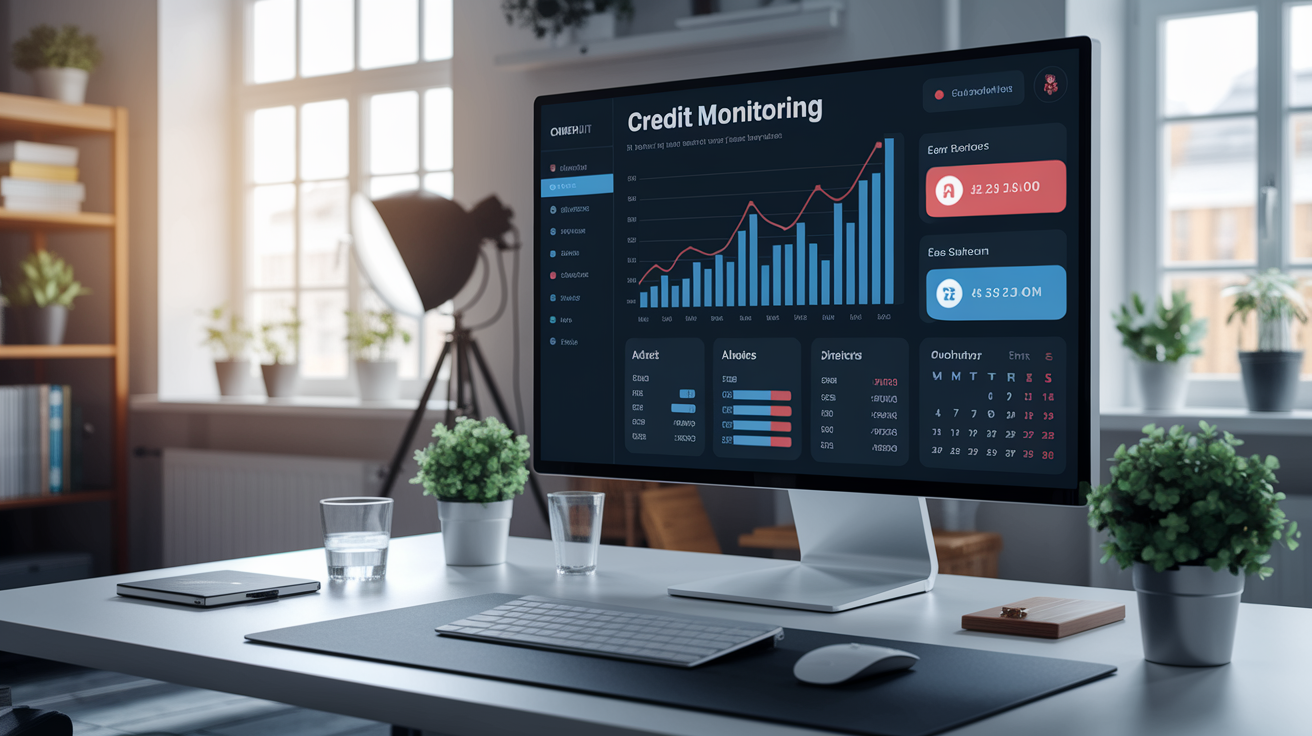
Monitoring your credit regularly reveals trends, confirms that positive changes are showing up, and flags new errors or fraudulent accounts before they cause serious damage. Many credit monitoring services provide updated scores and alerts when key information changes, like a new account opening, a balance increasing, or a late payment being reported. Some bureaus and third party services offer daily or weekly score refreshes, while others update monthly.
Scores update as credit report information changes, so you’ll see movement after each lender reporting cycle (typically every 30 days). If you pay down a balance or make an on-time payment this month, expect to see the effect reflected in your next score update. Tracking progress month over month helps you understand which actions are working and whether you’re on pace to hit your rebuilding goals.
Current balances and utilization percentages across all revolving accounts.
Payment status on every account to confirm no new late marks appear.
New accounts or inquiries to catch identity theft or unauthorized applications.
Changes in credit limits that could affect utilization even if your balance stays the same.
Age of negative items to know when each derogatory mark will fall off your report and when its impact should start fading.
Final Words
In the action, we explained that most people see measurable credit improvement within 3–24 months and that lenders usually update reports about every 30 days. We gave ranges for minor issues (weeks to months), moderate damage (12–24 months), and severe events (multi-year). We also covered factors that speed or slow recovery and practical steps to accelerate it.
If you do one thing now: pick a consistent habit—pay on time or lower balances—and track it weekly. How long does it take to rebuild credit score depends on your starting point, but steady steps bring steady gains.
FAQ
Q: How to raise credit score 100 points in 30 days?
A: Raising your credit score 100 points in 30 days is possible but rare; focus on paying down balances to cut utilization, dispute reporting errors, ask lenders to re-report positive payments, and avoid new inquiries.
Q: How long does it take to build credit from 600 to 700?
A: Building your credit from 600 to 700 typically takes 3 to 12 months; lower balances, make every payment on time, keep older accounts open, and use a secured card or credit-builder loan for steady progress.
Q: What credit score do you need for a $400,000 house?
A: The credit score needed for a $400,000 house depends on the loan: conventional lenders often want 620+, FHA may accept 580 with 3.5% down; aim for 700+ to get better rates.
Q: How long does it take to rebuild a 300 credit score?
A: Rebuilding a 300 credit score can take months to years; expect small gains in 3 to 6 months with consistent on-time payments and lower utilization, while full recovery often needs 2–5+ years.