


Waiting for “enough money” is the biggest reason people never invest.
You can start with $5 to $100 today. Not a typo.
Pick any platform that accepts small deposits, choose a simple index fund (a low-cost fund that owns many companies) or fractional shares, and set one automated transfer each payday.
That tiny habit beats waiting for the perfect moment.
Thesis: Start small and automate; time and compounding will do most of the work.
If you only do one thing today, open an account and schedule a $5 to $50 monthly deposit.
Immediate Beginner Steps to Start Investing with Little Money

You can start investing today with $5 to $100. That’s not a typo, and you don’t need a windfall or trust fund to make it happen. You just need to decide to put a small amount to work now instead of waiting for some “perfect moment” that probably won’t come.
The most important first step? Pick any beginner friendly platform that accepts low or no minimums and set up your first automated contribution. Don’t overthink it. Most platforms offer simple, diversified options like basic index funds that work perfectly when you’re just starting. Your goal right now isn’t to optimize every detail. It’s to get capital into the market and let time do the heavy lifting.
Compounding turns tiny contributions into real growth. Invest $100 every month for 30 years with an average 7% annual return, and you’ll put in $36,000 of your own money. But your account grows to roughly $122,000. That extra $86,000? It comes from compounding, not from you scraping together more cash. Starting today with $50 a month matters way more than waiting to invest $500 later. Time in the market beats timing the market. Every single time.
Your immediate action plan:
Pick any beginner friendly platform with low or no account minimums. Set up your first automated deposit, even if it’s just $5 to $50. Choose a simple diversified option like a basic index fund. Commit to recurring monthly contributions on the same schedule. Focus on consistency over perfect timing because regular investing wins.
Building Room to Invest: Budgeting and Freeing Up Small Amounts
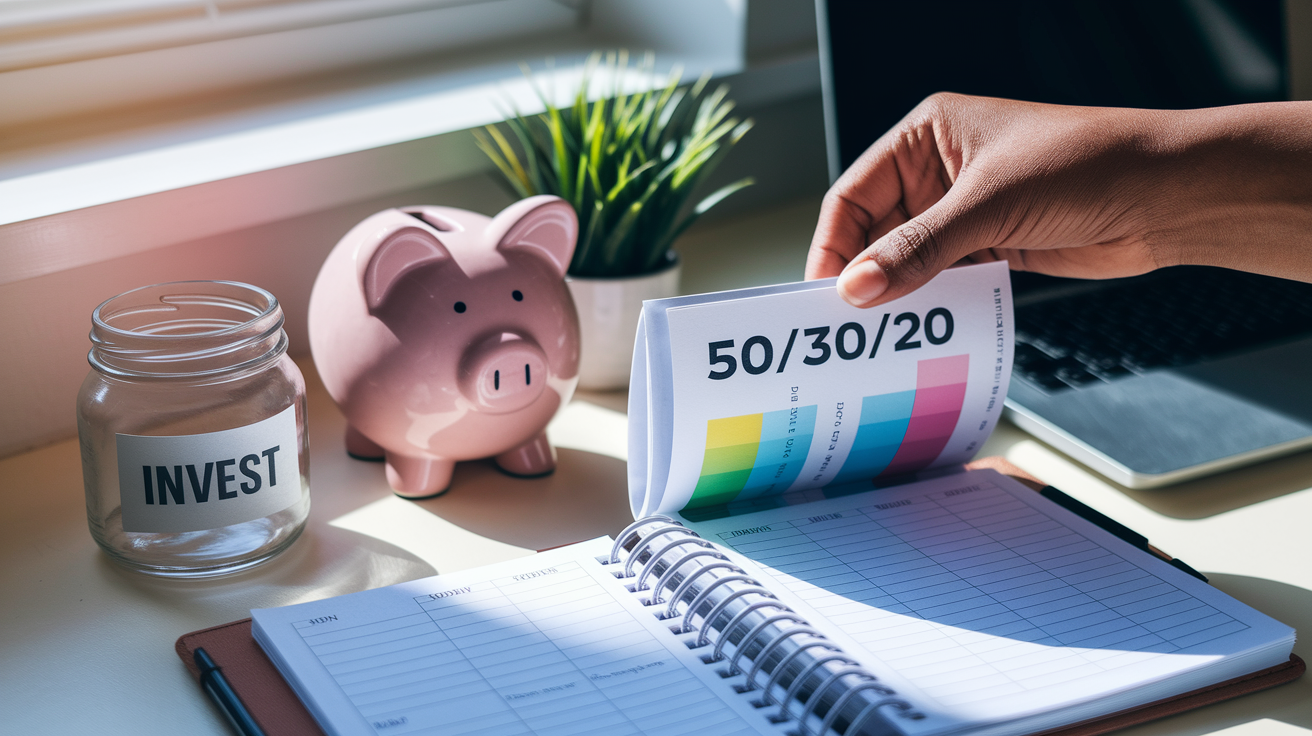
Before you can invest anything, you’ve got to create the cash flow to do it. The 50/30/20 budgeting rule gives you a simple starting framework. Allocate 50% of your take home income to needs (rent, utilities, groceries), 30% to wants (dining out, hobbies, subscriptions), and 20% to savings and investments. If you bring home $2,000 a month, that 20% bucket is $400. But even carving out $20 to $50 from the “wants” category is enough to begin. Look for small leaks. One unused subscription ($10), two fewer takeout meals ($30), or skipping one impulse purchase ($15) can free up $50 without major lifestyle changes.
Investing comes after two other priorities. Building a small emergency fund and paying off high interest debt. If you’re carrying credit card balances at 18% or 22% APR, paying those down delivers a guaranteed “return” equal to that interest rate. That’s better than almost any investment. Aim for a starter emergency fund of $500 to $1,000 before you move serious money into the market. Once those bases are covered, you’re ready to redirect that freed up cash toward long term growth.
The process in four steps:
Track your monthly spending for one full month to see where every dollar goes. Identify and reduce non essential expenses, the “leaks” you won’t actually miss. Allocate a fixed portion (even $20 to $50) toward your investment account each month. Set clear short term goals (emergency fund, debt payoff) and long term goals (retirement, financial independence) so you know what you’re building toward.
Investing with Small Sums Through Fractional Shares and Micro-Investing
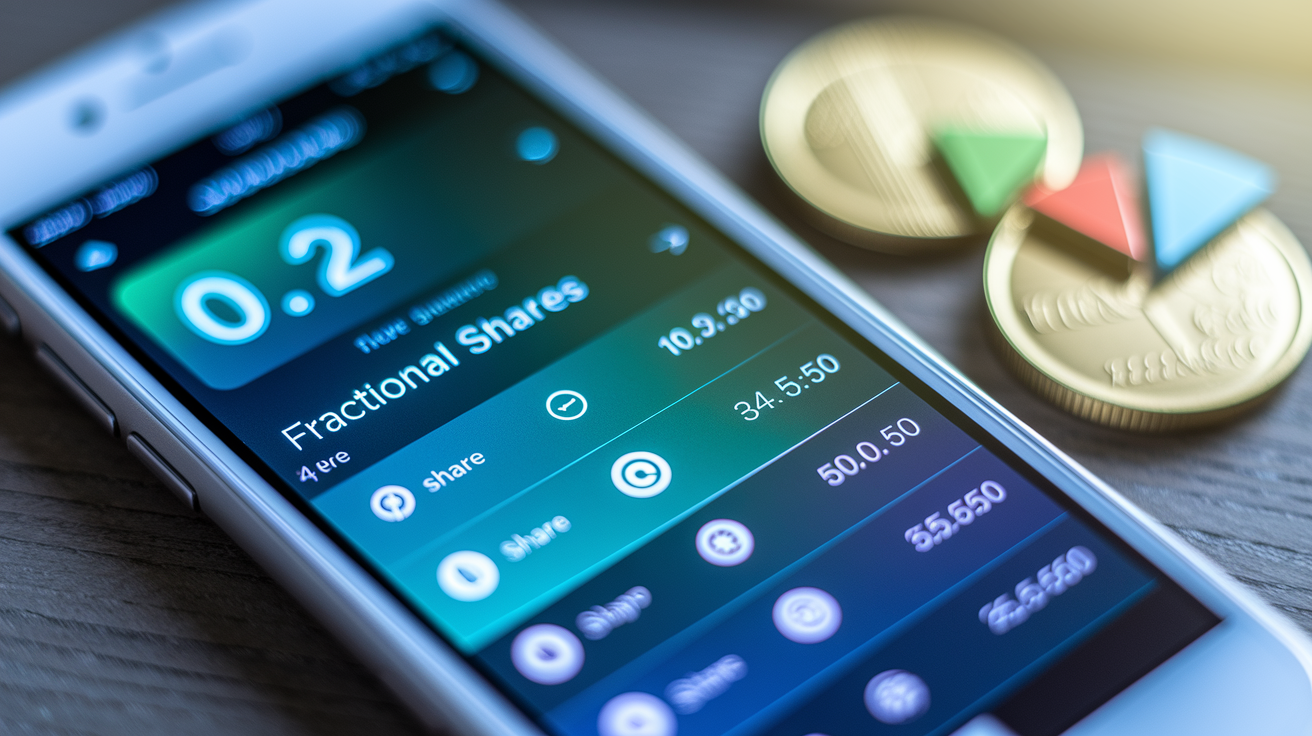
Fractional shares eliminate the old barrier of needing hundreds or thousands of dollars to buy a single share of stock. If one share costs $1,000 and you have $200, you can buy 0.2 shares. That’s 20% ownership of that share. Your $200 grows (or falls) at exactly the same rate as someone who owns ten full shares. Many commission free brokers now offer fractional investing with minimums as low as $1 to $5. You can own a piece of expensive, high quality companies without waiting years to save up the full share price.
Micro investing apps take this further by automating the process. Platforms like Acorns round up your everyday purchases to the nearest dollar and invest the spare change. Buy a coffee for $3.50, and $0.50 goes into your portfolio. You can also schedule recurring deposits of $5, $10, or $25 per week. The app handles the investing for you, typically in diversified portfolios of low cost ETFs. It’s designed to feel invisible, which helps you build the habit without decision fatigue.
Commission free brokers remove another traditional cost barrier. A decade ago, buying $50 worth of stock might have cost you a $7 trade commission. That ate 14% of your investment before you even started. Today, most major platforms charge $0 per trade and require no minimum balance to open an account. Every dollar you invest goes to work immediately, and you’re not penalized for contributing small amounts frequently.
| Platform | Minimum Investment | Key Feature |
|---|---|---|
| Acorns | $5 | Round-ups and recurring micro-deposits |
| Robinhood | $1 | Fractional shares, commission-free trades |
| Stash | $5 | Auto-investing and educational content |
| Fidelity / Schwab | $0 account minimum | Fractional shares on select stocks, full-service brokerage |
Low Cost Index Funds and ETFs for Small Investors

Index funds and exchange traded funds (ETFs) are collections of stocks or bonds that track a market index like the S&P 500 or the Nifty 50. Instead of researching and buying individual companies, you buy one fund and instantly own a diversified slice of hundreds or thousands of securities. An S&P 500 index fund holds shares in the 500 largest U.S. companies. Your $50 investment is spread across Apple, Microsoft, Johnson & Johnson, and 497 others.
The single most important feature of index funds and ETFs for small investors? Low fees. Expense ratios (the annual percentage fee the fund charges) directly reduce your returns. A fund charging 1.0% per year will cost you thousands of dollars over decades compared to a fund charging 0.05%. Lower fees mean more of your money stays invested and compounds. Many broad market index funds and ETFs now charge expense ratios under 0.10%, and some are as low as 0.03%. That difference compounds just like your returns do.
Why index funds and ETFs are ideal for small, steady contributions:
Low cost preserves long term growth by keeping more capital invested. Broad diversification reduces the risk of any single company tanking your portfolio. Easy automation through recurring purchases or robo advisors removes decision friction. No need to pick individual stocks, research earnings, or time the market. Small required contributions because many brokers let you buy fractional ETF shares with $1 to $10. Long term growth alignment, since broad indexes historically rise over multi decade periods.
Beginner Friendly Robo-Advisors with Low or No Minimums

Robo advisors are automated investment platforms that build and manage a diversified portfolio for you based on a short questionnaire about your goals, timeline, and risk tolerance. You answer a few questions. “When do you plan to retire?” “How would you feel if your account dropped 20% in a year?” The algorithm constructs a mix of low cost index funds and ETFs tailored to your answers. Then it handles all the ongoing work. Automatic contributions, dividend reinvestment, and periodic rebalancing to keep your asset allocation on track.
Many robo advisors now accept account minimums of $0 to $500, and some let you start recurring contributions with as little as $10 or $25 per month. Platforms like Groww, ET Money, and Kuvera (popular in India) and Betterment or Wealthfront (in the U.S.) offer beginner friendly interfaces, low management fees (typically 0.25% to 0.50% per year), and the ability to set up automatic monthly deposits that run in the background. For someone starting with $50 a month, a robo advisor removes the paralysis of choice. You don’t need to research funds, pick allocations, or remember to rebalance. The platform does it all, which makes it far easier to stay consistent and let compounding do its work.
Retirement Accounts for Small Monthly Contributions
Employer sponsored retirement plans like a 401(k) are accessible even if you can only contribute 1% of each paycheck. If you earn $3,000 per month, 1% is $30. That’s enough to get started and, critically, enough to capture any employer match your company offers. An employer match is free money. If your company matches 50% of your contributions up to 6% of salary, and you contribute just 1%, you’re leaving that match on the table. Start at 1% if that’s all you can afford, then raise it by 1% each year or whenever you get a raise.
Individual Retirement Accounts (IRAs) come in two main flavors. Traditional and Roth. A Traditional IRA lets you deduct contributions from your taxable income today (lowering this year’s tax bill), but you’ll pay ordinary income tax on withdrawals in retirement. A Roth IRA works in reverse. You contribute after tax dollars now, but all growth and withdrawals in retirement are tax free. Both types have the same annual contribution limits (check current IRS rules), and both penalize early withdrawals before age 59½ with a 10% IRS penalty plus any applicable taxes. For small investors, Roth IRAs are often simpler. If you’re in a low tax bracket now, paying tax today and locking in tax free growth forever is a smart trade.
The single most important rule? Always capture the full employer match if your company offers one. That match is an immediate, guaranteed return (often 50% to 100%) that you can’t replicate anywhere else. If you have to choose between an IRA and a 401(k) with a match, fund the 401(k) up to the match first, then open an IRA with any remaining dollars.
A simple contribution ladder:
Start at 1% to 3% of your paycheck in your employer plan to capture at least part of the match. Increase your contribution rate by 1% every year or after every raise. You won’t feel the difference in take home pay. Prioritize accounts with an employer match over accounts without one. The match is free money you can’t afford to skip.
How Small Contributions Grow: Compound Interest for New Investors

Compound interest is the mechanism that turns small, regular contributions into significant wealth over time. When you invest $100, that money earns a return. Say 7% in a year, or $7. The next year, you earn 7% on $107, not just the original $100. Add another $100 contribution, and now you’re compounding on $214. Over decades, the growth on your growth becomes larger than your contributions.
Real example. Invest $100 every month for 25 years. You’ll contribute $30,000 of your own money. At a 6% average annual return, your account grows to about $70,000. At 8%, roughly $96,000. At 10%, around $134,000. At 12%, approximately $190,000. The higher returns show the power of equity exposure and time, but even the 6% scenario more than doubles your principal.
Dollar cost averaging is the strategy of investing a fixed amount at regular intervals. $50 every month, $100 every two weeks, regardless of what the market is doing. When prices are high, your $50 buys fewer shares. When prices fall, the same $50 buys more shares. Over time, this smooths out your average purchase price and removes the emotional temptation to time the market. It also enforces discipline. You keep investing through volatility instead of freezing or panic selling when headlines turn scary.
The mechanics work beautifully with small amounts:
More shares are bought automatically when prices fall, lowering your average cost per share. Automatic discipline keeps you investing even when the market feels uncertain or scary. Works with contributions as small as $5 to $100 per month. No large lump sum required. Benefits amplify over decades as compounding accelerates and your cost basis smooths out across all market conditions.
Avoiding Common Beginner Mistakes When Starting Small

The biggest emotional mistake new investors make is trying to time the market. Waiting for the “perfect” entry point or selling in a panic when prices drop. Markets are volatile. Your account will fluctuate. If you invest $500 and it drops to $450 next month, that’s normal. Not a signal to sell. “Time in the market beats timing the market” is a cliché because it’s true. Staying invested through ups and downs has historically produced far better results than jumping in and out based on fear or headlines. Choose investments you can hold through a 20% or 30% drawdown without losing sleep, and commit to your recurring contribution schedule no matter what the news cycle says.
Hidden fees and expense ratios silently erode your returns. A mutual fund charging a 1.5% expense ratio might not sound expensive, but over 30 years that fee can cost you tens of thousands of dollars compared to an index fund charging 0.05%. Always compare expense ratios when choosing funds, and favor low cost index options unless you have a compelling reason to pay more. Commission free trading has eliminated most transaction fees, but management fees and expense ratios still matter. Especially when you’re investing small amounts where every dollar of growth counts.
Two priority mistakes can derail early progress. Investing before clearing high interest debt, and missing your employer match. If you’re carrying credit card debt at 18% APR, paying that off is a guaranteed 18% return. Better than any realistic investment. Pay down high rate debt first, then invest. On the flip side, if your employer offers a 401(k) match and you’re not contributing enough to capture it, you’re walking past free money. Even if it means contributing just 1% to start, do it. The match is an immediate return you can’t replicate anywhere else, and it’s the single easiest way to accelerate your progress when you’re working with small amounts.
Final Words
Start taking action: begin with $5–$100, open a low‑minimum account, pick a basic index fund or robo-advisor, and set up an automatic deposit.
Free up that small amount by trimming one nonessential expense, keep a tiny emergency buffer, and capture any employer match before investing more.
If you do one thing today, automate $25–$50 monthly. That simple habit is how to start investing with little money and lets compounding build real progress over time. You’ve got this.
FAQ
Q: Can I start investing with just $100?
A: You can start investing with just $100. Use a low‑minimum account or robo‑advisor, buy a low‑cost index fund or fractional shares, and set an automatic $5–$50 monthly contribution.
Q: How much do I need to invest to make $1000 a month?
A: To make $1,000 a month from investments, plan for roughly $300,000 at a 4% withdrawal rate; otherwise boost contributions, add side income, or accept higher investment risk.
Q: How should a beginner start investing with little money?
A: A beginner should start by opening a low‑minimum account, automating small monthly transfers ($5–$100), choosing a simple diversified index or robo‑advisor, and keeping an emergency fund first.
Q: How to turn $100 dollars into $1000 in a day?
A: Turning $100 into $1,000 in a day is unlikely and very risky. Safer short‑term options are flipping items, freelance gigs, or reselling, which can grow $100 faster without risky trading.