


Thinking of using a home equity loan for debt consolidation?
It can cut high interest from about 20% to under 8% and turn many bills into one predictable payment, but it also puts your house on the line.
If you have steady income, at least 15–20% equity, and a real plan to stop recharging cards, it’s often a smart move.
If you don’t, the risk of foreclosure and closing costs can wipe out the savings.
This post shows when it makes sense and the exact next steps.
Understanding Whether a Home Equity Loan Is a Smart Choice for Consolidating Debt

A home equity loan for debt consolidation lets you borrow against your home’s equity to wipe out high-interest debts. Credit cards, medical bills, personal loans. The big draw? You’re swapping interest rates that sit at 20% or more for a secured loan that usually runs in the single digits. You get your lump sum, pay off the creditors, then make one fixed monthly payment over 5 to 30 years.
But here’s the thing. When you consolidate unsecured debt with a home equity loan, you’re turning bills that couldn’t touch your house into a loan that absolutely can. Miss a credit card payment and your score tanks. Miss a home equity payment and you’re looking at foreclosure. So this isn’t really about whether you can save money on interest. It’s about whether you’re ready to commit to disciplined repayment and not just pile up new debt on those cards you just cleared.
A home equity loan makes sense when you meet certain conditions. Stable income, enough equity built up, and a real plan to fix whatever spending habits got you here. The math needs to work too. Your interest savings have to justify the closing costs, which usually run 2% to 5% of the loan amount.
When it’s a smart move:
- You’ve got multiple high-interest debts (credit cards above 15%, personal loans, medical bills) totaling at least $10,000 to $15,000. Makes the closing costs worth paying.
- You have 15% to 20% equity in your home and a credit score of 620 or better. Ideally above 680.
- Your income’s stable and your debt to income ratio sits under 43%. You’ve got breathing room.
- You’re confident you won’t run those credit cards back up after consolidation.
- The rate drop is big enough that even with a longer term, you’ll pay less total interest than you would’ve on your current debts.
How Home Equity Loans Function

A home equity loan is a second mortgage. You borrow a fixed chunk based on how much equity you’ve built. That’s the gap between what your house is worth and what you still owe on your primary mortgage. The lender gives you a lump sum. You pay it back in equal monthly installments at a fixed rate. Your home is collateral, which is why lenders can offer lower rates than unsecured credit. Default, and they’ve got the legal right to foreclose and sell the property.
Repayment terms usually run 5 to 30 years. Ten to 15 years is pretty common for debt consolidation. The fixed rate means your payment stays the same every month, so budgeting’s straightforward. Most lenders let you borrow up to 80% or 85% of your home’s appraised value, minus what you still owe on your first mortgage. If your home’s worth $400,000 and you owe $250,000, you might access somewhere between $60,000 and $90,000, depending on the lender’s loan to value limits and your credit.
The Debt Consolidation Process Step by Step
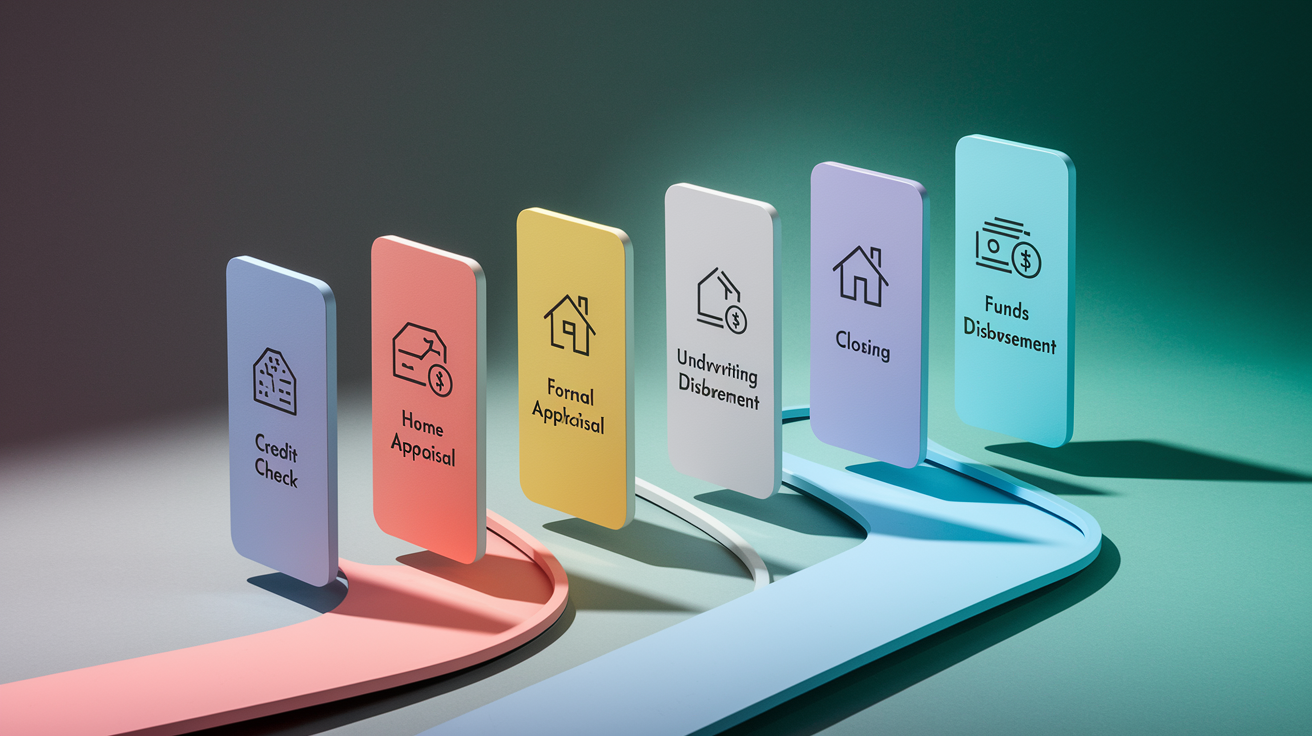
Before you apply, calculate your total debt payoff amount. List every balance, interest rate, and minimum payment. That gives you a clear target and shows whether the savings justify the effort and cost.
1. Check your credit score and home equity
Pull your credit report and confirm your score’s at least 620. Higher is better. Then estimate your home’s current market value and subtract your mortgage balance to see how much equity you have. Lenders will order an appraisal, but you need a rough idea now.
2. Shop multiple lenders
Compare offers from at least three sources. Banks, credit unions, online lenders. Look at interest rates, loan amounts, repayment terms, and closing costs. Some lenders let you prequalify with a soft credit check so you can compare without hurting your score.
3. Submit a formal application
Once you pick a lender, you’ll provide proof of income (pay stubs, tax returns), details on your existing debts, and permission for a home appraisal. Expect to pay an appraisal fee upfront. Typically $300 to $450.
4. Complete underwriting and close the loan
The lender reviews your financials, verifies your income and debts, and confirms your home’s value. If approved, you’ll sign closing documents. Federal law gives you three business days after closing to cancel without penalty if you change your mind.
5. Receive funds and pay off your debts
You’ll get the loan as a lump sum. Either a check or direct deposit. Some lenders will pay your creditors directly if you provide account details and payoff amounts. Either way, pay off those high-interest debts immediately to stop the interest clock.
6. Start making your consolidated monthly payment
Add the new payment to your budget. Set up automatic payments if you can. Track your progress, and resist the urge to use the credit cards you just paid off.
The whole thing usually takes two to six weeks from application to funding. Plan ahead if you need the money by a specific date.
Advantages of Using a Home Equity Loan for Debt Consolidation

The biggest advantage is cost. Swapping a 22% credit card balance for a 7% home equity loan can cut your interest expense by thousands of dollars, even if the repayment term’s longer. The fixed interest rate locks in your savings and protects you from future rate hikes, unlike variable rate credit cards or HELOCs.
Key benefits:
- Lower interest rates. Secured loans almost always carry lower rates than unsecured credit. Often by 10 to 15 percentage points.
- Single monthly payment. Instead of juggling multiple due dates and minimum payments, you make one predictable payment each month. Reduces the risk of late fees and missed payments.
- Fixed payments. Your monthly amount never changes. Easier to budget and plan. You know exactly when the loan will be paid off.
- Potential to borrow larger amounts. Home equity loans typically let you borrow $45,000 to $500,000 or more. Enough to consolidate significant debt and still have funds left for other needs if necessary.
Disadvantages and Risks to Consider

The most serious risk is losing your home. A home equity loan converts unsecured debt (where the worst consequence is damaged credit and potential lawsuits) into secured debt backed by your house. Can’t make the payments? The lender can foreclose. That’s not hypothetical. If your income drops, your expenses spike, or you fall back into old spending habits and can’t manage the new payment, you’re risking your housing stability.
Closing costs add up. Expect to pay 2% to 5% of the loan amount in fees. Origination, appraisal, title search, recording fees. On a $50,000 loan, that’s $1,000 to $2,500 out of pocket. If you’re consolidating a relatively small amount of debt, those costs can eat into your savings quickly.
Primary risks:
- Foreclosure exposure. Your home’s collateral. Default and you lose the house.
- Extended repayment timeline. Stretching repayment over 15 or 20 years can mean paying more total interest than your original debts, even at a lower rate.
- Temptation to re-accumulate debt. Once your credit cards are paid off, the temptation to use them again is real. Do that and you’ll end up with the home equity loan payment plus new credit card debt.
- Reduced home equity. You’re converting home value into cash. If property values drop or you need to sell, you may owe more than your home’s worth or have less equity for your next down payment.
Qualification and Requirements for a Home Equity Loan

Lenders want to see that you’ve got enough equity, stable income, and a track record of managing debt responsibly. Most require that you keep at least 15% to 20% equity in your home after the loan’s issued. In practical terms, that means they’ll lend you up to 80% or 85% of your home’s appraised value, minus your current mortgage balance. If your home’s worth $300,000 and you owe $200,000, you’ve got $100,000 in equity. At an 80% loan to value limit, the lender will cap your new loan at $40,000, leaving you with $60,000 in remaining equity.
Credit score thresholds vary by lender, but 620’s a common floor. Many lenders prefer scores of 680 or higher, and the best rates typically go to borrowers with scores above 720 or 740. If your score’s below 680, you might still qualify. Just expect higher interest rates or stricter debt to income requirements. Speaking of debt to income, lenders generally want your total monthly debt payments (including your existing mortgage, the new home equity loan, and any other obligations) to stay below 43% of your gross monthly income. Some lenders allow up to 50%, but lower’s always better.
You’ll need to document your income with recent pay stubs, W-2s, or tax returns if you’re self-employed. Lenders also want to see a history of on-time mortgage payments and stable employment. If you’ve had a foreclosure, bankruptcy, or significant late payments in the past few years, qualifying becomes harder. The underwriting process takes a few days to a few weeks, depending on how quickly you provide documents and how backed up the lender is.
Comparing Home Equity Loans to HELOCs and Personal Loans

A home equity loan isn’t the only way to consolidate debt. Understanding the alternatives helps you pick the right tool for your situation. The three most common options are home equity loans, home equity lines of credit (HELOCs), and personal loans. Different structures, costs, and risks for each.
A home equity loan gives you a lump sum with a fixed interest rate and a set repayment schedule. You know exactly what you’ll pay every month and when the loan will be paid off. A HELOC works more like a credit card. You get a revolving line of credit that you can draw from as needed during an initial draw period, usually 5 to 10 years. Interest rates on HELOCs are typically variable, meaning your payment can go up or down with market rates. After the draw period, you enter a repayment phase where you can no longer borrow and must pay back what you’ve used. HELOCs offer flexibility, but the variable rate adds uncertainty. If you need a specific amount for a one-time payoff, a home equity loan’s usually the better fit.
Personal loans are unsecured. You don’t put up your home as collateral. That’s a big plus if you’re not comfortable risking foreclosure. The downside? Higher interest rates. Often 6% to 36%, depending on your credit. Terms are typically shorter, ranging from 2 to 7 years, and loan amounts are usually smaller, often $1,000 to $50,000. Personal loans work well for smaller consolidations or when you don’t have enough home equity to borrow against. They also tend to have faster approval times (sometimes funding within a day or two) and lower or no closing costs.
| Option | Interest Type | Collateral | Best For | Typical Term |
|---|---|---|---|---|
| Home Equity Loan | Fixed | Your home | Large, one-time debt payoff with predictable payments | 5–30 years |
| HELOC | Variable | Your home | Ongoing or flexible borrowing needs; can manage rate risk | 10–30 years (draw + repayment) |
| Personal Loan | Fixed | None (unsecured) | Smaller consolidations; unwilling to risk home | 2–7 years |
Numerical Example: How Much You Could Save

Let’s say you’ve got $30,000 spread across three credit cards with an average interest rate of 22%. If you’re paying $750 a month, it’ll take you about 62 months to pay off the debt. You’ll pay roughly $16,500 in interest. Now compare that to a home equity loan at 7.5% over 10 years. Your monthly payment drops to about $356, and you’ll pay around $12,720 in interest over the life of the loan. Even after paying $1,500 in closing costs, you still save over $2,000 in total interest and cut your monthly payment nearly in half.
The savings get even better if your credit card rates are higher or if you stretch the home equity loan to 15 years. A 15-year term at the same 7.5% rate brings your payment down to around $278 per month, though you’ll pay more total interest (about $20,000). The longer term costs you more in the long run, but if monthly cash flow’s tight, the lower payment might be worth it.
| Scenario | Monthly Payment | Total Interest Paid | Time to Payoff |
|---|---|---|---|
| Current Credit Card Debt ($30,000 @ 22% APR) | $750 | ~$16,500 | 62 months |
| Consolidated With Home Equity Loan ($30,000 @ 7.5%, 10 years) | $356 | ~$12,720 | 120 months |
| Total Savings (After $1,500 Closing Costs) | — | ~$2,280 | — |
How to Apply for a Home Equity Loan

Applying for a home equity loan takes more paperwork and time than opening a credit card, but the process is straightforward if you’re prepared. Start by gathering your financial documents. Recent pay stubs, W-2s or tax returns for the past two years, a list of your current debts with account numbers and balances, and your most recent mortgage statement. Lenders want to see proof of income, employment history, and a clear picture of your existing obligations.
Once you’ve chosen a lender, you’ll complete a formal application and authorize a credit check. The lender will also order a home appraisal to confirm your property’s current market value. Appraisals typically cost $300 to $450 and take one to two weeks to schedule and complete. Underwriting happens next. The lender reviews your credit, income, debts, and the appraisal to decide whether to approve your loan and at what rate. This stage can take anywhere from a few days to a few weeks, depending on the lender’s workload and how quickly you respond to any requests for additional documentation.
Application steps:
- Gather documents. Collect proof of income, tax returns, debt statements, and your mortgage statement before you start.
- Choose and compare lenders. Get quotes from at least three lenders. Compare interest rates, fees, and loan terms.
- Submit your application. Fill out the application, authorize a credit check, and pay for the appraisal if required upfront.
- Complete underwriting. Respond quickly to any lender requests for additional documents or clarification. The faster you reply, the faster you close.
- Close and receive funds. Sign the closing documents, wait through the three-day rescission period, then receive your lump sum. Pay off your debts immediately to stop the interest from accruing.
Final Words
We covered whether a home equity loan is a smart move, how these loans work, the step-by-step consolidation process, plus benefits, risks, qualification rules, comparisons, a numeric example, and how to apply.
If you’re weighing options, here’s the rule: if you have high-interest cards, enough equity, and steady income, a home equity loan can cut interest and simplify payments. But it does put your home at risk, so don’t rush.
If you only do one thing, run the numbers and compare alternatives. Choose a home equity loan for debt consolidation when the math and your comfort with risk line up. You can make steady progress—start with one small step this week.
FAQ
Q: How much would a $50,000 home equity loan cost per month?
A: A $50,000 home equity loan will cost roughly $530/month at 5% over 10 years, or about $395/month at 5% over 15 years; your actual payment depends on interest rate and term.
Q: How to get rid of $30,000 credit card debt?
A: To get rid of $30,000 credit card debt, stop new charges, target highest-rate cards (debt avalanche), make extra payments, negotiate rates, and consider consolidation or a loan if monthly payments stay affordable.
Q: What should you not use a home equity loan for?
A: You should not use a home equity loan for short-term or risky spending like vacations, nonessential purchases, speculative investments, or ongoing bills since you could lose your home for expenses that don’t build equity.
Q: What type of loan is best for debt consolidation?
A: The best loan for debt consolidation depends: use a home equity loan for lower fixed rates if you accept collateral; pick an unsecured personal loan or HELOC if you prefer no collateral or need flexible access.