


Think a “debt consolidation loan” is a magic fix for credit card chaos?
Not exactly.
Most debt consolidation loans are just personal loans dressed up with a purpose.
The real difference shows up in loan limits, APR structure, and whether the lender wants collateral.
This post will show when consolidation actually saves you, how to compare the new loan’s APR and fees to the weighted average of your debts, and a simple decision rule you can use in five minutes.
Key Comparison Insights for Choosing Between These Loan Types
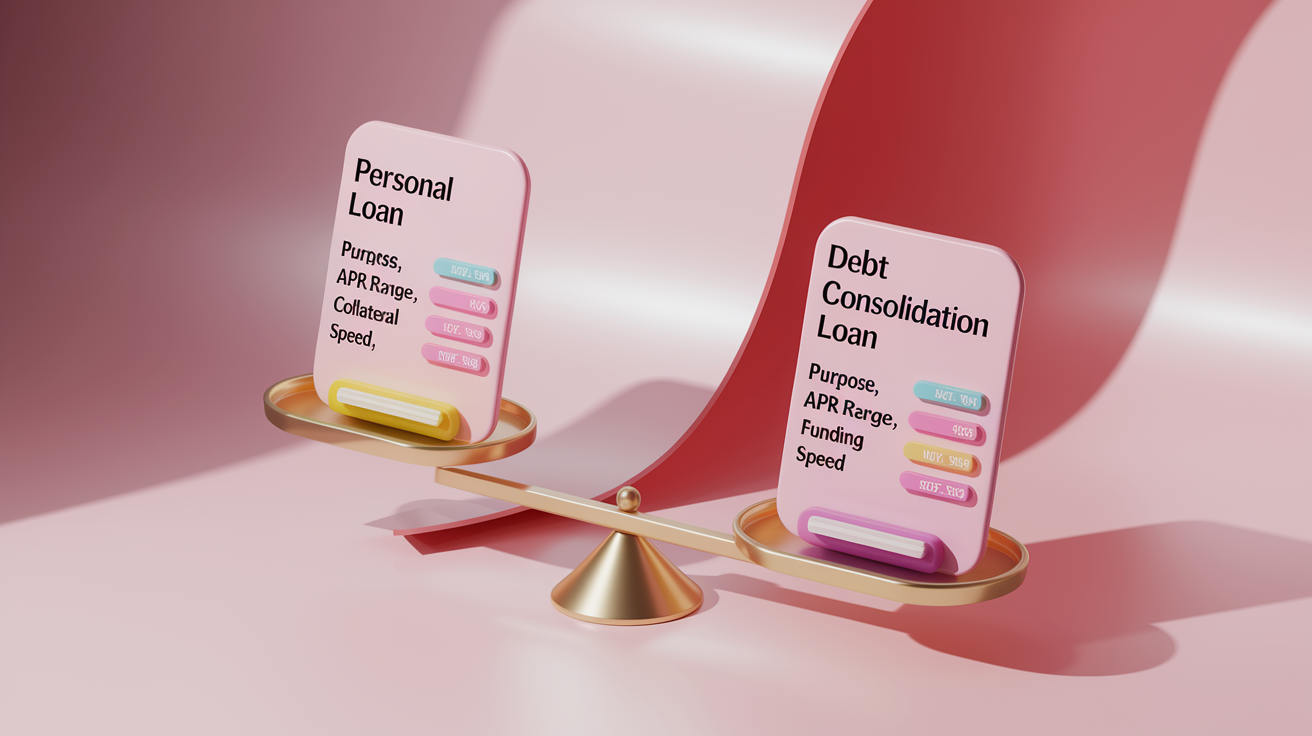
A debt consolidation loan is usually just a personal loan marketed for paying off high-interest debts, especially credit cards. Not every personal loan gets used for consolidation, but most lenders let you apply the funds however you want, including wiping out balances. The distinction matters because some lenders offer products specifically labeled “debt consolidation loan,” which might come with higher loan limits or features like direct creditor payoff.
The bottom line: both loan types function almost identically, with fixed monthly payments over terms that typically run 12 to 84 months. The real difference shows up in loan limits, APR structures, and whether the lender requires collateral. To see if consolidation will actually save you money, compare the new loan’s APR and fees against the weighted average APR of your current debts. If the new rate is lower and the fees don’t erase your savings, consolidation can work. If not, you’ll pay more over time even if your monthly payment drops.
| Feature | Comparison |
|---|---|
| Purpose | Personal loan: any use (purchase, emergency, debt payoff). Debt consolidation loan: specifically marketed to combine multiple debts into one payment. |
| APR Range | Personal loan: roughly 6%–36%. Debt consolidation loan: similar, typically 6%–20% for good credit, higher for subprime. |
| Average APR Examples (Q4 2025) | 24-month personal loan: 11.65%. Credit cards (paying interest): 22.30%. |
| Term Lengths | Both: commonly 12, 24, 36, 48, 60, 72, or 84 months. |
| Loan Limits | Personal loan: $1,000–$50,000 (some lenders up to $100,000+). Debt consolidation loan: $5,000–$100,000 depending on lender and product. |
| Fees | Origination fees: 1%–6% (some $0). Prepayment penalties: rare on unsecured personal loans, possible on secured products. |
| Eligibility | Both require credit check, income verification, and stable payment history. Better credit scores unlock lower APRs. |
| Collateral | Personal loan: typically unsecured. Debt consolidation loan: may be secured (home, car) for lower APR. |
| Credit Impacts | Both: hard inquiry (temporary 2–10 point drop), lower utilization if paying off cards, new account reduces average age. |
| Funding Speed | Approval in minutes; funds arrive same day to several days depending on verification and lender. |
Understanding Personal Loans for Borrowing and Debt Management
A personal loan is an unsecured installment loan issued by a bank, credit union, or online lender. You get a lump sum upfront, then repay it in fixed monthly payments over a set term. Most personal loans don’t require collateral, which means approval depends on your credit history, income, and existing debts. APRs typically range from about 6% to 36%, with the best rates reserved for borrowers with credit scores above 720.
Personal loans are flexible. You can use the money for almost anything, which is why people apply for them to cover home repairs, medical bills, weddings, car purchases, or to pay off high-interest debt. Terms commonly run 12 to 84 months. Loan amounts often fall between $1,000 and $50,000, though some lenders go higher for well-qualified borrowers.
Some lenders offer secured personal loan options, where you pledge savings, a car, or another asset as collateral. These secured versions usually carry lower APRs because the lender has less risk, but if you miss payments you can lose the collateral. Unsecured loans are more common. Expect higher rates if your credit score is below 660.
Common uses for personal loans include:
Home improvement projects, major purchases like appliances or furniture, medical or dental expenses, emergency expenses (car repair, urgent travel), and paying off high-interest credit card balances.
Lenders typically charge an origination fee, which can run anywhere from 1% to 6% of the loan amount or be waived entirely. That fee is usually deducted from your loan proceeds, so if you borrow $10,000 with a 3% origination fee, you’ll receive $9,700 but owe $10,000 plus interest.
How Debt Consolidation Loans Work to Combine Multiple Balances
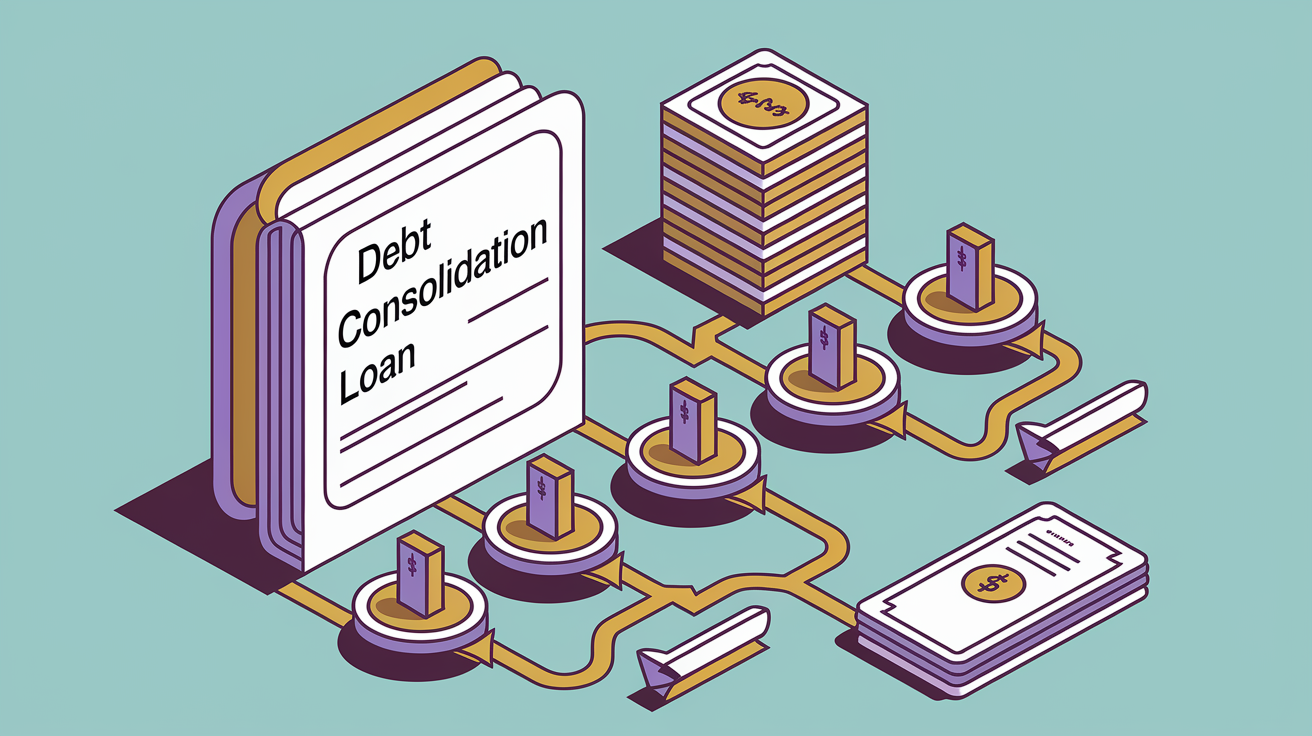
A debt consolidation loan is a loan specifically used to pay off multiple existing debts, replacing them with a single monthly payment. In most cases, it’s just a personal loan, but some lenders market dedicated consolidation products that may offer higher loan limits, direct creditor payoff, or slightly different terms.
The idea is simple: instead of juggling five credit card payments at different interest rates and due dates, you take out one loan large enough to cover all five balances. You use the loan proceeds to pay off those cards, leaving you with one fixed monthly payment at (ideally) a lower interest rate. This only saves money if the new loan’s APR is lower than the weighted average APR of your current debts and the origination or other fees don’t wipe out the savings.
Debt consolidation loans can be unsecured or secured. Unsecured versions work like standard personal loans. Secured versions, such as home equity loans or HELOCs, use your home as collateral and often offer lower APRs, commonly in the 4% to 8% range. But they carry the risk of foreclosure if you default. Loan limits for debt consolidation products often reach $50,000 to $100,000, making them suitable for borrowers with larger balances.
Here’s how the typical consolidation process works:
List all your current balances, interest rates, and minimum monthly payments. Check your credit score to estimate what APR you might qualify for. Apply with one or more lenders. Many offer prequalification with a soft credit pull that won’t affect your score. Compare approved offers for APR, term, monthly payment, and fees. Accept the best offer and complete the application. The lender verifies your income and identity, then disburses funds. Some lenders pay your creditors directly, others deposit the money in your account. You make fixed monthly payments to the new lender over the agreed term. Track your progress and avoid re-using paid-off credit cards to prevent accumulating new debt.
Funding timelines vary. Some online lenders approve and fund within the same day if your documentation is in order. Others take several business days for verification and disbursement.
Interest Rates, Fees, and Total Cost Differences Between Loan Types
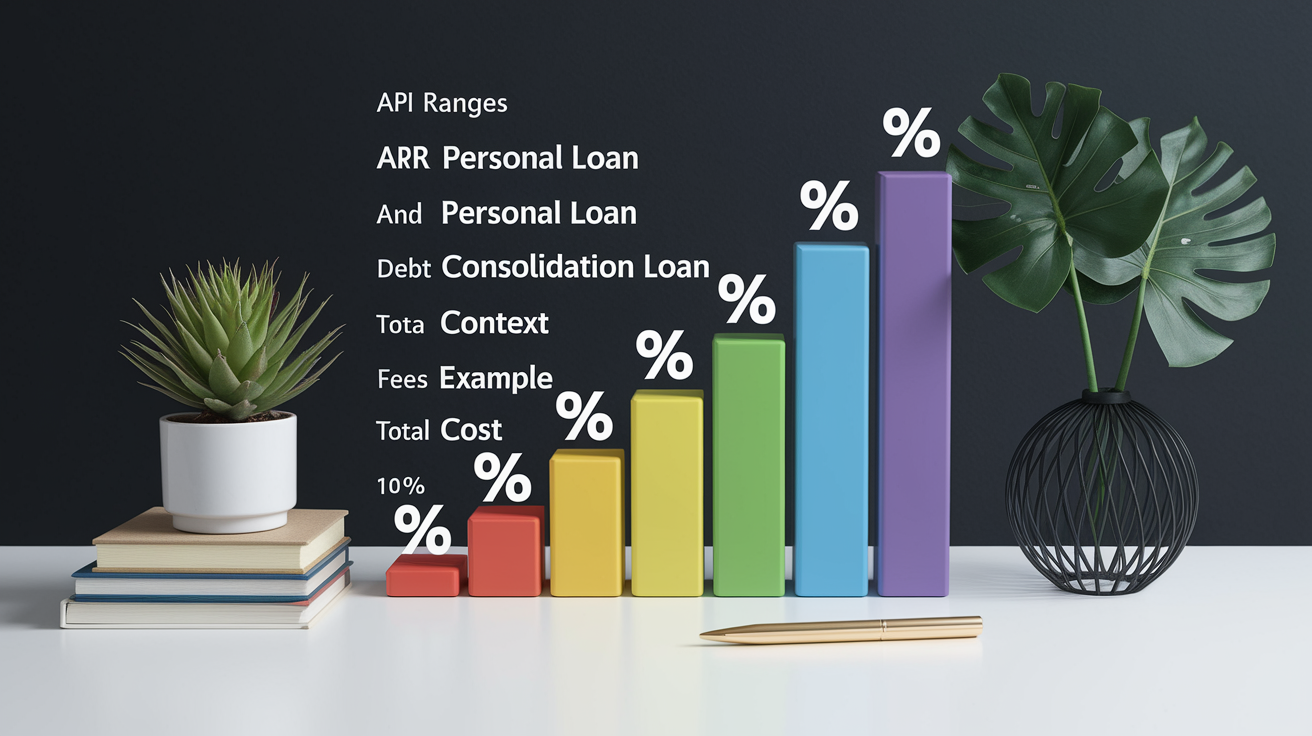
Interest rates are the biggest factor in deciding whether consolidation makes sense. Unsecured personal loans typically carry APRs between 6% and 36%, with most borrowers landing somewhere in the middle depending on credit score and income. If you have excellent credit, you might secure a rate in the single digits or low double digits. Subprime borrowers with scores below 600 often see rates approaching 25% to 36%, which can be higher than some credit card rates.
Debt consolidation loans marketed specifically for that purpose often fall into a similar APR range, roughly 6% to 20% for good to excellent credit. If the consolidation product is secured by home equity, APRs can drop to 4% to 8%, but you’re putting your house at risk. Balance transfer credit cards offer a different approach: 0% introductory APR for periods up to 21 months, but they charge a balance transfer fee of 3% to 5% upfront, and the ongoing rate after the promo period can exceed 20%.
Origination fees range from 0% to 6% on most personal and consolidation loans. A 5% fee on a $20,000 loan means you’ll receive $19,000 but owe $20,000 plus interest. Some lenders waive origination fees but may offer slightly higher APRs to compensate. Prepayment penalties are rare on unsecured personal loans, but some home equity products include them, so confirm before signing.
| Cost Component | Personal Loan | Debt Consolidation Loan |
|---|---|---|
| Typical APR Range | 6%–36% | 6%–20% (unsecured, good credit); 4%–8% (secured by home) |
| Term Options | 12–84 months | 12–84 months |
| Origination Fee | 1%–6% or $0 | 1%–6% or $0 |
| Prepayment Penalty | Rare | Rare on unsecured; possible on secured |
| Fixed vs. Variable Rate | Mostly fixed | Fixed on personal loan type; variable possible on HELOC |
| Balance-Transfer Fee (alternative) | N/A | 3%–5% if using balance transfer card instead |
| Intro 0% APR | No | No (except balance transfer cards, up to 21 months) |
Here’s a quick numeric comparison: say you consolidate $10,000 of credit card debt at an average 22% APR into a personal loan at 11% APR over 36 months. At 22%, you’d pay roughly $370 per month and about $3,320 in interest over three years. At 11%, you’d pay about $327 per month and roughly $1,772 in interest. That’s a savings of approximately $1,548 over 36 months, minus any origination fee. If the lender charges a 3% origination fee ($300), your net savings drop to around $1,248, still a solid improvement.
Credit Score Effects When Using Personal or Consolidation Loans
Applying for any loan triggers a hard credit inquiry, which can lower your credit score by roughly 2 to 10 points for a few months. That dip is temporary if you continue making on-time payments. Consolidating credit card debt into an installment loan also changes your credit mix and can reduce your revolving credit utilization, which is a major scoring factor. Lower utilization often boosts your score over the next 6 to 12 months, sometimes offsetting the initial inquiry hit.
Opening a new loan account lowers the average age of your credit accounts, which can have a mild negative effect on your score. If you close the paid-off credit card accounts, you lose their history and available credit, which can further reduce your score. Most experts recommend keeping old cards open with a zero balance to maintain account age and available credit, as long as you’re not tempted to run up new balances.
Here’s how consolidation can affect your credit in both directions:
Hard inquiry causes a small, temporary score drop of about 2 to 10 points. Lower revolving utilization happens when you pay off credit cards, which drops your utilization ratio and often boosts your score significantly over several months. New account age gets affected because the new loan reduces your average account age, which can slightly lower your score. Credit mix improves when you add an installment loan to a credit profile heavy on revolving accounts. Payment history builds positively if you make on-time payments on the new loan. Missed payments can cause serious damage. Closing accounts makes you lose available credit and history if you close paid-off credit cards, which may hurt your score more than the consolidation helps. High installment balance can be viewed negatively by some scoring models, though the effect is smaller than high revolving balances. Recovery timeline shows the initial inquiry impact fading within 3 to 6 months, while utilization improvements show up within one or two billing cycles.
Missing a single payment on your consolidation loan can drop your score by 50 to 100 points or more, depending on your starting score and credit history. Set up automatic payments and make sure your budget can handle the new monthly amount.
Pros and Cons of Using Personal Loans for Debt Consolidation
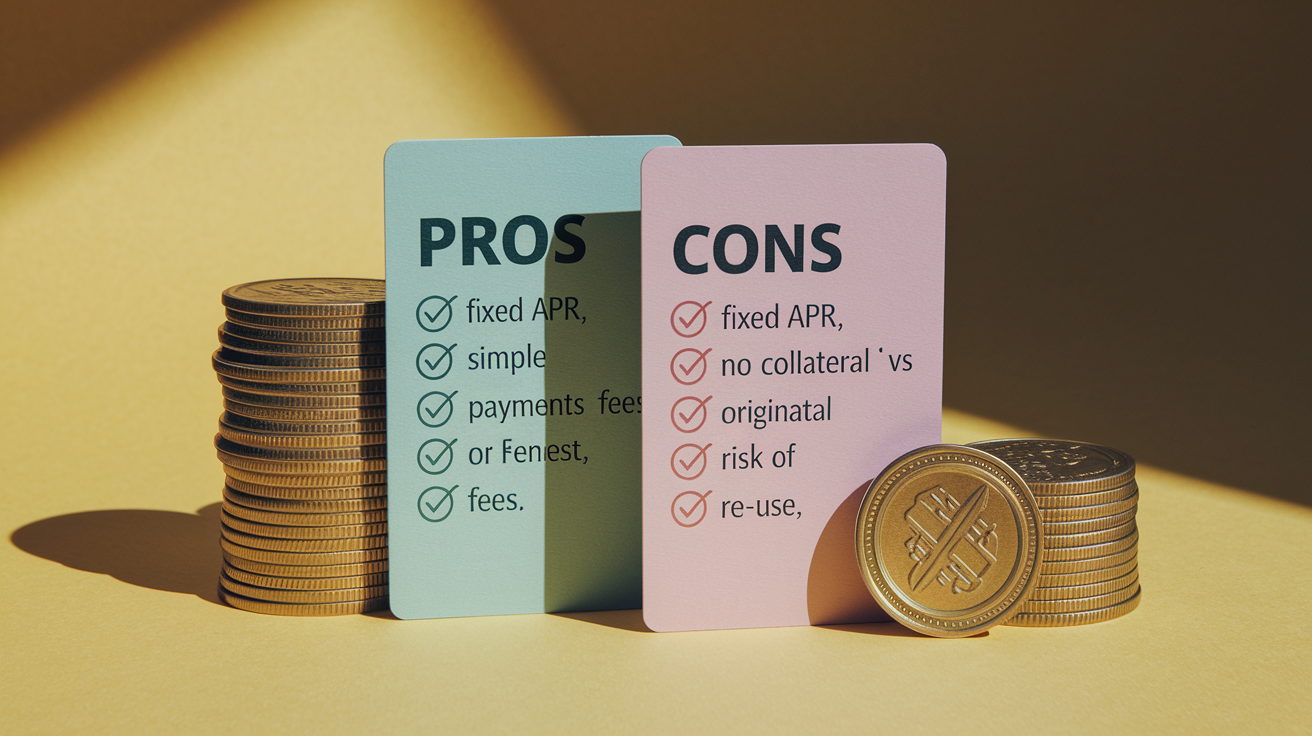
Personal loans offer a straightforward way to combine multiple debts without putting up collateral or navigating complex home equity products. The biggest advantages are fixed interest rates, predictable monthly payments, and faster approval times compared to secured loans.
Advantages of using a personal loan for consolidation:
Fixed APR means your interest rate won’t change, so you always know what you’ll pay. One monthly payment replaces multiple due dates and amounts, simplifying your budget. Unsecured structure means no risk to your home or car if you fall behind. Faster funding, often within the same day to a few business days. Can improve credit utilization if you pay off revolving credit card balances. Builds positive payment history if you make on-time payments.
Disadvantages and risks:
Origination fees up to 6% can reduce net savings, especially on smaller loans. Higher APRs for borrowers with fair or poor credit may not save money compared to current debts. Extending the repayment term to lower monthly payments can increase total interest paid, even with a lower APR. Temptation to re-use paid-off credit cards can lead to accumulating new debt on top of the loan. Hard inquiry and new account temporarily lower your credit score. If you can’t qualify for a rate lower than your current debts, consolidation won’t save money.
Your monthly budget is the deciding factor. A lower APR is great, but if the new monthly payment still stretches your income too thin, you risk missing payments. Run the numbers before you apply: add up your current minimum payments, compare them to the proposed loan payment, and make sure you have room for unexpected expenses.
Pros and Cons of Dedicated Debt Consolidation Loan Products
Debt consolidation loan products designed specifically for combining debts often come with higher loan limits and features like direct creditor payoff, where the lender sends payments straight to your credit card companies. Some are unsecured, functioning exactly like a personal loan, while others are secured by home equity or another asset.
Advantages of dedicated consolidation products:
Higher loan limits, often $50,000 to $100,000, make them suitable for large debt loads. Direct creditor payoff option removes the step of manually paying off each account. Secured versions (home equity loans or HELOCs) may offer APRs as low as 4% to 8%. Longer available terms can reduce monthly payments if needed. Some lenders specialize in consolidation and may offer guidance or budgeting tools.
Disadvantages and cautions:
Secured consolidation loans put your home or car at risk if you default. Closing costs on home equity products can run several thousand dollars, eroding savings. Longer repayment terms mean you’ll pay more interest over the life of the loan, even at a lower APR. If you don’t address spending habits, you may accumulate new debt on paid-off cards. Approval for high loan amounts requires strong credit and significant equity or income.
Secured consolidation makes sense only if you have substantial equity, can qualify for a meaningfully lower rate, and you’re confident you won’t miss payments. The savings from a 4% home equity loan versus a 12% personal loan can be significant, but the risk of foreclosure is real.
Choosing Between a Personal Loan and a Debt Consolidation Loan
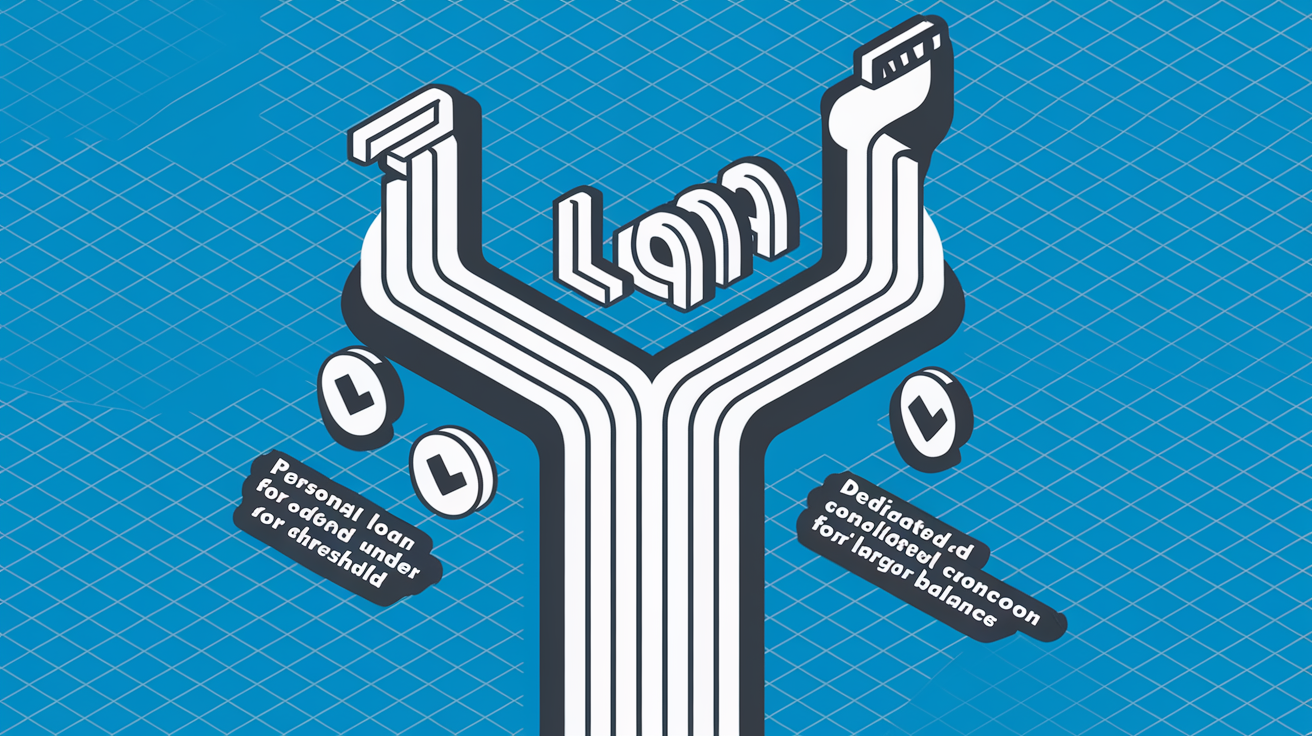
The choice between a standard personal loan and a dedicated consolidation product depends on how much debt you’re carrying, what APR you can qualify for, and whether you’re willing to use collateral. For most borrowers, the products function identically, so focus on finding the lowest APR with manageable monthly payments and minimal fees.
Use a personal loan if you have less than $50,000 in debt, qualify for a competitive unsecured rate, and want to avoid putting up your home or car as collateral. Personal loans are simpler, faster to close, and carry no risk to your assets. If your credit score is above 660 and you can secure an APR at least 3 to 5 percentage points lower than your current debts, a personal loan will save you money.
Choose a dedicated debt consolidation loan, especially a secured version, if you need to consolidate more than $50,000, have significant home equity, and can handle the closing process and associated costs. Secured consolidation loans offer lower APRs, but only if you’re willing to accept the risk. If your credit is poor and unsecured rates are too high, a secured option might be your only path to a lower rate.
Real-World Examples and Savings Estimates
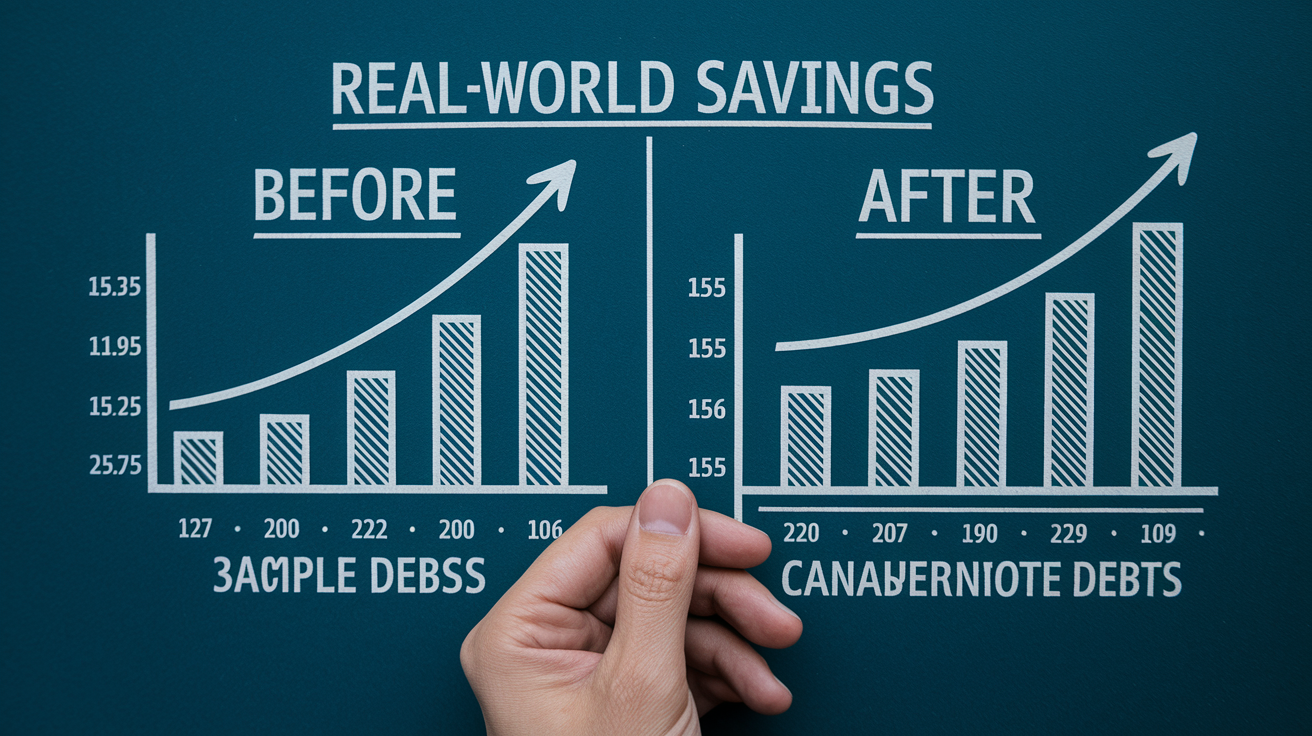
Consolidating $12,000 of credit card debt at 22.30% APR into a 24-month personal loan at 11.65% APR results in a monthly payment of about $563 instead of $625. Over 24 months, you’ll pay roughly $13,512 total instead of $14,990, saving approximately $978 in interest.
A larger example: $15,000 at 20% APR over 48 months would cost about $456 per month and $21,916 total, with $6,916 in interest. Refinancing into a 10% APR loan for 48 months drops the payment to around $381 per month and $18,270 total, with $3,270 in interest. That’s a savings of approximately $3,646.
Quick decision checklist:
Loan size under $50,000: standard personal loan usually sufficient. APR savings of at least 3 to 5 percentage points means consolidation is likely worth it. Origination fees or transfer fees should be included in total cost calculations. Collateral available and acceptable risk: consider secured consolidation for lower rates. Credit score above 660 qualifies you for better unsecured rates.
Step-by-Step Guide for Getting a Debt Consolidation Loan
Getting approved and funded for a consolidation loan takes a few simple steps if you have your documentation ready. Most lenders offer online applications, and many can deliver funds within a day or two of approval.
Start by listing all your current balances, interest rates, and minimum monthly payments. This gives you a clear picture of your total debt and the weighted average APR you’re currently paying. Next, check your credit score using a free service or your credit card provider’s app. This helps you estimate what APR you’re likely to qualify for.
Gather your current debt details: balances, APRs, monthly payments. Check your credit score and review your credit report for errors. Prequalify with multiple lenders using soft credit pulls that won’t affect your score. Compare APRs, monthly payments, loan terms, and origination fees across offers. Choose the best offer and complete the full application. Submit income verification (pay stubs, tax returns, bank statements) and identification. Wait for final approval and funding, which can take minutes to several business days. Use the funds to pay off your existing debts, or let the lender pay creditors directly if that option is available.
Prequalification is critical. It lets you shop rates without triggering multiple hard inquiries. Once you’ve chosen a lender and submitted a full application, the lender will run a hard pull and verify your income, employment, and identity. Have recent pay stubs, bank statements, and a government ID ready to speed up the process.
Alternatives to Personal or Consolidation Loans for Managing Debt
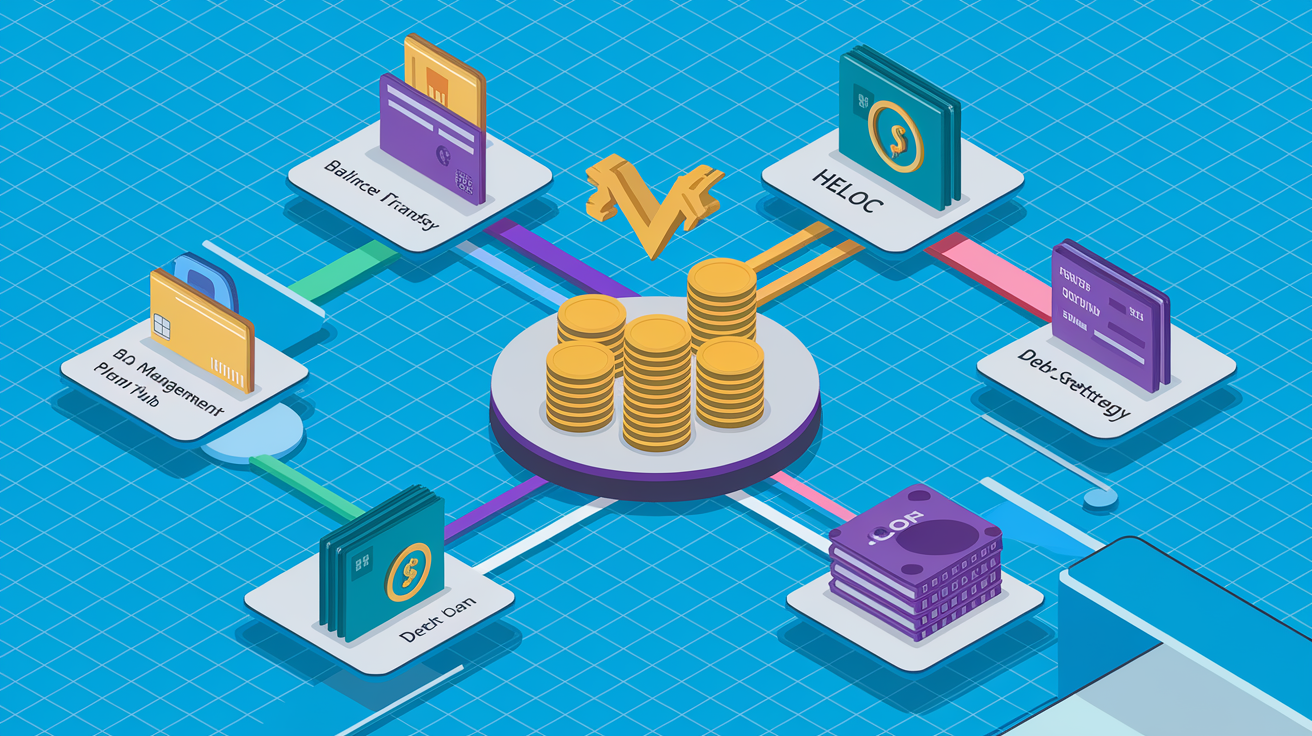
Personal and consolidation loans aren’t the only way to tackle multiple debts. Depending on your credit, income, and goals, other options might save more money or fit your situation better.
Balance transfer credit cards offer 0% introductory APR periods lasting up to 21 months, giving you time to pay down debt interest free. You’ll pay a balance transfer fee of 3% to 5% upfront, and the promotional rate expires after the intro period, so you need a plan to pay off the balance before the regular APR kicks in. This option works best if you can pay the full balance during the promo period.
A home equity loan or HELOC uses your home as collateral and typically offers APRs in the 4% to 8% range, lower than most unsecured loans. The trade-off is risk: if you default, you can lose your home. Closing costs and application fees can run several thousand dollars, so the savings need to justify the upfront expense.
A debt management plan (DMP) is a structured repayment program run by a nonprofit credit counseling agency. You make one monthly payment to the agency, which distributes funds to your creditors. DMPs typically take 3 to 5 years to complete and may require you to close or stop using your credit cards. Interest rates may be reduced through creditor agreements, but you won’t see the same immediate simplification as a consolidation loan.
Other alternatives to consider:
Balance transfer credit card: 0% APR for 6 to 21 months, 3% to 5% transfer fee. Best if you can pay off the balance during the promo period.
Home equity loan or HELOC: APRs around 4% to 8%, secured by your home, risk of foreclosure if you default.
Debt management plan (DMP): nonprofit counseling, 3 to 5 year repayment, may lower interest rates but requires closing credit cards.
Debt settlement: negotiating reduced balances with creditors. Damages credit significantly and involves fees, usually a last resort.
Low-interest personal line of credit: flexible borrowing up to a limit, interest only on what you use, but rates can be variable.
401(k) loan: borrow from your retirement account at low rates, but you risk your retirement savings and may face taxes and penalties if you leave your job.
Each alternative has trade-offs. Balance transfers work if you have discipline and can pay off the balance quickly. Home equity products offer low rates but put your house on the line. DMPs provide structure but limit your credit use during the plan. Debt settlement should be a last resort because it severely damages your credit and doesn’t guarantee success.
Final Words
Compare costs first: we walked through what personal loans and debt consolidation loans are, how consolidation works, interest and fee differences, credit-score effects, pros and cons, when to pick each, a step-by-step application process, and alternatives.
Next steps: total your balances, calculate your weighted average APR, prequalify to see real offers, and pick the option that lowers your total cost. When deciding personal loan vs debt consolidation loan, favor the choice that reduces interest and fits your timeline and comfort with risk. You’ll likely lower payments and feel more in control.
FAQ
Q: What is the difference between a personal loan and a debt consolidation loan?
A: The difference is a debt consolidation loan is a personal loan used to pay multiple debts at once; some consolidation products offer higher limits, can be secured, and may pay creditors directly.
Q: How much would a $30,000 personal loan cost per month?
A: A $30,000 personal loan would cost roughly $637 per month at 10% APR for 60 months, or about $835 per month at 15% APR for 48 months; exact amounts depend on APR and term.
Q: Why does Dave Ramsey say not to consolidate debt?
A: Dave Ramsey says not to consolidate debt because consolidation can mask spending problems, lengthen repayment with more interest or fees, risk your home if secured, and doesn’t replace discipline like the snowball method.
Q: How much personal loan can I get on a $70,000 salary?
A: On a $70,000 salary you might qualify for a $10,000–$50,000 unsecured personal loan depending on credit score, debts, and DTI (debt-to-income); secured loans or home equity allow larger limits.