


What if one “best” way to consolidate debt doesn’t exist?
Think one fast trick will fix your balances? It won’t.
The right move depends on your credit score, the type of debt, and how quickly you can pay it off.
This post gives a simple decision rule and clear next steps you can use today.
Balance transfer if you can finish in the 0% window.
Personal loan for steady fixed payments.
Home equity only if you can risk your house.
DMPs when credit is low.
First step: check your credit and total balances.
Choosing the Most Effective Method for Debt Consolidation

Debt consolidation moves multiple high-interest balances onto a single account or payment structure, usually with a lower interest rate or simpler monthly schedule. The goal is to reduce total interest, make payments more manageable, and stop juggling due dates across several accounts. It doesn’t erase what you owe. But it can create breathing room if you’re watching fees pile up every month.
The best consolidation method depends on your credit score, the type of debt you’re carrying, how much you owe, and how fast you can realistically pay it all off. Balance transfer credit cards offer 0% APR introductory periods (typically 9 to 21 months) and work well if you’ve got good credit and can pay down the balance before the promotional rate expires. Personal consolidation loans give you fixed monthly payments over a set term (usually up to 7 years) and can lower your APR if your credit is strong, though origination fees can reach 10% of the loan amount. Home equity loans or HELOCs let you borrow against your home, often at lower rates, but put your house at risk if you can’t keep up. Nonprofit debt management plans (DMPs) consolidate unsecured debts into a single monthly payment through a credit counselor, often with negotiated interest rate reductions, and typically last 3 to 5 years with setup fees around $30 to $50 and monthly fees of $20 to $75.
When you’re weighing your options, focus on these four things:
- Credit score — some methods require good to excellent credit; others work even if your score is low
- Debt type — unsecured credit cards respond best to balance transfers, personal loans, and DMPs; secured debts like a mortgage fit different strategies
- Interest cost — calculate the total you’ll pay in interest and fees over the full repayment period, not just the monthly amount
- Repayment timeline — short term fixes like balance transfers require discipline to finish before the promo expires; longer term options need consistent payments over years
Key Cost and Risk Factors That Distinguish Consolidation Methods

Each consolidation option carries a different cost structure and level of risk. Balance transfer credit cards charge a one time transfer fee (usually 3% to 5% of the amount moved), then offer months of zero interest. But if you don’t pay off the balance before the intro period ends, the remaining debt gets hit with a standard credit card APR that can easily reach 20% or higher. Personal consolidation loans lock in a fixed interest rate and fixed monthly payment for the life of the loan, making budgeting predictable, but some lenders tack on origination fees at the start. Home equity loans and HELOCs deliver the lowest interest rates because your home backs the loan. Yet defaulting can trigger foreclosure. Debt management plans through nonprofit counselors bundle your unsecured debts without requiring you to borrow new money, so you avoid another hard credit inquiry or collateral risk. Instead, you pay the counselor a monthly fee while they distribute payments to your creditors under negotiated terms. Borrowing from a 401(k) sidesteps credit checks entirely and keeps interest payments inside your own retirement account, but you lose compound growth while the loan is outstanding. And unpaid balances can become taxable distributions with a 10% early withdrawal penalty if you leave your job.
Cost differences add up. A 3% balance transfer fee on $10,000 is $300 upfront. A personal loan with a 5% origination fee on the same $10,000 costs $500 before you make the first payment. Home equity loans often require an appraisal and closing costs that can run 2% to 5% of the loan amount, or $200 to $500 on a $10,000 loan, plus potential annual HELOC fees. DMPs charge recurring monthly service fees that can total several hundred dollars over a multi-year program but may reduce your interest rates by half and eliminate late fees altogether. Risk profiles vary just as much. Unsecured methods (balance transfers, personal loans, DMPs) won’t take your property, but missed payments damage your credit and can lead to collections. Secured methods (home equity) offer lower rates in exchange for putting your home on the line.
| Method | Best For | Typical Costs | Major Risk |
|---|---|---|---|
| Balance Transfer Card | Good/excellent credit; can pay off within 9 to 21 months | 3% to 5% transfer fee; high APR after intro expires | Debt rebounds if not paid before intro ends; temptation to charge new purchases |
| Personal Loan | Moderate to good credit; need fixed payments over several years | Origination fee up to around 10%; interest over loan term | Hard to qualify for low APR with weaker credit; higher monthly payment than minimums |
| Home Equity Loan/HELOC | Homeowners with significant equity; want lowest interest rate | Closing costs 2% to 5%; possible annual HELOC fees | Foreclosure if you default; variable rates on HELOCs can increase payments |
| Debt Management Plan | Low credit score; need structured help without new borrowing | $30 to $50 setup; $20 to $75/month service fee | Slower 3 to 5 year payoff; may require closing credit cards |
| 401(k) Loan | Last resort when other options unavailable | Lost investment growth; possible tax/penalty on default | Loan accelerates if you leave job; reduces retirement savings |
Using Balance Transfer Credit Cards as a Debt Consolidation Strategy
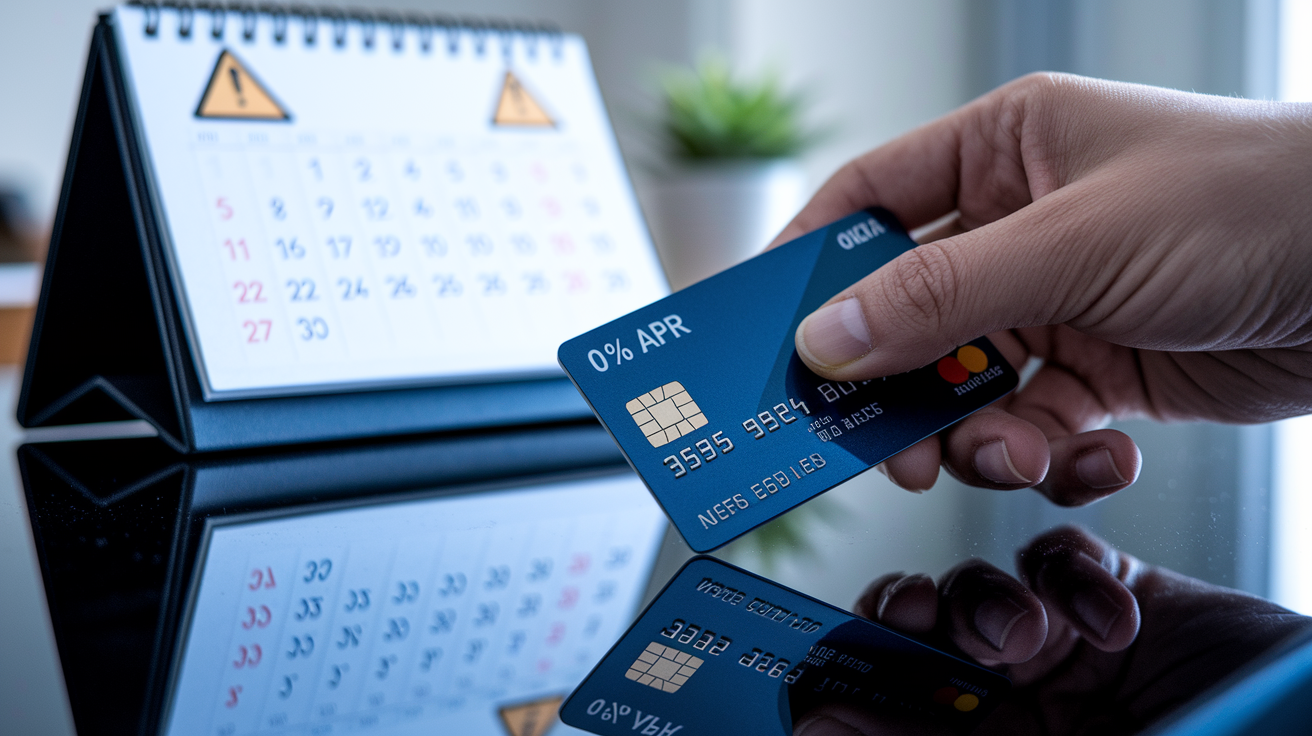
Balance transfer credit cards let you move existing credit card balances onto a new card that offers 0% APR for an introductory period, commonly 9 to 21 months. During that window, every dollar you pay goes directly toward principal instead of interest, which can save hundreds or even thousands if you knock out the balance before the promotional rate expires. Most cards charge a balance transfer fee of 3% to 5% of the amount moved, so transferring $5,000 costs around $150 to $250 upfront. You need good to excellent credit to qualify for the best offers. And issuers cap the transfer at your new credit limit, so you may not be able to move all your debt in one go.
The strategy works when you’ve got a realistic plan to pay off the transferred balance before the 0% period ends. If you’re left with a balance when the intro APR expires, the remaining debt jumps to the card’s regular rate, often 18% to 25%. You’re back where you started, except now you’ve paid the transfer fee. Another trap: new purchases on the card may start accruing interest immediately at the standard rate, even while the transferred balance enjoys 0%. That makes it easy to accidentally run up a new balance while you’re paying down the old one.
Here’s a step by step transfer process:
- Check your credit score and prequalify for balance transfer offers to see intro APR length, transfer fee, and credit limit without a hard inquiry.
- Calculate the payoff schedule by dividing the total transferred balance (including the transfer fee) by the number of months in the intro period to find the monthly payment you need.
- Apply and complete the transfer by providing account numbers and balances for the cards you want to pay off; transfers usually take 1 to 3 weeks to process.
- Set up automatic payments for at least the calculated monthly amount so you finish before the 0% window closes.
- Avoid new purchases on the balance transfer card and on the old cards to prevent reborrowing and interest charges.
Using Personal Loans as a Debt Consolidation Method

A personal consolidation loan replaces multiple credit card balances with a single installment loan at a fixed interest rate and fixed monthly payment. Loan amounts typically range from $1,000 to $50,000, with repayment terms stretching up to 7 years. The main benefit is predictability. You know exactly how much you’ll pay each month and when the loan will be paid off, which makes budgeting straightforward. If your credit is good or excellent, you may qualify for an APR lower than your current credit card rates, saving you money over the life of the loan.
The downside is that your credit score directly affects the rate you’re offered. Borrowers with fair or poor credit often see APRs that aren’t much better than credit card rates, which limits the benefit. Some lenders also charge an origination fee, typically 1% to 10% of the loan amount, that gets deducted from the funds you receive or added to your principal. A 5% origination fee on a $10,000 loan means you only get $9,500 to pay off your cards, yet you owe the full $10,000 plus interest. One useful feature: some lenders will pay your creditors directly, which removes the temptation to pocket the money and skip the payoff.
Pros:
- Fixed interest rate and fixed monthly payment
- Simplifies multiple bills into one predictable payment
- Some lenders offer direct payment to creditors
- Can improve credit over time with consistent on time payments
Cons:
- Requires good credit to get a low APR
- Origination fees can reach 10% of the loan
- Monthly payment is often higher than combined credit card minimums
- Doesn’t eliminate the debt or prevent reborrowing on paid off cards
Consolidating Debt with Home Equity Loans or HELOCs

Home equity loans and home equity lines of credit (HELOCs) let you borrow against the equity you’ve built in your house. Lenders typically allow you to borrow up to about 85% of your home’s current value minus what you still owe on your mortgage. Because the loan is secured by your property, interest rates are usually lower than unsecured personal loans or credit cards, sometimes several percentage points lower. A home equity loan provides a lump sum at a fixed rate with a fixed repayment term, while a HELOC works like a credit line with a variable rate that can adjust over time. Closing costs generally run 2% to 5% of the loan amount. And HELOCs may carry annual maintenance fees on top of that.
The big trade off is collateral risk. If you can’t keep up with payments, the lender can foreclose on your home. That makes this option appropriate only if you’re confident in your income stability and committed to not reborrowing on the credit cards you just paid off. Variable rate HELOCs add another layer of uncertainty. If interest rates climb, your monthly payment can increase, squeezing your budget. On the plus side, longer repayment periods (often 10 to 30 years) spread out the payments and lower the monthly amount, which can ease cash flow pressure in the short term.
Home equity consolidation makes sense for homeowners who have substantial equity, a steady income, and a clear plan to avoid new debt. It’s less suitable if your job situation is uncertain, if you’re already stretched thin on housing costs, or if you’re not ready to change the spending habits that created the credit card balances in the first place. The lower rate can save thousands in interest, but only if you treat the consolidation as a one time reset and stick to a budget that prevents the cycle from repeating.
Nonprofit Debt Management Plans (DMPs) as a Consolidation Alternative

A debt management plan through a nonprofit credit counseling agency consolidates your unsecured debts (mostly credit cards) into a single monthly payment without requiring you to take out a new loan. You make one payment to the counseling agency each month, and the agency distributes that money to your creditors under terms they’ve negotiated on your behalf. Creditors often agree to reduce your interest rates, sometimes by around 50%, and waive late fees or over limit charges. The typical DMP runs 3 to 5 years, with a one time setup fee around $30 to $50 and monthly service fees between $20 and $75.
DMPs work for borrowers who don’t qualify for low interest consolidation loans or balance transfer cards because of low credit scores. The counselor reviews your income, expenses, and debts, then proposes a monthly payment you can afford. Once creditors accept the plan, your accounts are usually closed or frozen to prevent new charges, and you’re expected to make no late payments for the duration of the program. Staying current is critical. A single missed payment can cause a creditor to pull out of the plan and reinstate the original interest rate and fees.
Enrollment generally doesn’t hurt your credit score the way a settlement or bankruptcy does. And making consistent on time payments can actually improve your score over time. The main drawback is duration (3 to 5 years is longer than a balance transfer card’s 0% window) and the requirement to close credit cards can temporarily increase your credit utilization ratio if you’re left with little available credit. Still, for someone overwhelmed by multiple payments and unable to secure better loan terms elsewhere, a DMP provides structure, accountability, and real interest savings.
Here’s the enrollment and payment process:
- Contact a nonprofit credit counseling agency accredited by a recognized body (like the National Foundation for Credit Counseling) and schedule a free consultation to review your debts and budget.
- Receive a proposed repayment plan that lists the new interest rates, monthly payment amount, and projected payoff date; review the setup and monthly fees before agreeing.
- Authorize the agency to contact your creditors and negotiate reduced rates and fee waivers; creditors must accept the plan for those accounts to be included.
- Make one consolidated monthly payment to the agency on the agreed schedule, and the agency disburses payments to each creditor; avoid new credit and stay current to keep the plan active.
When Settlement, Bankruptcy, or Hardship Programs Become Debt Alternatives

If you can’t afford any consolidation method and your debt has become unmanageable, three alternatives may come into play: debt settlement, bankruptcy, or creditor hardship programs. Debt settlement involves negotiating with creditors (or hiring a settlement company) to pay less than the full balance owed. Settlement companies typically charge 15% to 25% of the enrolled debt amount as their fee. And the process often requires you to stop making payments while negotiations proceed, which severely damages your credit. Settled accounts appear on your credit report as “paid settled” and remain visible for up to 7 years from the date of the first missed payment. Any forgiven amount may also be counted as taxable income, creating a surprise tax bill.
Bankruptcy (either Chapter 7 or Chapter 13) can discharge or restructure debts under court supervision, but it carries long term credit consequences and stays on your report for 7 to 10 years. It’s typically a last resort when income is insufficient to cover even minimum payments and assets are at risk. Hardship programs offered directly by credit card issuers can temporarily reduce interest rates or monthly payments if you’ve experienced job loss, medical crisis, or another financial shock. These programs don’t eliminate debt, but they can buy time and prevent default while you stabilize your situation.
Here’s when each alternative is typically used:
- Debt settlement — when you’re several months behind, collection calls have started, and you cannot afford even a reduced consolidation payment; expect severe credit damage and possible tax liability.
- Bankruptcy — when total debts exceed your ability to repay over any reasonable timeline, creditors are threatening legal action, and you need court protection to stop garnishment or foreclosure.
- Hardship programs — when a specific temporary event (job loss, medical leave, divorce) has disrupted income and you need a short term payment reduction or interest rate freeze to avoid default.
Understanding Credit Score Impacts of Debt Consolidation

How consolidation affects your credit score depends on the method you choose and how you manage the accounts afterward. Applying for a new balance transfer card or personal loan triggers a hard inquiry, which can lower your score by a few points temporarily. Opening a new account also reduces the average age of your credit accounts, which can have a modest negative effect. On the other hand, consolidating high balances onto a loan or new card can lower your overall credit utilization ratio (the percentage of available credit you’re using). And that often boosts your score, especially if you keep the old credit card accounts open with zero balances.
Closing paid off credit cards can backfire. When you close an account, you lose that card’s credit limit, which raises your utilization ratio on any remaining cards and can drop your score. Keeping at least one old card active with a small recurring charge (like a subscription) and paying it off each month preserves your credit history length and available credit. The most important factor for your score is payment history. Making every payment on time under your new consolidation plan will gradually improve your credit, while any missed or late payment will hurt it. Debt management plans generally don’t damage your score directly, though closing cards as part of the program can have a temporary effect. Settlement and bankruptcy cause significant, long lasting drops.
| Action | Credit Impact |
|---|---|
| Apply for balance transfer card or consolidation loan | Hard inquiry lowers score by a few points temporarily; new account reduces average age |
| Pay off credit cards and keep accounts open at zero balance | Lowers utilization ratio, often raises score; preserves credit history length |
| Close paid off credit card accounts | Reduces total available credit, raises utilization ratio, may lower score |
| Miss or make late payments on consolidation account | Significant negative marks; stays on report for 7 years |
Calculating Savings and Projecting Timeline After Consolidation

Running the numbers before you consolidate shows whether the effort and fees will actually save you money. Start with your current situation: add up all your credit card balances, note each card’s APR, and calculate your total minimum payment. Then estimate how long it’ll take to pay everything off if you keep making minimums, and how much interest you’ll pay over that period. Most credit card statements include a payoff timeline if you only pay the minimum. It’s often measured in years, with total interest that can exceed the original principal.
Compare that baseline to each consolidation option. For example, if you’ve got $10,000 spread across four cards at an average APR of 23% and you’re paying $75 minimum on each card ($300 total per month), it’ll take roughly 4.5 years to be debt free and you’ll pay around $6,200 in interest on top of the $10,000 principal. If you consolidate that $10,000 with a personal loan at 15% APR and keep the same $300 monthly payment, you’ll finish in about 4 years and pay roughly $3,400 in interest, saving more than $2,800 and shortening the timeline by around 6 months. A balance transfer card with 0% APR for 18 months and a 3% transfer fee ($300) lets you pay off the full $10,300 in 18 months with $572 monthly payments and zero additional interest, saving the full $6,200 minus the $300 fee. If you can afford the higher monthly payment and stick to the schedule.
| Scenario | Monthly Payment | Payoff Timeline | Total Interest + Fees |
|---|---|---|---|
| No Consolidation (23% APR, minimums) | around $300 | around 4.5 years | around $6,200 |
| Personal Loan (15% APR, fixed) | around $300 | around 4 years | around $3,400 |
| Balance Transfer (0% for 18 months, 3% fee) | around $572 | 18 months | around $300 (fee only) |
Steps to Choose the Right Debt Consolidation Method

Picking the best consolidation path starts with an honest assessment of your financial situation and what you can realistically commit to. Check your credit score first. You can get it free through your card issuer or a credit monitoring service. And pull a free credit report to list every debt, the current balance, the interest rate, and the monthly minimum. Add up your total debt and calculate your debt to income ratio (total monthly debt payments divided by your gross monthly income). Lenders use that ratio to decide whether you qualify, and it helps you see how tight your budget really is.
Next, compare the methods that match your credit score and debt profile. If your score is good or excellent, prequalify for balance transfer cards and personal loans to see actual rates and terms without a hard inquiry. If your score is fair or poor, focus on debt management plans or home equity options if you own a house. Look at the total cost of each method over the full repayment period. Add up interest, transfer fees, origination fees, closing costs, and monthly service fees. A lower monthly payment isn’t always better if it stretches the timeline and increases total interest paid. Calculate how much you can afford to pay each month without skipping essentials or emergency savings, then pick the option that minimizes total cost while fitting that budget. If two methods are close, choose the one with the lowest risk. Unsecured over secured, shorter term over longer if you can handle the payment.
- Check your credit score and pull a free credit report to list all debts, balances, and interest rates.
- Calculate your total debt and debt to income ratio to understand what lenders will see and what you can afford.
- Prequalify for balance transfer cards and personal loans (if your credit is good) or contact a nonprofit credit counselor (if your credit is lower) to see available terms.
- Compare total cost over the full repayment term for each method, including all fees and interest, not just the monthly payment.
- Verify eligibility requirements (credit limit for transfers, home equity for secured loans, credit score minimums for personal loans, employer plan rules for 401(k) loans).
- Choose the method with the lowest total cost and acceptable risk level that fits your monthly budget, then commit to a repayment plan and avoid new debt.
Avoiding Common Mistakes When Consolidating Debt
The biggest mistake people make after consolidating is treating paid off credit cards like new spending money. You’ve cleared the balances, your cards show zero, and it feels like you suddenly have room to breathe. Or to buy something you’ve been putting off. That’s the trap. If you run those balances back up, you’ll end up with the new consolidation payment plus fresh credit card debt, and you’ll be worse off than before. The second most common error is missing the deadline on a balance transfer card’s 0% intro period. If you don’t pay off the balance before the promo expires, the remaining debt gets hit with a high APR, and you’ve wasted the transfer fee for nothing.
Another mistake: falling into the minimum payment cycle on a consolidation loan or choosing a loan term that’s longer than necessary just to lower the monthly payment. A longer term means more months of interest, which can cost hundreds or thousands extra even if the APR is lower than your old cards. And watch out for consolidation scams. Companies that promise to eliminate your debt for a fee but don’t deliver, or that charge upfront before doing any work. Legitimate nonprofit credit counselors don’t ask for large upfront payments, and reputable lenders don’t guarantee approval before checking your credit.
Common consolidation mistakes to avoid:
- Reborrowing on paid off credit cards after consolidation, which doubles your debt load instead of reducing it
- Missing the 0% intro APR deadline on a balance transfer card and getting stuck with high interest on the remaining balance
- Choosing a longer loan term than needed to lower monthly payments, which increases total interest paid over time
- Falling for consolidation scams that charge big upfront fees without delivering results or that promise guaranteed approval without a credit check
Staying on Track After Consolidating Debt
Consolidation only works if you change the habits that created the debt in the first place. The most effective way to stay on track is to automate your consolidation payment so it leaves your account on payday, before you have a chance to spend the money elsewhere. Set up the payment for at least the minimum required amount (or more if you can afford it) and treat it like rent or a utility bill. Non negotiable and due every month. If you consolidated with a balance transfer card, calculate the exact monthly payment you need to finish before the intro period ends, then automate that amount.
Build a small emergency fund as quickly as possible, even if it’s just $500 to start. Without a buffer, any surprise expense (car repair, medical bill, broken appliance) will push you back onto a credit card, and the cycle starts over. Keep at least one credit card open and active, but use it only for a small recurring charge like a streaming subscription, and pay it off in full every month. That keeps the account from closing due to inactivity and preserves your available credit and account age. Avoid opening new credit cards or taking out new loans while you’re paying off the consolidation. Every new account adds to your monthly obligations and increases the temptation to spend.
Practical steps to maintain progress:
- Automate your consolidation payment to ensure it’s made on time every month without relying on memory
- Build a starter emergency fund of at least $500 to $1,000 to cover surprises without reaching for a credit card
- Keep one old credit card active with a small recurring charge and pay it off monthly to preserve credit history and available credit
- Avoid opening new credit accounts until the consolidation is fully paid off and you’ve proven you can stick to a budget
Final Words
Compare your options: balance transfer cards, personal loans, home equity lines, and nonprofit debt management plans. Each one brings different costs and risks like intro 0% periods, fixed rates, collateral risk, or program fees.
Use four decision factors: credit score, debt type, interest cost, and repayment timeline. Run the numbers, watch fees, and avoid reborrowing or falling into minimum-payment traps.
If you follow the steps here, you’ll find the best way to consolidate debt for your situation and build a simple repayment plan. Pick one small next step this week and you’ll gain momentum.
FAQ
Q: What is the best option to consolidate debt?
A: The best option to consolidate debt matches your credit, debt type, and timeline: 0% balance transfer for short payoff, a personal loan for steady payments, home equity for low rates (risk to home), or a nonprofit DMP if credit is poor.
Q: How to pay off $30,000 in debt in 1 year?
A: To pay off $30,000 in debt in 1 year, you need about $2,500 monthly plus interest; budget tightly, cut spending, boost income, prioritize high-rate balances, and consider a lower-rate consolidation loan to cut interest.
Q: How much is the payment on a $50,000 consolidation loan?
A: The payment on a $50,000 consolidation loan depends on APR and term. Examples: 3 years at 12% ≈ $1,661/month; 5 years at 8% ≈ $1,014/month; 7 years at 10% ≈ $830/month.
Q: What two debts cannot be erased?
A: The two debts that generally cannot be erased are federal student loans and most tax debts; exceptions exist (eg, undue hardship or old tax types), and child support or recent court-ordered obligations also remain non-dischargeable.