


Think debt consolidation lets you dodge taxes? Not usually.
Consolidating multiple accounts into one loan isn’t taxable because you’re still borrowing.
But if a lender cancels (forgives) part of what you owe, that forgiven amount can become taxable income and you’ll likely get a Form 1099-C.
This post explains, in plain terms, what’s taxable and what’s deductible after consolidation, which exclusions (like bankruptcy or insolvency) might apply, and the simple next steps to check your forms and lower any tax hit.
Understanding the Core Debt Consolidation Tax Implications

Consolidating multiple debts into a single loan doesn’t create taxable income. When you receive loan proceeds from a personal loan, balance transfer, or home equity product, the IRS treats that money as borrowed funds, not earnings. You haven’t gained anything. You’ve just restructured your obligations under new terms with a different creditor.
Tax consequences show up only when part of your debt is actually forgiven or canceled, not when it’s combined or refinanced. If a creditor agrees to accept less than the full balance owed and writes off what’s left, that forgiven portion can become taxable income. The IRS requires creditors to report canceled debt of $600 or more on Form 1099‑C, which also goes to you and to state tax authorities when applicable. Getting that form means you need to figure out whether the forgiven amount belongs on your tax return as additional income.
The legal foundation for canceled debt taxation is Internal Revenue Code §108, which governs “discharge of indebtedness” income. Under this rule, forgiven debt is presumed taxable unless you qualify for one of several statutory exceptions or exclusions, such as bankruptcy, insolvency, or specific types of home mortgage relief. Those exceptions are detailed in later sections. But the core principle is simple: consolidation itself is tax neutral, while forgiveness triggers tax reporting.
IRS Tax Rules That Shape Debt Consolidation Tax Implications
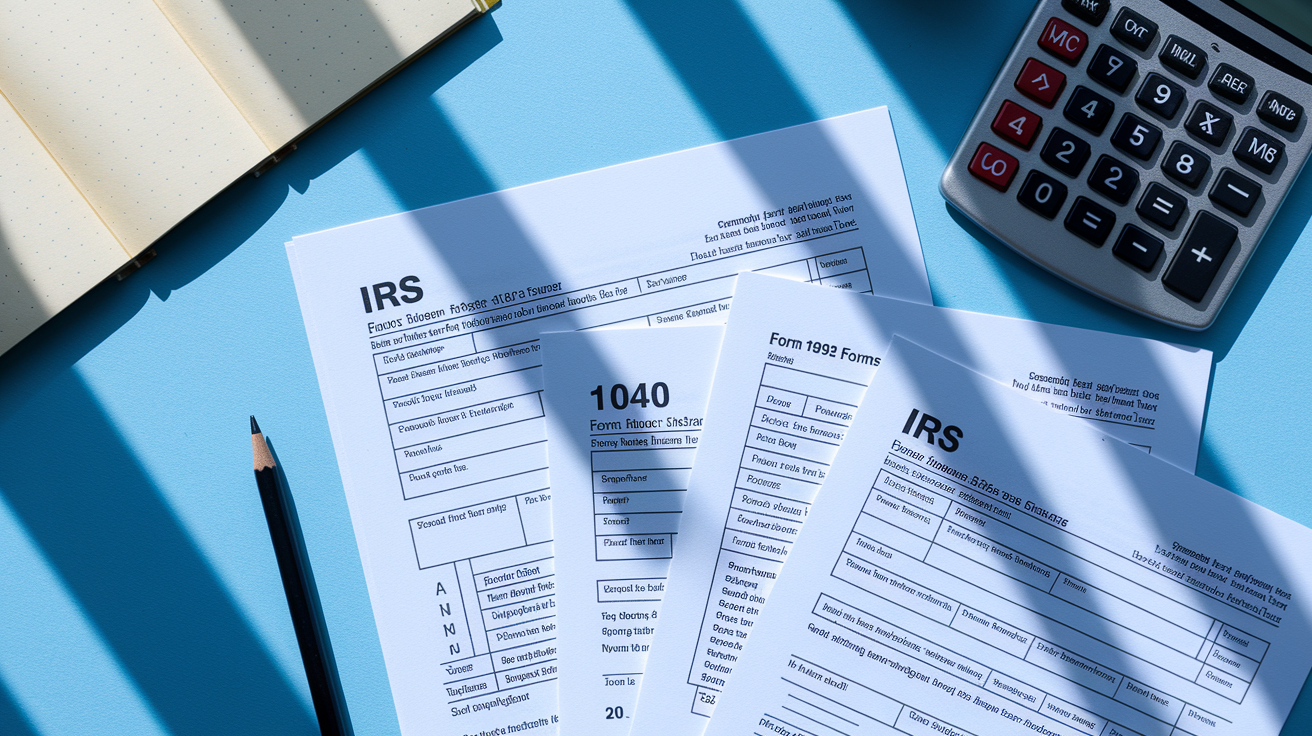
Internal Revenue Code §108 says that when a creditor cancels $600 or more of debt, the forgiven amount is treated as income unless a specific exclusion applies. This rule covers nearly every type of consumer and business debt, from credit cards to mortgages to personal loans. The code also lays out which forms taxpayers must file and when documentation is required to support an exclusion claim.
IRS reporting mechanics revolve around three primary forms. Form 1099‑C arrives from the creditor and shows the amount of canceled debt. You use that figure to determine taxable income. Form 1040 is where you report any taxable forgiven debt as “Other income,” or on Schedule C if the debt relates to self employment. Form 982 is the tool you file to claim an exclusion, such as insolvency or bankruptcy, and to document any required basis adjustments in your property. Keeping copies of all three forms, plus supporting worksheets and discharge orders, protects you if the IRS requests proof later.
| Form | Purpose |
|---|---|
| Form 1099‑C | Creditor’s report of $600+ canceled debt; sent to taxpayer and IRS |
| Form 1040 | Where taxpayers report taxable forgiven debt as “Other income” or on Schedule C |
| Form 982 | Election form to exclude canceled debt from income under bankruptcy, insolvency, or other statutory rules |
| Schedule A | Used to claim itemized deductions, including qualified mortgage interest on home equity debt when applicable |
Exceptions and Exclusions That Influence Debt Consolidation Tax Implications

Certain categories of forgiven debt are never taxable because they fall under statutory exceptions. Debt canceled as a gift, where there was never a true expectation of repayment, doesn’t count as income. Some student loan forgiveness programs tied to work for government, tax exempt organizations, or qualifying educational institutions also generate no tax liability. Specific mortgage modification programs, such as reductions under the Home Affordable Modification Program in certain years, may qualify for relief under temporary federal provisions.
Bankruptcy provides a broad exclusion. If your debt is discharged under Chapter 7, Chapter 11, or Chapter 13, the forgiven amount isn’t taxable income, regardless of the dollar total. The protection applies only to debts that existed when you filed the bankruptcy petition and that the court actually discharged. You’ll need a copy of the discharge order and Form 982 to document the exclusion on your tax return.
Insolvency is the most widely used exclusion outside of bankruptcy. You’re insolvent when your total liabilities exceed the fair market value of all your assets at the moment the debt is canceled. The exclusion covers only the amount by which you’re insolvent. For example, if your assets total $25,000 and your liabilities are $50,000, you’re insolvent by $25,000. If a creditor cancels $10,000 of debt, the full $10,000 likely qualifies for the insolvency exclusion and wouldn’t be taxable. If the same creditor forgave $30,000, only $25,000 would be excluded. The remaining $5,000 would be taxable income.
Gift or bequest: Debt forgiven by a family member or estate with no repayment expectation isn’t taxable.
Qualified student loan forgiveness: Cancellation under certain public service or employer based programs may be tax free.
Bankruptcy discharge: Debt eliminated in Chapter 7, 11, or 13 is excluded from income with no dollar cap.
Insolvency: Forgiven debt is excluded up to the amount by which liabilities exceed asset FMV at cancellation.
Qualified principal residence indebtedness: Some forgiven mortgage debt on a primary home may be excluded under applicable tax year rules.
Comparing Debt Consolidation Methods and Their Tax Implications

Personal loans used to consolidate credit card balances or other unsecured debt carry no upfront tax impact. You’re borrowing, not earning. Interest on personal loans taken for consumer purposes isn’t tax deductible. If the lender later forgives part of the principal, that forgiven amount may be taxable income unless you qualify for an exclusion. The lack of deductibility means personal loan consolidation offers no annual tax benefit, only potential simplification and possibly a lower interest rate.
Credit card balance transfers work the same way. Moving balances from one card to another doesn’t create taxable income because you’re still obligated to repay the full transferred amount. If a credit card issuer later settles your account and forgives a portion of the balance, the creditor will issue Form 1099‑C for the forgiven amount. That canceled debt is taxable unless you can demonstrate bankruptcy, insolvency, or another exception.
Home equity loans and HELOCs introduce different rules. Loan proceeds still aren’t taxable when received, but the interest you pay may be deductible if, and only if, you use the borrowed funds to buy, build, or substantially improve the home that secures the loan. If you use home equity proceeds to pay off credit cards or personal expenses, the interest isn’t deductible under current mortgage interest rules. Forgiveness of a home equity loan or HELOC may fall under primary residence exclusions in some circumstances, but those exclusions depend on the specific tax year and statutory provisions in effect at the time.
Personal loan consolidation: Loan proceeds not taxable; interest not deductible for consumer debt; forgiven principal may be taxable unless excluded.
Credit card balance transfer: No tax impact when transferring; forgiven balances generate Form 1099‑C and are generally taxable unless an exception applies.
Home equity loan: Proceeds not taxable; interest deductible only if used for home acquisition or improvement; forgiveness rules vary by tax year.
HELOC: Same tax treatment as home equity loan. Deductibility tied to use of funds, not the type of account.
Step by Step Filing Process After Debt Is Canceled

Once a creditor cancels debt, you follow a defined sequence at tax time to report the event correctly and claim any exclusion you qualify for.
1. Confirm receipt of Form 1099‑C. The creditor should mail a copy by January 31 of the year following cancellation. If you don’t receive one but know debt was forgiven, you still must report it.
2. Locate the correct line on Form 1040. If the debt is personal, report the canceled amount as “Other income.” If it relates to a sole proprietorship, report it on Schedule C.
3. Determine whether you qualify for an exclusion. Review bankruptcy discharge orders, calculate insolvency using an asset liability worksheet, or verify eligibility under student loan or mortgage rules.
4. Attach Form 982 if claiming an exclusion. Complete the form to elect the exclusion type, report the amount excluded, and document any required basis reduction in property.
5. Retain all documentation. Keep copies of Form 1099‑C, discharge orders, insolvency worksheets, FMV appraisals, and Form 982 for at least three years in case of IRS inquiry.
Minimizing Tax Liability Within Debt Consolidation Tax Implications

Before finalizing any consolidation, settlement, or debt relief agreement, ask the creditor whether they’ll issue a Form 1099‑C and how much will be reported as canceled. Understanding the tax impact upfront lets you compare the net cost of settlement against other options, such as extended repayment plans or reinstatement offers that avoid forgiveness entirely.
Accurate documentation is your best defense against unexpected tax bills. If you believe you’re insolvent, prepare a detailed worksheet listing every asset at fair market value (bank accounts, retirement balances, vehicle trade in values, home equity) and every liability, including credit cards, student loans, mortgages, and personal debts. Date the worksheet to match the cancellation date on Form 1099‑C. Keep appraisals, account statements, and loan documents to substantiate the figures if the IRS requests proof.
Ask creditors about 1099‑C issuance before agreeing to settle, so you can estimate the tax cost and explore alternatives.
Prepare an insolvency worksheet showing FMV of all assets versus total liabilities on the exact date of cancellation, and retain supporting records.
Verify bankruptcy discharge documentation if debts were eliminated in Chapter 7, 11, or 13, and keep a copy of the court order.
Reconcile business deductions if you previously claimed expenses paid with debt that’s later forgiven. You may need to adjust prior year Schedule C deductions.
File Form 982 promptly to claim exclusions and document basis adjustments. Missing this form can trigger taxable income even when you qualify for relief.
Consult a tax professional when you receive Form 1099‑C for large amounts, face complex insolvency calculations, or deal with mortgage or student loan forgiveness under evolving rules.
Numeric Scenario Demonstrating Debt Consolidation Tax Implications

Settling $5,000 of credit card debt for $2,500 means the creditor forgives $2,500. That $2,500 is added to your taxable income for the year. If you’re a single filer with $60,000 in adjusted gross income and you fall into the 22% federal tax bracket, the forgiven $2,500 generates approximately $550 in additional federal tax liability. $2,500 multiplied by 22% equals $550. State income tax may add another layer depending on your location.
Now consider insolvency. Your assets total $25,000: $8,000 in a checking account, $12,000 in retirement savings, and a car worth $5,000. Your liabilities are $50,000: $30,000 in credit card balances, $15,000 in student loans, and $5,000 owed on a personal loan. You’re insolvent by $25,000. If a creditor cancels $10,000 of that credit card debt, the full $10,000 falls within your $25,000 insolvency cushion and is excluded from taxable income. You file Form 982 to document the exclusion, and you owe no tax on that canceled amount.
Taxable settlement: $2,500 forgiven × 22% bracket = $550 federal tax; state tax may apply separately.
Insolvency exclusion: $10,000 canceled fits within $25,000 insolvency margin, so $0 federal tax owed when Form 982 is filed.
When a Tax Professional Should Guide Your Debt Consolidation Tax Implications

High risk scenarios (bankruptcy discharges, large insolvency calculations, forgiven mortgage debt on a primary residence, or student loan cancellations under evolving federal programs) often require a certified public accountant or enrolled agent. These cases involve multi step forms, statutory deadlines, and basis adjustments that can increase future capital gains if handled incorrectly. A professional can model the tax impact of different settlement amounts, confirm exclusion eligibility, and prepare Form 982 to ensure basis reductions are calculated and reported properly.
Misreporting canceled debt or failing to attach required forms can trigger IRS notices, audits, or incorrect tax assessments. If you underreport taxable forgiven income, you may owe back taxes plus penalties and interest. If you claim an exclusion without proper documentation, the IRS may disallow it and bill you for the shortfall. Getting expert help when the stakes are high reduces those risks and gives you confidence that your filing matches the actual tax law in effect for your situation.
Final Words
Keep this simple: taking a consolidation loan is not taxable because loan proceeds aren’t income. The tax issue only shows up when debt is forgiven and a creditor issues Form 1099‑C for $600 or more.
If a cancellation happens, report it on Form 1040 as other income and use Form 982 to claim insolvency or bankruptcy exclusions when they apply. Gather records and run the numbers before you settle.
Understanding debt consolidation tax implications helps you avoid surprises, so get your paperwork ready and ask a tax pro if needed. You’ve got this.
FAQ
Q: How does debt consolidation affect your taxes?
A: Debt consolidation affects your taxes by itself not creating taxable income; only forgiven or canceled debt can become taxable as discharge-of-indebtedness income, typically reported on Form 1099‑C when $600 or more is canceled.
Q: How badly does a 1099‑C affect my taxes?
A: A 1099‑C affects your taxes by reporting canceled debt as income, which can raise your tax bill unless you qualify for exclusions like insolvency or bankruptcy and claim them (often via Form 982).
Q: What is the $100000 loophole for family loans?
A: The “$100,000 loophole” for family loans refers to informal lending tactics within families, not an official exemption; tax results depend on imputed‑interest rules, gift‑tax limits, and clear loan documentation—consult a tax pro for specifics.
Q: What is the most overlooked tax break?
A: The most overlooked tax break is often the insolvency exclusion under IRC §108, which can let you exclude canceled debt from income when liabilities exceed assets; many taxpayers forget to calculate and claim it.