


Think bad credit shuts every door?
Yes, you can consolidate debt with bad credit.
Approval is tougher and rates are higher, and you may need collateral or a cosigner.
This post walks through real options like secured loans, credit union loans, online bad-credit lenders, and nonprofit debt management plans.
It shows what lenders look for and gives a simple decision rule so you know what to try first.
Read on to find the right first move for your score and budget.
Immediate Answers and Viable Paths for Consolidating Debt With Bad Credit
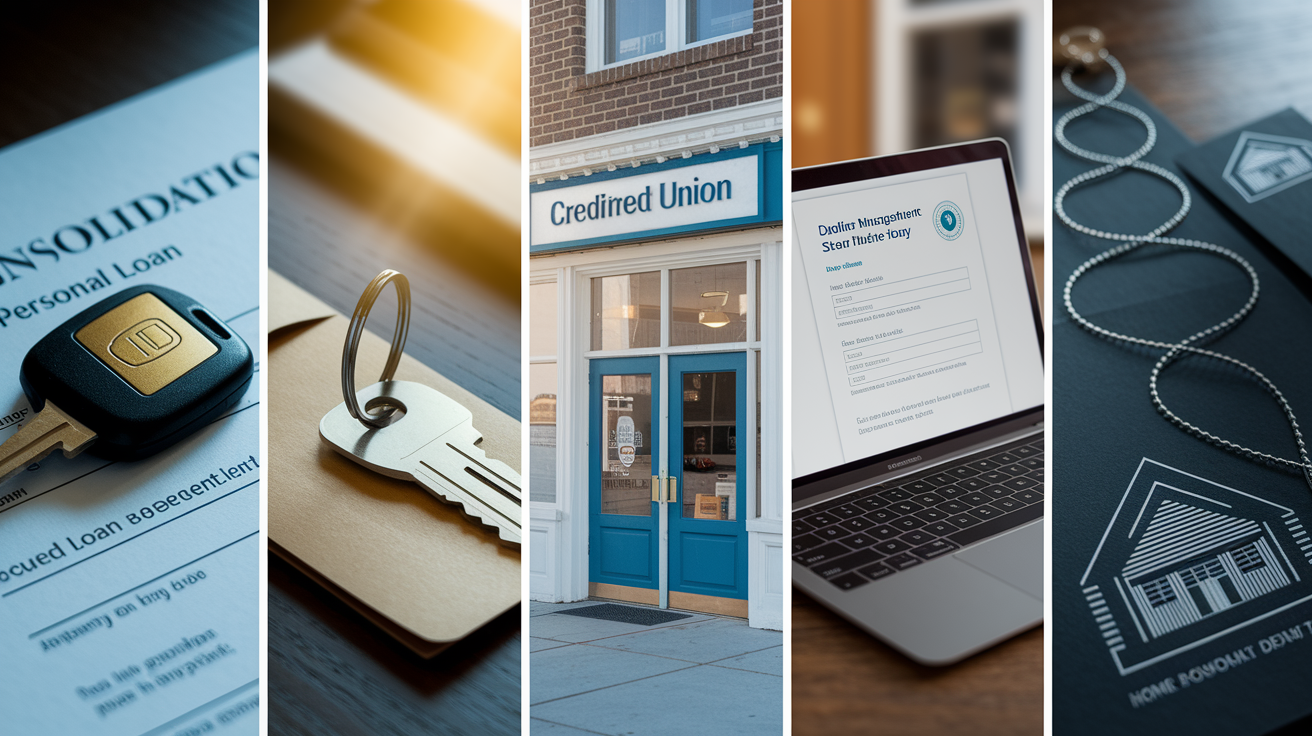
Yes, you can consolidate debt with bad credit. Borrowers sitting in the 300 to 579 FICO range still qualify for consolidation products, though you’re looking at tougher approval odds and higher interest rates than someone with good credit gets. Expect stricter rules, potentially steeper origination fees, and you might need to put up collateral or bring in a cosigner.
You won’t see those attractive low rates that prime borrowers grab, but several paths stay open. The trick is knowing which lenders actually work with low scores and understanding what you’re trading off with each option.
Common consolidation routes if your credit’s rough:
Secured personal loans where you use collateral like a car, savings account, or home fixture to cut the lender’s risk and get approved.
Credit union loans from smaller institutions that look at your membership history, income stability, and alternative data alongside your score.
Online lenders who focus on bad credit borrowers and use different underwriting models. Some approve applicants with scores as low as 300.
Debt management plans (DMPs) run by nonprofit credit counseling agencies. These consolidate payments without requiring a new loan or minimum credit score.
Home equity loans or HELOCs that tap your home’s value for lower rates, though they bring foreclosure risk and closing costs.
The reality? Lower credit score means higher APR and more hoops to jump through. Borrowers under 500 usually can’t get any unsecured personal loan, but adding collateral or a cosigner changes the game. Poor credit consolidation loans typically run from about 22% to 35.99%, with origination fees between 2% and 12% pulled from your loan proceeds. If the new APR beats your current weighted average and you commit to paying on time, consolidation can save you interest and simplify repayment.
How Debt Consolidation Works for Borrowers With Low Credit Scores
Debt consolidation swaps multiple monthly payments (usually high interest credit cards, medical bills, or personal loans) for a single payment at a fixed rate and term. Instead of tracking different due dates and varying minimums, you borrow enough to wipe those accounts clean, close them or leave them at zero, then repay the new loan over a set period. The point is cutting your total interest cost, shortening payoff time, and making budgeting easier.
When you apply with bad credit, lenders dig deeper than your FICO score. They’ll pull income documentation, calculate your debt to income ratio (total monthly debt divided by gross monthly income), review recent payment history, and check for recent delinquencies or collections. A low score signals past trouble, so lenders hunt for compensating factors. Steady employment, manageable DTI below 40%, or willingness to pledge collateral. Some bad credit specialists use alternative data like education, job stability, or bank account cash flow alongside the traditional credit review.
If approved, the lender either sends funds directly to your creditors or deposits money into your bank account for you to handle payoffs yourself. You then make fixed monthly payments until it’s paid in full. Bad credit means a hard credit inquiry that temporarily drops your score a few points and a new installment account on your report. Over time, on time payments and reduced revolving account utilization can lift your score, but the short term impact is a small ding and higher borrowing costs than good credit borrowers face.
Types of Consolidation Options Suitable for Bad Credit Profiles
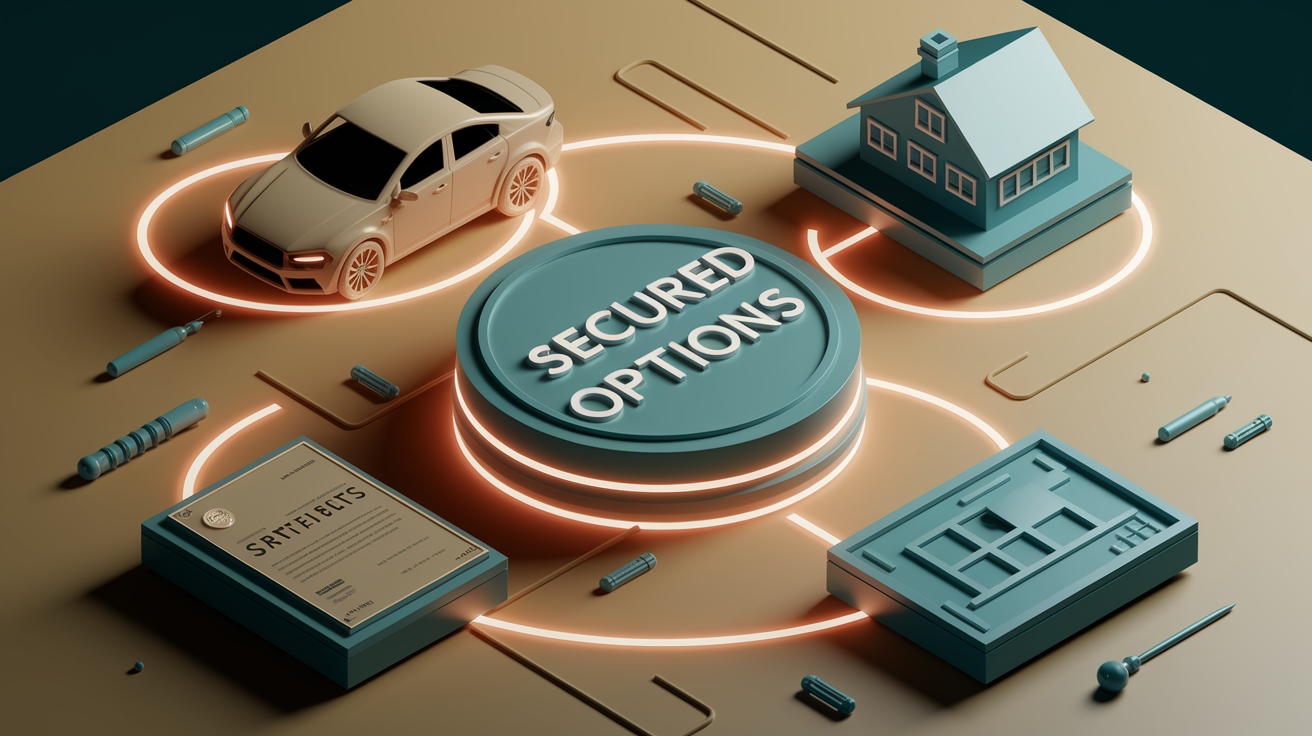
Secured Debt Consolidation Loans
Secured loans require you to pledge an asset (typically a car, savings account, certificate of deposit, or even home equity) as collateral. Default and the lender seizes that asset to recover the balance. This cuts the lender’s risk, which translates into easier approval and lower rates compared to unsecured offers. Best Egg and some credit unions offer secured consolidation loans where a vehicle or permanent home fixture backs the debt, opening access to borrowers with scores in the low 500s who’d otherwise get declined for unsecured products. The downside’s straightforward. Miss too many payments and you lose the collateral.
Credit Union Loans
Credit unions are member owned nonprofits that may weigh your relationship, income stability, and overall financial picture more heavily than a raw credit score. Smaller credit unions sometimes approve consolidation loans for members with FICO scores in the 500s, especially if you hold checking or savings accounts with them and have steady direct deposits. Rates at credit unions often run several points below online bad credit lenders. Membership is required, usually tied to your employer, location, or membership in an affiliate organization, and you may need to open a savings account with a small minimum deposit to join.
Balance Transfer Cards With Low Credit Thresholds
Balance transfer credit cards let you move high interest balances onto a new card, ideally one offering 0% introductory APR for 12 to 21 months. This can be powerful if you qualify. Unfortunately, most balance transfer cards require at least fair credit (FICO 580 or higher), and many issuers prefer scores above 650. Borrowers below 580 rarely get approved or receive meaningful intro offers. If your score sits near the 580 threshold and you have recent positive payment history, check pre qualification tools, but don’t count on this path if your credit’s deeply damaged.
Debt Management Plans Through Nonprofits
A debt management plan isn’t a loan. A nonprofit credit counseling agency negotiates with your creditors to reduce interest rates, waive fees, and consolidate payments into one monthly amount you send to the agency, which then distributes funds to each creditor. DMPs typically last three to five years and accept applicants regardless of credit score. Setup fees are modest (often $30 to $50) and monthly administration fees run $20 to $75. Your accounts get closed during the plan, and late or missed DMP payments can trigger re aging of your debts at original rates, but successful completion improves your credit and saves interest without requiring approval for a new loan.
| Option | Key Benefit | Typical Requirements |
|---|---|---|
| Secured Loan | Easier approval, lower APR with collateral | Asset to pledge (car, savings, home equity) |
| Credit Union Loan | Relationship based underwriting, lower rates | Membership, steady income, checking/savings account |
| Balance Transfer Card | 0% intro APR period | Fair credit or better (FICO around 580+), good payment history |
| Debt Management Plan | No credit score requirement, reduced interest via negotiation | Enrollment with nonprofit agency, willingness to close accounts |
Credit Requirements and What Lenders Look For
There’s no universal minimum credit score for debt consolidation loans, but approval likelihood drops sharply below 580. Lenders that work with poor credit borrowers (Upstart, OneMain Financial, Avant, Universal Credit among them) publish score floors ranging from effectively 300 (Upstart’s alternative data model) up to around 550 (Avant’s stated threshold). Even when a lender accepts low scores, your rate and loan amount hinge on the full risk picture. Monthly income, debt to income ratio, employment length, and recent payment behavior all weigh into the decision.
Income often matters as much as credit score. A borrower earning $4,000 per month with a 520 FICO and a DTI below 35% may secure approval where a higher score applicant with irregular income and 50% DTI doesn’t. Lenders want proof you can afford the new monthly payment without defaulting. Stable employment (at least six months in the same job) and verifiable income through pay stubs, bank statements, or tax returns strengthen your application. Some lenders set minimum monthly income thresholds. Avant, for instance, requires net monthly income above $1,200.
Recent delinquencies hurt more than old ones. A 90 day late payment from six months ago signals active distress and will tank approval odds and jack up rates, whereas charge offs from three years back carry less weight if your recent 12 month payment history is clean. Lenders also check for recent bankruptcies. Upstart, for example, declines applicants with a bankruptcy discharge in the past three years and may decline or demand higher rates if you have active collections or recent defaults. Correcting report errors and paying down small balances before you apply can shift these factors in your favor.
Costs and Risks of Consolidating Debt With Bad Credit
Consolidating with bad credit carries financial risks that can wipe out the benefits if you’re not careful.
High interest rates that may not beat your current debts. Many bad credit consolidation loans carry APRs between 22% and 35.99%, which can exceed what you’re already paying on some accounts.
Origination fees deducted from loan proceeds, typically 2% to 12%. A $10,000 loan may only deliver $9,000 in cash while you owe the full $10,000 plus interest.
Collateral risk on secured loans. Defaulting can cost you your car, savings, or even trigger foreclosure if you used home equity.
Extended repayment terms that lower monthly payments but pile on total interest. A seven year loan at 25% APR costs far more over time than a three year term at the same rate.
Interest rates for poor credit borrowers have hovered around 22% on average in recent marketplace data, but individual offers span a wide range. An applicant with a 540 score, steady income, and a cosigner might land a 19% APR, while someone with a 500 score, high DTI, and no collateral could see 32% or higher. Always compare the new loan’s total cost (principal plus all interest and fees) to what you’d pay if you stuck with your current debts. Use a debt consolidation calculator to model both scenarios and confirm you’re actually saving money, not just reshuffling balances at similar or worse terms.
Origination fees add another layer of cost. If a lender charges 5% upfront on a $12,000 loan, you receive $11,400 but repay $12,000 plus interest. That $600 fee effectively raises your APR by roughly half a percentage point over the loan’s life. Some lenders (Best Egg and Upgrade, for instance) offer origination fees as low as 0.99% to 1.85%, while others reach 9.99% or even 12%. Reading the fine print and calculating the effective APR including fees prevents unpleasant surprises at funding.
When Debt Consolidation Makes Sense (and When It Doesn’t)
Debt consolidation makes sense when the new loan’s APR is meaningfully lower than your current weighted average rate and you’re committed to not adding new debt. If you’re paying 28% on one card, 24% on another, and 22% on a third, consolidating into a single loan at 20% saves interest, shortens your payoff timeline, and replaces three due dates with one. Fixed monthly payments also simplify budgeting and remove the temptation to pay only minimums, which can stretch repayment for a decade or more on revolving accounts.
Consolidation’s less helpful (or outright harmful) if the math doesn’t improve your situation. A 25% consolidation loan that replaces 23% average debt costs you more, not less. Extending the term to lower monthly payments can backfire. Dropping from $300 per month to $200 sounds appealing until you realize the extra four years of interest adds thousands to your total cost. And if freeing up credit lines tempts you to rack up new balances, you’ll end up with both the consolidation loan and fresh card debt. Dangerous cycle that leaves you worse off.
Red flags that consolidation may not be the right move:
Your best available APR is higher than your current average rate.
You can’t commit to a realistic budget that prevents adding new debt.
The monthly payment on the new loan strains your cash flow, raising the risk of missed payments and default.
Alternatives for People Who Cannot Qualify for Consolidation

If no lender approves you for a consolidation loan at reasonable terms, or if the offers you receive don’t improve your total cost, several alternatives can still simplify or reduce your debt. Credit counseling through a nonprofit agency costs little or nothing for an initial consultation and can connect you to a debt management plan without requiring loan approval. A counselor reviews your income, debts, and budget, then contacts your creditors to negotiate lower interest rates and consolidated payments. You make one monthly payment to the agency, which distributes funds to each creditor. Accounts are typically closed during the plan, and completing it successfully can lift your credit over time while saving significant interest.
Debt settlement’s riskier and damages credit in the short term. You stop paying creditors, let accounts go delinquent, and build cash in a separate holding account. After several months, a settlement company (or you, if negotiating directly) offers creditors lump sum payments for less than the full balance, often 40% to 60% of what you owe. Creditors may accept to avoid a total loss, but your credit score will drop sharply during the process, and there’s no guarantee all creditors will settle. Forgiven debt above $600 is also taxable income, which can trigger a surprise tax bill. Settlement makes sense primarily when debt’s already severely delinquent and you face potential lawsuits or garnishment.
Payment renegotiation directly with creditors (sometimes called a hardship plan) can lower interest or defer payments temporarily without involving third parties. Call each creditor, explain your situation, and ask for a reduced rate, waived fees, or temporary forbearance. Success varies by creditor and account status, but it’s worth trying before pursuing settlement or bankruptcy. Document every agreement in writing and confirm how the plan will be reported to credit bureaus.
Bankruptcy provides legal protection when unsecured debt exceeds roughly 40% of your annual income and can’t be repaid within five years even with aggressive budgeting. Chapter 7 discharges most unsecured debts within months but stays on your credit report for ten years and may require liquidating non exempt assets. Chapter 13 structures a court supervised repayment plan over three to five years and lets you keep assets, with remaining eligible debt discharged at plan completion. Both options carry serious long term credit consequences, but they also offer a legal reset when other paths have closed. Consult a bankruptcy attorney to evaluate whether filing makes sense for your situation and which chapter fits your income and asset profile.
Final Words
We showed that you can consolidate debt with bad credit, but expect higher rates, stricter rules, and sometimes collateral.
Main options are secured loans, credit union loans, balance transfers (less likely), nonprofit debt management, and bad-credit lenders.
We covered the process, what lenders check, costs, risks, and when it makes sense.
If you’re asking can you consolidate debt with bad credit, the short answer is yes if it lowers your rate or simplifies payments. If not, start with a simple budget and a counselor and try again.
FAQ
Q: Can you get a debt consolidation loan with a 500 credit score?
A: A debt consolidation loan is possible with a 500 credit score, but options are limited, rates are high, and you may need collateral or a co-signer; check credit unions or nonprofit counseling first.
Q: How to pay off $30,000 in debt in 1 year?
A: To pay off $30,000 in one year you’ll need about $2,500 monthly plus interest; cut spending, boost income, and use a strict repayment plan or consolidation to lower interest and simplify payments.
Q: How much is the payment on a $50,000 consolidation loan?
A: The payment on a $50,000 consolidation loan depends on rate and term; for example, at 8% over 5 years it’s about $1,014/month, and at 15% over 5 years it’s about $1,191/month.
Q: What credit score do I need to consolidate debt?
A: The credit score needed to consolidate debt varies: lenders prefer 670+ for best rates, 580–669 for fair terms, and below 580 you’ll face limited options and higher interest.