


Think a civilian consolidation loan is the same as a military one?
Think again.
Military debt consolidation loans offer real advantages: lower interest, built-in legal shields like the Servicemembers Civil Relief Act (SCRA), and deployment-friendly rules that civilian lenders rarely match.
If you’re active duty, a veteran, or a dependent, these loans can cut your blended APR, simplify multiple bills into one predictable payment, and pause or adjust terms during deployments and moves.
This post shows how those protections and lower rates work, and what to do first.
Core Advantages of Military Debt Consolidation Loans for Service Members
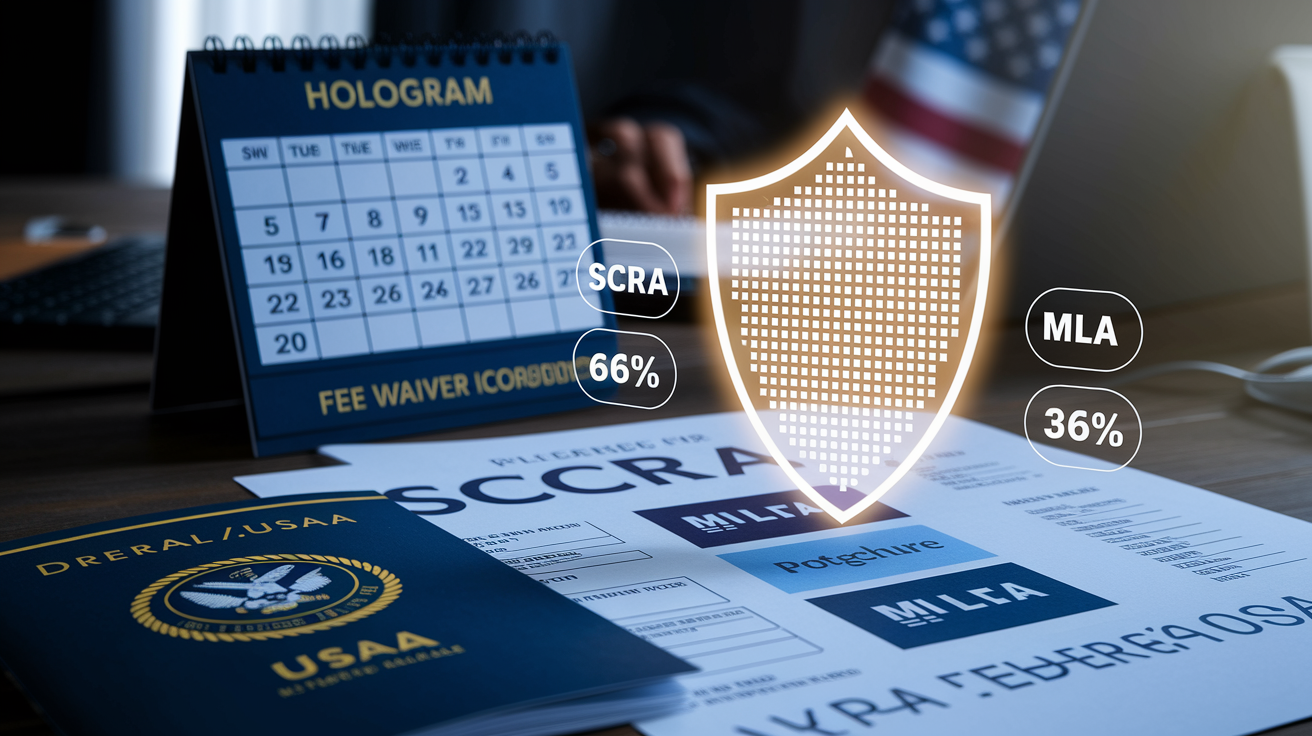
Military debt consolidation loans come with protections and financial support that civilian options can’t touch. Active duty service members, veterans, and their families get access to legal safeguards like the Servicemembers Civil Relief Act (SCRA), which caps interest at 6% on pre-service debts during active duty, and the Military Lending Act (MLA), which limits APR to 36% on covered consumer credit. Civilian consolidation loans? They don’t have these automatic protections. They also don’t offer the deployment flexibility or fee waivers you’ll find through military lenders.
Active duty borrowers get deployment accommodations like payment deferments, credit-lenient underwriting, and reduced or waived fees. Lenders like Navy Federal and USAA often grant fee waivers to military members and adjust repayment terms during PCS moves or deployments. These lenders understand military pay cycles. They recognize that service-related moves or deployments can mess with your finances, and they adjust underwriting accordingly. If you’ve ever opened a credit card statement mid-deployment and felt the weight of juggling five different due dates, this is the fix.
Military borrowers also get flexibility during permanent change of station moves, including the ability to pause or adjust payments without the rigid penalties civilians face. Fee waivers on origination, balance transfer costs, and closing expenses are common when working with military credit unions or veteran programs. These protections and accommodations exist specifically because service creates financial situations that standard lenders don’t account for. Deployments, frequent relocations, variable pay during transitions.
The five veteran benefits cited by military financial advisors:
Jump start civilian life: use loan funds for career training, certifications, or transition costs when leaving active duty.
Housing improvements: free up monthly cash flow to save for a down payment, fund home repairs, or finance disability-related modifications.
Smoother money management: consolidate multiple bills into one predictable payment with autopay, reducing the risk of missed due dates during deployments or benefits processing delays.
Travel flexibility: save for family visits, leave travel, or vacations by lowering total monthly debt obligations.
Mission readiness: build an emergency fund, improve credit scores, and create financial cushion to handle unexpected expenses without high interest credit cards.
Military Debt Consolidation Loan Benefits Related to Interest Rates and Monthly Payments

Consolidation lowers your blended APR when you combine high interest credit cards under a single military protected loan. For example, if you carry three credit cards at 18%, 22%, and 24% and consolidate them into a loan at 8%, your interest burden drops immediately. Monthly payments also fall because you’re no longer covering multiple minimum payments designed to maximize lender profit. A service member paying $150, $120, and $100 across three cards ($370 total) might reduce that to $250 per month after consolidation. That frees $120 in monthly cash flow while paying down principal faster.
Military lenders often provide APR advantages that civilian lenders can’t. Navy Federal and USAA, for instance, offer member-only pricing and lower APRs for active duty applicants, plus SCRA and MLA compliance built into their loan terms. Debt Management Programs negotiated by certified credit counselors can secure interest rates between 0% and 10% after negotiation, even for borrowers with poor credit. This is the advantage: military status and negotiated programs stack protections that drive rates lower than market standards.
| Type of Interest Reduction | Applicable Protection/Program | Typical Range |
|---|---|---|
| SCRA interest cap on pre-service debt | Servicemembers Civil Relief Act (active duty only) | 6% maximum APR |
| MLA interest cap on covered consumer credit | Military Lending Act (active duty and dependents) | 36% maximum APR |
| Debt Management Program negotiated rates | Credit counselor negotiations with creditors | 0% to 10% APR |
Eligibility Rules for Military Debt Consolidation Options

Active duty service members, veterans, National Guard members, and Reservists on Extended Active Duty all qualify for military debt consolidation, but the specific programs and protections differ by status. Active duty borrowers can invoke SCRA protections and access deployment friendly repayment terms. Veterans qualify for veteran targeted consolidation loans and, if they own a home financed through a VA loan, may be eligible for a Military Debt Consolidation Loan that taps home equity. Guard and Reserve members activate SCRA protections and allotment systems only while on EAD orders.
Documentation requirements are consistent across all groups but tailored to prove status. Active duty members need a current military ID or active duty orders, recent Leave and Earnings Statements or pay stubs, and account statements showing current balances and payoff amounts for all debts being consolidated. Veterans must provide a DD-214 or discharge paperwork, proof of income (pay stubs, benefit statements, or tax returns), and creditor statements. National Guard and Reserve members on EAD submit copies of orders along with standard income and debt documentation.
MDCL eligibility is stricter because it’s a home equity product. You must already own a home financed through a VA backed mortgage. If your mortgage came from a conventional lender, you don’t qualify. You also need sufficient home equity: if your home is worth $120,000 and your remaining mortgage balance is $80,000, you have $40,000 in equity that can be tapped. If your home value equals or falls below your mortgage balance, you’re underwater and can’t use an MDCL. Lenders also review credit and debt to income ratios, though underwriting for MDCLs is often more forgiving than civilian home equity loans.
Deployment-Friendly Military Debt Consolidation Features

Deployment creates financial stress. Managing bills from a combat zone, handling fluctuating pay, and coordinating with a spouse or family member back home. Consolidation simplifies this by reducing multiple payment dates, amounts, and accounts into one predictable monthly obligation. Active duty members and Reservists on EAD can establish up to six discretionary pay allotments, and one of those allotments can automatically route loan payments from your paycheck to the lender every month. Allotments ensure uninterrupted payments even when mail is delayed, internet access is limited, or you’re in a location where managing finances manually is impossible.
The Savings Deposit Program offers deployed service members a unique repayment strategy. If you deploy to a combat zone and receive Hostile Fire Pay or Imminent Danger Pay, you qualify for SDP, which pays 10% interest on deposits up to $10,000. Because SDP yields 10% and SCRA caps debt interest at 6%, the smart move is to contribute to SDP during deployment and use the lump sum payout (often received when you return) to knock down your consolidated debt before SCRA protections expire and rates revert. That lump sum can cut years off your repayment timeline.
Key deployment-related consolidation tactics:
Set up a discretionary allotment for your consolidated loan payment before you deploy to ensure the lender receives payment automatically from your military pay.
Designate a Special Power of Attorney for a trusted family member or financial manager to adjust allotments or handle payment issues if your situation changes mid deployment.
Freeze or limit credit card use by authorized users or your spouse to prevent new high interest debt from accumulating while you’re deployed.
Use SDP funds strategically after returning from deployment to make lump sum payments that reduce principal and total interest paid over the life of the loan.
Comparing Military Debt Consolidation Loans vs Civilian Loan Options

Military consolidation loans include legal protections, fee waivers, and deployment accommodations that civilian lenders don’t offer and aren’t required to provide. SCRA and MLA protections apply only to active duty service members and their dependents. Civilian borrowers consolidating similar debts face market rate APRs without caps, standard origination fees, and no automatic deferment or flexibility during job loss or relocation. Military lenders also apply more lenient underwriting, recognizing that frequent PCS moves, deployment gaps in employment history, and variable pay structures are normal for service members, not red flags.
Military credit unions like Navy Federal and USAA provide member-only pricing, often waiving loan origination fees and offering APRs below market rates for active duty applicants. Traditional banks and online lenders serving civilian borrowers charge origination fees ranging from 1% to 5% of the loan amount, apply stricter debt to income and credit score thresholds, and rarely offer payment flexibility for deployments or relocations. Civilian lenders also lack the military specific financial counseling resources and deployment aware customer service that military lenders build into their programs.
Deployment considerations create the widest gap between military and civilian options. Military lenders and Debt Management Programs operated by military affiliated counseling agencies can pause payments, adjust terms, or accept allotment based payments coordinated directly with DFAS. Civilian lenders treat deployment the same as any other reason for payment difficulty. They require formal hardship applications, often deny deferments, and continue to report missed payments to credit bureaus if terms aren’t met.
| Feature | Military Loan | Civilian Loan |
|---|---|---|
| APR | Often lower; SCRA caps at 6% on pre-service debt, MLA caps at 36% on covered credit | Market rate; no mandatory caps; typically 8% to 25%+ based on credit |
| Fees | Frequently waived or reduced for active duty; some lenders waive origination fees entirely | Standard origination fees 1% to 5%; balance transfer fees; closing costs on secured loans |
| Legal Protections | SCRA and MLA protections; deployment deferments; foreclosure protections (with limits) | None; standard contract terms; no deployment or service-related accommodations |
| Underwriting Flexibility | Lenient for PCS moves, deployment gaps, variable military pay, and transition-related credit issues | Strict; employment gaps and relocations can reduce approval odds or raise rates |
| Deployment-Friendly Options | Allotment payments; deferments; Special POA support; SDP integration; lender understands military lifecycle | Hardship applications required; deferments rare; no allotment system; no SDP coordination |
Understanding the Mechanics of MDCL Cash-Out Options

A Military Debt Consolidation Loan is a VA backed cash out refinance available only to veterans who financed their home through a VA loan and have built sufficient home equity. The mechanics work like this: if your remaining mortgage balance is $80,000 and your home is worth $120,000, you can refinance up to the full $120,000, pocket the $40,000 difference as cash, and use that cash to pay off unsecured debts like credit cards, medical bills, or personal loans. Your new mortgage balance is now $120,000 instead of $80,000, and your monthly mortgage payment increases accordingly.
Closing costs on MDCLs typically range from 1% to 5% of the new loan amount, which reduces the net cash you receive. On a $40,000 cash out, closing costs might be $1,200 to $6,000, leaving you with $34,000 to $38,800 after fees. Those costs must be factored into your payoff calculations. If you’re paying off $35,000 in credit card debt but netting only $34,000 after closing costs, you’ll need additional funds or a smaller cash out amount. Monthly payment changes are significant: at 4.5% APR, an $80,000 mortgage costs roughly $405 per month, while a $120,000 mortgage at the same rate costs approximately $608 per month. That’s an increase of about $203. If you were paying $500 per month across credit cards, you save $297 in net monthly cash flow, but you’ve converted unsecured debt into secured debt backed by your home.
Key MDCL risks and considerations:
Foreclosure risk increases because your home now secures a larger loan. If you default, the lender can foreclose, and veterans lose SCRA active duty foreclosure protections once separated from service.
Closing costs reduce net cash out and must be included when calculating whether the MDCL saves money compared to continuing minimum payments on existing debts.
Interest rate market sensitivity affects your new mortgage rate. Applying when rates are low locks in lower lifetime interest, but refinancing during a high rate period can erase the savings from consolidating high interest credit cards.
Credit Impact and Financial Readiness Benefits of Military Consolidation Loans

Consolidating multiple debts into one payment improves payment history outcomes because you only need to manage one due date instead of five or six. On time payments account for roughly 35% of your credit score, so reducing the number of accounts where you risk a late payment directly supports score stability. Setting up autopay through an allotment or bank draft removes the manual effort and ensures the payment posts on time every month, even during deployments, PCS moves, or periods when your attention is elsewhere.
Opening a new consolidation loan does trigger a hard credit inquiry and adds a new account to your credit report, which can lower your score by a few points temporarily. Closing paid off credit card accounts can also reduce your total available credit and increase your credit utilization ratio if you carry any remaining balances. However, these short term impacts are typically outweighed by the long term benefit of consistent on time payments and reduced total debt. Debt Management Programs can lower monthly credit card obligations by 30% to 50% after creditors agree to reduced rates and waived fees, making it easier to stay current and avoid the score damage from missed or late payments.
Consolidation doesn’t fix spending habits. If you pay off credit cards through consolidation but continue using those cards and accumulating new balances, you’ll end up with both the consolidation loan payment and new credit card debt. That’s a situation that worsens financial readiness instead of improving it. Pairing consolidation with a realistic monthly budget, controlled spending, and a plan to avoid new high interest debt is the only way to turn short term relief into long term stability. Financial readiness for service members means being able to handle an unexpected car repair, a PCS move, or a gap in pay without reaching for a credit card at 22% APR.
Practical Steps to Apply for a Military Debt Consolidation Loan

Lenders that serve military borrowers typically offer pre-qualification within 24 hours of initial contact, allowing you to compare offers quickly without committing to a full application. During pre-qualification, the lender reviews basic information (military status, income, debt totals, credit range) and provides an estimated APR, loan amount, and monthly payment. This step uses a soft credit inquiry that doesn’t affect your score, so you can shop multiple lenders and programs without penalty.
Once you choose a lender, you’ll submit full documentation including proof of military status (active duty ID or DD-214 for veterans), recent Leave and Earnings Statements or pay stubs, account statements for all debts being consolidated, and written payoff amounts from each creditor. For MDCLs, you’ll also need proof of your existing VA loan, a recent home appraisal or estimated home value, and verification of equity. Lenders review your debt to income ratio, credit history, and ability to afford the new payment, then issue formal loan terms including the final APR, repayment period, and itemized fees such as origination charges or closing costs (typically 1% to 5% on secured loans). Confirm in writing that SCRA or MLA protections apply if you’re on active duty, and verify that any promised fee waivers appear in the loan documents before signing.
Follow these six steps to apply and finalize your military debt consolidation loan:
Inventory all debts by listing each account, current balance, APR, minimum monthly payment, and payoff amount. Include credit cards, student loans, medical bills, and personal loans.
Gather service and income documents including active duty ID or orders (or DD-214 for veterans), recent LES or pay stubs, bank statements, and benefit statements if applicable.
Request quotes from multiple lenders including military credit unions (Navy Federal, USAA), veteran specific lenders, and any Debt Management Program providers. Ask for estimated APR, fees, repayment term, and confirmation of SCRA/MLA applicability.
Review and compare fees such as origination charges, balance transfer fees, closing costs on MDCLs, and prepayment penalties. Calculate net cash received after fees to confirm the loan covers all payoff amounts.
Confirm legal protections in writing by requesting documentation that SCRA interest caps or MLA compliance will apply, and verify deployment deferment policies and allotment payment options if you’re active duty.
Finalize creditor payoffs by providing the lender with written payoff statements for each account, confirming that funds will be sent directly to creditors, and checking that all accounts show zero balances within 30 days of loan funding.
Final Words
Use SCRA and MLA protections now, then compare military-aligned lenders for fee waivers and deployment accommodations. We covered eligibility, MDCL cash-out trade-offs, deployment features, rate and payment impacts, and how to apply step-by-step.
Next, gather DD-214 or ID, LES, and payoff statements; get quotes and confirm protections before signing. Pair any loan with a simple budget and autopay to protect your credit.
If you only do one thing, request quotes from Navy Federal or USAA and confirm SCRA/MLA coverage. Those clear military debt consolidation loan benefits can lower stress and keep you mission-ready.
FAQ
Q: What is a military debt consolidation loan?
A: A military debt consolidation loan is a single loan that combines multiple debts for service members, often with military-specific protections (SCRA/MLA), lender fee waivers, deployment accommodations, and simpler monthly payments.
Q: How much is the payment on a $50,000 consolidation loan?
A: The payment on a $50,000 consolidation loan depends on the interest rate and term. For example, approx $965/month over 5 years at 6% or about $613/month over 10 years at 8%.
Q: Should veterans take a consolidation loan?
A: Veterans should take a consolidation loan when it lowers monthly costs, eliminates high-interest cards, or improves cash flow; avoid if it lengthens debt and risks home equity—check protections and compare terms first.
Q: Why does Dave Ramsey say not to consolidate debt?
A: Dave Ramsey says not to consolidate debt because it can extend repayment, cost more interest over time, and hide spending problems; he prefers the debt-snowball method to force quick wins and habit change.