


Want a quick credit score boost fast enough to matter before your loan?
You can often see movement in 30 to 45 days because most lenders report once per billing cycle.
The fastest wins come from two moves: fix payment history and cut credit utilization (balances versus limits).
This post gives proven, step-by-step actions like paying before your statement closes, disputing errors, asking for a limit increase, or becoming an authorized user.
If you do one thing this week, pay down the card closest to maxed out.
Fast-Action Steps to Improve Your Credit Score Quickly

You can see real credit score movement in 30 to 45 days because most lenders report once per billing cycle. The fastest path? Target the two factors with the heaviest weight: payment history and credit utilization. Fix any errors dragging your numbers down. If you’re applying for a mortgage or auto loan soon, rapid rescore can update your file in 3 to 5 business days, but you’ll need a lender or broker to request it.
Go after your highest utilization cards first. Get overall usage below 30 percent of your total limits. Better yet, aim for under 10 percent if you want the strongest lift. Dispute mistakes on your reports right away. Bureaus typically resolve disputes in 30 to 45 days, and removing an incorrect late payment or fraudulent account can produce a noticeable jump. Don’t open multiple new accounts or apply for credit you don’t need. Each hard inquiry shaves points off your score and slows your progress.
Here’s what to do first:
-
Pay down your highest utilization cards to get balances under 30 percent (or lower) of each card’s limit. Put extra cash toward the card that’s closest to maxed out.
-
Make payments before your statement closing date, not just before the due date. This lowers the balance that gets reported.
-
Dispute errors immediately by filing with all three bureaus online or by mail. Resolution usually takes 30 to 45 days, and corrected errors can trigger a fast increase.
-
Request a credit limit increase on existing cards and confirm the issuer will do a soft pull (no hard inquiry). A higher limit drops your utilization ratio instantly once reported.
-
Become an authorized user on a friend or family member’s low utilization, long standing account. Many issuers report authorized users to the bureaus, and the boost can show up within one billing cycle.
-
Make multiple payments per month instead of waiting for the due date. Smaller, more frequent payments keep your reported balance low.
Credit Score Fundamentals That Influence Fast Improvements
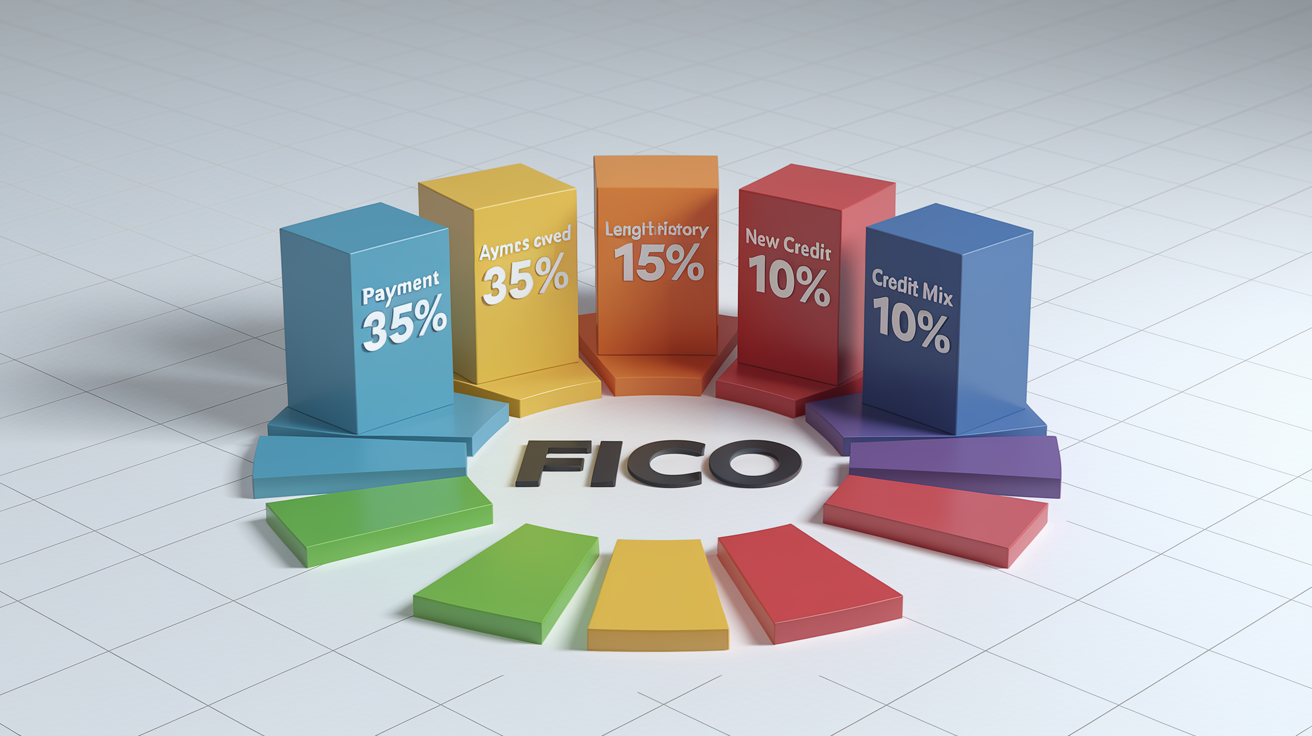
FICO scores are built from five main categories. Each one carries different weight. Payment history accounts for 35 percent, the largest share, which is why a single missed payment hurts so much. Amounts owed (also called credit utilization) makes up 30 percent, and it’s the fastest category to improve because your card balances can change month to month. Length of credit history (15 percent), credit mix (10 percent), and new credit (10 percent) all matter. But they take longer to move because they reflect long term behavior or require opening new accounts, which can trigger hard inquiries.
Payment history and utilization deliver the quickest wins because they update every billing cycle. Pay down a maxed out card today, that lower balance will usually show up on your report within 30 days. The other categories need time. Opening a new account or adding a different type of credit might help your mix over the next few months, but it won’t produce the same immediate lift as dropping your utilization from 80 percent to 20 percent. “Before applying for a new car loan, Jake paid down his two highest balance cards and saw his FICO score rise 40 points in 35 days.”
| Factor | Weight (%) |
|---|---|
| Payment History | 35 |
| Amounts Owed (Utilization) | 30 |
| Length of Credit History | 15 |
| New Credit | 10 |
| Credit Mix | 10 |
Reducing Credit Utilization to Boost Scores Fast

Utilization is the ratio of your current credit card balances to your total credit limits. Keep it below 30 percent on each card and across all cards combined. For the strongest score impact, aim for under 10 percent. Even if your overall utilization looks fine, a single card with a 90 percent balance can still hurt. Spread your balances out or focus on paying down the card that’s closest to its limit. Every dollar you pay down brings your utilization ratio down, and that change typically shows up on your report within one billing cycle, about 30 days.
Timing is everything. Most card issuers report your balance to the bureaus on your statement closing date, not your payment due date. Make a big payment a few days before your statement closes? The lower balance gets reported and your score can jump before your payment is even technically due. You can call your issuer or check your online account to find out when your statement closes each month. If you carry a balance month to month, consider making multiple smaller payments throughout the billing cycle instead of one large payment at the end. This keeps your reported balance lower.
If you’re carrying high interest debt on multiple cards, a balance transfer to a card with a 0 percent intro APR can consolidate your balances and give you breathing room to pay down principal without accruing more interest. Just remember that opening a new balance transfer card adds a hard inquiry and lowers your average account age. Use this strategy only if the interest savings and faster payoff timeline outweigh those small temporary hits.
Here are the fastest utilization reduction tactics:
-
Pay your highest utilization cards first. Focus extra cash on the card that’s closest to maxed out.
-
Make payments before the statement closing date so the lower balance gets reported to the bureaus.
-
Call your issuers to find out when they report and schedule payments a day or two before that date.
-
Make multiple payments per month to keep your balance low throughout the billing cycle.
-
Consider a balance transfer to a 0 percent APR card if the interest savings help you pay down debt faster, but don’t open multiple new accounts at once.
Error Removal and Dispute Strategies for Fast Score Gains
Mistakes on your credit report can cause large, sudden score drops. Correcting them is one of the fastest ways to recover lost points. Incorrect late payments, fraudulent accounts, duplicate tradelines, and wrong balances are all common errors that can drag your score down unfairly. Pull your reports from all three bureaus (Equifax, Experian, and TransUnion) at AnnualCreditReport.com for free once a year. Scan each report line by line and look for anything that doesn’t match your records.
If you find an error, file a dispute with the bureau reporting it. You can do this online, by mail, or by phone, though mail creates a paper trail. Under the Fair Credit Reporting Act, bureaus must investigate within 30 days and typically resolve disputes in 30 to 45 days. Once an error is corrected, the impact on your score can be immediate. Removing an incorrect late payment or a fraudulent account can produce a noticeable jump as soon as the next reporting cycle. For late payments that are accurate but you’d like removed, consider writing a goodwill letter to the creditor explaining the circumstances and asking them to delete the mark as a courtesy. It doesn’t always work, but it costs nothing to try. If you have a collection account, you might be able to negotiate a pay for delete agreement where the collector agrees to remove the account from your report once you pay it off, though not all collectors will agree.
Common High Impact Errors to Dispute
Focus on errors that carry heavy scoring penalties. An incorrect late payment or a fraudulent account opened in your name can each knock dozens of points off your score overnight. Duplicate tradelines (where the same loan or card shows up twice) can inflate your debt totals and confuse the scoring models. Wrong balances, especially if a paid off account still shows a balance, can raise your utilization and hurt your score even though you don’t owe anything.
| Error Type | Typical Resolution Time |
|---|---|
| Incorrect Late Payment | 30–45 days |
| Fraudulent Account | 30–45 days |
| Incorrect Balance | 30–45 days |
| Duplicate Tradeline | 30–45 days |
Credit Building Accounts and Authorized User Strategies

Becoming an authorized user on someone else’s credit card is one of the fastest ways to add positive payment history and lower your overall utilization, especially if you have a thin credit file or you’re rebuilding. When the primary cardholder adds you, many issuers report the full account history to your credit report. That includes the card’s age, credit limit, and payment record. If the card has a long history, low utilization, and no missed payments, you inherit all of that positive data. The account usually appears on your credit report within one billing cycle (about 30 days) and the score lift can show up just as fast.
Secured credit cards are another good option if you’re starting from scratch or recovering from serious credit damage. You open the account by putting down a cash deposit, which becomes your credit limit. Use the card for small purchases each month, pay the balance in full before the due date, and the issuer reports your on time payments to the bureaus. After several months of clean payment history, many issuers will graduate you to an unsecured card and refund your deposit. Just make sure the issuer reports to all three bureaus before you apply.
Credit builder loans work differently. You borrow a small amount (often 300 to 1,000 dollars) and the lender holds the money in a savings account while you make monthly payments. Once you’ve paid off the loan, you get the cash. These loans improve your credit mix and build payment history, but the score impact usually takes one or two billing cycles to show up because the loan needs time to age on your report.
Key authorized user and account building practices:
- Choose an authorized user card with a long account age, low utilization (under 10 percent), and a spotless payment record.
- Open a secured card with an issuer that reports to all three bureaus and use it for small recurring charges like a streaming subscription.
- Make sure the primary cardholder keeps the account in good standing. Any late payments or high balances will hurt your score too.
- Consider a credit builder loan if you have no credit history and want to add an installment account to your mix, but expect a slower score lift than authorized user strategies.
Strategic Use of Credit Limit Increases
Requesting a credit limit increase on your existing cards is one of the simplest ways to lower your utilization ratio without paying down any debt. If your card issuer raises your limit from 5,000 dollars to 8,000 dollars and you’re carrying a 2,500 dollar balance, your utilization on that card drops from 50 percent to about 31 percent instantly. That improvement usually shows up on your credit report within one billing cycle (around 30 days) and can produce a noticeable score increase as soon as the bureau updates your file.
Before you request an increase, call your issuer and ask whether they’ll do a soft pull or a hard inquiry. Many issuers use a soft pull for existing customers, which won’t affect your score. If they warn you it will be a hard inquiry, decide whether the utilization benefit outweighs the temporary score dip from the inquiry. Avoid requesting increases when you’re about to apply for a mortgage or auto loan, because even a small hard inquiry ding can make a difference during underwriting.
Quick credit limit increase tips:
- Confirm the issuer will use a soft pull before you submit the request.
- Request increases on cards you’ve had for at least six months and where you’ve made on time payments consistently.
- Don’t increase your spending after your limit goes up. The whole point is to lower utilization, not give yourself permission to charge more.
Payment History Optimization for Faster Score Recovery

Payment history is the single largest factor in your FICO score at 35 percent, so protecting it is critical for fast improvement. One missed payment can drop your score by 50 to 100 points, and it stays on your report for up to seven years. The good news? The damage fades over time, especially if you bring delinquent accounts current and avoid any new late payments. High FICO achievers (those with scores above 800) rarely have missed payments. The small 2 percent who do had their missed payment about four years in the past, showing that consistent on time payments eventually offset old mistakes.
Set up autopay for at least the minimum payment on every account so you never miss a due date. If you can afford to pay more, do it, but the minimum keeps your payment history clean. If you’ve already missed a payment, contact the lender immediately. Ask if they’ll waive the late fee or remove the late payment mark as a one time courtesy, especially if it’s your first miss. Not every lender will agree, but many will if you’ve been a reliable customer. Bringing a delinquent account current stops the bleeding. Once you’re current, the account stops reporting as late each month, which prevents further score damage.
Timing Payments for Maximum Score Protection
Pay before your due date to avoid any risk of a late mark, but also pay before your statement closing date to reduce the balance that gets reported. Even if you pay your card in full every month, a high balance reported on your statement closing date can temporarily raise your utilization and lower your score. If you know your closing date, make a payment a day or two before it so the bureaus see a lower balance. This is especially helpful if you use your card for large purchases or business expenses that you pay off each cycle.
If you’ve missed a payment and it’s been fewer than 30 days since the due date, pay immediately. Most issuers don’t report a late payment to the bureaus until you’re 30 days past due, so catching up before that threshold can save your payment history from a damaging mark. Set calendar reminders, use autopay, and keep a small buffer in your checking account to cover minimum payments even during tight months.
Rapid Rescore and Short Term Lending Considerations

Rapid rescore is a process that updates your credit file within 3 to 5 business days, but it’s only available through a lender or mortgage broker during an active loan application. You can’t request it directly from the credit bureaus. It works by submitting proof of a recent positive change (like a paid off collection, a corrected error, or a large balance reduction) and asking the bureau to update your file immediately instead of waiting for the next reporting cycle. This can make the difference between qualifying for a loan or getting a better interest rate when you’re days away from closing.
Rapid rescore is most useful when you’ve just taken action that will improve your score but the lender needs to see the updated file right away. For example, if you paid down a high balance card last week and your lender is pulling your credit today, a rapid rescore can reflect that payoff and boost your score before underwriting finishes. You’ll need documentation (proof of payment, a letter from the creditor, or a corrected credit report) and your lender will submit it to the bureaus on your behalf. Not all lenders offer this service, so ask early in the application process if you think you’ll need it.
Risk Management and Mistakes That Prevent Fast Credit Improvement

Opening too many new accounts at once is one of the fastest ways to undo your progress. Each hard inquiry can shave a few points off your score, and multiple inquiries in a short period signal risk to the scoring models. Hard inquiries affect your score for about 12 months and stay on your report for 2 years. If you’re trying to raise your score quickly, avoid applying for new credit unless it’s absolutely necessary. Wait until after you’ve improved your utilization and corrected errors, then consider new accounts only if they serve a clear purpose (like a balance transfer to save on interest or a secured card to build history).
Closing old credit card accounts after you pay them off is another common mistake. When you close an account, you lose that card’s credit limit, which raises your overall utilization ratio. If you close your oldest account, you also shorten your average account age, which can hurt the 15 percent of your score tied to credit history length. Keep paid off accounts open and use them occasionally for small purchases to keep them active. Most issuers won’t close an account for inactivity if you charge something small every few months and pay it off.
Be cautious of credit repair companies that promise instant score increases or guaranteed results. Legitimate credit repair involves disputing errors and negotiating with creditors, which takes time (usually 30 to 45 days per dispute). If a company asks for upfront fees, promises to remove accurate negative information, or tells you to create a new credit identity, walk away. You can dispute errors yourself for free, and anything a repair company can do, you can do on your own with the same timeline.
Watch out for these score damaging mistakes:
- Applying for multiple new cards or loans in a short period. Each hard inquiry hurts, and opening many new accounts lowers your average account age.
- Closing old accounts to “clean up” your credit. This reduces your total available credit and raises your utilization ratio.
- Falling for credit repair scams. Legitimate fixes follow legal dispute processes and take weeks, not days.
- Ignoring your credit reports. Errors can sit unnoticed for months and drag your score down the entire time.
- Maxing out a new card right after opening it. High utilization on a brand new account signals risk and cancels out any benefit from the higher total credit limit.
Final Words
Start by lowering card balances and paying before statement closing dates. That cuts reported utilization and often shows improvement in one billing cycle.
Also dispute errors quickly, request soft-pull credit-limit increases, or get added as an authorized user. Use rapid rescore only with an active loan. Avoid new hard inquiries and quick-fix services.
If you can only do one thing this week, pay down the highest-utilization card or make an extra payment before the statement posts. Small, timed moves can raise your score in 30 to 45 days. You’re closer than you think on how to improve credit score fast.
FAQ
Q: How can I raise my credit score to 700 in 30 days?
A: Raising your credit score to 700 in 30 days requires targeted moves: pay down balances to under 10–30% utilization, pay before statement closing, dispute errors, request limit increases, or become an authorized user. Not guaranteed.
Q: What brings your credit score up the fastest?
A: The fastest lifts come from lowering credit utilization (aim under 10%), making payments before statement closing, disputing report errors, getting a credit-limit increase, or being added as an authorized user.
Q: How can I raise my credit score in 10 days?
A: Raising your credit score in 10 days is limited: pay balances down before issuers report, make multiple payments to cut utilization, request a soft-pull limit increase, or use a lender’s rapid rescore (for active loan applications).