

Stuck juggling five monthly payments and different due dates?
Debt consolidation turns several balances—credit cards, medical bills, or personal loans—into one loan with one monthly payment so you only manage one bill and a clear payoff date.
It can save interest if the new rate is lower than your current average, but it can also stretch payments longer and cost more overall.
If you try this, first add up all your balances and compare the total cost (APR, the annual percentage rate, plus fees) before you apply.
Understanding the Debt Consolidation Process Step-by-Step

Debt consolidation combines multiple debts (credit cards, personal loans, medical bills) into one single loan with one interest rate and one monthly payment. Instead of tracking due dates and balances across several creditors, you make one payment to one lender. The goal is to simplify your financial life and, if the new loan’s rate is lower than your current average rate, reduce the total interest you pay over time.
The process starts when you add up all the debts you want to consolidate and decide on a total loan amount. Most consolidation loans range from $1,000 to $50,000, though some lenders go up to $100,000. Once you know the amount, you compare lenders to find a fixed rate loan that fits your budget. Many consolidation loans lock in a fixed interest rate, so your monthly payment stays the same for the entire term.
After you’re approved and funded (often within a week, sometimes same or next day), you use the loan to pay off your existing balances. From that point forward, you repay only the new consolidation loan in equal monthly installments until it’s paid off. You’ve replaced chaos with one clear repayment plan and a definite finish line.
Here’s how the consolidation process works in five steps:
-
Add up all your debts. List every balance, interest rate, and minimum payment you want to consolidate so you know exactly how much you need to borrow.
-
Compare lender options. Shop at least three lenders, focusing on those that allow prequalification without a hard credit pull so you can see estimated rates and terms.
-
Apply and undergo credit checks. When you submit a full application, the lender will run a hard credit inquiry and ask for income and employment documentation.
-
Receive funding. Once approved, the lender deposits the loan amount into your account or, in some cases, pays your creditors directly.
-
Pay off debts and begin the new repayment plan. Use the funds to bring each old balance to zero, confirm payoffs, then start making your single monthly payment on the consolidation loan about a month after funding.
What Debt Consolidation Options Are Available?
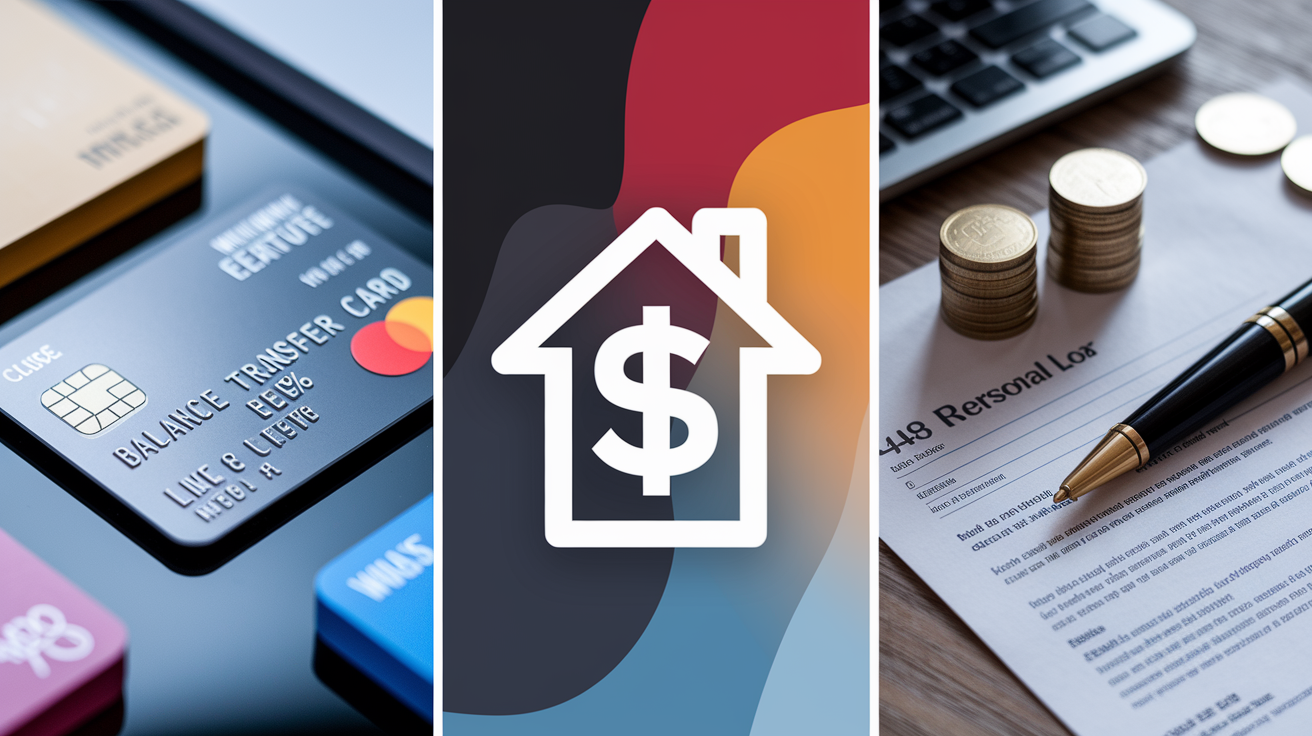
Not all consolidation looks the same. You can consolidate debt through a balance transfer card, a home equity product, or a personal loan. Each option has different mechanics, risks, and best use scenarios.
Balance Transfer Cards
A balance transfer card lets you move credit card balances onto a new card, often with a promotional 0 percent intro APR for 12 to 21 months. This can be a powerful tool if you can pay off the balance before the promo period ends. Most issuers charge a transfer fee of 3 to 5 percent of the amount you move, so transferring $5,000 might cost you $150 to $250 up front. If you’re more than 60 days late on a payment, many issuers will end your promo rate and apply a higher penalty APR to your entire balance. Balance transfers work best for relatively small debts you can realistically knock out in a short window.
Home Equity Loan or HELOC
A home equity loan gives you a lump sum at a fixed rate, with consistent monthly payments starting right after closing. A home equity line of credit, or HELOC, works like a credit card secured by your home. You draw what you need up to your limit, and your payment adjusts based on how much you’ve borrowed and whether your rate is fixed or variable. Both options typically offer lower interest rates than unsecured loans because your home is collateral. The major risk is foreclosure if you can’t make payments, and if your home’s value drops, you could end up owing more than the house is worth. Use a home equity loan for a single large payoff. Use a HELOC if you need flexibility for ongoing expenses or staged debt repayment.
Personal Loan or Personal Line of Credit
A personal loan delivers a lump sum you repay in fixed monthly installments of principal plus interest. Most are unsecured, meaning no collateral, though some lenders offer secured personal loans if you pledge an asset. A personal line of credit gives you revolving access to funds up to a set limit. Draw, repay, and draw again as needed. Both can be used to consolidate credit cards, medical bills, or other unsecured debts, and rates are often lower than credit card APRs. Lenders set your limit and rate based on your credit score, income, and debt to income ratio. Personal loans work well if you want predictable payments and plan to pay off the debt in about one year or less to lock in the best rates.
| Option | Typical Use Case |
|---|---|
| Balance Transfer Card | Small credit card debt paid off within the promotional period |
| Home Equity Loan or HELOC | Larger debts when you own a home and can tolerate foreclosure risk |
| Personal Loan or Line of Credit | Unsecured consolidation for multiple debt types with fixed monthly payments |
Eligibility Requirements for Debt Consolidation
Lenders want to know you can afford the new loan and that you have a track record of managing credit responsibly. They’ll check your credit score, review your credit history (many prefer at least two to three years of on time payments), and calculate your debt to income ratio by dividing your total monthly debt payments by your gross monthly income. A lower DTI and a higher credit score improve your chances of approval and help you qualify for better rates.
Before you apply, you can often prequalify with a soft credit check that doesn’t affect your score. Prequalification shows you estimated rates and terms so you can compare lenders without commitment. When you’re ready to move forward, the full application triggers a hard credit inquiry and requires documentation like a letter of employment, recent tax statements, and loan statements or letters from your current creditors. Decisions can come the same day or take a few business days, depending on the lender.
Once approved, funding typically happens within about a week, though some lenders offer same or next day deposits. If the lender pays your creditors directly, the process can take several weeks to complete, so keep an eye on your old accounts to avoid missed payments or extra interest charges while the payoffs are in progress.
Costs, Interest Rates, and Loan Terms in Debt Consolidation
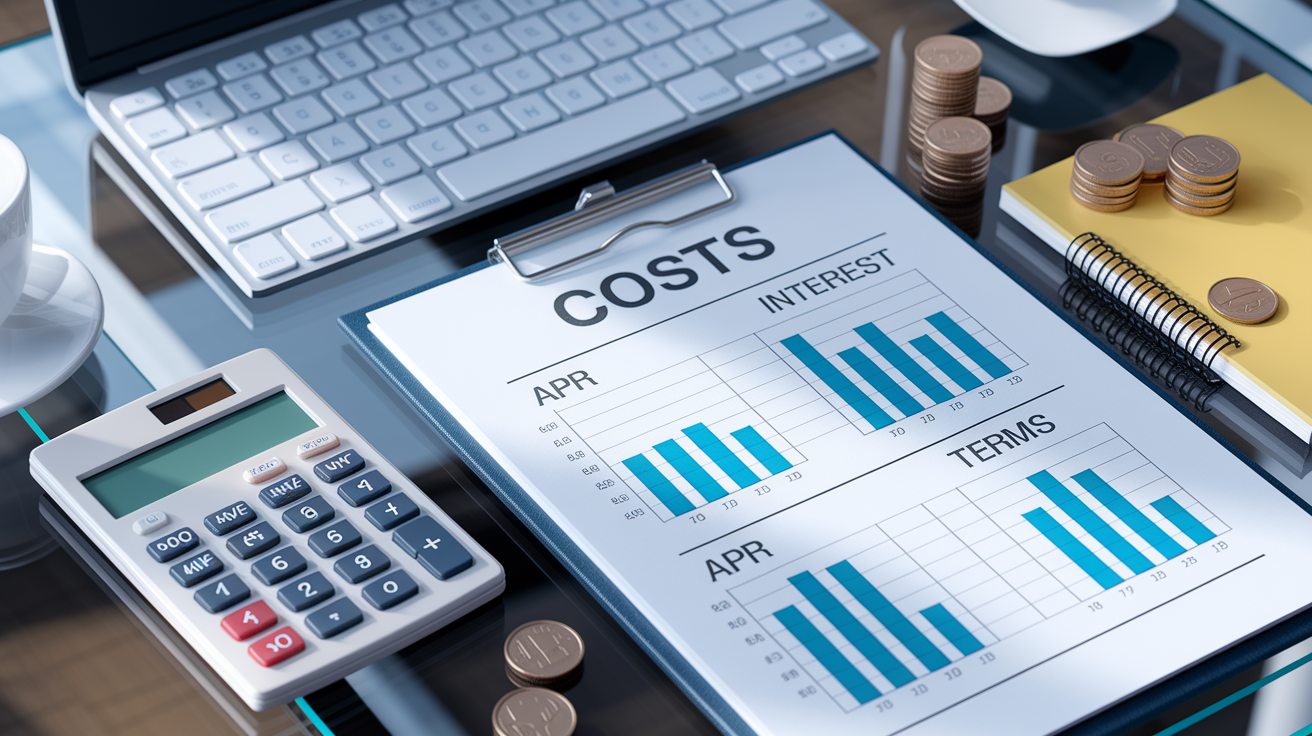
Debt consolidation loans commonly carry annual percentage rates between 7 and 36 percent, and your exact APR depends on your credit score, income, and the lender’s underwriting standards. Loan terms can run anywhere from one year to ten years. The term length you choose has a big impact on your total cost. A longer term lowers your monthly payment but stretches out the interest charges, often resulting in higher total interest over the life of the loan. A shorter term means higher monthly payments but less total interest and a faster path to debt free.
Before you commit, compare the full picture of what you’ll pay. Add up all the costs (interest, fees, and any prepayment penalties), then calculate the total amount you’ll repay over the loan’s entire term. That number tells you whether consolidation actually saves you money or just spreads the pain out longer.
Here are the four cost components to examine:
- Interest rate: The base cost of borrowing, expressed as an annual percentage before fees.
- APR: The true annual cost, including the interest rate plus origination fees and other lender charges.
- Fees: Origination fees on personal loans, balance transfer fees of 3 to 5 percent on credit cards, and sometimes early payoff penalties.
- Total interest over the loan lifespan: Multiply your monthly payment by the number of months, subtract the original loan amount, and you’ll see exactly how much interest you’re paying from start to finish.
Credit Score Impact When Consolidating Debt
When you apply for a consolidation loan, the lender runs a hard credit inquiry, which can lower your score by a few points temporarily. That dip is normal and usually recovers within a few months if you continue making on time payments. The inquiry stays on your credit report for about two years, but its impact fades over time.
If you use the loan to pay off credit card balances, your credit utilization ratio (how much of your available credit you’re using) drops, and that can boost your score. Utilization is a major scoring factor, so zeroing out cards while keeping the accounts open can help. The catch is that you have to resist the temptation to run those cards back up. If you pay off $10,000 in credit card debt with a consolidation loan and then charge another $5,000 on the cards, you’ve made the problem worse, not better.
On time payments on your new consolidation loan help rebuild and strengthen your credit over time. Payment history is the single biggest factor in your credit score, so every month you pay on time works in your favor. Miss a payment, and the damage can be severe. Late payments stay on your report for up to seven years and can tank your score by dozens of points.
Pros and Cons of Debt Consolidation Decisions
Debt consolidation offers real benefits when the numbers work in your favor. You replace multiple due dates and payment amounts with one predictable monthly bill, which reduces the chance of missing a payment and makes budgeting simpler. If your new loan’s interest rate is lower than the average of your current debts, you can save hundreds or even thousands of dollars in interest over the life of the loan. For example, consolidating $15,000 in credit card debt at 22 percent into a loan at 13 percent can save nearly $7,000 in interest and cut your payoff timeline by more than a year.
But consolidation doesn’t erase debt, it just restructures it. Stretching repayment over a longer term can lower your monthly payment but increase the total interest you pay, especially if the rate isn’t much better than what you have now. Secured loans like home equity products carry the risk of foreclosure if you default. Any consolidation only works if you stop adding new debt while you pay off the old.
Here are three key benefits and three serious drawbacks:
- Benefit: One monthly payment simplifies tracking and reduces the risk of missed due dates.
- Benefit: A lower interest rate can save significant money over time and speed up your payoff.
- Benefit: Fixed rate loans provide predictable payments that make long term budgeting easier.
- Drawback: Longer loan terms can increase total interest paid, even if your monthly payment drops.
- Drawback: Secured loans put your home or other collateral at risk if you can’t keep up with payments.
- Drawback: Consolidation only helps if you stop using credit cards and avoid piling on new balances.
Real World Examples of How Debt Consolidation Works
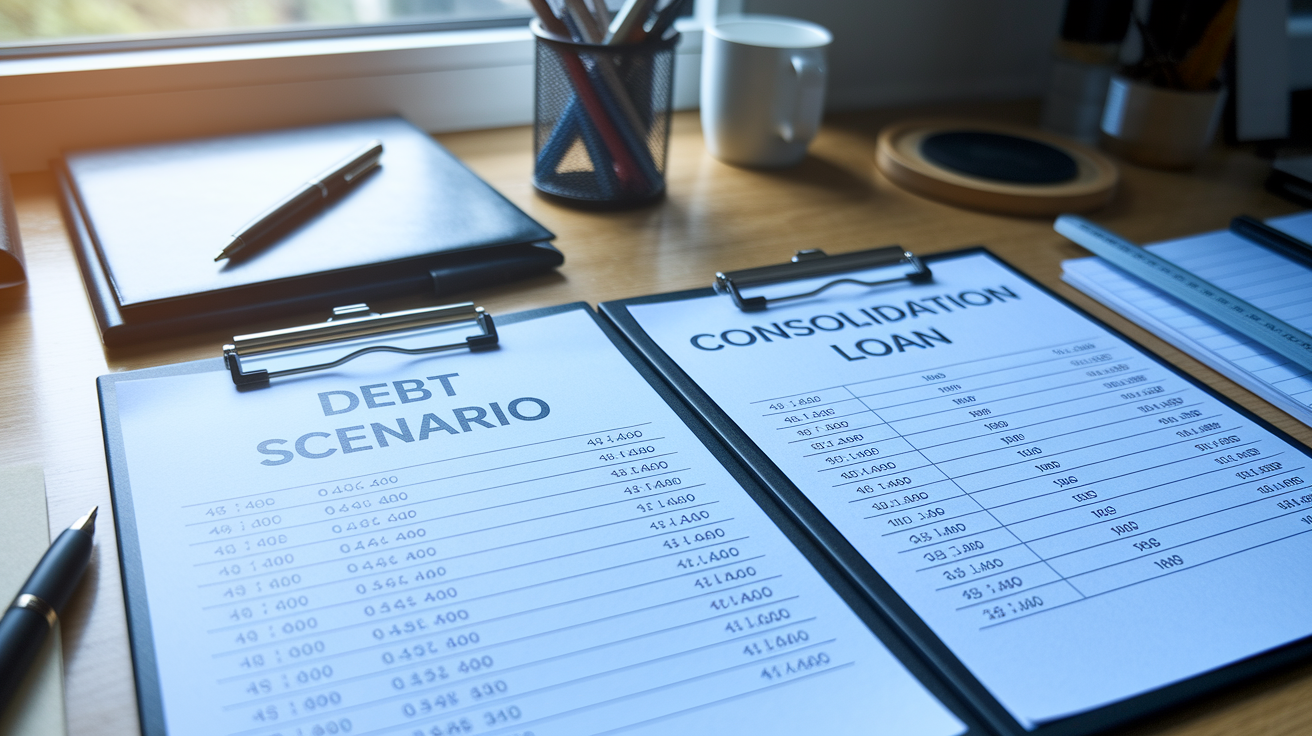
Seeing the math in action makes it easier to understand whether consolidation saves you money. Imagine you’re carrying $15,000 in credit card debt spread across three cards, each with a $5,000 balance. Your average interest rate is 22 percent APR, and you’re making combined minimum payments of about $375 per month. At that pace, it would take more than six years to pay off the debt, and you’d pay roughly $12,375 in interest alone.
Now compare that to a debt consolidation loan for $15,000 at 13 percent APR with a five year term. Your new monthly payment drops to about $341, $34 less per month, and you’ll pay around $5,475 in total interest. You save nearly $7,000 in interest and become debt free roughly one year earlier. The table below lays out both scenarios side by side.
| Debt Scenario | APR | Monthly Payment | Total Interest | Payoff Timeline |
|---|---|---|---|---|
| Three credit cards, $15,000 total | 22% | $375 | $12,375 | 6+ years |
| Consolidation loan, $15,000 | 13% | $341 | $5,475 | 5 years |
Alternatives to Debt Consolidation
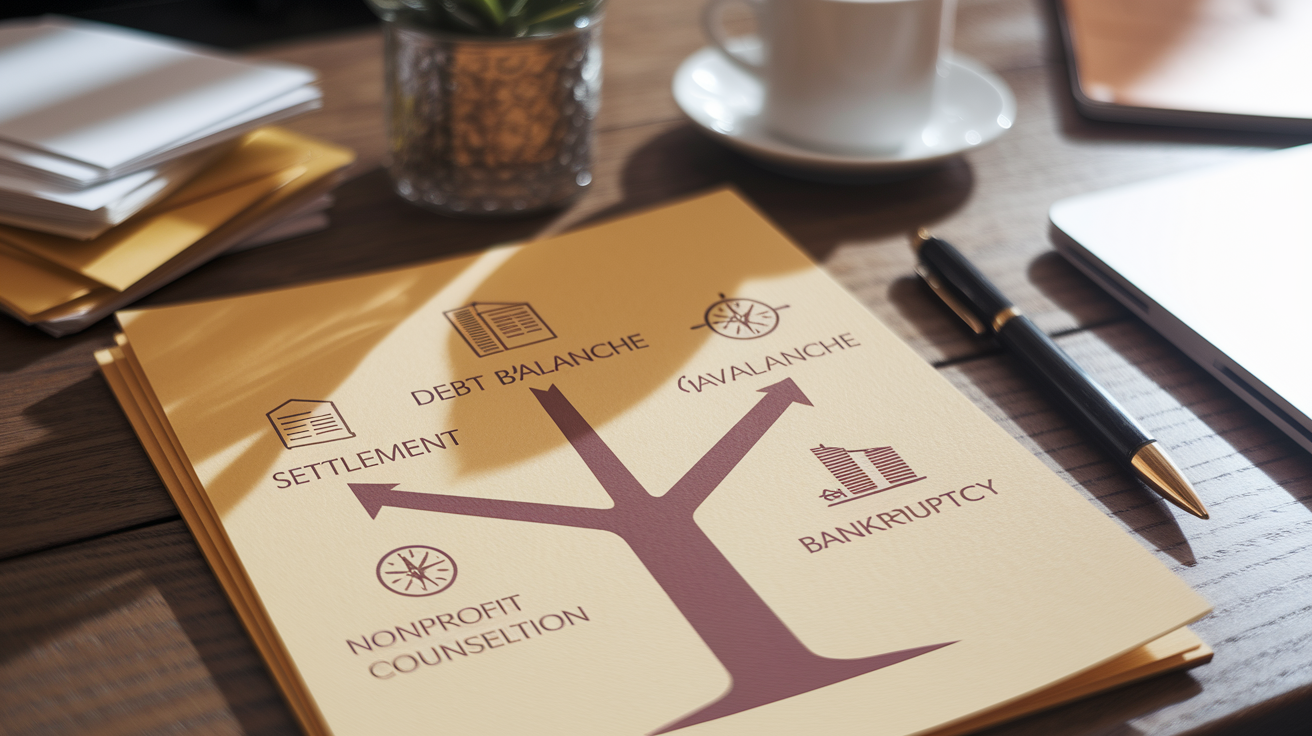
If consolidation doesn’t fit your situation (maybe you don’t qualify for a better rate, or you’re worried about taking on a new loan), there are other paths to tackle debt. Debt settlement involves negotiating directly with creditors to pay less than the full balance, often through a lump sum payment. It can reduce what you owe, but it also damages your credit and may trigger tax consequences if forgiven debt is reported as income.
You can also use a payoff strategy without borrowing. The debt snowball method focuses on paying off your smallest balance first to build momentum, then rolling that payment into the next smallest debt. The debt avalanche targets your highest interest debt first, saving you the most money over time. Both work, and you can mix approaches. Pay the smallest balance to get a quick win, then switch to avalanche mode for the rest.
Nonprofit credit counseling agencies can help you set up a debt management plan, where the counselor negotiates lower interest rates with your creditors and consolidates your payments without a new loan. Bankruptcy is the most drastic option and should be a last resort. It can wipe out or restructure debts, but it stays on your credit report for seven to ten years and makes it harder to rent, borrow, or sometimes even get a job.
Here are four alternatives to consolidation worth exploring:
- Debt settlement: Negotiate with creditors to pay less than the full balance, often in a lump sum.
- Snowball or avalanche payoff strategies: Tackle debts systematically without taking on a new loan.
- Nonprofit credit counseling: Work with a counselor to create a debt management plan with reduced rates.
- Bankruptcy: A legal process that discharges or reorganizes debts but carries severe long term credit consequences.
Final Words
in the action, you learned what consolidation does, the main options, eligibility, costs, credit effects, and real examples.
If you’re deciding whether to move forward, follow a simple rule: pick consolidation only if it lowers your total cost or simplifies payments without risking your home. Run the numbers with a calculator and watch for fees.
If you’re still asking how does debt consolidation work, remember it combines debts into one loan so you make one payment. Start by adding balances, comparing offers, and picking a plan you can follow. You can do this.
FAQ
Q: How much is the payment on a $50,000 consolidation loan?
A: The payment on a $50,000 consolidation loan depends on the interest rate and term. Expect roughly $650–$1,150 per month: e.g., about $1,130 at 13% for 5 years, $660 at 10% for 10 years.
Q: What are the negative effects of debt consolidation?
A: The negative effects of debt consolidation include higher total interest if you stretch the term, transfer or origination fees, and risk to secured assets like your home if you default.
Q: How long does it take for debt consolidation to pay off debt?
A: How long debt consolidation takes depends on the loan term you choose and payment size. Typical terms run 1–10 years; balance transfers offer 0% for 12–21 months if you can pay quickly.
Q: How long will it take to pay off $20,000 in credit card debt?
A: How long to pay off $20,000 depends on APR and monthly payment. Example: at 15% APR and $500/month ≈ 4.7 years; at 18% APR and $1,000/month ≈ 2 years.