


Think debt consolidation is instant? Many people expect a same-day fix, but the reality is different.
In short: consolidation can take anywhere from a few days to several weeks, depending on the method and your paperwork.
Personal loans and balance transfers often finish in about 2 to 10 business days.
Home equity loans or debt management plans can take several weeks.
This article breaks down timelines by method, explains the biggest delays, and gives simple steps to speed things up so you know what to expect and what to do next.
Overall Debt Consolidation Timeline Overview
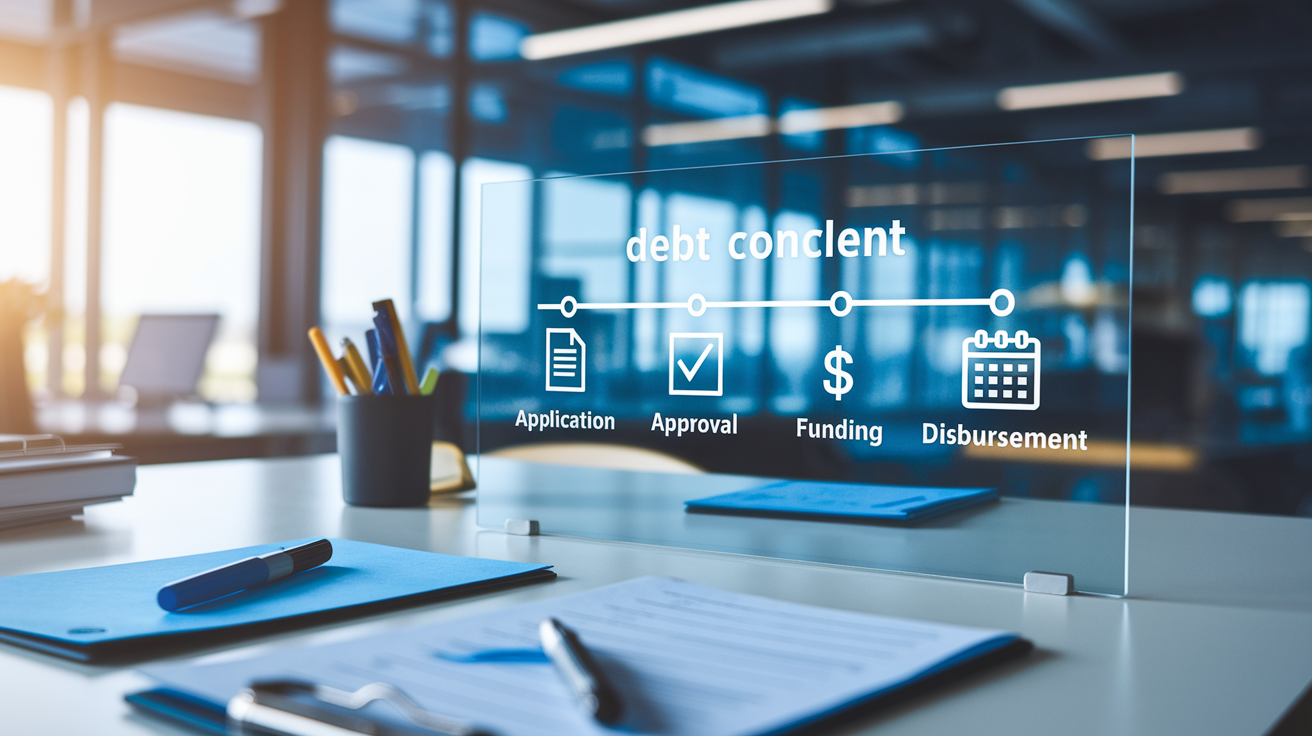
Debt consolidation usually takes anywhere from a few days to several weeks. It depends on your lender, your credit, and how fast you can get your documents together. The application itself? About 10 to 60 minutes if you’re filling out an online form or talking to a loan officer. Most lenders ask for the basics upfront: income, employment, Social Security number, existing debts, and why you need the loan.
Approval decisions come next. That window usually runs one to seven business days for personal loans and balance transfers. Some online lenders advertise instant or same-day decisions if your credit’s strong and your income’s easy to verify. Others take a few days to review pay stubs, bank statements, employment letters. Once you’re approved, fund disbursement typically happens within one to seven days. A handful of lenders can deposit money the same day you sign if you meet their cutoff time. If you e-sign by 2:30 p.m. Eastern on a business day, some lenders will initiate a wire that afternoon.
The full timeline from application to money in your account depends on a few things:
Excellent credit (720+) with W-2 income often means 2 to 7 days total. Instant prequalification, quick approval, fast funding.
Average credit (650 to 719) with standard employment typically takes 5 to 10 days. A few days for underwriting, another few for disbursement.
Poor credit (below 650) or a thin credit file can stretch to 10 to 14 days or longer if additional verification’s required.
Self-employed or contract income often runs 7 to 14+ days because lenders request tax returns, profit and loss statements, and may need extra review time.
Timeframes by Debt Consolidation Method
Different consolidation methods follow different timelines because they involve different underwriting processes, collateral checks, or creditor negotiations. A personal loan from an online lender might fund in three days. A home equity loan requires appraisals and title work that can take weeks. Knowing which method you’re using helps you set realistic expectations for when your old accounts will be paid off and your new single payment begins.
Personal Loan Consolidation Timeline
Personal loan consolidation is one of the faster routes. Most unsecured personal loans move from application to funding in about three to ten business days. You’ll start by completing an online or phone application, which takes 15 to 45 minutes. Lenders pull your credit, verify income, check your debt to income ratio. If you prequalify with a soft pull first, you’ll see estimated rates without affecting your credit score.
Approval typically arrives within one to seven days. Some lenders give instant decisions if your profile’s straightforward. After approval, you’ll sign a loan agreement electronically. Funding usually happens one to seven days later, though certain lenders advertise same-day or next-day disbursement if you finish signing early enough in the day. Many lenders can pay your creditors directly, which adds a few extra days because they mail checks or initiate ACH transfers to each account. If you receive a lump sum instead, you’re responsible for paying off your old debts yourself. That can be immediate once the money hits your account.
Loan amounts commonly range from $5,000 to $100,000. Repayment terms usually run 24 to 60 months. A shorter term like 24 months gets you debt free faster but raises your monthly payment. A 60 month term lowers the payment but increases total interest paid.
Balance Transfer Card Timeline
Balance transfer cards can approve in minutes to a few days if you apply online and have decent credit. Once approved, you request a balance transfer from your new card issuer, providing account numbers and amounts for each debt you want to move. The actual transfer, meaning when your old creditors receive payment and your balance appears on the new card, takes anywhere from one to 14 days. Most complete in about five to seven business days.
These cards often come with a 0% introductory APR period that lasts six to 24 months. Helpful if you can pay off the full balance before the promo ends. Most issuers charge a balance transfer fee, typically 3% to 5% of the amount transferred. If you’re moving $10,000 and the fee’s 3%, you’ll pay $300 upfront, but you save on interest if you clear the balance during the zero percent window.
The key timing risk is missing the intro period. If you transfer $10,000 with a 21 month 0% offer and only pay down $8,000 in that time, the remaining $2,000 starts accruing interest at the card’s standard purchase APR. That can be 18% to 25% or higher. Plan your monthly payments so you finish before the clock runs out.
Debt Management Plan Timeline
A debt management plan through a nonprofit credit counseling agency takes longer to set up than a loan because it involves negotiating with multiple creditors. Your initial consultation usually lasts 60 to 90 minutes. A counselor reviews your income, expenses, debts. If a DMP makes sense, the agency contacts your creditors to request lower interest rates, waived fees, or adjusted payment terms.
Setup typically takes two to six weeks. Each creditor has to agree to the plan, and some respond faster than others. Once all creditors are on board, you start making a single monthly payment to the agency, which distributes funds to your creditors. The full DMP commonly lasts three to five years, depending on how much you owe and what payment you can afford.
One downside: most plans require you to close or stop using your credit cards, which can hurt your credit utilization ratio temporarily. But as you pay down balances and make on-time payments through the plan, your credit often improves over the life of the DMP. Accounts eventually show as “paid as agreed” once they’re settled.
| Method | Approval Time | Full Setup Time |
|---|---|---|
| Personal Loan Consolidation | 1–7 days | 3–10 days (application to funding) |
| Balance Transfer Card | Minutes to 7 days | 1–14 days (approval to transfer completion) |
| Debt Management Plan | Same day (counselor session) | 2–6 weeks (creditor agreements finalized) |
Factors That Speed Up or Slow Down the Process

Your financial profile and how well you prepare can shave days off the timeline or add a week of back and forth. Lenders move faster when they can verify everything quickly. They slow down when they need to ask follow-up questions or wait for third-party responses.
Credit score plays a big role. Borrowers with scores above 700 often qualify for automated underwriting, which means a computer reviews your application in seconds and kicks out an instant decision. If your score’s below 650, a human underwriter may review your file manually, checking for compensating factors like steady employment or low debt to income. That manual review can take an extra two to five business days. Income type matters too. W-2 employees usually get approved faster than self-employed applicants because pay stubs and employer verification are simpler to confirm than tax returns and profit and loss statements.
Other factors that can extend the timeline:
Incomplete paperwork. Missing a bank statement or pay stub means the lender has to request it again, adding days.
Slow employer verification. Some lenders call or email your HR department, and if no one responds for 48 hours, your approval stalls.
Lender backlog. During busy seasons or rate drops, lenders can see application volume spike, which pushes approval times from three days to seven or more.
High loan amounts. Requesting $50,000 instead of $10,000 may trigger additional underwriting steps or require a second reviewer to sign off.
Self-employment income. Lenders often want two years of tax returns, a year to date profit and loss, and sometimes bank statements showing consistent deposits. All of which take time to gather and review.
Tips to Speed Up Debt Consolidation Approval

Preparation is the easiest way to cut days off the process. Lenders approve loans faster when they don’t have to chase you for documents or clarify confusing information. Most delays happen because an applicant forgot to upload a second pay stub or didn’t realize the lender needed a specific type of bank statement.
Start by prequalifying with a soft credit pull if the lender offers it. Prequalification shows you estimated rates and loan amounts without triggering a hard inquiry, so you can shop around and pick the best offer before committing. Once you’re ready to apply for real, gather your documents in advance: recent pay stubs (usually the last two or three), bank statements from the past two months, government issued photo ID, Social Security number, and a list of debts you want to consolidate with account numbers and balances. If you’re self-employed, add your last two years of tax returns and a year to date profit and loss statement.
Choosing the right lender speeds things up too. Online lenders and fintech companies often have faster underwriting systems than traditional banks because they rely on automated decisioning and don’t require in-person visits. Some advertise same-day funding if you apply early in the day and e-sign documents by a cutoff time, which can be as early as 2:30 p.m. Eastern. Credit unions can be fast if you’re already a member, but joining a new credit union may add a few days while your membership processes.
Here’s a step by step checklist to expedite approval:
- Prequalify with multiple lenders using soft pulls to compare rates without damaging your score.
- Gather all required documents before you start the application. Pay stubs, bank statements, ID, Social Security number, and debt account details.
- Apply during business hours on a weekday so underwriters can review your file the same day and reach out if they need clarification.
- Choose lenders that specialize in fast funding, especially online platforms that advertise one to three day disbursement.
- Freeze or lift any fraud alerts on your credit report temporarily. Alerts can slow automated approvals because the system flags your file for manual review.
- Respond immediately to any lender requests for additional information. Every day you wait to upload a missing document is another day your approval sits in the queue.
Final Words
You saw the full debt consolidation timeline: application (minutes to hours), approval (1–7 days), and disbursement (1–7 days). That’s the path from start to finish.
We compared methods like personal loans, balance transfers, and debt management plans, and covered key factors that speed or slow the process, plus quick tips to move things faster.
If you’re asking how long does debt consolidation take, expect a few days to a few weeks based on credit and method. Do one thing today: gather pay stubs, bank statements, and ID, then prequalify. You’ll likely finish sooner than you think.
FAQ
Q: How much is the payment on a $50,000 consolidation loan?
A: The payment on a $50,000 consolidation loan depends on rate and term. For example, at 6% APR it’s about $967/month for 5 years or $555/month for 10 years; higher rates raise payments.
Q: How to pay off $30,000 in debt in 1 year?
A: To pay off $30,000 in one year you need about $2,500 monthly plus interest. Cut spending, boost income, target highest-interest balances, and automate large monthly payments.
Q: How long does debt consolidation take to process?
A: Debt consolidation processing takes minutes-to-hours to apply, 1–7 days for approval, then 1–7 days for disbursement, and most borrowers finish in 1–2 weeks; slower if documents are missing.
Q: Is debt consolidation hurting your credit?
A: Debt consolidation can hurt your credit short-term due to a hard inquiry and account changes, but it often helps long-term if you make on-time payments and reduce total balances.