


Do derogatory marks stay on your credit report forever?
No — most don’t.
Under federal rules, most derogatory items stick around for 7 years from the original delinquency date.
Chapter 7 bankruptcies last 10 years; hard credit inquiries vanish after 2 years.
Knowing the exact timelines matters: it tells you when old marks stop hurting and where to focus your recovery.
This post breaks down each item’s clock, explains when the countdown starts, and gives the first steps to repair or dispute your report.
Exact Timeframes for How Long Derogatory Marks Stay on a Credit Report

Most derogatory marks stick around for 7 years from the date of first delinquency. That’s the standard rule under the Fair Credit Reporting Act. Bankruptcies and hard inquiries break the pattern. Chapter 7 bankruptcy hangs on for 10 years from filing. Hard inquiries disappear after 2 years. Pretty much everything else follows the 7‑year timeline.
The 7‑year clock starts at the “original delinquency date.” Not when your creditor reports it. Not when a collection agency buys your debt. If you missed a payment in January 2020 and the account went to collections in March 2020, the countdown begins in January 2020. So the collection entry vanishes in January 2027, no matter how many times the debt gets sold or reported.
Derogatory marks don’t hurt the same way throughout their entire lifespan. A late payment from three months ago tanks your score way harder than one from five years ago. Scoring models care most about what you’ve done lately. Your best move? Build fresh positive history, even while those old marks are still visible.
Timeframe Summary by Derogatory Mark
- Late payments – 7 years from the first missed payment; gets reported after 30, 60, or 90 days late
- Collection accounts – 7 years from the original delinquency date that led to the collection
- Charged-off accounts – 7 years from the original delinquency date
- Repossessions – 7 years from the first missed payment that triggered repossession
- Foreclosures – 7 years from the first missed payment that started foreclosure proceedings
- Debt settlements – 7 years from the first missed payment; status gets updated to “settled”
- Chapter 7 bankruptcy – 10 years from the filing date
- Chapter 13 bankruptcy – 7 years from the filing date
- Hard inquiries – 2 years from the inquiry date; impact usually fades after 1 year
- Medical collections – 7 years from original delinquency; only gets reported after 180 days of nonpayment
- Student loan delinquencies – 7 years; private loans show late after 30 days, federal after 90 days; default happens after 270 days missed
Why Different Derogatory Marks Follow Different Reporting Rules

FCRA sets baseline reporting durations, but credit bureaus and data‑furnishing agreements layer on extra rules. Bureaus update policies to meet evolving data‑quality standards. In April 2018, Equifax, Experian, and TransUnion all removed civil judgments and tax liens from consumer credit reports because those public records had too many errors. The legal reporting period still existed. The bureaus just stopped displaying those items altogether.
Medical debt gets special treatment beyond basic FCRA timelines. There’s a 180‑day waiting period before medical collections show up on reports. That gives you time to work with insurance providers and sort out billing disputes. Other derogatory items like collections, charge‑offs, and late payments rely on the original delinquency date. Hard inquiries count from the inquiry date itself. Bureau policies, lender agreements, and federal regulations all interact to shape how and when each mark drops off.
| Item Type | Governing Rule or Policy | Special Exceptions or Notes |
|---|---|---|
| Late payments | FCRA 7‑year rule; start date = original delinquency | Reported at 30, 60, or 90 days late |
| Collections | FCRA 7‑year rule; start date = original delinquency before placement | Paid collections ignored by FICO 9 and VantageScore 3.0 |
| Charge‑offs | FCRA 7‑year rule; start date = original delinquency | Paying doesn’t remove the entry; updates status only |
| Foreclosures | FCRA 7‑year rule; start date = first missed payment leading to foreclosure | Short sales also hurt credit but typically less than foreclosure |
| Repossessions | FCRA 7‑year rule; start date = first missed payment | Often happens after about 90 days of missed payments |
| Chapter 7 bankruptcy | FCRA 10‑year exception; start date = filing date | Individual accounts discharged in bankruptcy may drop earlier |
| Chapter 13 bankruptcy | FCRA 7‑year rule; start date = filing date | Repayment plan typically lasts 3–5 years |
| Hard inquiries | FCRA 2‑year rule; start date = inquiry date | Multiple rate‑shopping inquiries within 14–45 days often count as one |
| Medical collections | FCRA 7‑year rule; bureau policy = 180‑day wait before reporting | Newer models may ignore small‑balance medical collections entirely |
| Civil judgments & tax liens | Historically FCRA 7 years (paid) or indefinite (unpaid) | Removed by all three major bureaus as of April 2018 due to data‑quality issues |
When the Clock Starts for Derogatory Marks and Why Start Dates Matter

The “original delinquency date” is the first missed payment that kicked off the whole mess. Let’s say you stopped paying a credit card in March 2021. The account charged off in September 2021 and got sold to a collection agency in December 2021. Your 7‑year reporting period starts in March 2021. Not September. Not December. By March 2028, the charge‑off and collection entries must disappear from your credit report.
Reporting date, sale of debt, and delinquency date are three different things. The reporting date is when the creditor first tells the bureaus about the late account. The sale date is when a new collector buys the debt. Neither one resets the clock. FCRA requires that all furnishers and bureaus use the same original delinquency date, even as the debt changes hands. Ignore any collection letter claiming a “new” account with a fresh timeline.
Re‑aging happens when a creditor or collector improperly reports a later delinquency date to stretch the 7‑year period. It’s illegal. If you spot a delinquency date that doesn’t match your records, dispute it right away with each credit bureau and the furnisher. Provide account statements, payment history, or other documentation showing the real date of first delinquency. Bureaus must investigate within 30 days and correct the record if the furnisher can’t verify the reported date.
How Scoring Models Treat Derogatory Marks Over Time

FICO 8 still counts paid collections against your score, so paying a collection won’t immediately boost a FICO 8 score. FICO 9 and VantageScore 3.0 ignore paid collections completely. If you pay a collection and your lender uses FICO 9, you might see an immediate score increase even though the collection stays on your report for the full 7 years. Before paying, ask which scoring model your target lender uses. Or just know that newer models reward payment while older models don’t.
As derogatory marks age, their impact shrinks. A 90‑day late payment from six months ago can drop a good score by more than 100 points. That same late payment from five years ago might lower your score by 20 to 30 points. Hard inquiries stop affecting most scores after about a year, even though they stay visible for two. The longer you go without new negative activity, the more your positive payment history dilutes the old marks.
5 Key Scoring‑Model Behaviors
- FICO 8 includes paid collections; paying collections helps with lender perception but not this score
- FICO 9 and VantageScore 3.0 ignore paid collections; paying can produce an immediate score lift
- Hard inquiries count for scoring for roughly 1 year but stay visible for 2 years
- Derogatory marks lose weight as they age; a 5‑year‑old late payment hurts less than a recent one
- Multiple late payments or a mix of derogatory types compound the score damage more than a single old item
Disputing Inaccurate Derogatory Marks on Your Credit Report

Disputes make sense when you spot incorrect dates, wrong balances, duplicate accounts, or items that don’t belong to you. Identity theft, clerical errors, and furnisher mistakes all create inaccuracies you can challenge. Don’t dispute accurate negative information just because you don’t like it. Bureaus will verify the item and leave it there.
You’ll need documentation that proves the error. Gather account statements, payment receipts, police reports for identity theft, or letters from creditors confirming corrections. Submit your dispute to each credit bureau that lists the inaccurate item. Bureaus must investigate and respond within 30 days. If you provide extra relevant information during the investigation, they may extend the deadline to 45 days. Once the bureau finishes its review, it’ll update, verify, or delete the item.
If the bureau leaves the inaccurate item on your report, contact the data furnisher directly and request a reinvestigation. Send your evidence and ask the furnisher to correct its records and notify all three bureaus. If both the bureau and furnisher refuse to remove a genuinely incorrect mark, escalate by filing a complaint with the Consumer Financial Protection Bureau. The CFPB tracks patterns of noncompliance and can prompt faster resolutions.
7 Steps to Dispute a Derogatory Mark
- Request your credit reports from Equifax, Experian, and TransUnion at AnnualCreditReport.com or directly from each bureau
- Review each report line by line and identify inaccuracies like wrong dates, balances, or accounts you don’t recognize
- Collect supporting documents like payment records, account statements, correspondence from creditors, or identity‑theft reports
- File a dispute online, by mail, or by phone with each bureau that shows the error; attach copies of your evidence
- Wait 30 days for the bureau’s investigation and response (up to 45 days if you submit new information mid‑investigation)
- If the item stays and you believe it’s wrong, dispute directly with the furnisher and send the same documentation
- If still unresolved, file a complaint with the Consumer Financial Protection Bureau and include all correspondence and evidence
Payment, Settlement, and Pay‑for‑Delete: How They Affect Derogatory Mark Outcomes
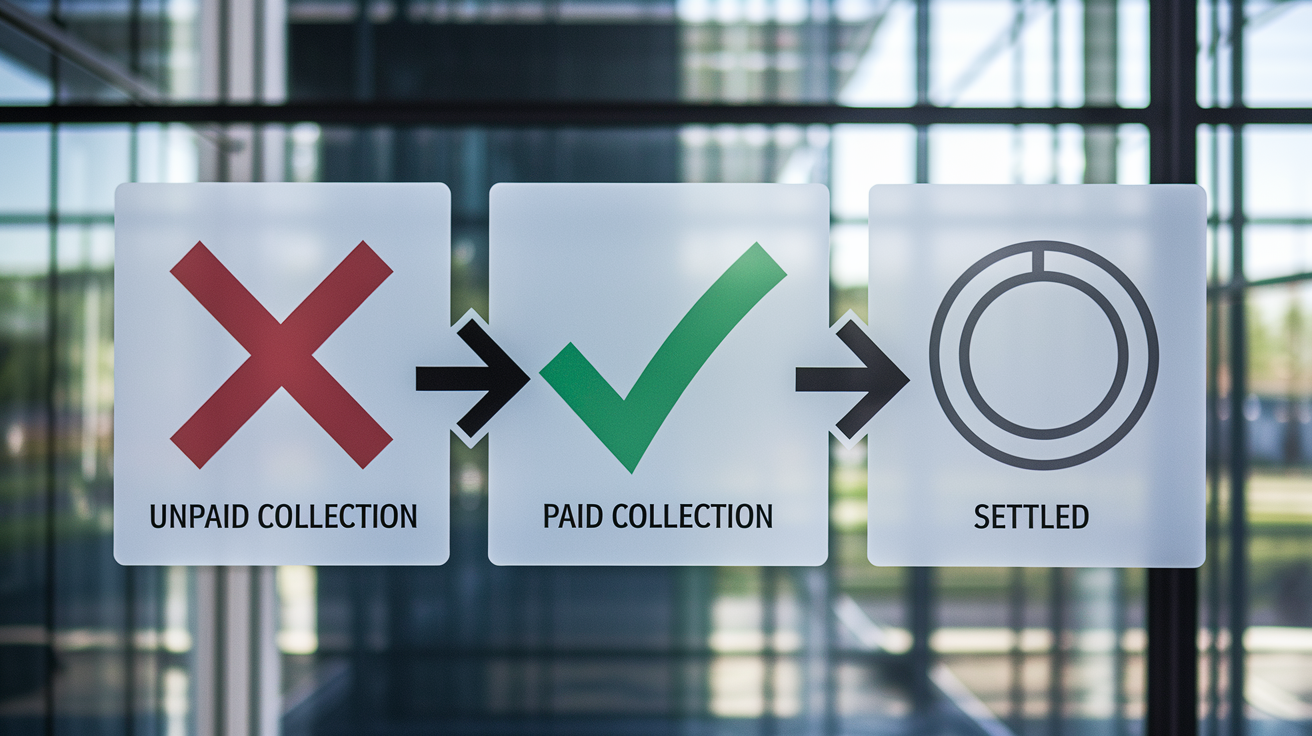
Paying or settling a debt updates the account status to “paid” or “settled” but doesn’t erase the derogatory entry or restart the 7‑year clock. The original delinquency date stays put. A paid collection is still a collection. But paying brings real benefits. Newer scoring models like FICO 9 and VantageScore 3.0 ignore paid collections, so your score may jump immediately. Lenders reviewing your full credit report see “paid” as better than “unpaid,” which can tip approval decisions in your favor.
Settlement means you negotiated to pay less than the full balance. The account updates to “settled” or “settled for less than full balance.” It’s still negative, but it’s better than an unpaid collection or charge‑off. Settling stops further collection activity, kills the risk of a lawsuit, and may qualify you for certain credit products sooner than leaving the debt unpaid. Some lenders treat settled accounts nearly the same as paid accounts. Others stay cautious.
6 Effects of Payment and Settlement Actions
- Paying a collection changes status to “paid collection”; doesn’t remove the entry or reset the 7‑year timer
- Settling updates status to “settled” or “settled for less”; entry stays for the full 7 years from original delinquency
- FICO 9 and VantageScore 3.0 ignore paid collections; FICO 8 still counts them
- Pay‑for‑delete is a negotiated agreement where the collector removes the entry after payment; collectors aren’t required to agree and bureaus discourage it
- Paying eliminates ongoing collection calls, letters, and the risk of a lawsuit
- Both paid and settled accounts improve lender perception compared to unpaid debts, even though the mark stays visible
Rebuilding Credit While Waiting for Derogatory Marks to Fall Off

You don’t have to wait 7 or 10 years for your score to recover. Rebuilding starts the day after a derogatory mark appears. Payment history makes up the biggest piece of your credit score. Every on‑time payment you make from today forward adds positive weight. After 12 to 24 months of consistent, on‑time payments, many people see real score improvement even with old derogatory marks still sitting there.
Keep credit utilization below 30 percent of each card’s limit. Lower is better. If your card has a 1,000 limit, keep the balance under 300 at all times. Pay down balances quickly and don’t run cards up to their limits. Low utilization signals to scoring models that you manage credit responsibly. Limit new credit applications to avoid piling up hard inquiries. When rate‑shopping for a mortgage or auto loan, finish all applications within a 14‑to‑45‑day window so they count as a single inquiry.
Track your progress by checking your credit reports every few months. Watch for score increases and confirm that derogatory marks age off on schedule. Celebrate small wins. A 20‑point score jump after six months of on‑time payments is real progress. The combination of time, positive behavior, and smart credit use will rebuild your creditworthiness long before the last derogatory mark disappears.
7 Credit‑Rebuilding Strategies with Numeric Targets
- Make every payment on time; set up autopay or calendar reminders to avoid any new late payments
- Keep credit utilization below 30 percent on each revolving account; aim for under 10 percent if you can
- Pay down high‑interest balances first to reduce total outstanding debt and interest costs
- Open a secured credit card with a deposit of 200 to 500 and use it for small recurring charges, paying in full each month
- Consider a credit‑builder loan from a credit union; typical loan amounts range from 300 to 1,000, held in savings while you make monthly payments
- Become an authorized user on a family member’s or friend’s account with a long, positive payment history and low utilization
- Limit new credit inquiries; if rate‑shopping for a loan, finish all applications within 14 to 45 days to minimize hard‑inquiry impact on your score
Final Words
Start by using the exact timeframes we laid out: most derogatory marks follow the 7-year rule, some exceptions like Chapter 7 bankruptcy last 10 years, and hard inquiries fall off sooner.
Check the original delinquency date, dispute any incorrect items, and keep building positive history. Paying or settling helps even if entries remain.
If you’re asking how long do derogatory marks stay on credit report, use the 7-year rule as your baseline, watch exceptions, and focus on steady credit habits. You’ll see progress.
FAQ
Q: Do derogatory marks go away after 7 years?
A: Derogatory marks typically fall off after 7 years under the FCRA, but exceptions exist: Chapter 7 bankruptcy stays 10 years, Chapter 13 seven, and hard inquiries only 2 years; timing starts at first delinquency.
Q: How do I remove derogatory marks from my credit report?
A: To remove derogatory marks from your credit report, dispute inaccurate or unverifiable items with each credit bureau, include supporting documents, contact the creditor, and escalate to the Consumer Financial Protection Bureau if unresolved.
Q: Can you have a 700 credit score with collections?
A: You can have a 700 credit score with collections, especially if accounts are old or paid and you have strong recent payment history and low credit utilization; some newer models ignore paid collections.
Q: How bad is a derogatory mark on your credit report?
A: A derogatory mark on your credit report lowers scores and raises borrowing costs, but its impact lessens with time; recent, major items like charge-offs or foreclosures cause the biggest score drops.