


Think consolidating debt automatically wrecks your credit?
Not true.
A single hard inquiry might shave about 10 points, but fixing payment history and lowering credit-card utilization do far more for your score over time.
This post shows simple, credit-safe ways to consolidate: use soft-pull prequalification, pick the right loan or balance-transfer plan, keep old accounts open, and set up automatic payments.
Follow these steps and you can cut interest and simplify payments without long-term damage to your rating.
Credit-Safe Ways to Consolidate Debt While Protecting Your Score
Debt consolidation works by swapping multiple balances for one payment, usually at a lower rate or stretched over a longer timeline. You’ll probably see your credit score drop about 10 points right after a lender runs a hard inquiry. That inquiry hangs around on your report for a year. But the long-term payoff is worth it. Payment history accounts for more than a third of your score, and nailing one monthly payment builds better credit faster than trying to keep five different due dates straight.
Two things keep your credit safe during consolidation. You make on-time payments. Tracking one consolidated loan or balance-transfer card is way easier than juggling multiple accounts, so you’re less likely to miss a date. And your utilization drops. When you clear revolving balances with a loan, your credit-card utilization falls to zero. Getting utilization under 30 percent (better yet, under 10 percent) bumps your score almost immediately. Personal loans and balance-transfer cards both trigger a hard pull, but lower utilization and better payment habits usually recover the score in a few months.
Picking the right consolidation option matters because some carry bigger risks. Personal loans add an installment account with fixed payments and might improve your credit mix. Balance-transfer cards can offer promotional rates like 1.99 percent APR for 12 months with no transfer fee, but that promo expires March 31, 2026, and the rate can jump to 11.25 to 17.95 percent after. Home equity loans use your house as collateral and charge closing costs. 401(k) loans let you borrow up to $50,000 and repay within five years without a credit check, but missing repayment can trigger taxes and penalties. Match the method to your repayment timeline and how much risk you’re willing to take.
Five proven credit-safe techniques:
- Use soft-pull prequalification to compare rates and terms before submitting a formal application.
- Target utilization below 30 percent on revolving accounts, ideally below 10 percent, to maximize score gains.
- Avoid closing old accounts unless fees or misuse require it, to preserve average account age and available credit.
- Set up automatic payments so you never miss a due date and protect the payment-history component of your score.
- Group all hard credit inquiries within a two-week window so they count as a single pull.
Comparing Consolidation Options That Preserve Credit Health
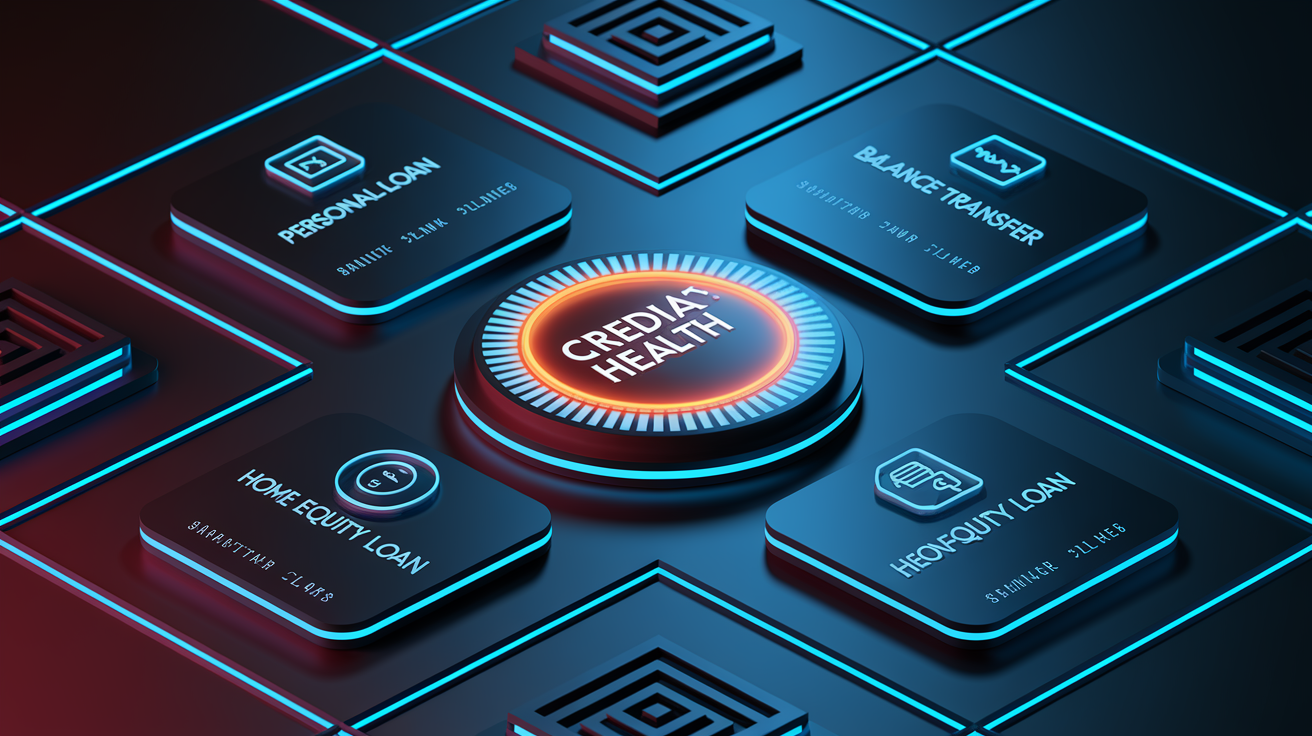
Each consolidation method hits your credit differently. Understanding the trade-offs helps you choose the option that fits your budget and timeline without unnecessary score damage.
Personal Loans
Personal loans don’t require collateral. They turn variable-rate credit-card debt into one fixed monthly payment. A hard inquiry happens when the lender checks your credit, which might temporarily lower your score by about 10 points. Once you’re approved, the new installment account can improve your credit mix if you only had revolving accounts before. Paying off credit-card balances with the loan proceeds drops your revolving utilization to zero, which often offsets the inquiry hit within a few months.
For example, a $19,658 loan for 36 months at 13.24 percent interest with a 6 percent origination fee ($1,179) gives you $18,479 in net proceeds, carries an APR of 17.63 percent, and requires 36 monthly payments of $665. Typical loan amounts range from $1,000 to $60,000, terms run 24 to 84 months, and APRs span 6.53 percent to 35.99 percent as of January 7, 2026. Because the rate is fixed, you know exactly what you’ll pay each month. That makes budgeting easier and reduces the risk of missed payments.
Balance-Transfer Credit Cards
Balance-transfer cards move multiple card balances onto one card with a lower introductory rate, often 0 percent or a low promotional APR like 1.99 percent for 12 months with no balance-transfer fee. That promo expires March 31, 2026, and after the promo period ends, the APR jumps to a variable rate between 11.25 percent and 17.95 percent. Paying off the balance before the promo ends saves you serious interest. Failing to do so means the remaining balance accrues interest at the higher rate.
Opening a balance-transfer card triggers a hard inquiry and lowers your average account age, which can dip your score in the short term. If you transfer a large balance and use most of the new card’s limit, your utilization on that card may look high to scoring models, even though your overall revolving utilization is lower. To protect your score, transfer only what you can pay off during the promo period, don’t make new purchases on the card, and keep old accounts open to preserve your total available credit.
Home Equity Loans
Home equity loans use your house as collateral and typically offer lower interest rates than unsecured debt because the lender has less risk. A hard pull is required, and you’ll pay closing costs, appraisal fees, and origination charges. Paying off high-interest unsecured debt with a home equity loan can reduce your monthly payment and add a secured installment account to your credit mix.
The major risk is foreclosure. If you miss payments, the lender can seize your home. Late payments on a secured loan damage your credit just as much as missed credit-card payments, and the consequences extend beyond your credit score. Use home equity consolidation only if you have stable income, a clear repayment plan, and the discipline to avoid running up new credit-card balances after paying them off.
401(k) Loans
401(k) loans let you borrow up to $50,000 from your retirement account, typically with repayment required within five years. No credit check happens, so there’s no hard inquiry and no direct effect on your credit score. You pay interest to yourself, and the loan doesn’t show up on your credit report unless you default.
The downside is opportunity cost and risk. While you’re repaying the loan, you miss out on investment growth, employer matches, and compound interest. If you leave your job or get laid off, the full loan amount may become due immediately. Failure to repay triggers income tax and a 10 percent early-withdrawal penalty if you’re under 59½. Because 401(k) loans don’t improve your credit and can weaken your long-term financial stability, they’re best reserved for situations where no other consolidation option is available.
| Method | Hard Pull? | Utilization Change? | Major Risk |
|---|---|---|---|
| Personal Loan | Yes | Drops revolving utilization to 0% | High APR if credit is poor |
| Balance Transfer | Yes | Can spike if new card is maxed | Rate jump after promo ends |
| Home Equity Loan | Yes | Drops revolving utilization to 0% | Foreclosure if you default |
| 401(k) Loan | No | No change | Tax penalty and lost growth |
Factors That Influence Credit Scores During Debt Consolidation
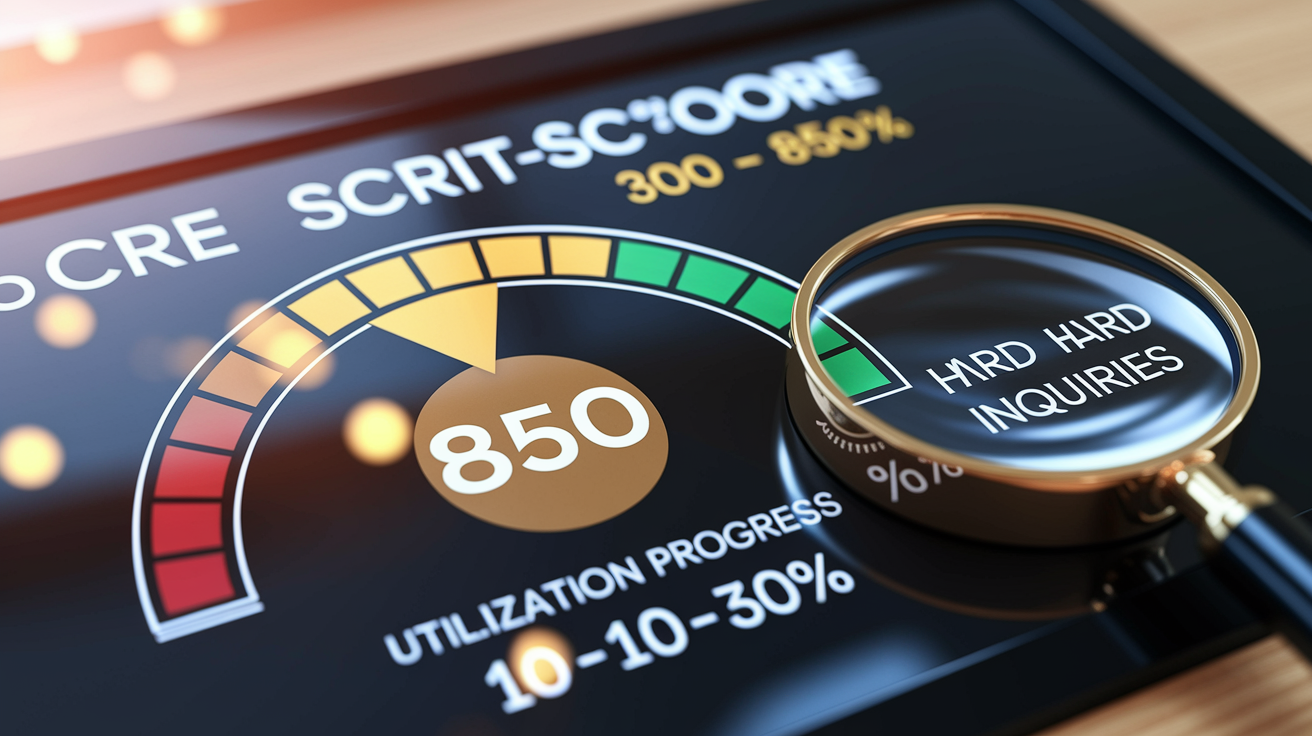
Payment history accounts for roughly 35 percent of most credit scores. It’s the single most important factor. A missed payment can stay on your credit report for up to seven years and cause a big score drop. When you consolidate debt, you replace multiple payment due dates with one, which reduces the chance of forgetting a payment. Set up automatic payments on the consolidation loan or balance-transfer card so you never miss a due date, and your payment history will improve steadily over time.
Credit utilization is the second largest factor. Utilization above 30 percent of your available credit can lower your score. Utilization above 50 percent often triggers bigger drops. Paying off revolving balances with a personal loan or home equity loan brings your card utilization down to zero, which can produce an immediate score increase. If you use a balance-transfer card, don’t max out the new card because high utilization on any single card can still hurt your score even if your total utilization is reasonable. Try to keep utilization below 10 percent on each card and overall for the fastest score recovery.
Hard inquiries from loan or credit-card applications cause a temporary score dip of about 10 points, and the inquiry stays on your report for one year. Opening a new account also lowers your average account age, which can reduce your score slightly. To minimize these effects, limit the number of hard pulls by using soft-pull prequalification tools and submitting formal applications only for your top choice. Keep old accounts open after you pay them off so your average age and total available credit stay intact, both of which support a higher score.
Step-by-Step Process to Consolidate Debt Without Score Damage

Following a structured process helps you compare options fairly and avoid common mistakes that can drag your score down.
-
Check your credit reports and current score. Pull reports from all three bureaus and note any errors, late payments, or accounts in collections. Dispute inaccuracies before you apply for consolidation.
-
List all debts with balances, APRs, minimum payments, and due dates. This inventory shows which accounts cost the most in interest and helps you calculate how much you need to borrow.
-
Use soft-pull prequalification tools offered by lenders and card issuers. Soft pulls don’t affect your score and give you estimated rates and terms so you can compare offers without triggering hard inquiries.
-
Compare APRs, fees, loan terms, monthly payments, and total interest paid over the life of the loan. Don’t just look at the lowest monthly payment. A longer term can mean more total interest even if the rate is lower.
-
Group all hard credit inquiries within a two-week window. Most credit-scoring models treat multiple inquiries for the same type of credit within 14 days as a single inquiry, reducing the score impact.
-
Choose the consolidation option that offers the lowest total cost, an affordable monthly payment, and minimal collateral risk. If you can pay off a balance transfer before the promo ends, that may be cheapest. Otherwise, a personal loan with a fixed rate gives you predictability.
-
Pay off the targeted accounts in full using the consolidation proceeds, then confirm each creditor reports the balance as paid. Check your credit report after 30 to 60 days to verify the accounts show zero balances.
-
Keep paid-off accounts open unless a creditor requires closure or the account charges an annual fee you can’t justify. Preserving account age and available credit supports your score.
-
Don’t apply for new credit for at least 6 to 12 months after consolidation. Let your score recover from the hard inquiry and benefit from consistent on-time payments before adding another account.
Most people see their score stabilize within three to six months if they follow this timeline and make every payment on time. After 12 months of on-time payments, the positive payment history usually outweighs any initial inquiry or account-age dip.
How to Maintain Strong Credit During and After Consolidation
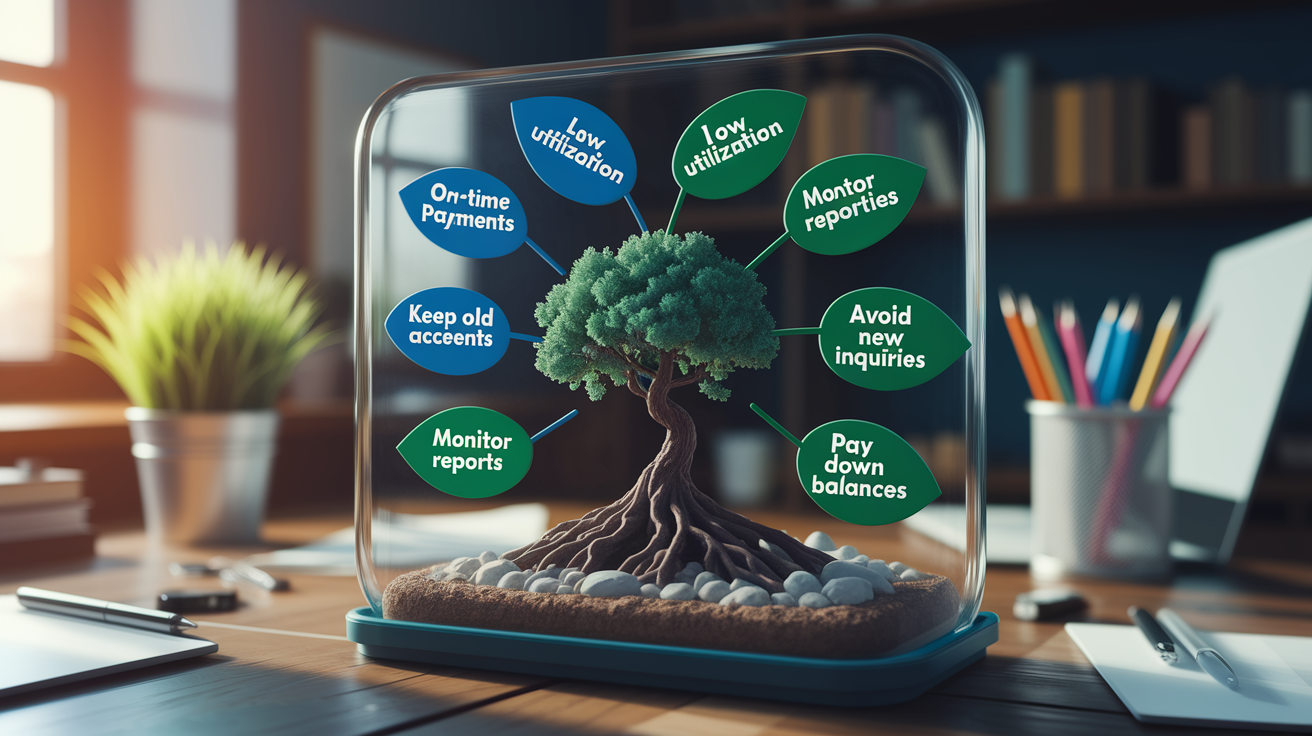
Once you’ve consolidated, protecting your score takes consistent habits and regular monitoring. Making every payment on or before the due date is the single most effective action you can take because payment history is the largest scoring factor. Automated payments get rid of the risk of forgetting a due date. Setting a calendar reminder a few days before the autopay runs gives you time to make sure your bank account has enough funds.
Keep utilization low on any remaining revolving accounts. If you paid off credit cards with a loan, resist the temptation to charge those cards back up. Target utilization below 30 percent and ideally below 10 percent to maximize your score gains. If you have older accounts with no balance, make a small recurring charge (like a streaming subscription) and pay it in full each month to keep the account active and preserve its age in your credit history.
Six credit-maintenance actions after consolidation:
- Continue making on-time payments every month for at least 12 consecutive months to build strong positive history.
- Monitor your credit reports annually using free services to catch errors or identity theft early.
- Keep old accounts open and active by using them occasionally and paying in full to maintain average account age.
- Avoid new hard inquiries for six to 12 months after consolidation to let your score recover fully.
- Pay down any remaining revolving balances to below 10 percent utilization within three to six months.
- Use credit-monitoring tools or soft-pull score trackers to watch your progress without triggering additional inquiries.
Mistakes That Can Hurt Your Credit During Consolidation

Even a well-planned consolidation can backfire if you fall into common traps. Missing a payment on your new consolidation loan or balance-transfer card damages your score just as much as missing payments on the original accounts. A single late payment can erase months of progress. Submitting multiple loan applications without grouping them in a short window racks up hard inquiries that each lower your score. Closing old accounts immediately after paying them off reduces your total available credit and shortens your average account age, both of which can drop your score.
- Missing payments on the consolidation account. Automate payments and set reminders to avoid this.
- Running up new balances on paid-off credit cards. Treat consolidation as a fresh start, not permission to borrow more.
- Applying for multiple loans or cards outside the two-week inquiry window. Each hard pull lowers your score.
- Closing old accounts right after paying them off. Keep them open to preserve age and available credit.
- Not paying off a balance transfer before the promo period ends. The rate can spike from 0 percent to 17.95 percent.
- Falling for predatory consolidation offers with sky-high fees or back-loaded interest. Compare APRs and total costs carefully.
- Ignoring the post-promo APR on balance-transfer cards. If you can’t pay off the balance in time, a personal loan with a fixed rate may cost less overall.
Avoiding these mistakes takes discipline and a clear plan. If you’ve struggled with overspending in the past, address the behavior before you consolidate. Debt consolidation restructures your payments but doesn’t eliminate the underlying habit. Pair consolidation with a realistic budget, an emergency fund, and a commitment to stop adding new debt, and you’ll protect your credit while building long-term financial stability.
Final Words
Protecting your credit while simplifying payments starts with a plan. Prequalify with soft pulls, avoid closing old accounts, and set up autopay.
Consolidation may cause small, short-term dips. Over time it often helps through lower utilization and stronger payment history. You also learned the tradeoffs between loans, balance transfers, home equity, and 401(k) options.
If you can only do one thing: run soft-pull quotes and enable autopay. That single step makes debt consolidation without hurting credit score more likely and starts steady progress.
FAQ
Q: What debt consolidation doesn t ruin your credit score?
A: The debt consolidation that doesn’t ruin your credit score is a low-rate personal loan or 0% balance transfer after soft-pull prequalification; keep old accounts open and use autopay to protect history and utilization.
Q: How to pay off $30,000 in debt in 1 year?
A: Pay off $30,000 in one year by targeting about $2,500 plus interest monthly, cut expenses, increase income, use windfalls, and only consolidate if it lowers your overall rate and fees.
Q: Why does Dave Ramsey say not to consolidate debt?
A: Dave Ramsey says not to consolidate debt because he prefers the debt-snowball to build quick wins and change behavior; consolidation can extend payments, add fees, and hide progress even with lower rates.
Q: Is $20,000 in credit card debt a lot?
A: Twenty thousand dollars in credit card debt is significant; whether it’s a lot depends on your income, monthly payments, and interest. If it raises utilization or causes unaffordable payments, treat it as urgent.