


Your credit score sits on a 300 to 850 scale, but what does that number actually mean when you’re trying to get a loan or a credit card? The difference between a 680 and a 740 isn’t just bragging rights. It’s lower interest rates, easier approvals, and thousands of dollars saved over the life of a mortgage or car loan. Lenders use your score to decide if you’re prime or subprime, and those labels control your borrowing costs more than most people realize. This guide breaks down each credit score range, explains how FICO and VantageScore differ, and shows you exactly what changes when you move up one tier.
Clear Breakdown of Credit Score Ranges Across FICO and VantageScore

Credit score ranges turn your entire credit history into one three-digit number. Most scores, FICO or VantageScore, sit on a 300 to 850 scale. That number predicts how likely you are to repay on time, and lenders use it to decide approval and pricing. Knowing the bands and where you land is step one to figuring out where you are and where you need to be.
FICO divides the 300 to 850 spectrum into five buckets: 300 to 579 is Poor, 580 to 669 is Fair, 670 to 739 is Good, 740 to 799 is Very Good, and 800 to 850 is Exceptional. These cutoffs show up everywhere. Lenders, credit educators, even your bank’s online portal. Each tier maps to different borrowing outcomes. If you’re looking at a FICO score for a mortgage, auto loan, or major credit card, these are the ranges that count.
VantageScore uses the same 300 to 850 scale but slices it differently. VantageScore 3.0 and 4.0 typically go like this: 300 to 499 Poor, 500 to 600 Fair, 601 to 660 Good, 661 to 780 Very Good, and 781 to 850 Excellent. The numbers shift. “Good” starts at 661 instead of 670, so you might land in different labeled categories depending on which model your lender checks. Understanding both models helps you see the full picture, especially when you’re pulling scores from different apps or banks.
| Model | Range | Category |
|---|---|---|
| FICO | 300–579 | Poor |
| FICO | 580–669 | Fair |
| FICO | 670–739 | Good |
| FICO | 740–799 | Very Good |
| FICO | 800–850 | Exceptional |
| VantageScore | 300–499 | Poor |
| VantageScore | 500–600 | Fair |
| VantageScore | 601–660 | Good |
| VantageScore | 661–780 | Very Good |
| VantageScore | 781–850 | Excellent |
Credit Score Range Categories and What Each Tier Means for Borrowing

Lenders sort scores into risk buckets to estimate your chance of missing payments. Higher scores mean lower risk, so lenders compete for you with better rates. Lower scores suggest higher risk, so lenders charge more to cover potential losses. Your score doesn’t dictate every detail of approval. Income, debt-to-income ratio, and job history all matter. But it heavily shapes whether you get prime or subprime pricing.
Exceptional/Excellent (800 to 850, or 781+ VantageScore): You get the best interest rates and the widest menu of products. Top-tier rewards cards, the lowest mortgage APRs, the most favorable auto-loan terms. Lenders see you as very low risk.
Very Good (740 to 799 FICO, or 661 to 780 VantageScore): Strong approval odds and near-best pricing. You’ll rarely face denial for mainstream credit and you’ll save a lot on interest compared to lower tiers. Many lenders put this group in “prime” categories.
Good (670 to 739 FICO, or 601 to 660 VantageScore): Acceptable to most lenders. You’ll qualify for most loans and cards, though rates won’t match the Very Good or Excellent tiers. This is often the line that separates prime from near-prime.
Fair (580 to 669 FICO, or 500 to 600 VantageScore): Approval is possible but comes with higher interest, bigger down payments, and fewer choices. Lenders might ask for extra documentation or cosigners. This tier usually falls into near-prime or subprime pricing.
Poor (300 to 579 FICO, or 300 to 499 VantageScore): High chance of denial for mainstream credit. When you’re approved, expect very high APRs, strict terms, and limited options. Many borrowers here need subprime lenders or secured products.
Prime borrowers usually sit above 670 (or 660, depending on the lender), while subprime starts below 620. Deep subprime, the highest-risk category, often includes scores below 580. Near-prime lands in between, roughly 620 to 659, where you might qualify but pay above-market rates.
Lenders in the Good tier and up might approve you with minimal paperwork and faster decisions. In the Fair and Poor tiers, underwriters often want pay stubs, bank statements, and explanations for any negative marks. The approval process slows down and requirements get stricter.
Moving up one tier, say from Fair to Good, can unlock better card options, lower your monthly payment on a new car loan, or qualify you for a conventional mortgage instead of an FHA loan. One tier is the difference between denial and approval, or between paying 25 percent APR and paying 18 percent.
How FICO and VantageScore Use Credit Score Ranges Differently

Both models convert your credit file into a number on the same 300 to 850 scale, but the formulas and cutoffs differ. FICO leans harder on the age of your oldest account and credit mix, while VantageScore (especially 4.0) puts more weight on recent payment trends and can score people with shorter histories faster. These differences mean your FICO and VantageScore can differ by several points or even land you in different labeled categories.
The numeric boundaries shift, too. FICO’s “Good” starts at 670, but VantageScore’s “Good” begins at 601 (in typical 3.0/4.0 mappings), and “Very Good” kicks in at 661. If you’re sitting at 665, you might see “Good” on a FICO report and “Very Good” on a VantageScore report. The models also handle trended data differently. VantageScore 4.0 looks at month-to-month balances and payment patterns over time, not just a snapshot, so paying down debt steadily can help your VantageScore faster than it moves your older FICO versions.
Lenders pick which model to use based on the product and their own underwriting rules. Most mortgage lenders rely on FICO scores (often older versions like FICO 5, 4, or 2 for mortgages), while credit card issuers and auto lenders might use FICO 8, FICO 9, or VantageScore 3.0 or 4.0. Some lenders check multiple scores and use the middle one. Because of this variation, you might get approved by one lender and denied by another even if both check your credit the same day.
How Credit Score Ranges Affect Interest Rates and Loan Approval Odds
Lenders price risk in layers. Higher scores get lower interest rates because predicted loss is smaller. Lower scores mean higher rates, bigger down payments, or denial. The difference between a Good score and an Excellent score can mean thousands of dollars over the life of a loan, and the gap widens as the loan amount grows.
Mortgages (conventional): Many lenders set a floor around 620, but pricing improves at 680, 700, 720, and 740. Best rates typically start at 740 or higher. FHA-backed loans allow scores as low as 500 with a 10 percent down payment, or 580 with 3.5 percent down, but higher scores still unlock better terms.
Auto loans: Subprime lenders serve scores below 620, often at APRs above 10 percent. Prime borrowers (620 to 719) see mid-single-digit to low-double-digit rates. Super-prime (720+) can access rates near 3 to 5 percent, depending on market conditions and loan term.
Credit cards: Prime rewards cards usually require 670 or higher. Subprime and secured cards serve the 580 to 669 range, often with APRs from 20 to 30 percent and annual fees. Excellent scores (740+) open access to 0 percent intro APR offers and premium rewards.
Personal loans: Lenders typically offer the best rates to borrowers above 700. Below 640, rates climb fast, and approval becomes harder without collateral or a cosigner.
On a $300,000 30-year mortgage, the difference between a 3.25 percent rate and a 4.50 percent rate is about $216 per month, or roughly $77,760 over the loan’s life. Moving from a Fair score (say, 650) to a Very Good score (say, 750) can shift you from the higher rate to the lower one. For credit cards, a 10 percentage point APR difference on a $5,000 balance means hundreds of dollars more in interest each year if you carry a balance.
A jump of even a few points can flip you into the next pricing tier. If your score is 739, paying down one credit card to drop utilization might push you to 740, unlocking Very Good pricing on a new loan. Lenders often have internal cutoffs at round numbers like 620, 640, 660, 680, 700, 720, 740, 760. Small improvements near those thresholds deliver outsize value.
Factors That Determine Where You Fall in the Credit Score Ranges
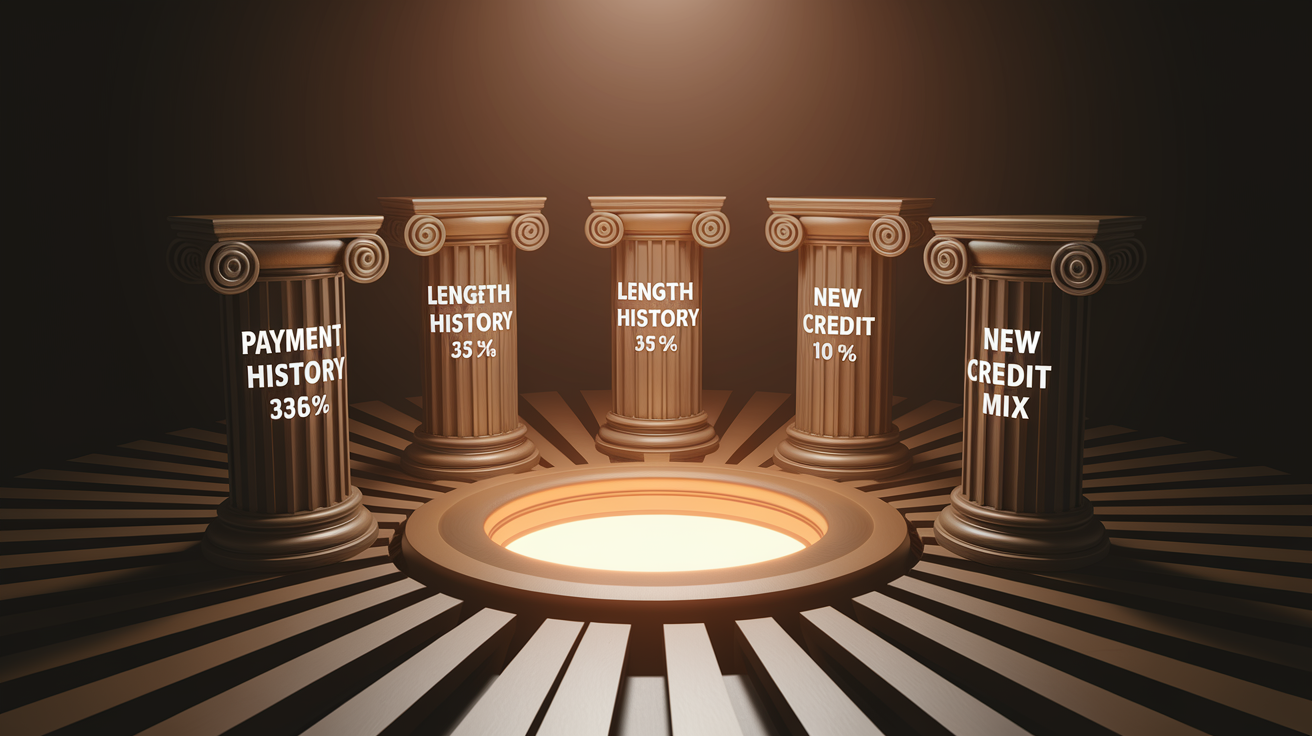
Your score is the sum of how you’ve managed credit over time, broken into five main categories. Different models weight these factors a bit differently, but the core drivers stay consistent. Understanding which factors have the biggest impact helps you prioritize where to focus when you want to move up a tier.
Payment history (around 35 percent in FICO): On-time payments help. Late payments, collections, charge-offs, and bankruptcies hurt. This is the single biggest factor. A 30-day late payment can drop your score by 60 to 110 points, depending on your file.
Credit utilization / amounts owed (around 30 percent in FICO): How much you owe relative to your credit limits. Keeping utilization below 30 percent is the common advice. Below 10 percent is even better. High balances signal risk even if you pay on time.
Length of credit history (around 15 percent in FICO): The age of your oldest account and your average account age. Longer histories show more evidence of responsible use. Closing old accounts can shorten your average age and hurt this factor.
New credit and inquiries (around 10 percent in FICO): Opening several accounts in a short period or racking up multiple hard inquiries suggests you’re seeking credit urgently, which can be a risk signal. Each hard inquiry might drop your score by 5 to 10 points temporarily.
Credit mix (around 10 percent in FICO): Having both revolving accounts (credit cards) and installment loans (car loan, mortgage) shows you can handle different types of credit. This factor has a smaller impact, so don’t open accounts you don’t need just to diversify.
Payment history matters most. If you miss a payment and it’s reported as 30 days late, the damage is immediate and can drop you from Good to Fair overnight. The late payment stays on your report for up to seven years, though the impact fades. Most of the damage happens in the first 12 to 24 months. A 60-day or 90-day late payment causes even bigger drops, and a collection account or charge-off can knock off 100+ points.
Utilization is the second-biggest lever and the fastest to change. If you’re using 60 percent of your total credit limit and you pay down balances to 20 percent, your score can jump 20 to 100 points within one or two billing cycles. Utilization gets calculated per card and across all cards, so spreading balances or paying them off strategically makes a difference. Keeping every card below 30 percent usage (better yet, below 10 percent) gets the most out of this factor.
Age of accounts and inquiries matter more when your file is thin or when you’re near a tier boundary. Closing your oldest credit card shortens your history and might increase utilization if that card had a high limit. Opening three new cards in one month can drop your average account age and add multiple inquiries, costing you 15 to 30 points total. Rate-shopping for a mortgage or auto loan within a short window (typically 14 to 45 days, depending on the model) usually counts as a single inquiry, so don’t avoid shopping around.
Derogatory marks like collections, charge-offs, bankruptcies, and foreclosures can drop your score into the Poor range and keep you there for years. A bankruptcy can stay on your report for 7 to 10 years, and the impact is severe at first. Collections and charge-offs stay for seven years from the original delinquency date. Even after the mark ages off, rebuilding takes consistent positive behavior: on-time payments, low utilization, and no new negative items.
How to Check Which Credit Score Range You’re In

You’ve got multiple ways to check your score, from free tools to paid monitoring. Free options include credit card issuers and banks that offer complimentary FICO or VantageScore access, plus sites that provide scores in exchange for viewing targeted offers. Annual credit reports from the three major bureaus (Equifax, Experian, TransUnion) don’t always include scores, but many consumers can now see scores directly through bureau websites or third-party apps. Paid services offer deeper monitoring, alerts, and sometimes access to multiple score versions.
When you check your own score, or when a lender checks it as part of a prequalification without a full application, that’s a soft pull. Soft inquiries don’t affect your score. When you apply for credit and the lender performs a hard inquiry, that can lower your score by a few points. Scores update whenever your creditors report new data to the bureaus, which usually happens once a month near your statement closing date. If you pay down a balance or miss a payment, you might see the score change within one or two billing cycles once the new information gets reported.
Checking multiple models matters because lenders don’t all use the same version. Your free VantageScore might show you in the “Good” range, but a mortgage lender pulling an older FICO version could see you in “Fair.” Monitoring both FICO and VantageScore, and checking reports from all three bureaus, gives you a complete view. Scores can differ across bureaus if not all creditors report to every bureau, so a missed payment might appear on one report but not another.
Moving Up the Credit Score Ranges: Practical Ways to Improve

Short-term improvement is possible if your score is being dragged down by high utilization or fixable errors. Paying down credit card balances and disputing inaccuracies on your credit report can produce results within weeks. These moves won’t fix serious derogatory marks, but they can push you from Fair to Good or from Good to Very Good if your file is otherwise clean.
-
Lower your credit utilization: Pay down balances so you’re using less than 30 percent of your total limit, better yet under 10 percent. If you have a $10,000 total limit, keep balances below $3,000 (ideally below $1,000). This can raise your score within one to two billing cycles.
-
Dispute errors on your credit reports: Check all three bureau reports for incorrect late payments, accounts that aren’t yours, or outdated info. File disputes online with each bureau. Corrections can restore lost points as soon as the bureaus update your file.
-
Make all payments on time going forward: Set up autopay for at least the minimum due. Payment history is 35 percent of your FICO score, so even one missed payment in the next 12 months can undo months of progress.
-
Avoid new credit applications: Each hard inquiry costs a few points and signals risk. Space out applications by at least six months unless you’re rate-shopping for a mortgage or auto loan within a short window.
-
Ask for a credit-limit increase: If your issuer raises your limit without a hard pull, your utilization drops instantly (assuming you don’t increase your balance). This can help your score within the next billing cycle.
-
Become an authorized user on a well-managed account: If a family member adds you to a card with low utilization and a long history, that account might appear on your report and boost your average age and payment history. Confirm the issuer reports authorized users to all three bureaus.
Medium-term habits include keeping an unbroken streak of on-time payments for 12 to 24 months and maintaining consistently low utilization. Avoid closing old accounts even if you don’t use them, because age matters. If you must close a card, close a newer one and keep your oldest accounts open. As negative marks age, their impact fades. A two-year-old late payment hurts less than a six-month-old one.
Long-term strategies focus on building a thicker credit file with a healthy mix of revolving and installment accounts. If you only have credit cards, adding a small installment loan (car loan, credit-builder loan, or personal loan) can help your mix. Don’t take on debt you don’t need, but if you’re financing a car anyway, the loan will contribute positively over time if you pay on schedule. Keeping accounts open for years increases your average age and strengthens your file.
Expect utilization changes to show up within one to two months. Dispute resolutions can take 30 to 45 days. Moving from Fair (say, 620) to Good (say, 680) by building consistent on-time payments and lowering utilization typically takes 6 to 12 months. Recovering from serious derogatory marks like collections, charge-offs, or bankruptcies can take several years, but your score will improve steadily as the marks age and you add positive history.
Common Myths and FAQs About Credit Score Ranges

Misunderstandings about how scores work can lead to decisions that hurt instead of help. Some people think closing accounts always improves their score, or that one hard inquiry will wreck their chances of approval. Others believe there’s a single “good” number that guarantees the best rates everywhere. The reality is more nuanced, and knowing what actually matters helps you avoid common mistakes.
What is the highest possible credit score? 850 is the top of the 300 to 850 scale used by FICO and VantageScore. Very few people reach 850, and you don’t need a perfect score to get the best rates. Most lenders offer their lowest APRs starting around 740 to 760.
What is considered a “good” credit score? Most lenders view 670 or higher as the start of “good” in the FICO model, though some products require 680 or 700 for the best terms. VantageScore labels 661+ as “Good” or “Very Good.” There’s no universal magic number. Thresholds vary by lender and loan type.
Why do my scores differ across credit bureaus? Not all creditors report to all three bureaus, so your Equifax, Experian, and TransUnion reports might contain slightly different information. Scores get calculated from the data in each report, so differences in the underlying data lead to different scores.
Will checking my own credit score hurt it? No. Checking your own score is a soft inquiry and has no impact. Only hard inquiries, when you apply for credit, can lower your score, and even then the drop is small and temporary (usually 5 to 10 points per inquiry).
Does closing a credit card improve my score? Usually not. Closing a card reduces your total available credit, which can raise your utilization ratio and hurt your score. It can also shorten your average account age if it’s an older card. Keep old cards open and use them occasionally to keep the accounts active.
Ranges are guidelines, not guarantees. Lenders look at your score alongside income, debt-to-income ratio, employment history, down payment, and the type of loan. A 680 score might get you approved for a credit card but denied for a mortgage if your debt-to-income ratio is too high. Conversely, a 620 score with strong income and a large down payment might still qualify you for a loan. Your score is one of the most important factors, but it’s not the only one.
Final Words
in the action, this post listed the numeric bands for FICO and VantageScore and showed what each tier means for borrowing.
We also covered how the models differ, what moves your score, where to check it, and practical steps to improve, plus common myths to ignore.
If you take one thing away, track your current band, pay down high balances, and build on-time habits. Do this and you’ll likely move up the credit score ranges over months. That’s doable, keep going.
FAQ
Q: What credit score do you need for a $400,000 house?
A: The credit score you need for a $400,000 house is not fixed; most conventional lenders want about 620+, while best rates usually require 740+. Down payment and debt-to-income ratio also affect approval.
Q: What are the 5 levels of credit scores?
A: The five credit-score levels are Poor (300–579), Fair (580–669), Good (670–739), Very Good (740–799), and Excellent (800–850) on the common 300–850 scale.
Q: How common is a 700 credit score?
A: A 700 credit score is slightly above average and fairly common; it sits in the “good” band and typically gives you access to most credit products with reasonably priced offers.
Q: What is a realistic good credit score?
A: A realistic good credit score is generally 670–739 on the FICO 300–850 scale; that band usually qualifies you for most mainstream loans and decent interest rates.