


Think debt consolidation is off the table if your credit is bad?
It’s not, but it’s trickier and often pricier.
If your score is under 600, expect higher interest and fewer lenders, yet real options remain, like secured loans, credit-union or online lenders that use alternative underwriting, cosigned loans, and nonprofit debt management plans.
This post walks through those choices, shows when consolidation actually saves you money, and gives a simple decision rule so you can pick the option that will lower your total cost and monthly stress.
Immediate Options for Managing Debt Consolidation With Bad Credit

If your FICO score sits between 300 and 579, consolidating debt is possible. But expect tighter restrictions, higher APRs, and fewer lenders willing to work with you. The typical APR range for personal loans runs from 6.7% to 35.99%, and borrowers with subprime scores usually end up near the top. Sometimes as high as 30% to 36%. Your lender choices shrink, but they don’t vanish completely. Credit unions, online lenders, and select peer to peer platforms remain realistic paths, especially if you can bring a cosigner or offer collateral to offset the risk.
The three main consolidation paths are unsecured personal loans, secured loans, and debt management plans. Unsecured personal loans require no collateral but charge higher rates for bad credit and may cap you at a smaller loan amount than you need. Secured loans let you pledge an asset (like a vehicle, savings account, or home equity) in exchange for better approval odds and potentially lower interest, though you’ll lose the asset if you default. Debt management plans, offered through nonprofit credit counseling agencies, aren’t technically loans. Instead, a counselor negotiates lower interest rates with your creditors and rolls all your payments into one monthly sum. These plans typically run 3 to 5 years and charge modest setup and monthly fees.
Here are the five most realistic consolidation options when your credit score is under 600:
- Online lenders that specialize in subprime borrowers and use alternative underwriting models (such as employment and education history) to offset weak credit scores.
- Credit unions where you already hold a membership or can easily join. Many offer secured or relationship based loans with more flexibility than big banks.
- Secured personal loans backed by a car, savings balance, or investment account to improve approval odds and reduce APR.
- Cosigned loans where a creditworthy friend or family member agrees to share responsibility and lowers your rate.
- Debt management plans (DMPs) through a nonprofit credit counseling agency, which consolidate payments and may lower interest without requiring a new loan.
Consolidation only makes sense if you can secure an APR lower than the weighted average of your current debts. If your consolidation loan carries a 32% rate and your existing credit cards charge 25%, you’re moving backward. Run the math before you commit. Compare the new monthly payment, total interest over the loan term, and any origination fees or closing costs. If you can’t beat your current cost, or if the only offers you receive come with predatory terms, you’re better off exploring budgeting strategies, debt snowball or avalanche methods, or credit counseling instead.
Eligibility Factors Affecting Debt Consolidation Approval for Poor Credit Scores

Lenders evaluating borrowers with bad credit look beyond the score itself. They assess income stability, employment history, debt to income ratio (DTI), and whether you have a cosigner or collateral to reduce their risk. Even if your credit score is below 600, steady employment, documented income, and a DTI under 40% can improve your approval odds. Some lenders, like Upstart, consider nontraditional factors such as your education level, job history, and the sector you work in. These alternative underwriting models expand access for people with thin credit files or poor scores but otherwise solid financial footing.
Each lender sets its own baseline requirements. Common minimums include age verification (typically 18, though some states require 19), US residency or citizenship, a valid bank account, and verifiable income. You may need to provide recent pay stubs, tax returns, or bank statements to prove you can afford the monthly payment. If you’re applying for a secured loan, you’ll also need documentation showing the value and ownership of the collateral, like a car title or a statement from your bank or brokerage. Lenders that pay creditors directly may ask for account numbers and balances for each debt you plan to consolidate.
| Factor | Why It Matters |
|---|---|
| Income stability | Proves you can afford the monthly payment without defaulting. |
| Debt to income ratio | Lenders prefer DTI under 40%. Higher ratios signal repayment strain. |
| Cosigner or collateral | Reduces lender risk and may unlock lower rates or higher loan amounts. |
| Employment history | Shows consistent work record. Gaps or frequent job changes can raise red flags. |
Comparing Consolidation Options When Your Credit Score Is Low
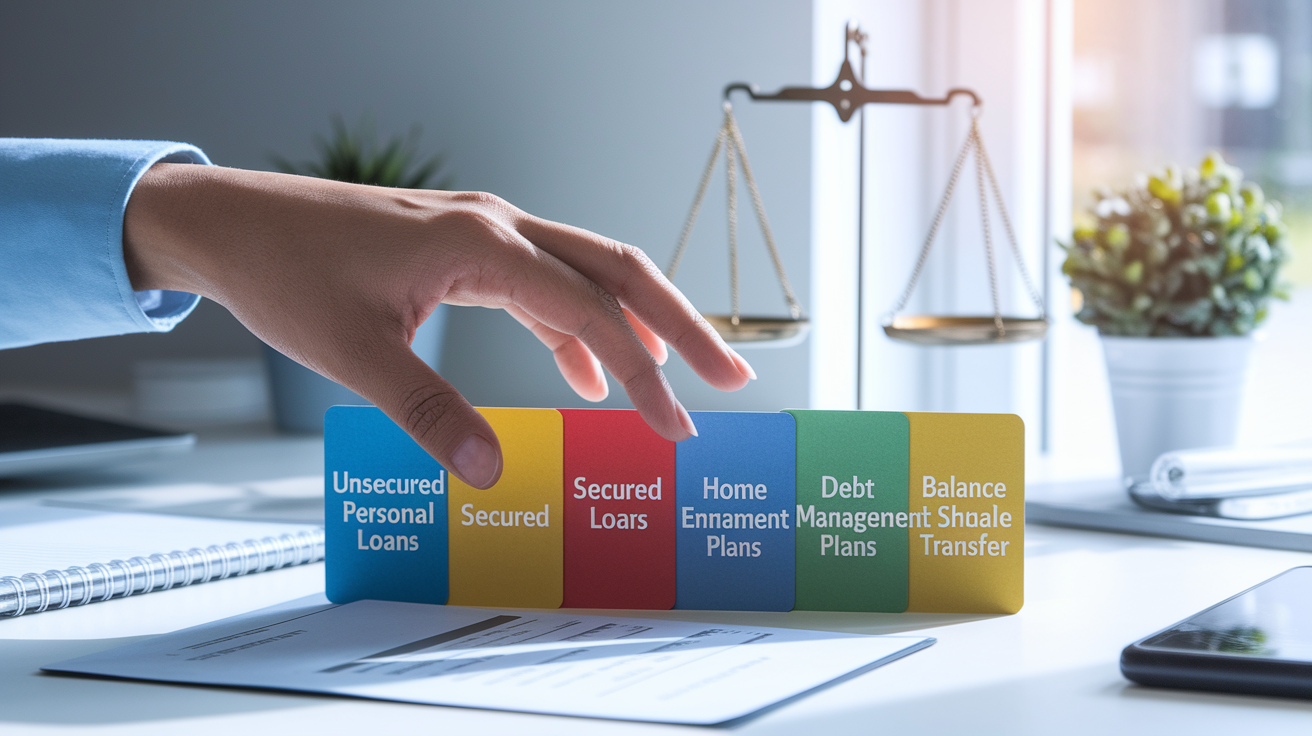
Unsecured personal loans are the most common consolidation route, but they’re also the hardest to qualify for when your credit score is low. No collateral means the lender takes on more risk, so they charge higher rates and may limit the loan amount. If you do qualify, expect APRs between 28% and 36% and repayment terms from 2 to 7 years. Monthly payments will be fixed, and you’ll know exactly when you’ll be debt free, which helps with planning. The downside is that origination fees (often 1% to 10% of the loan amount) can cut into the money you actually receive. And if you miss a payment, your credit takes another hit.
Secured loans flip the script. By pledging a car, savings account, certificate of deposit, or other asset, you give the lender something they can repossess if you default. That collateral lowers their risk, which can mean approval even with a score in the low 500s and an interest rate several points lower than an unsecured loan. The catch is real: if you can’t make the payments, you lose the asset. A car title loan might consolidate your credit card debt, but a few missed payments and you’re walking to work.
Home equity loans and home equity lines of credit (HELOCs) fall into the secured category, using your house as collateral. Repayment periods typically stretch 5 to 30 years, and because the loan is backed by real estate, APRs often sit well below personal loan rates. Sometimes in the single digits, even for borrowers with subpar credit. Closing costs can run 2% to 5% of the loan amount, and if you default, you risk foreclosure. This option only makes sense if you have significant equity, a stable income, and a clear plan to avoid new debt.
Debt management plans offer a different model. You work with a nonprofit credit counseling agency that contacts your creditors, negotiates lower interest rates and waived fees, then consolidates your payments into one monthly amount you send to the agency. The agency distributes the funds to each creditor. DMPs typically last 3 to 5 years and may include a modest setup fee and a monthly service fee, often around $25 to $50. You don’t take on new debt, and your credit report will show “enrolled in credit counseling,” which is less damaging than settlement or bankruptcy. The tradeoff is that you’ll usually have to close the accounts being paid through the DMP, and you can’t use credit cards while enrolled.
Unsecured personal loans: No collateral, fixed terms, higher rates for bad credit, and origination fees that reduce net proceeds.
Secured personal loans: Lower rates, better approval odds, but risk losing the pledged asset if payments are missed.
Home equity loans / HELOCs: Lowest rates, long terms, high closing costs, and foreclosure risk if you default.
Debt management plans: Not a loan. Agencies negotiate lower rates and consolidate payments, with modest fees and account closure requirements.
Balance transfer credit cards: Often require good credit (FICO 670+), making them largely inaccessible to borrowers below 600.
Cosigned loans: A creditworthy cosigner can unlock approval and lower rates, but missed payments damage both parties’ credit.
Realistic Interest Rates and Loan Terms for Bad Credit Consolidation

Average consolidation loan rates for bad credit hovered around 30.27% APR in late 2025, and borrowers with scores below 580 frequently see offers in the 28% to 36% range. Some lenders cap their maximum APR at 35.99%, but others, particularly smaller finance companies or payday adjacent lenders, can push higher. For context, the average credit card APR runs 20% to 25%, so consolidation only saves you money if your new rate beats what you’re currently paying. If most of your debt sits on cards charging 22%, a 32% consolidation loan makes the problem worse.
Loan amounts for bad credit borrowers typically range from $1,000 to $50,000, though some lenders go as low as $500 or as high as $250,000 if you have substantial income, collateral, or a strong cosigner. The average funded personal loan in recent data sat around $33,000, but that figure includes all credit tiers. If your score is in the 500s, expect lenders to offer smaller amounts, often $5,000 to $15,000, unless you can provide collateral or bring a cosigner. Repayment terms usually fall between 2 and 7 years (24 to 84 months), with shorter terms carrying higher monthly payments but lower total interest, and longer terms easing the monthly burden at the cost of more interest over time.
Your specific offer depends on income, employment stability, debt to income ratio, and whether you’re bringing a cosigner or collateral. Two borrowers with identical credit scores can receive vastly different terms based on those factors. That’s why prequalification is valuable: you can see multiple rate offers via soft credit pulls without committing or damaging your score further.
| Credit Tier | Typical APR Range | Likely Loan Term |
|---|---|---|
| Excellent (740+) | 6.7% to 12% | 2 to 7 years |
| Good (670 to 739) | 12% to 20% | 2 to 7 years |
| Fair (580 to 669) | 20% to 28% | 2 to 7 years |
| Poor (300 to 579) | 28% to 36% | 2 to 5 years (shorter terms common) |
| Secured or cosigned (any tier) | May drop 5 to 10 percentage points | Varies by lender and collateral |
Strategies to Improve Your Approval Odds Before Applying for Consolidation
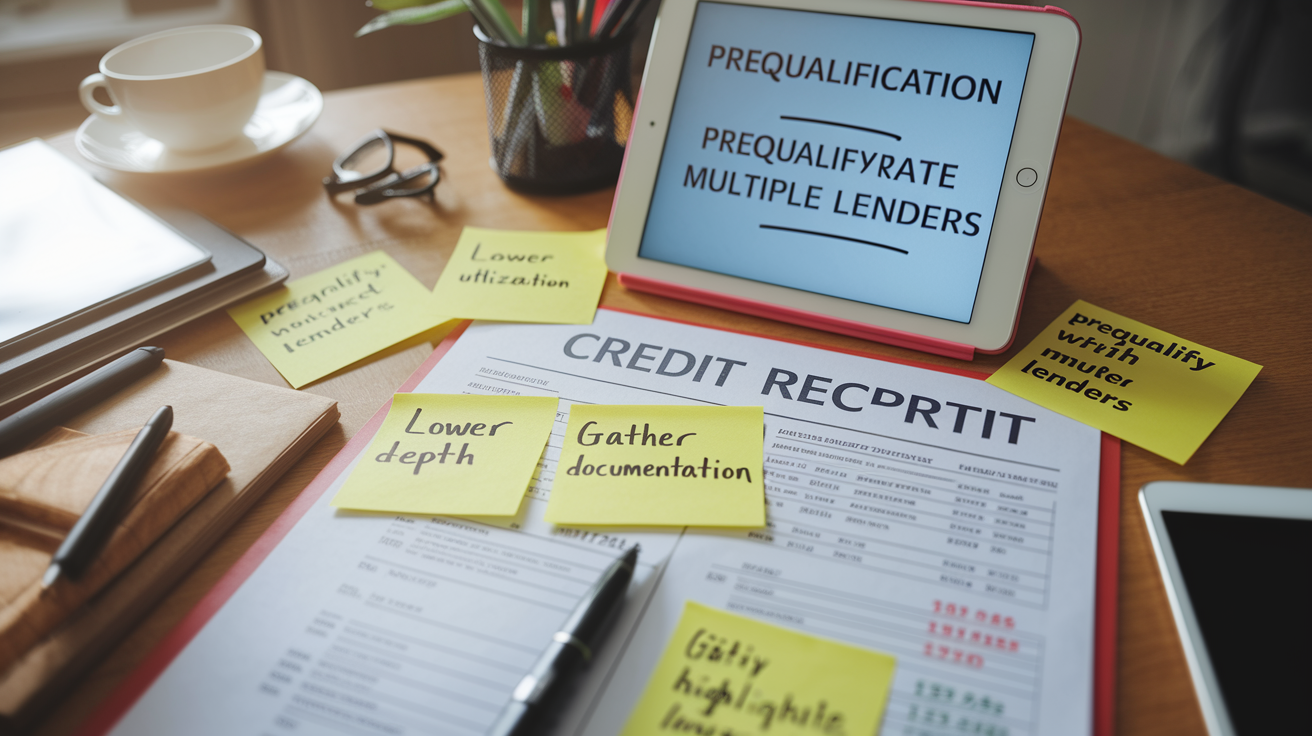
Start by pulling your credit reports from all three major bureaus (Equifax, Experian, and TransUnion) and check for errors. You can get free weekly reports, and inaccuracies are surprisingly common. Dispute any mistakes, like accounts that don’t belong to you, incorrect late payment marks, or outdated collections. Even one correction can bump your score enough to move you into a better rate tier or unlock lenders that wouldn’t have considered you before.
Next, reduce your credit utilization. If your cards are maxed out or close to the limit, paying down even a few hundred dollars per card can improve your score quickly. Sometimes within weeks. Aim to get utilization below 30% on each card and across all cards combined. If you have small balances on multiple cards, paying off one or two entirely also helps. Lenders see lower utilization as a sign you’re managing credit responsibly, which can tilt approval decisions in your favor even when your score is still subprime.
Prequalification is your friend. Many lenders offer it, and it uses a soft credit pull that won’t hurt your score. You enter basic information (income, employment, rough debt amounts) and receive estimated rates and terms. You can prequalify with several lenders in a short window, compare the offers, and only submit a full application to the one or two that look best. That limits the number of hard inquiries on your report and keeps your score from dropping further during the shopping process.
Check your credit reports and dispute any errors or outdated information before you apply.
Lower your credit utilization by paying down card balances, especially those near or over the limit.
Gather documentation early: recent pay stubs, tax returns, bank statements, employer contact info, and a list of all debts with balances and APRs.
Prequalify with multiple lenders to compare rates without triggering hard inquiries.
Consider waiting a few months to raise your score if you’re not in a crisis. Even a 20 point increase can save hundreds in interest.
Explore cosigners or collateral if you’re on the edge of approval or if offered rates are too high to justify consolidation.
Risks, Red Flags, and Predatory Consolidation Offers to Avoid

Payday loans and car title loans should be last resorts, if you use them at all. APRs can hit 400% or more, and repayment terms are often measured in weeks, not years. Miss a payment and you’re trapped in a cycle of rollovers and mounting fees. Car title loans put your vehicle on the line for what might be a small, short term loan. If you can’t repay, they repossess the car, and you’re left without transportation and still in debt.
Debt settlement companies often pitch themselves as consolidation services, but they’re not the same. They tell you to stop paying your creditors and instead send money to the settlement firm, which supposedly negotiates to reduce your balances. In reality, your credit takes a beating from the missed payments, creditors may sue you, and the settlement company charges large upfront or monthly fees. Settled accounts remain on your credit report for up to seven years, and the IRS may count forgiven debt as taxable income. If you’re considering settlement, work directly with creditors or through a nonprofit credit counseling agency first.
Sky high APRs: Any offer above 36% is a warning sign, especially if paired with short repayment terms and high fees.
Upfront fees before services: Legitimate lenders don’t ask for payment before approving or funding a loan.
Pressure tactics: If a salesperson rushes you to sign or discourages you from shopping around, walk away.
Unclear terms: Vague language about interest rates, fees, or repayment schedules is a red flag. Read the full loan agreement before signing.
Collateral demands that don’t match the loan amount: Be wary of lenders asking for assets worth far more than the loan you’re requesting.
Credit Score Impact After Consolidating Loans With Bad Credit
Consolidation can help or hurt your credit score, depending on how you manage the new loan. In the short term, expect a small score drop from the hard inquiry when you apply and possibly from opening a new installment account. If you close credit card accounts after paying them off with the consolidation loan, your overall available credit shrinks, which can raise your credit utilization ratio on any remaining cards. That can push your score down a few more points temporarily.
Over the long term, consolidation can improve your score if you make every payment on time. Payment history is the biggest factor in your FICO score, and a string of consistent, timely payments on the new loan will gradually rebuild your credit. If the consolidation loan replaces high balance credit cards, your utilization ratio may drop significantly, which boosts your score. For example, if you had $8,000 in credit card debt across $10,000 in total limits (80% utilization), paying those cards down to zero with a personal loan drops your revolving utilization to 0%, which can lift your score by 20 to 50 points or more within a few months.
The timeline to see improvement varies. Some borrowers notice a score increase within 30 to 60 days as lower utilization gets reported. Others see steady, gradual gains over six months to a year as on time loan payments build a positive payment history. If you miss a payment or add new debt while paying off the consolidation loan, your score will stall or drop again.
Expected credit outcomes after consolidating with bad credit:
Short term score dip of 5 to 15 points from hard inquiries and new account opening.
Potential utilization spike if you close paid off credit card accounts, temporarily lowering score.
Long term score improvement of 20 to 100+ points if all payments are made on time and no new debt is added.
Faster score recovery if you keep old credit card accounts open (even with zero balances) to maintain higher total available credit.
Budgeting and Money Management Tips After Consolidating Debt

Once you’ve consolidated, the real work starts: making sure you don’t slide back into debt. The consolidation loan gives you a clean slate on credit cards and other accounts, but if you start charging again without a plan, you’ll end up with both the new loan payment and growing card balances. Set a strict monthly budget that covers essentials, the consolidation payment, and a small amount for savings. Track every dollar for at least the first few months so you can spot patterns and adjust before problems build.
Build a small emergency fund, even if it’s just $500 to $1,000. This buffer keeps you from reaching for a credit card when the car breaks down or a medical bill arrives. If you’re on a debt management plan or using the snowball or avalanche method, the same principle applies: a tiny cushion prevents missed payments that trigger fees, rate increases, and credit damage. Aim to save a consistent amount each month, even if it’s only $25 or $50.
Monitor your progress. Whether you’re using a spreadsheet, a budgeting app, or a simple notebook, write down your remaining loan balance each month and celebrate small wins. Seeing the balance drop keeps you motivated and makes it easier to resist the temptation to open new credit accounts. If you do need to use credit, pay the balance in full each month so you’re not adding to your debt load.
Create a zero based budget where every dollar has a job (bills, savings, debt payment, necessities) so nothing slips through the cracks.
Automate the consolidation payment so it leaves your account the day after payday, reducing the risk of late fees and missed payments.
Freeze or cut up credit cards if you’re prone to impulse spending. Keep one low limit card for true emergencies only.
Set up account alerts for low balances, upcoming due dates, and large transactions to catch problems early.
Review your budget monthly and adjust for changes in income, expenses, or financial goals.
Alternatives When You Cannot Qualify for a Consolidation Loan
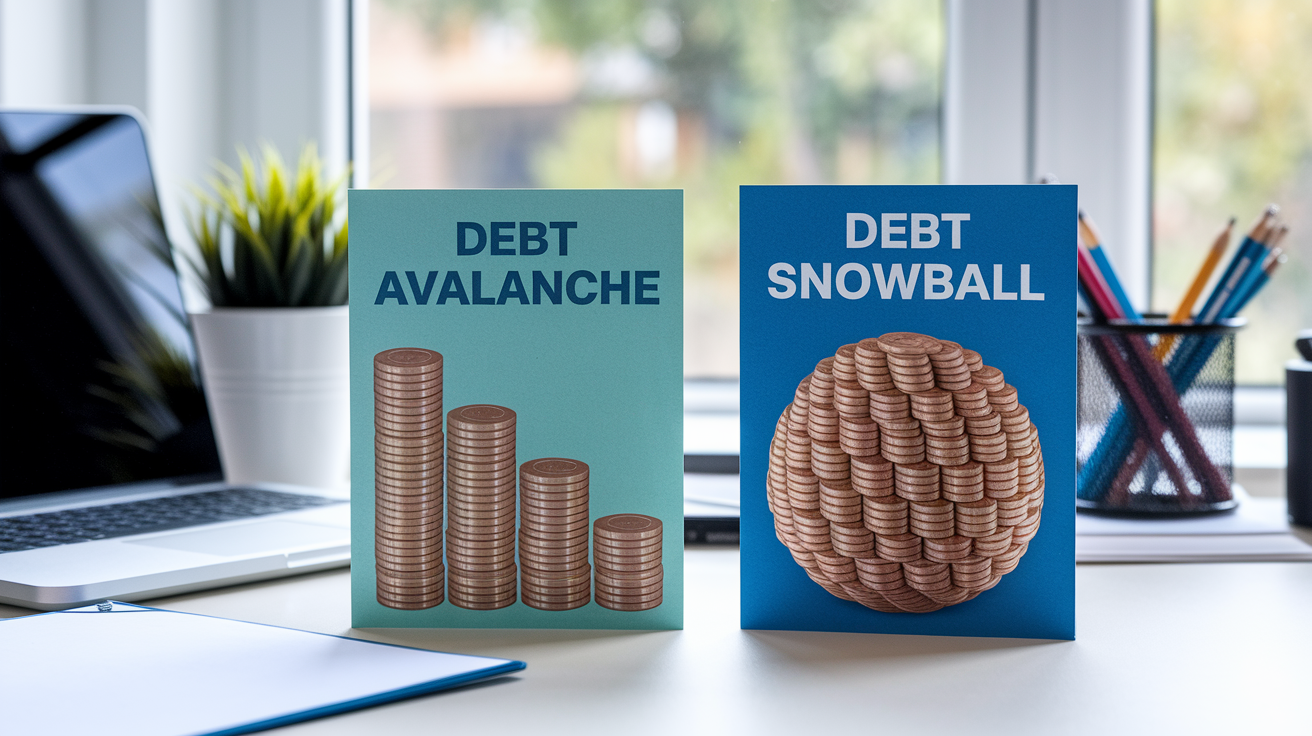
If lenders turn you down or the only offers you receive carry rates higher than your current debts, you still have options that don’t involve taking on a new loan. The debt avalanche method focuses your extra payments on the account with the highest interest rate while making minimums on everything else. Once that account is paid off, you roll its payment into the next highest rate debt. This approach saves the most money in interest over time. The debt snowball method targets the smallest balance first, regardless of interest rate, to build momentum and motivation. Both require discipline and a budget that frees up extra money each month, but they cost nothing beyond your existing debt payments.
Nonprofit credit counseling agencies offer free or low cost guidance and can help you set up a debt management plan if a loan isn’t feasible. These plans consolidate your payments without new borrowing, and the agency may negotiate lower interest rates or waived fees with your creditors. Unlike for profit debt settlement firms, nonprofit counselors are required to act in your best interest and won’t charge large upfront fees. Look for agencies accredited by the National Foundation for Credit Counseling or the Financial Counseling Association of America.
Debt settlement is an option if you’re already 90+ days past due and facing collections or lawsuits, but it’s a last resort before bankruptcy. You or a settlement company negotiate with creditors to accept less than the full balance owed. Settled accounts severely damage your credit and remain on your report for up to seven years. The forgiven debt may also be taxable income. If you pursue settlement, try to negotiate directly with creditors first to avoid paying a third party.
Bankruptcy clears most unsecured debts, but it’s the nuclear option. Chapter 7 bankruptcy can discharge credit card debt, medical bills, and personal loans, but you may have to surrender assets, and the bankruptcy stays on your credit report for up to ten years. Chapter 13 sets up a court supervised repayment plan lasting three to five years. Both types tank your credit score and make it extremely difficult to get new credit, rent an apartment, or even land certain jobs. Bankruptcy is worth considering only if you’re drowning in debt with no realistic path to repayment and other options have failed.
Debt avalanche or snowball methods: Self directed repayment strategies that cost nothing and save the most interest (avalanche) or build quick wins (snowball).
Nonprofit credit counseling and debt management plans: Consolidate payments, negotiate lower rates, and receive budgeting support without taking a new loan.
Direct negotiation with creditors: Call your credit card companies, medical providers, or other creditors to request lower interest rates, hardship plans, or settlement offers.
Debt settlement (last resort): Negotiate reduced balances, but expect severe credit damage and potential tax consequences.
Bankruptcy (absolute last resort): Legal discharge of debts, with long lasting credit and financial consequences. Consult a bankruptcy attorney before proceeding.
Final Words
If you’re weighing a consolidation move, compare APRs, monthly payments, and lender rules before you apply.
This article covered immediate paths like unsecured loans, secured loans, and debt management plans, what lenders consider, realistic rates and terms, steps to boost approval odds, warning signs to avoid, how consolidation can affect credit, budgeting after a consolidation, and nonloan alternatives.
Start with soft prequalification and simple math. With a clear plan, debt consolidation for bad credit can make payments easier and help you regain control.
FAQ
Q: What immediate options are available for managing debt consolidation with bad credit?
A: The immediate options for managing debt consolidation with bad credit are unsecured personal loans (higher APRs), secured loans using collateral, and nonprofit debt management plans that combine payments without creating new debt.
Q: What are the most realistic consolidation options for borrowers under a 600 credit score?
A: The most realistic options for borrowers under a 600 credit score are: 1) credit union personal loans, 2) online subprime lenders, 3) secured loans with collateral, 4) loans with a cosigner, 5) nonprofit debt management plans.
Q: What eligibility factors do lenders consider for consolidation with poor credit?
A: The eligibility factors lenders consider for consolidation with poor credit include income stability, debt-to-income ratio, employment history, cosigner availability, collateral value, age/residency, and valid bank account details.
Q: How do consolidation options compare when your credit score is low?
A: Consolidation options compare as follows: secured loans often offer lower rates but risk your collateral; DMPs cut payments without new debt; unsecured subprime loans give access but at much higher APRs and fewer lenders.
Q: What interest rates and loan terms should bad-credit borrowers expect for consolidation?
A: Bad-credit borrowers should expect APRs often between about 20% and 36%, with averages near 30%, loan amounts from $1,000 to $250,000, and typical repayment terms of two to seven years.
Q: How can I improve my approval odds before applying for a consolidation loan?
A: To improve approval odds before applying, reduce credit utilization, prequalify with soft pulls, gather pay stubs and bank statements, add a cosigner or collateral, and delay hard applications until scores improve.
Q: What predatory offers and warning signs should I avoid when consolidating with bad credit?
A: Avoid predatory consolidation offers that demand large upfront fees, promise guaranteed approvals, push payday or title loans with sky-high APRs, or instruct you to stop paying creditors before a plan is in place.
Q: How will consolidating debt with bad credit affect my credit score?
A: Consolidating debt with bad credit can cause a short-term dip from hard inquiries and account changes, but lowering utilization and making consistent on-time payments usually improves scores over months to years.
Q: What budgeting and money management steps should I take after consolidating debt?
A: After consolidating debt, budget by automating payments, building a small emergency fund, tracking progress monthly, avoiding new credit, and adjusting your repayment plan if income changes.
Q: What alternatives exist if I cannot qualify for a consolidation loan with bad credit?
A: If you cannot qualify for a consolidation loan, use DIY methods (snowball or avalanche), work with nonprofit credit counseling, negotiate with creditors, consider settlement carefully, or treat bankruptcy as a last resort.