


Is debt consolidation a smart move or a money trap waiting to happen?
It’s not a one-size-fits-all fix.
Here’s a simple rule: consolidation helps when you can get a noticeably lower rate, have steady income, and your unsecured balances total roughly $5,000 to $50,000.
If your credit score is around 670 or higher and the new loan cuts your weighted APR by at least 3 to 5 percentage points, consolidation can save you real money and give a clear payoff date.
If those boxes aren’t checked, consider a balance transfer, debt management plan, or a focused payoff plan instead.
How to Know If Debt Consolidation Is Right for You

First thing to check: stable income. If your paychecks bounce around or you’re staring down a layoff, committing to a new fixed payment every month can backfire fast. Consolidation locks you into one set amount for years. You need to know you can cover it without panic each cycle.
Your credit score decides what rates you’ll actually get. Most lenders save their best deals for people with scores around 670 or higher. Below that? You might still qualify, but the rate on the consolidation loan could land close to what you’re already paying. If the new rate isn’t noticeably lower, there’s no point.
Consolidation works best with unsecured debt. Credit cards and personal loans, not mortgages or car loans. The typical range where it makes sense is $5,000 to $50,000. Below $5,000, fees can wipe out any savings. Above $50,000, you’re probably better off exploring debt management plans or settlement.
The interest rate gap is what really matters. If you’re averaging 19% now and the consolidation loan comes in at 9%, you’ll redirect serious cash from interest to principal every month. But if the gap’s narrow, maybe 15% versus 13%, the benefit shrinks fast and fees can kill it.
Strong consolidation candidates usually meet these conditions:
- Stable income that covers all monthly bills with room to breathe
- Credit score of 670 or higher for competitive rates
- Unsecured debt totaling $5,000 to $50,000
- Current interest rates at least 5 percentage points higher than consolidation offers
- No plans to close paid accounts or take on new debt during repayment
Situations Where Debt Consolidation Works Best

Consolidation delivers the biggest win when it slashes your interest rate by a real margin. If you’re juggling three credit cards at 18%, 22%, and 19%, and you can roll them all into a personal loan at 10%, you’ll pay less interest every month and clear the balance faster. That’s real money you keep instead of handing over to lenders.
Multiple due dates create chaos. When you’re tracking four or five accounts with different billing cycles, it’s easy to miss one. One consolidated payment removes that friction. You know the amount, you know the date, and you can automate it without worrying about which card is due next. That simplicity cuts stress and protects your credit score from late payment dings.
A fixed repayment timeline gives you a finish line. Credit cards with minimum payments can stretch repayment across decades if that’s all you pay. A consolidation loan with a 60 month term means you know exactly when the debt disappears, and each payment moves you closer. That predictability helps with planning and keeps you motivated.
When Debt Consolidation Should Be Avoided

Small balances don’t justify the fees. If you owe $2,000 total and the consolidation loan charges a 3% origination fee, that’s $60 upfront. Add a higher monthly payment or extended term, and you might pay more in total than you would by just attacking the debt directly with extra payments. When fees exceed the interest you’d save, consolidation doesn’t make sense.
Unstable income makes fixed payments dangerous. If your hours vary, your income is commission based, or you’re between jobs, committing to a new monthly obligation can backfire hard. Missing payments on a consolidation loan damages your credit and can trigger late fees or default. If you can’t reliably cover the payment, don’t take the loan.
Secured consolidation using your home or car raises the stakes way too high. A home equity loan might offer a lower rate, but now your credit card debt is backed by your house. If something disrupts your income and you can’t pay, you risk foreclosure. Turning unsecured debt into secured debt shifts the consequence from damaged credit to losing an asset. That trade is usually too risky unless your financial position is rock solid.
Alternatives to Debt Consolidation

If consolidation doesn’t fit, other paths can still get you out of debt without taking a new loan.
Debt management plans work through nonprofit credit counseling agencies. The counselor negotiates lower interest rates with your creditors, often dropping rates by several percentage points, and you make one monthly payment to the agency, which distributes funds to each creditor. These plans typically last three to five years and don’t require you to qualify for a new loan.
Debt settlement involves negotiating with creditors to accept less than the full balance. This can cut what you owe by 30% to 50%, but it seriously damages your credit and often requires you to stop paying creditors for months to create leverage. Settlement is a last resort before bankruptcy.
Balance transfer credit cards with 0% introductory APR can work if you have good credit and can pay off the balance during the promotional period, usually 12 to 18 months. You’ll pay a transfer fee (typically 3% to 5%), but you avoid interest if you clear the balance before the promo ends.
Debt avalanche or snowball methods let you attack balances without borrowing. Avalanche targets the highest interest debt first to save the most money. Snowball pays the smallest balance first to build momentum. Both require discipline and consistent extra payments, but you avoid fees and new loans entirely.
Choosing among these depends on your credit, income stability, and total debt. If you have decent credit and stable income, a balance transfer or debt management plan is often safer than settlement. If your debt is overwhelming and consolidation won’t help, settlement or even bankruptcy might be the realistic path.
Qualification Requirements for Debt Consolidation Loans
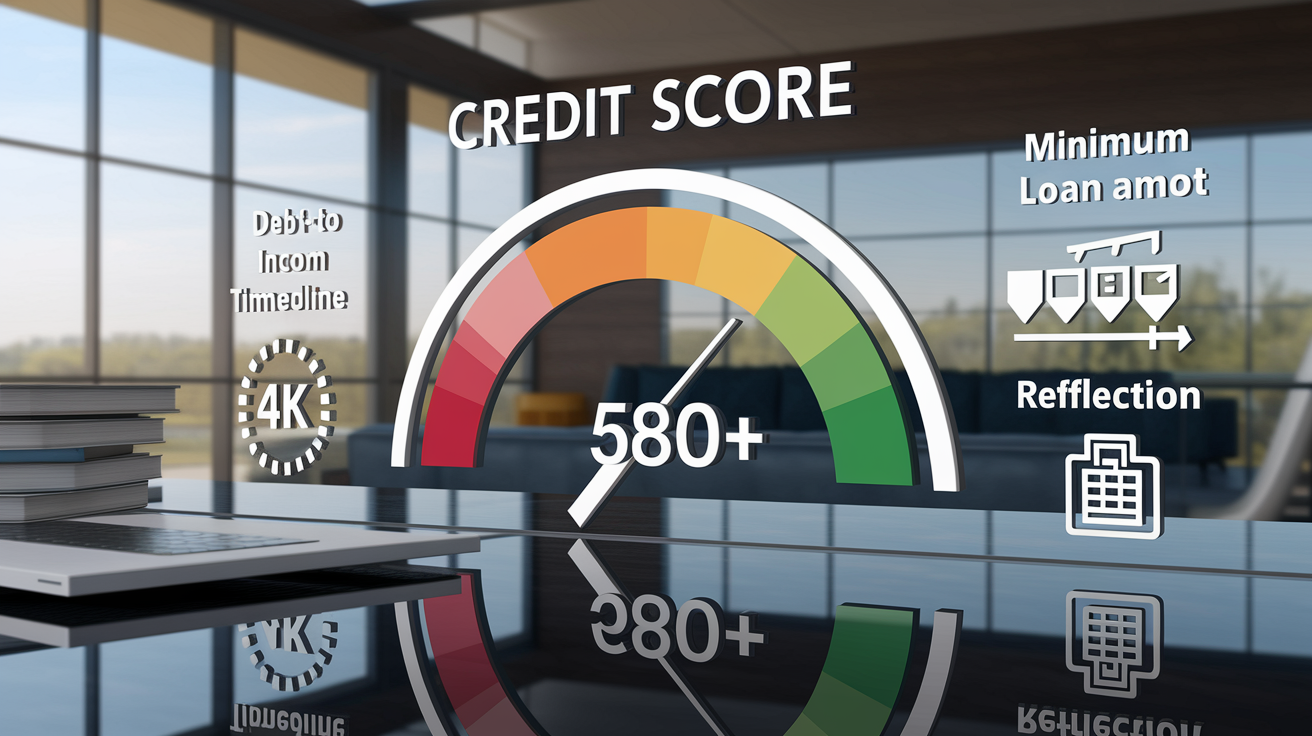
Lenders start with your credit score. Most require at least 580 to 620 for approval, but competitive rates, often in the 7% to 12% range, go to borrowers with scores of 670 or higher. Below 670, you’ll see higher APRs, sometimes above 20%, which can make consolidation pointless if your current debt already sits in that range.
Income and debt to income ratio (DTI) matter just as much. Lenders want proof you earn enough to cover the new payment plus your other obligations. A DTI below 40% is the typical threshold. If your monthly debt payments (including the proposed consolidation loan) exceed 40% of your gross monthly income, approval becomes harder. Some lenders set stricter limits at 35% or lower.
Employment history and minimum loan amounts round out the criteria. Steady employment for at least a year improves your approval odds. Many lenders won’t issue loans below $3,000 because the administrative cost isn’t worth it for them. If your total debt sits under that floor, you might not qualify or might face higher fees that erase any benefit.
Debt Consolidation vs. Maintaining Current Payments
The only way to know if consolidation saves money is to run the numbers side by side. Start by listing every debt you want to consolidate: the balance, the APR, and the monthly minimum. Add up the total balance and the total monthly payment.
Next, get a consolidation loan quote showing the APR, the term in months, and any origination or other fees. Use an installment loan calculator to find the monthly payment and total interest you’ll pay over the life of the loan. Add the fees to the total interest to get the true total cost.
Follow these steps to compare:
- Calculate the weighted average APR of your current debts (multiply each balance by its APR, sum those products, then divide by total balance).
- Estimate how much total interest you’ll pay if you keep making current minimums until each debt is paid off (use a credit card payoff calculator or amortization schedule).
- Compare that total to the consolidation loan’s total cost (monthly payment times term, plus fees).
- If the consolidation total is lower and the monthly payment fits your budget, consolidation makes sense.
A meaningful rate reduction usually means at least a 3 to 5 percentage point drop. For example, if your weighted average is 19% and the loan offers 10%, you’ll save. If your average is 15% and the loan is 13%, the gap is too small and fees will likely wipe out the benefit.
Decision Checklist: Is Debt Consolidation a Good Idea for Your Situation?

Use this checklist to quickly assess whether consolidation fits. If you check most of these boxes, consolidation is likely worth pursuing. If you miss several, an alternative strategy may be safer.
- Your total unsecured debt is between $5,000 and $50,000
- You have a credit score of 670 or higher
- Your current debts carry interest rates at least 5 percentage points higher than the consolidation loan rate
- You have stable income and employment for at least a year
- Your debt to income ratio is below 40%
- You’re ready to stop adding new charges to credit cards after consolidation
If you meet all six, consolidation will probably lower your monthly payment, reduce total interest, and give you a clear payoff date. If you’re missing two or more, compare the numbers carefully and consider alternatives like a debt management plan or targeted payoff using avalanche or snowball methods.
Final Words
Start with the decision signals: income stability, a solid credit score, mostly unsecured balances, and a meaningful rate drop after fees. Those were the practical checks we walked through.
We also covered where consolidation shines, when it can backfire, and sensible alternatives like debt management plans or balance-transfer cards.
If you’re asking when is debt consolidation a good idea, use the checklist—compare rates, check fees, verify income—and pick the option that lowers interest and simplifies payments. You’ll feel more in control and less stressed.
FAQ
Q: Is it a good idea to consolidate debt?
A: Consolidating debt is a good idea when it lowers your interest rate by several points, cuts fees, and you have steady income to meet one predictable payment. If not, don’t consolidate.
Q: How to pay off $30,000 in debt in 1 year?
A: To pay off $30,000 in one year, plan for about $2,500 monthly (before interest): cut expenses, boost income, attack highest-interest balances first, use bonuses, and consider refinancing only if it lowers your overall cost.
Q: How much is the payment on a $50,000 consolidation loan?
A: The payment on a $50,000 consolidation loan depends on rate and term; for example, roughly $965/month at 6% over 5 years, or about $1,060/month at 10% over 5 years. Longer terms lower monthly cost but raise total interest.
Q: Is $20,000 in credit card debt a lot?
A: Twenty thousand dollars in credit card debt is a large balance for most people; it often carries heavy interest, creates sizable monthly interest charges, and usually calls for consolidation, a repayment plan, or counseling.