


Most people think tracking expenses requires complicated apps or strict budgets.
But the truth: simple systems and a two-week snapshot beat perfection every time.
This post shows how to list income, separate fixed and variable bills, track every transaction for two weeks, and compare results to a 50-30-20-style plan.
You’ll get easy options: apps, spreadsheets, cash envelopes, and a quick weekly routine so you actually follow the plan.
If you only do one thing this week, track every transaction for 14 days.
Core Steps to Start Tracking Monthly Expenses Right Away

List every income source you have: salary, freelance jobs, benefits, side gigs. Then list your fixed monthly expenses like rent or mortgage, utilities, insurance, loan payments, and subscriptions. Fixed expenses don’t change much month to month. Variable expenses include groceries, fuel, dining out, entertainment, and personal care. These shift based on how you live that month.
Track every transaction for at least two weeks to build an accurate baseline. That two week snapshot shows what you’re actually spending, not what you think you spend. The gap between the two can be big. Closing it is the first step toward control.
Use the 50-30-20 budgeting rule as a starting framework: 50% for needs, 30% for wants, and 20% for savings or debt payoff. Once you have your baseline, you can test whether your real spending aligns with those targets and make adjustments.
Here’s the immediate routine:
-
Gather all income sources. Write down each one and the amount you receive monthly after taxes.
-
List fixed obligations. Rent, mortgage, utilities, insurance, car payment, student loan minimums, childcare, recurring subscriptions.
-
Track every transaction for two weeks. Use a simple spreadsheet, an app, or even a paper notebook. Don’t skip anything. Coffee, parking, or small online purchases all count.
-
Organize spending into categories. Separate needs, wants, and debt or savings. Common categories: groceries, dining out, transportation, home, personal care, subscriptions, entertainment, debt payments.
-
Compare actual spending to your budget framework. After two weeks, total each category. If groceries and dining out consume 40% of your income, that’s a red flag.
-
Make one immediate adjustment. Pick the category where you overspent the most and create a realistic cap for next month. Then keep tracking.
Practical Methods to Track Monthly Expenses (Apps, Spreadsheets, Manual Options, and Automation)

No single method fits everyone. Some people want real time automation. Others need hands on control. You can pick one or combine multiple approaches, but consistency matters more than perfection.
Apps sync your bank and credit card accounts, auto categorize transactions, and show dashboards with spending summaries. Examples include Banktivity, Money Dashboard, and Emma. Spreadsheets offer full control, custom formulas, and the ability to track anything the way you want. Offline methods like cash envelopes and receipt logs work well if you prefer less screen time or don’t trust automation.
Here are the main methods:
Expense tracking apps. They sync accounts, tag transactions automatically, and send alerts when you approach category limits. The upside: fast, accurate, and minimal effort. The downside: you still need to review categories weekly because apps sometimes mislabel transactions.
Spreadsheets (Google Sheets or Excel). Build your own tracker with columns for Date, Description, Category, Amount, Payment Method, Recurring Y/N, and Notes. Add formulas to sum categories and calculate percentages of income. Spreadsheets take more time upfront but let you track irregular bills, shared expenses, or freelance income exactly how you need.
Manual logs (receipt tracking or notebooks). Save every receipt and batch enter daily or weekly. This method increases awareness because you write down each purchase. It works well for people who spend a lot in cash or prefer offline systems.
Cash envelope system. Withdraw monthly budgets for categories like groceries, gas, and entertainment. Put cash into labeled envelopes. When an envelope is empty, you’re done spending in that category. Simple, effective, and impossible to overspend.
Hybrid systems combine methods. For example, use an app for daily tracking and a spreadsheet for monthly summaries. Or track digital transactions with an app and handle cash purchases manually.
Building a Simple Spreadsheet Tracker
Start with these columns: Date, Description, Category, Amount, Payment Method, Recurring (Y/N), and Notes. Add a monthly summary sheet that totals each category, calculates variance versus budget, and shows percentage of income per category.
Use formulas like =SUMIF(Category_Range, "Groceries", Amount_Range) to auto sum categories. Create a simple pivot table or conditional formatting to highlight overspend. Spreadsheets shine when you need to track irregular bills (like annual insurance premiums) by dividing the total by 12 to get a monthly average.
Spreadsheets work best if you want full customization, don’t mind manual entry, or need to share a tracker with a partner. If you hate spreadsheets or find them overwhelming, an app will be faster.
Using Digital Banking Automation and Bank Sync Features
Most banks now offer transaction categorization, spending insights, and CSV exports. Apps that sync your bank can pull transactions automatically, apply rules to tag recurring items, and alert you when you exceed a category budget.
Automation saves time but isn’t perfect. Banks sometimes mis categorize transactions. Your grocery store might show up as “shopping” instead of “groceries.” Review your categories weekly to catch errors. Set up transaction rules so your rent payment always tags as “Housing” and your Netflix charge always tags as “Subscriptions.”
Digital banking tools also offer fraud detection and recurring payment management. Use the recurring list to audit subscriptions you forgot about. Export your transactions to CSV once a month if you want a backup or prefer analyzing data in a spreadsheet.
Automation works best when you pair it with a quick weekly check. Don’t assume the system is flawless.
How to Categorize Monthly Expenses for Accurate Tracking

Categories turn raw transaction data into useful information. Without consistent labels, you can’t see patterns or figure out where to cut back. Start with broad categories and refine only if you need more detail.
Common categories to track:
Groceries and household supplies. Dining out and takeout. Transportation (fuel, public transit, parking, rideshare). Home (rent, mortgage, utilities, maintenance, insurance). Personal care and health (gym, hygiene, medical co pays, prescriptions).
Use the same label every time. If you call it “Food” one week and “Groceries” the next, your totals will be wrong. Apps auto categorize, but you still need to review and correct mislabeled items weekly. A coffee shop might default to “Dining” when you’d rather tag it “Coffee” under a discretionary spending bucket.
Tag or color code categories to make patterns easier to spot. Green for needs, yellow for wants, red for debt payments. Some people assign percentages based on the 50-30-20 rule, then check if actual spending aligns.
Keep your system simple. If you create 30 micro categories, you’ll spend more time labeling than analyzing. Five to ten categories usually cover most people. Adjust when something stops working, but avoid changing labels mid month because it breaks your monthly comparison.
Daily, Weekly, and Monthly Routines for Tracking Expenses Consistently

Tracking works when it becomes a habit. Most people check their finances once or twice a month and wonder why they lose control. Daily or weekly updates keep your data current and prevent backlog.
Here’s a realistic rhythm:
Daily or every few days: Log transactions while they’re fresh. If you use an app, open it and confirm auto categorized items. If you use a spreadsheet, enter receipts before you forget what they were for.
Weekly review (15 minutes): Check for untagged or mis categorized transactions. Compare your week’s spending to your budget. If you blew past your dining out cap on Tuesday, you’ll know to cook the rest of the week.
Monthly reconciliation: At month end, total every category. Compare actual spending to your budget. Look for surprises like irregular bills you forgot, subscription renewals, or categories where you consistently overspend. Adjust next month’s budget based on what you learned.
Quarterly strategic review: Every three months, step back and analyze trends. Are you paying too much for car insurance? Can you renegotiate your phone plan? Should you reallocate money from an underspent category to savings?
Pick one day each week for your review. Sunday evenings or Friday afternoons work well. Set a phone reminder so it’s automatic. Weekly consistency beats perfect daily tracking. If you skip a week, don’t give up. Just pick it back up and keep going.
Managing Recurring Bills, Subscriptions, and Irregular Expenses
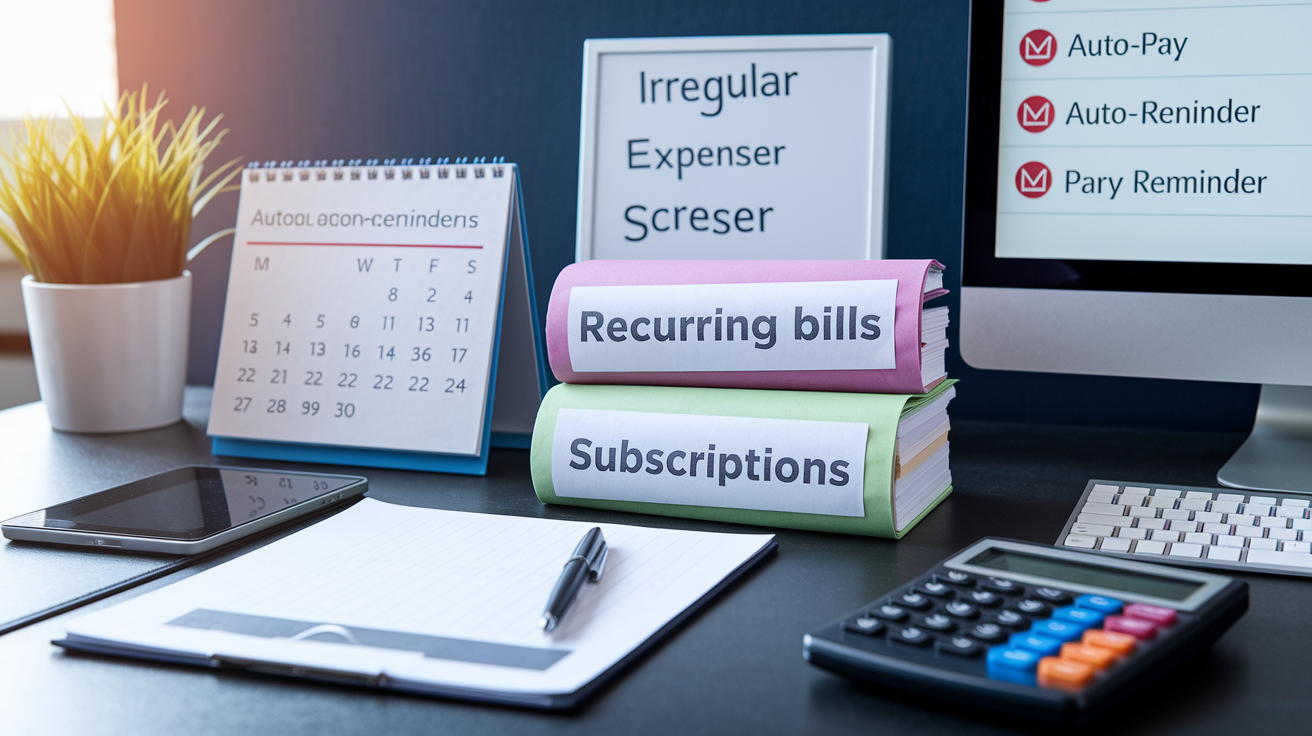
Recurring payments hide in the background and quietly drain your budget. Subscriptions, insurance, utilities, loan minimums, childcare, and memberships all repeat monthly or annually. Track them separately so you can audit and negotiate.
List every recurring payment. Note the amount, due date, and whether it’s monthly, quarterly, or annual. Apps often detect recurring transactions automatically, but verify the list yourself. Cancel anything you don’t use. Compare providers for utilities, phone plans, and insurance at least once a year. You can often save 10% to 20% by switching or negotiating.
Irregular expenses like car repairs, medical bills, holiday gifts, and annual insurance premiums disrupt your budget if you don’t plan for them. Average these by dividing the annual or quarterly cost by 12. For example, if you pay £1,200 for car insurance once a year, set aside £100 per month in your budget so the bill doesn’t surprise you.
Here’s how to stay on top of recurring and irregular costs:
-
Audit subscriptions monthly. Check your bank for recurring charges. Cancel services you forgot about or don’t use enough to justify the cost.
-
Negotiate bills annually. Call your insurance, internet, or phone provider and ask for a better rate. Mention competitor pricing or loyalty discounts.
-
Automate payments to avoid fees. Set up auto pay for fixed bills so you never miss a due date and get hit with late charges.
-
Amortize big annual expenses. Divide the total by 12 and treat it as a monthly line item. Move that amount into a separate savings bucket each month so the cash is ready when the bill arrives.
-
Review and adjust quarterly. If your utility costs drop in spring or your childcare ends, reallocate that freed up cash to savings or debt payoff instead of letting it disappear into discretionary spending.
Special Expense Tracking Scenarios: Couples, Freelancers, Students, and Business Owners

Different life situations need different tracking setups. A couple splitting expenses, a freelancer separating business costs, or a student on a tight budget each face unique challenges. Adjust your system to match how money actually moves in your life.
When you share finances or track income that varies month to month, a one size approach breaks down fast. Build flexibility into your categories and routines.
Couples and Shared Household Tracking
If you share expenses with a partner, decide upfront how to split costs: 50/50, proportional to income, or one person covers certain categories. Use a shared spreadsheet or app where both of you log transactions. Tag purchases as “Joint,” “Person A,” or “Person B” so you can reconcile at month end.
Set up a joint account for shared bills like rent, utilities, and groceries. Each person transfers their share on payday. Track personal discretionary spending separately so neither partner feels policed. Review the shared tracker together once a month to make sure you’re aligned on priorities and categories.
Freelancers and Self Employed Expense Systems
Freelancers must separate personal and business expenses for tax purposes. Use different bank accounts or credit cards, and tag every transaction as “Personal” or “Business.” Track deductible expenses like software subscriptions, office supplies, mileage, travel, and client meals.
Keep digital or physical receipts for every business purchase. Log mileage immediately after work trips using an app or notebook. Reconstructing it later is a nightmare. Reconcile monthly so you catch missing receipts and have clean records at tax time. If income varies, base your monthly budget on your lowest recent month and treat extra as savings or irregular expense buffer.
Students and Low Income Budgeting
Students and anyone on a tight budget benefit most from tracking discretionary spending. Fixed costs like rent and tuition are usually set. The variable part (food, entertainment, transport) is where money disappears.
Use the cash envelope method for categories like groceries and social spending. It’s visual, immediate, and stops overspending. Track every small purchase for a month to see where your money actually goes. Even £3 coffees add up fast. Once you have the data, cut or cap the categories that don’t align with your priorities.
Reviewing Spending Patterns and Creating Monthly Expense Reports

Tracking is only useful if you review the data. At the end of each month, create a summary that compares actual spending to your budget and highlights trends. This monthly report shows whether you’re improving, where you’re stuck, and what to change next month.
Pull totals for each category. Calculate how much you spent as a percentage of your income. Compare this month to the last two or three months. Are you spending less on dining out? Did an unexpected car repair blow your transportation budget? Did you forget to account for a quarterly bill?
Use your monthly report to forecast next month’s expenses. If you know your car insurance renews in two months, start setting aside cash now. If you consistently underspend in one category, reallocate that money to a higher priority goal like your emergency fund or credit card payoff.
Here’s what to include in a simple monthly expense report:
Total income for the month (after taxes). Total spending, broken out by category. Variance for each category: actual vs budgeted amount. Percentage of income spent per category.
| Month | Category | Budgeted | Actual | Variance |
|---|---|---|---|---|
| January | Groceries | £400 | £380 | -£20 |
| January | Dining Out | £150 | £210 | +£60 |
| January | Transportation | £200 | £245 | +£45 |
| January | Subscriptions | £50 | £50 | £0 |
Review this report with a partner if you share finances, or use it to set next month’s targets if you track solo. Celebrate small wins. If you cut discretionary spending by 10%, that’s real progress. Adjust your budget when life changes: a raise, a new expense, or a goal you’ve hit.
Common Expense Tracking Mistakes and How to Fix Them

Even disciplined trackers make mistakes that reduce accuracy or kill consistency. Recognizing these errors early and fixing them keeps your system running smoothly.
Inconsistent tracking is the biggest mistake. If you log transactions daily for two weeks, then ignore it for a month, your data becomes useless. Fix: set a weekly reminder and treat it like any other non negotiable appointment.
Other common mistakes:
Ignoring small purchases. Coffee, snacks, app downloads, and parking fees add up fast. Track everything or your totals will be wrong.
Using multiple tracking systems. Running a spreadsheet and two apps at the same time creates confusion and duplicate work. Pick one primary method and stick with it.
Failing to reconcile cash spending. If you withdraw £100 and can’t account for where it went, your budget has a hole. Log cash purchases the same day or keep receipts and batch enter weekly.
Overly complex categories. Ten categories are enough for most people. If you split “Groceries” into “Produce,” “Dairy,” “Snacks,” and “Household,” you’ll spend more time labeling than learning.
Not accounting for irregular bills. Annual insurance, quarterly taxes, holiday gifts, and car maintenance will surprise you unless you average them into monthly budgets.
Skipping the weekly review. Monthly reconciliation is too late to catch overspending. A quick weekly check lets you course correct before the damage is done.
Fix these by simplifying your system, automating where possible, and scheduling regular check ins. If something feels too hard, adjust it until it works.
Aligning Monthly Expenses with Broader Financial Goals

Tracking expenses isn’t the end goal. The real point is to free up cash for what matters: paying off debt, building an emergency fund, saving for a house, or investing for the future.
Use the 50-30-20 rule as a guide. If your needs consistently exceed 50% of income, look for ways to cut fixed costs. Move to a cheaper place, refinance a loan, or switch to a lower car payment. If wants are eating 40% or more, cap discretionary categories and reallocate the difference to savings or debt payoff.
Build an emergency fund that covers three to six months of living expenses. Use your monthly expense tracker to calculate that target. If your essentials total £2,500 per month, aim for £7,500 to £15,000 in an accessible savings account. Once you hit that milestone, shift focus to paying down high interest debt or increasing retirement contributions.
Here’s how to connect tracking to long term goals:
-
Set a specific savings target. Use your tracker to calculate how much you need for an emergency fund, house deposit, or debt payoff. Break it into monthly chunks.
-
Identify one category to cut. Pick the area where you overspend most and set a realistic cap. Move the savings into a separate account immediately after payday so it’s not available for spending.
-
Automate transfers to savings or extra debt payments. Schedule them the day after your income hits. Treat savings like a fixed expense that can’t be skipped.
-
Review progress quarterly. Compare your current savings balance or debt total to where you were three months ago. If you’re not moving forward, revisit your budget and find another category to trim.
Tracking monthly expenses is the foundation. The structure it creates lets you make intentional decisions, reduce financial stress, and build toward stability one month at a time.
Final Words
Start by listing every income source, capture two weeks of transactions to build a baseline, and separate fixed from variable expenses. Pick one method: app, spreadsheet, or notebook, and commit to daily entries and a weekly review.
If you only do one thing this week, record all spending for two weeks and run a quick weekly audit. That shows where to trim and where to protect.
How to track monthly expenses effectively: make it a simple routine, automate where it helps, check categories weekly, and forecast monthly totals. Do this steadily and you’ll feel more control and less stress.
FAQ
Q: What is the best way to keep track of monthly expenses?
A: The best way to keep track of monthly expenses is to pick one system, like an app, spreadsheet, or notebook. Log every transaction for two weeks to build a baseline, set categories, and review weekly.
Q: What is the 70/20/10 rule money?
A: The 70/20/10 rule splits take-home pay: 70% for essentials, 20% for savings and debt, and 10% for wants. Use it as a starting rule and adjust for high-interest debt or low income.
Q: How to save $10,000 in 3 months?
A: To save $10,000 in 3 months you need about $3,334 a month. Cut big variable spending, pause subscriptions, add one income source, and automate transfers to a separate savings account.
Q: Can you live comfortably on $1000 a month?
A: Living comfortably on $1,000 a month depends on location and fixed costs. It’s possible only with very low rent or shared housing, strict food and transport limits, and no high debt. Consider extra income or assistance.