


What if you never had to use a card or loan for a planned bill again?
Sinking funds are simply money you set aside for a specific future cost, separate from your emergency fund.
They turn big, lumpy bills into small monthly chunks so you pay with cash, avoid interest, and stop panicking when due dates arrive.
In this post you’ll learn how to pick goals, calculate the monthly amount, choose where to keep the money, and a simple decision rule: if you can see the expense coming, make a sinking fund for it.
Clear Explanation of Sinking Funds and Their Purpose

A sinking fund is money you set aside for a specific future expense. It’s not your emergency fund, and it’s not general savings. You put away small amounts regularly so when the bill comes, you’ve got the cash ready without borrowing or panicking.
The idea is straightforward: turn a big irregular cost into manageable monthly chunks. Instead of getting hit with an £1,800 holiday bill all at once, you save £150 every month for a year. When the insurance renewal shows up, you’re ready because you’ve been putting money aside since last time. Sinking funds cut financial stress because you’re choosing when and how to save. The money’s there when you need it. They also keep your emergency fund intact for actual emergencies and keep you away from credit cards, which means no interest charges, no debt spiral, and way more control.
This works for anything you can see coming, even if you don’t know the exact timing or amount. Name each fund and track it separately. You’ll watch your progress and stay motivated without mixing that money into your everyday spending or your safety net.
You can use them for:
- Vehicle stuff: registration, servicing, tyres, or saving up for a replacement
- Home maintenance: boiler work, roof repairs, new appliances, furniture
- Holidays and travel: family trips, honeymoons, weekend getaways, gap years
- Seasonal costs: Christmas presents, school supplies, birthdays
- Medical and dental: insurance excess, prescriptions, glasses, planned dental treatment
- Events: weddings, baby showers, anniversaries, charity commitments
How Sinking Funds Work Inside a Budget

Sinking funds live in your budget just like any other regular expense. Once you know your monthly amount for each goal, it becomes a line item. Same as rent or groceries. You set the money aside at the start of the month, move it into the fund, and consider it spent. This keeps your day to day spending realistic because those irregular costs are already covered, spread evenly over the year.
If you budget weekly or get paid every two weeks, split your contributions to match. A £150 monthly amount becomes roughly £75 every fortnight or £35 weekly. That flexibility helps smooth things out, especially if your income arrives unevenly or you want tighter control between paydays. Just stay consistent. Sinking funds only work if the money actually leaves your main account and lands in the dedicated spot each time.
They solve the problem of lumpy expenses wrecking an otherwise stable budget.
- They turn unpredictable timing into predictable monthly payments.
- They stop months with big bills from blowing up your budget or pushing you onto credit.
- They let you plan spending guilt free because the money was always earmarked.
- They free up headspace. You know the car service or holiday deposit is sorted, so you can focus on daily decisions.
Step-by-Step Guide to Setting Up a Sinking Fund
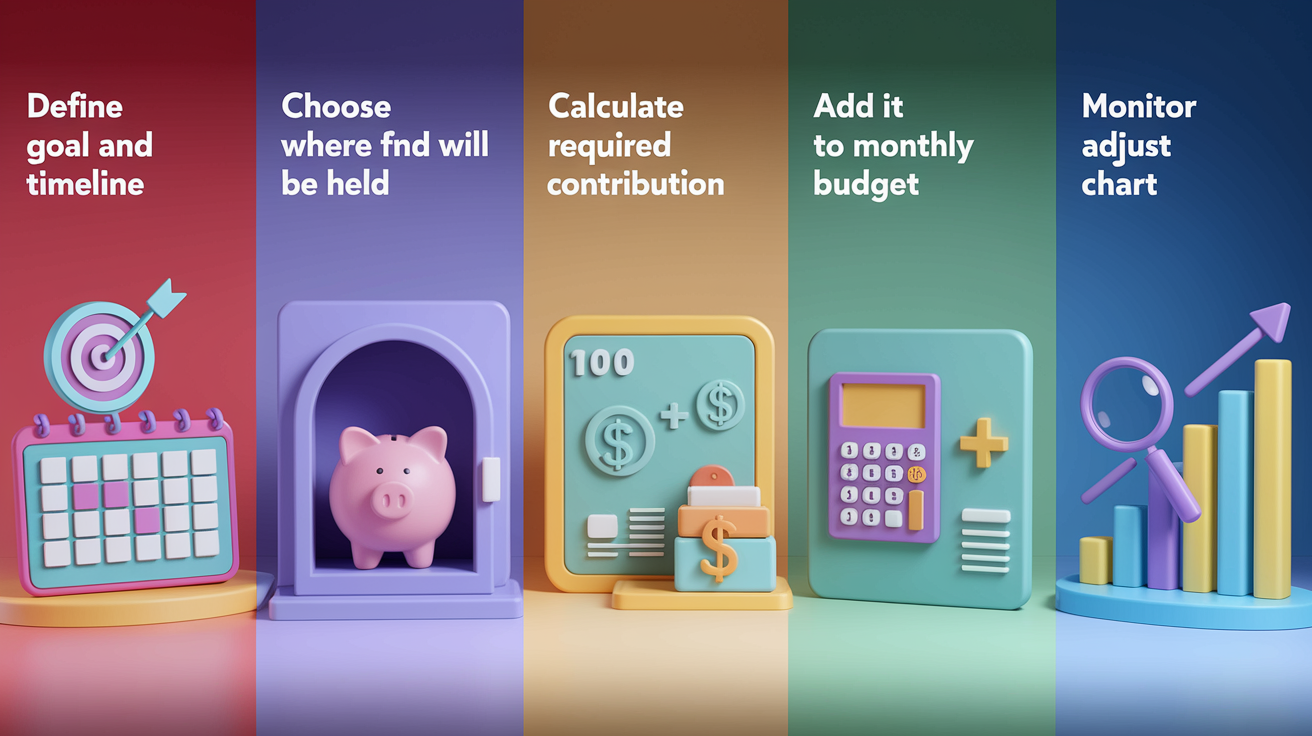
Define the Goal and Timeline
Pick one specific expense and set a target date. December holiday? Maybe you’ve got 10 months. Car insurance renews in August and it’s February now? Six months. Write down the exact amount and the month you’ll need it. Vague goals like “save for home repairs someday” don’t create urgency or clear monthly targets.
Choose Where the Fund Will Be Held
Decide if the money sits in your existing savings with a label, a separate account, or a digital “pot” in your banking app. It should be easy to access when the expense hits but not so convenient you dip into it for everyday stuff. Nothing fancy required, just somewhere you can watch the balance grow and keep it separate from your emergency stash.
Calculate the Required Contribution
Formula: monthly contribution = target amount ÷ months until expense. You need £600 for Christmas gifts starting in January? That’s £600 ÷ 11 = £54.55 per month. Car registration costs $280 in six months? Save $280 ÷ 6 = $46.67 monthly. Round up a bit if it makes the math easier or you want a buffer.
Add It to Your Monthly Budget
Treat it like a bill. When you allocate income at the start of the month, move that amount into the sinking fund before spending on anything discretionary. Tight budget? Adjust another category or extend your timeline. The contribution should feel firm, not optional.
Monitor and Adjust Regularly
Check your fund balance monthly when you review your budget. If things change (income drops, expense estimate was low, timeline shifts), recalculate and tweak the monthly amount. Get a bonus or tax refund? Top up the fund early and lower future contributions or finish ahead of schedule.
Celebrate Milestones and Completion
When you reach 25%, 50%, or 75% of your goal, pause and recognize it. Small rewards work. Grab a coffee, take an evening off budgeting, tick the milestone in your tracker. When the fund hits target and you spend it as planned? That’s success. You’ve paid for something significant without debt, stress, or touching your emergency fund.
Practical Sinking Fund Categories and Examples

Sinking funds work best when each category is clear and tied to a real upcoming cost. Name them precisely. “June 2025 Spain holiday” instead of “travel fund” keeps motivation high and prevents vague pots that lose focus. The more concrete, the easier to calculate contributions and know when to stop saving.
Common example: annual car registration costs £280 and renews in October. Set up a fund in December, contribute £28 monthly for 10 months. By September, the full amount’s ready. Another: family holiday budgeted at £1,800 in 12 months needs £150 per month. After six months you’ll have £900 saved and can book deposits confidently, knowing the rest is coming.
Ten common sinking fund categories:
- Vehicle maintenance and repairs: tyres, servicing, MOT, breakdowns, or saving toward a replacement over several years.
- Home repairs and upgrades: boiler servicing, roof work, redecorating, replacing a broken fridge or washing machine.
- Annual insurance premiums: car, home, pet, or health insurance paid yearly instead of monthly at higher cost.
- Holiday and travel: summer trips, city breaks, honeymoons, gap year adventures.
- Christmas and gift spending: presents, decorations, food, hosting costs spread over the year to avoid December chaos.
- Medical and dental: insurance excess, glasses, contacts, private dental work, treatments not covered by the NHS.
- Subscriptions and memberships: annual gym fees, professional associations, software licenses, streaming bundles paid yearly.
- Children’s expenses: school uniforms, trips, activities, childcare deposits, nursery fees.
- Events and celebrations: weddings, milestone birthdays, anniversaries, baby showers, charity commitments.
- Pet care: vaccinations, annual checks, insurance excess, grooming, emergency vet visits.
Sinking Funds vs. Emergency Funds: Key Differences

An emergency fund covers unplanned urgent crises. Job loss, broken boiler in winter, urgent medical bills, sudden car failure. You don’t know when you’ll need it or how much, so you keep it liquid and untouched. A sinking fund is for expenses you know are coming. You can estimate the cost, set a deadline, plan contributions. One’s reactive, the other’s proactive.
Keeping them separate matters because mixing them leads to confusion. Dip into your emergency fund for Christmas or a planned holiday? You’re exposed when a real crisis hits. Treat a sinking fund like a general slush fund? You won’t have the money when the planned expense arrives. Separation can be physical (different accounts) or organizational (labeled sub-accounts, app “pots,” detailed tracking).
- Purpose: Emergency funds cover the unexpected. Sinking funds cover the predictable.
- Timing: Emergency funds have no fixed date. Sinking funds have a clear target month or event.
- Usage rules: Emergency funds are only for true emergencies. Sinking funds get spent as soon as the planned expense arrives.
- Impact on debt: Emergency funds prevent crisis borrowing. Sinking funds prevent routine borrowing for known costs.
- Tracking: Emergency funds are a single lump sum. Sinking funds are multiple labeled pots, each with its own goal and timeline.
Where to Keep Sinking Funds Safely

Sinking funds need to be accessible when the expense arrives but safe from impulsive spending. The best spot is usually a savings account that earns interest, has no monthly fees, needs no minimum balance, and sits one step away from your current account. High yield savings accounts are ideal if the goal’s more than a few months out because you’ll earn a small return while you save. Money market accounts work similarly and may offer slightly higher rates with the same access.
Many banking apps now offer built in “pots” or “jars.” Virtual sub-accounts you can label, color code, and track separately without opening multiple accounts. Perfect for sinking funds because setup’s instant, no extra fees, and you see all your goals in one place. If your bank doesn’t offer this, a simple separate savings account works. Just keep a spreadsheet or note to track which portion belongs to which goal.
| Account Type | Best For | Considerations |
|---|---|---|
| High yield savings account | Goals 6 to 24 months away, earning modest interest while saving | Check for monthly fees, withdrawal limits, minimum balance requirements |
| App based pots or jars | Multiple short term goals, visual tracking and instant setup | Interest rates may be lower than standalone savings accounts, confirm FSCS protection |
| Money market account | Larger funds with flexible access, slightly higher rates than standard savings | May require higher opening deposits, compare rates and access rules carefully |
Tracking, Reviewing, and Managing Multiple Sinking Funds
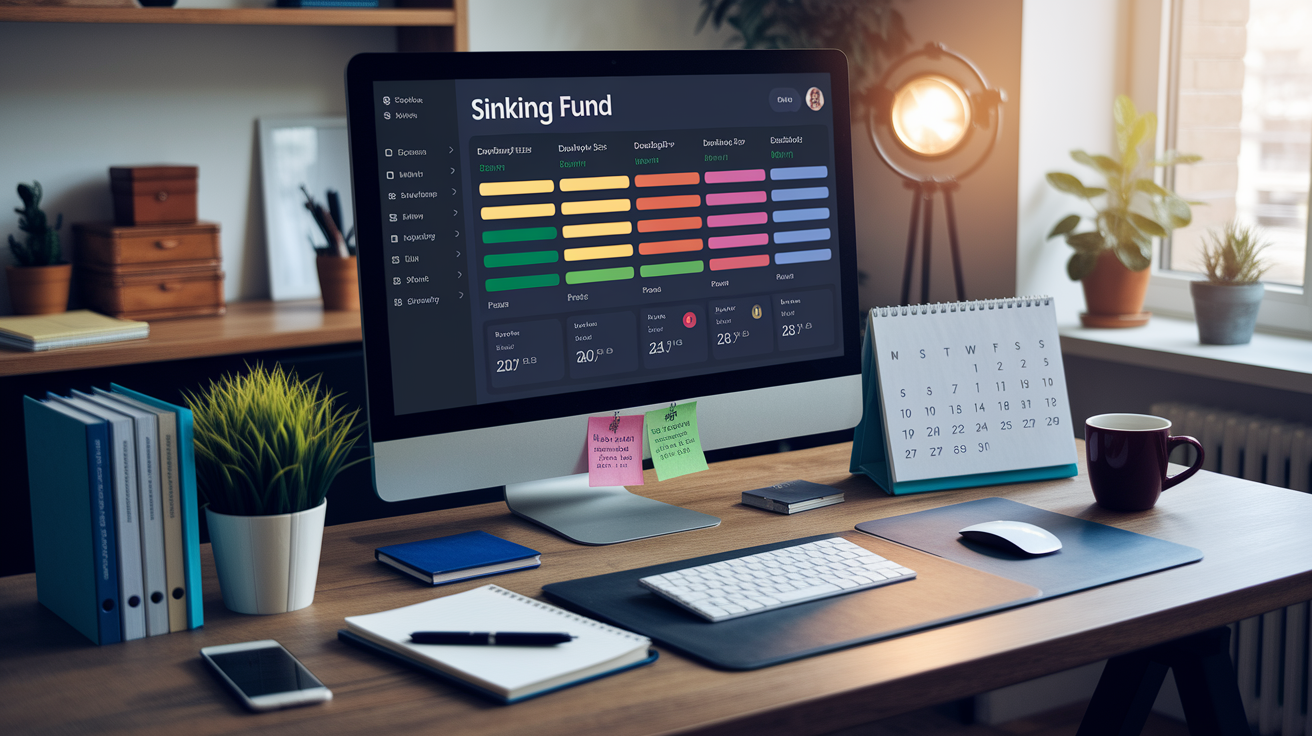
Once you’ve got more than one sinking fund, tracking becomes essential. A simple spreadsheet with each goal, target amount, deadline, monthly contribution, and current balance gives you a single page snapshot. Update it monthly after contributions go in. You’ll see which funds are on track, which need adjusting, and how close you are to each goal. If spreadsheets feel like work, budgeting apps or banking apps with labeled pots do this automatically.
Set a standing monthly review. Same day each month, right after payday or when you update your budget. Check automatic transfers went through, confirm balances, adjust contributions if your income or expense estimate changed. If a goal finishes early or gets canceled, reallocate that monthly amount to another fund or move it into your emergency fund. Managing funds with a partner or housemate? Shared digital pots make it easy to contribute together and see progress without separate accounts or manual reconciliation.
Don’t create so many categories the system becomes a burden. Three to six active sinking funds is manageable for most people. More than that and you risk decision fatigue, tiny contributions that feel pointless, or forgetting what each fund’s for. Prioritize goals that matter most or have nearest deadlines. Add others only once the first few are running smoothly.
Tools and methods for tracking multiple sinking funds:
- Simple spreadsheet with columns for goal name, target, deadline, monthly contribution, current balance, percentage complete.
- Banking apps with color coded pots or jars that show progress bars and let you rename, adjust targets, automate top ups.
- Budgeting software like YNAB, EveryDollar, or Mint, which assign jobs to money and track sinking fund categories alongside your regular budget.
- Shared digital pots for couples, housemates, or travel groups so everyone contributes and sees the same balance in real time.
- Automatic transfers scheduled on payday so contributions happen without manual action or temptation to skip a month.
- Monthly calendar reminders to review balances, adjust goals, celebrate milestones, confirm nothing’s been accidentally spent.
Common Mistakes and How to Avoid Them When Using Sinking Funds

Opening too many sinking funds at once is the biggest mistake. It feels productive to create a fund for every possible future expense, but spreading £10 or £20 across eight different goals means painfully slow progress and motivation disappears. Start with two or three priorities. The expenses with nearest deadlines or highest financial impact. Add more only when those are reliably funded each month.
Another mistake is underestimating the target amount. Base your car repair fund on optimistic guesses and the actual bill’s 50% higher? The fund fails when you need it. Build in a small buffer. Add 10% to 15% to your estimate or round contributions up. Better to finish with a surplus you can reallocate than come up short and reach for a credit card.
- Creating too many categories: Limit active funds to what you can realistically track and fund each month. Consolidate or pause low priority goals.
- Skipping contributions when cash is tight: Treat sinking fund payments like bills. Must reduce? Lower the amount but keep the habit alive. Skipping breaks momentum.
- Using sinking fund money for unrelated expenses: Each fund has one job. Dipping into the holiday fund to cover groceries defeats the purpose and leaves you short when the trip arrives.
- Leaving funds in zero interest accounts: If a goal’s more than six months away, move the money to a savings account that earns interest. Every percentage point counts over time.
- Not reviewing or adjusting: Life changes. Review funds monthly and recalculate contributions when income, timelines, or costs shift, or the fund drifts off target.
Final Words
Start saving now: name the goal, set the timeline, pick an account, and add regular deposits like a bill.
This post defined sinking funds, showed how they fit into a budget, gave a six-step setup with examples, listed practical categories, explained differences from emergency funds, reviewed where to keep money, and covered tracking plus common mistakes.
If you still wonder what are sinking funds and how to use them, remember: small, steady contributions for planned costs beat surprise debt. Start small, stick with it, and you’ll have less stress and more control.
FAQ
Q: Are sinking funds a good idea?
A: Sinking funds are a good idea when you want to avoid debt and protect your emergency fund by saving small amounts for planned expenses; they reduce stress and spread large costs over time.
Q: What is the smartest thing to do with $10,000?
A: The smartest thing to do with $10,000 depends on your goals; prioritize paying high-interest debt, then build or top an emergency fund, and use remaining funds for sinking funds or low-cost investments.
Q: How much should I put in a sinking fund?
A: How much you should put in a sinking fund equals the total cost divided by months until the expense; choose a monthly contribution that fits your budget (for example, $50–$300 depending on the goal).
Q: Where should I put my sinking fund?
A: You should put your sinking fund in a safe, accessible place such as a high-yield savings, money market, or labeled sub-account; pick low fees, modest interest, and easy transfers to avoid dipping into it.