


A good credit score is usually 670 to 739 on the FICO 300 to 850 scale, and that range can save you thousands in interest over time.
It tells lenders you’re lower risk and helps you get approvals, better rates, and cheaper insurance.
This post explains the score ranges, why FICO and VantageScore differ, the main factors that move your score, and simple steps to improve.
If you do one thing today, check your score and focus on on-time payments and lower credit use.
Credit Score Ranges That Define a “Good” Credit Score
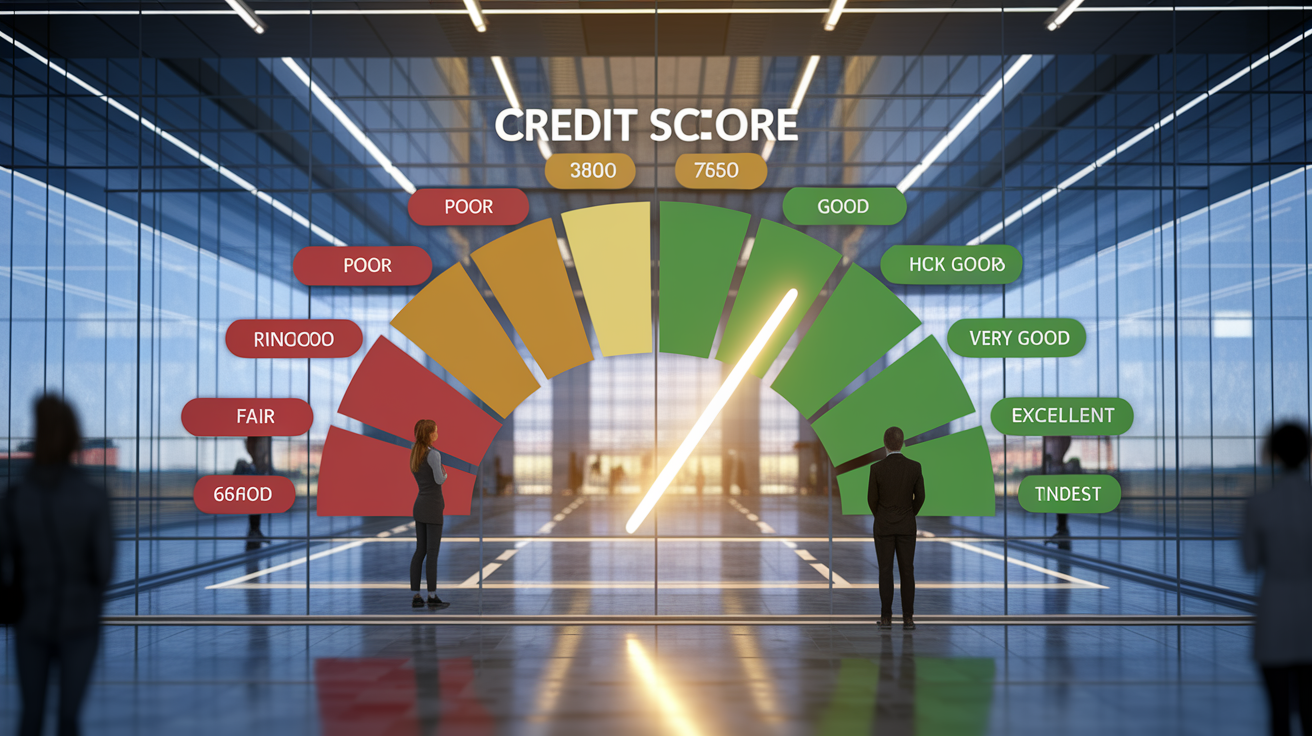
A good credit score sits between 670 and 739 on the standard 300 to 850 FICO scale. VantageScore defines “prime” credit a bit wider, from 661 to 780. These ranges put you in the middle of the credit spectrum and tell lenders you’re generally reliable. Knowing where your score lands helps you guess approval odds and interest rates before you actually apply.
Credit scores get grouped into tiers. Poor credit starts around 300 to 580, fair credit lands between 580 and 669, very good runs from 740 to 799, and excellent begins at 800 or higher. Each tier shows lenders a different level of risk. Moving up just one tier can get you better loan terms and lower rates.
The average American FICO score in 2023 was 715. That’s solidly in the “good” range. About one third of consumers have FICO scores between 600 and 750, and another 48 percent sit above that. If you’re near or above the national average, you’re in a strong position to qualify for most credit products with reasonable terms.
| Score Tier | FICO Range | VantageScore Range |
|---|---|---|
| Poor | 300–579 | 300–600 |
| Fair | 580–669 | 601–660 |
| Good | 670–739 | 661–780 |
| Very Good | 740–799 | N/A (included in “Good” or “Excellent”) |
| Excellent | 800–850 | 781–850 |
How FICO and VantageScore Determine a Good Credit Score

FICO and VantageScore are the two main scoring models in the U.S. FICO introduced consumer credit scoring back in 1989, and FICO Score 8 is still one of the most referenced versions. VantageScore launched in 2006 as a joint project by Experian, Equifax, and TransUnion. They’ve released multiple versions since, including VantageScore 4.0 in 2017 and VantageScore 4plus in May 2024. Both use a base range of 300 to 850, but FICO also offers industry-specific scores that can range from 250 to 900, like the FICO Auto Score.
Each model defines “good” a little differently and uses different formulas to calculate your score. That’s why your score can vary across different apps, bank dashboards, and lender systems. They might be pulling from different bureaus or using different scoring versions.
Model Differences That Affect Your Score
FICO requires at least one account that’s six months old or older and at least one account that’s been active within the past six months to generate a score. VantageScore can produce a score with just one active account, even if it’s only a month old. Makes it easier for people with limited history to get scored.
Range differences: Base FICO and VantageScore both use 300 to 850, but FICO industry scores can go up to 900.
Weighting differences: VantageScore 3.0 assigns 40 percent weight to payment history and 34 percent to credit usage, while FICO’s exact weights are proprietary but generally similar.
Data usage variations: VantageScore 4plus lets you optionally link your bank account to consider cash flow data. Traditional FICO models don’t.
Industry-specific scores: FICO offers separate scoring models for auto loans and bankcards that can change what counts as “good” for that product.
Why scores don’t match across apps: Different apps may use different models, pull data from different bureaus on different dates, or refresh at different intervals.
How Credit Score Factors Influence Whether Your Score Is “Good”
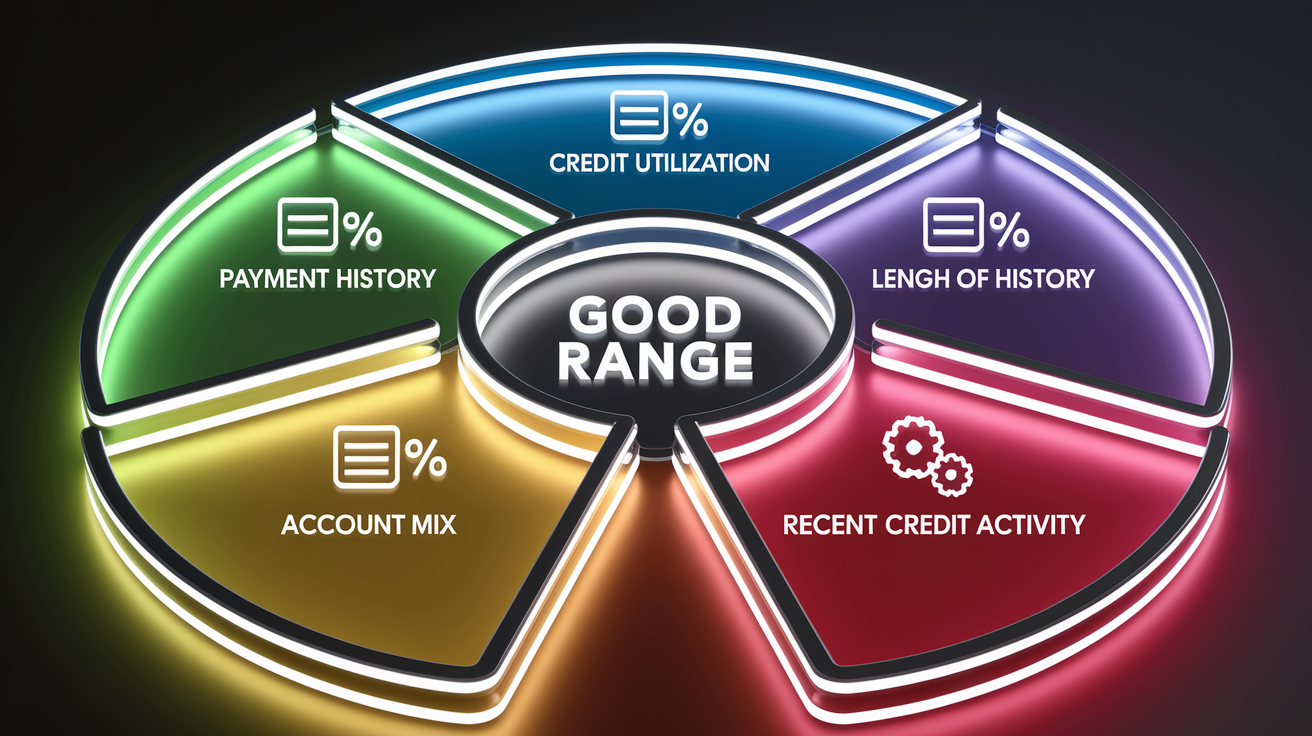
Five major categories determine whether your credit score reaches good status. Payment history, credit usage, length of credit history, account mix, and recent credit activity. Payment history and credit usage together account for roughly two thirds of most scoring models, which means those two behaviors have the biggest impact on whether you stay in the good range or slip into fair or poor territory.
Payment history is the single most influential factor. Typically weighted at 40 percent in VantageScore 3.0 and similarly in FICO models. A single late payment that’s 30 days or more past due can damage your score, and late payments can remain on your credit report for up to seven years. Consistent on time payments build a strong foundation that helps you qualify for better rates and higher credit limits.
Credit usage, also called credit utilization, makes up about 34 percent of your VantageScore 3.0 score. Lenders look at how much of your available revolving credit you’re using. Keeping that percentage under 30 percent is the common target. Borrowers with excellent credit often carry single digit utilization, meaning they use less than 10 percent of their total credit limits.
Hard inquiries, account age, and account mix play smaller but still meaningful roles. Opening multiple new accounts in a short period can trigger several hard inquiries, each of which may lower your score temporarily. Keeping older accounts open preserves your average account age, which helps your score over time. Lenders also like to see a mix of installment loans like car loans or student loans and revolving accounts like credit cards, though this factor typically carries only about 5 percent weight in most models.
Six core factors that influence credit scores:
Payment history (40 percent in VantageScore 3.0): on time payments versus late or missed payments.
Credit utilization (20 percent in VantageScore 3.0): balance to limit ratio on revolving accounts.
Total balances (11 percent in VantageScore 3.0): total debt across all accounts.
Available credit (3 percent in VantageScore 3.0): total unused credit limit.
Credit depth (21 percent in VantageScore 3.0): length of history and number/types of accounts.
Recent credit (5 percent in VantageScore 3.0): new accounts and hard inquiries.
Credit Score Requirements for Major Loans and Approvals
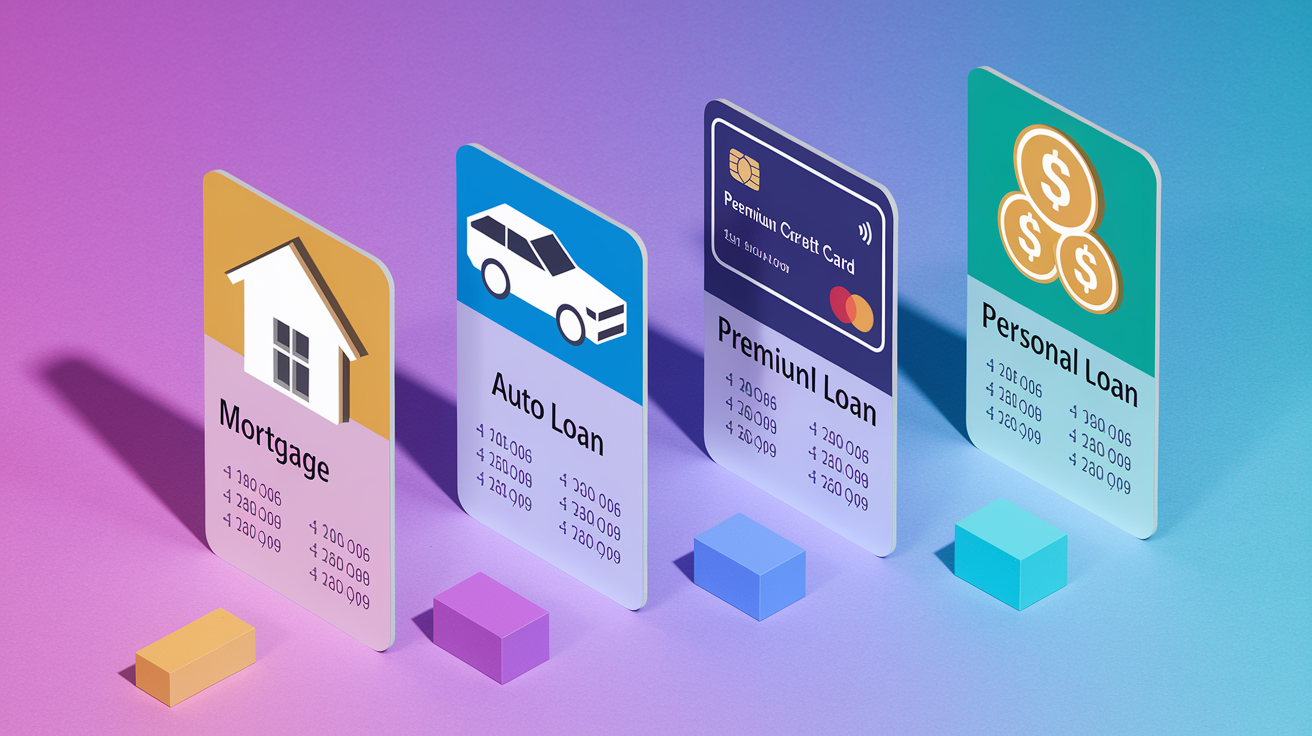
Lenders set minimum credit score thresholds for each type of loan, and those minimums can vary widely by product and lender. Many conventional mortgage lenders require a minimum FICO score around 620, but your best approval odds and pricing start around 670 or higher. For auto loans, a VantageScore of 661 or above is a common benchmark for better interest rates and terms. Credit cards and personal loans often follow similar patterns. “Good” scores unlock premium cards and lower annual percentage rates.
The difference between a fair score and a good score can translate into real money over the life of a loan. On a 30 year fixed $350,000 mortgage, moving from a 620 FICO score to a 700 FICO score could lower your monthly payment by $138.58 and save you about $49,889 in interest over the life of the loan, based on December 6, 2024 rate data. That single score improvement pays for itself many times over.
| Loan Type | Typical Minimum | Ideal “Good” Range |
|---|---|---|
| Mortgage (Conventional) | 620 | 670–739+ |
| Auto Loan | 600–650 | 661–780+ |
| Credit Card (Premium) | 670 | 670–800+ |
| Personal Loan | 580–640 | 670–739+ |
How to Improve Your Credit Score to Reach “Good” Status
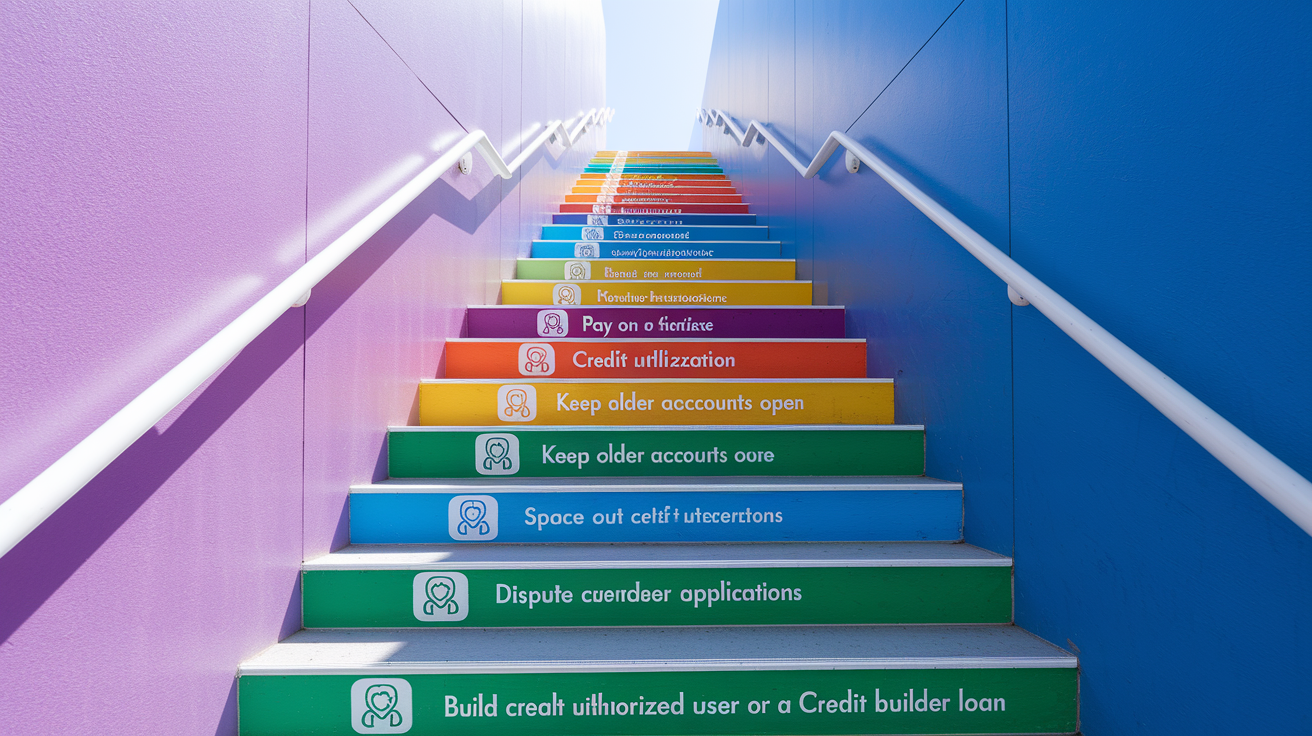
Building or rebuilding credit to reach good status takes consistent habits over time, but the core actions are straightforward. Focus on paying bills on time, keeping your credit card balances low, and avoiding unnecessary hard inquiries. Small, steady improvements compound. You can often see score movement within a few months when you address the biggest issues first.
Pay on time every month. Set up automatic payments or calendar reminders so you never miss a due date. Late payments can stay on your credit report for up to seven years. Even one missed payment can set you back.
Lower your credit utilization below 30 percent. Pay down existing balances, request a credit limit increase on your current cards, or become an authorized user on someone else’s well-managed account to increase your total available credit.
Keep older accounts open when practical. Closing an old credit card reduces your total available credit and can raise your utilization ratio, which may hurt your score. Weigh this against any annual fees.
Space out credit applications. Each hard inquiry from a new credit application can temporarily lower your score. Apply for new credit only when you need it, and try to avoid multiple applications in a short period.
Dispute errors on your credit reports. Review your reports from all three bureaus (Experian, Equifax, and TransUnion) at least once a year. Inaccurate negative marks can drag your score down, and most negative items fall off after seven years.
Build credit with an authorized user spot or a credit builder loan. If you have thin credit history, ask a family member to add you as an authorized user on a card with a long, positive payment history. Or consider a credit builder loan from a credit union or online lender, which reports your payments to the bureaus.
Improvement timelines vary based on your starting point. Paying down high balances can produce a noticeable score bump within one or two billing cycles. Recovering from a late payment or collection account can take several months to a year of consistent on time payments. Long term habits matter more than quick fixes, and steady progress will move you from fair to good and eventually to very good or excellent.
Why Maintaining a Good Credit Score Matters for Long-Term Financial Health

A good credit score isn’t just a number. It’s a tool that saves you money and opens doors. Lower interest rates on mortgages, auto loans, and credit cards can save you tens of thousands of dollars over the life of a loan. Better approval odds mean you have more options when you need to borrow, refinance, or upgrade your credit card rewards. Landlords, insurance companies, and even some employers check credit as part of their screening process. Maintaining a good score can make renting an apartment easier and lower your insurance premiums in many states.
Scores above 800 generally qualify you for the best rates and terms, but high 700s are often treated the same way by lenders. You don’t need a perfect 850 to get top deals. What matters is staying in the good or excellent range consistently, which gives you flexibility and bargaining power when life requires a major purchase or an unexpected expense.
Loan cost savings: Lower interest rates on mortgages and auto loans can save tens of thousands of dollars.
Higher credit limits: Good credit signals low risk, so lenders offer larger credit lines and better card perks.
Better borrowing terms: Access to promotional 0 percent APR offers, lower fees, and flexible repayment options.
Easier housing approvals: Landlords and property managers are more likely to approve your rental application without extra deposits.
Common Reasons Your Credit Score May Change Even If You Stay in the “Good” Range
Credit scores change whenever new information gets added to your credit report or old information is updated or removed. Lenders and creditors typically report to the bureaus once a month, so your score can fluctuate even if your habits stay the same. A balance update, a newly reported payment, or the aging of an old account can all nudge your score up or down by a few points.
Checking your own credit score or report is a soft inquiry and does not hurt your score. Hard inquiries, triggered when you apply for new credit, can lower your score temporarily. Multiple hard inquiries in a short period can have a larger combined impact. Paying off a loan can sometimes reduce your score for a short time because it changes your account mix or removes your only installment account, but this effect is usually minor and temporary.
Five common reasons your score fluctuates:
Monthly balance updates on revolving accounts change your utilization ratio.
Hard inquiries from new credit applications cause temporary dips.
Closing or paying off accounts alters your total available credit or account mix.
Aging of negative items: as late payments or collections get older, their impact decreases.
Corrections or disputes that remove inaccurate information from your report.
How to Monitor Your Credit and Protect Your Good Score

Regularly checking your credit score and credit reports helps you spot errors, detect fraud early, and track your progress toward better credit. Soft inquiries, like checking your own score through a bank app, credit card issuer, or free monitoring service, do not affect your score. You can check as often as you like. Reviewing all three credit reports from Experian, Equifax, and TransUnion at least once a year is a smart baseline, since each bureau may have slightly different data.
Credit freezes and monitoring tools add an extra layer of protection. A credit freeze locks your credit file so new lenders can’t access it without your permission, which stops identity thieves from opening accounts in your name. Many credit card issuers and monitoring services offer alerts when new accounts are opened or when your score changes, giving you early warning of misuse or errors. For a deeper guide on how to access your credit reports from all three bureaus, see the Free Credit Report Guide.
Check your score monthly through your bank, credit card issuer, or a free monitoring service.
Review full credit reports from all three bureaus at least once a year to catch discrepancies or fraud.
Place a credit freeze if you suspect identity theft or want to prevent unauthorized new accounts.
Set up monitoring alerts so you’re notified immediately of new inquiries, accounts, or score changes.
Final Words
You now have the numbers: a good credit score is about 670–739 on FICO and 661–780 on VantageScore.
We covered why models differ, which behaviors matter most (payment history and credit use), and common lender cutoffs.
Do this next: check all three reports, pay on time, keep card balances low, and space out new applications.
If you’re asking what is a good credit score, remember it’s a range that affects rates and approvals. Start with small, steady steps and you’ll see progress soon.
FAQ
Q: What is a good credit score by age?
A: A good credit score by age is generally the same across ages, FICO 670–739 and VantageScore 661–780, the U.S. average is about 715, and younger people often score lower.
Q: Can I get a $50,000 loan with a 700 credit score?
A: A 700 credit score often qualifies you for a $50,000 personal or auto loan, but approval depends on income, debt-to-income ratio, and lender rules, so shop banks, credit unions, and online lenders.
Q: What credit score do you need for a $400,000 house?
A: To buy a $400,000 house, conventional lenders typically want at least a 620 FICO, but 670+ gets better rates, and down payment, credit history, and debt-to-income also matter.
Q: How to get 800 credit score in 45 days?
A: Reaching an 800 score in 45 days is unlikely, focus on paying all bills on time, cutting utilization under 10%, fixing report errors, avoid new hard inquiries, and expect months not weeks.