


Want to raise your credit limit without a hard pull?
You can.
Many card issuers approve small increases with a soft inquiry when you request online or update your income.
That protects your score while giving you more breathing room.
This post walks you through proven, step-by-step soft-pull methods: update your gross annual income, lower utilization, ask for a modest increase online, and call to confirm the inquiry type.
If you only do one thing, update income and request a 10–30% bump.
Soft-Pull Credit Limit Increase Methods That Work Immediately

The fastest way to raise your credit limit without triggering a hard inquiry? Request it directly through your card issuer’s online portal. Most major issuers run soft pulls when you submit through their official website or app. Soft pulls don’t touch your score.
Before you hit “Request Increase,” log in and update your annual income. List your current gross monthly income times twelve. Include recent raises, bonuses, freelance work, second jobs. All of it. Issuers check your income against your limit when they’re evaluating soft-pull requests, and a higher income often gets you instant approval.
Check your current utilization first. Pull up your statements and do the math. Divide your current balance by your credit limit, multiply by 100. You want to be under 30 percent. Under 10 percent is better.
Here’s the process:
-
Log in to your issuer’s website or app and find your account profile settings.
-
Update your gross annual income. Current earnings, all verifiable sources.
-
Find the “Request Credit Limit Increase” or “Services” menu and check your current limit and utilization.
-
Call the customer service number on the back of your card. Ask: “If I request a credit limit increase online today, will you perform a soft inquiry or a hard inquiry?” If they say hard pull, decline and wait.
-
Request an increase of 10 to 30 percent of your current limit. If your limit’s $3,000, ask for $300 to $900. Modest requests get approved more often via soft pull.
-
Submit the request. You’ll either get an instant decision or hear back within 7 to 10 business days. Many issuers approve small soft-pull requests immediately if your account history’s solid.
Understanding Credit Pulls and How They Affect Limit Increase Requests

A soft inquiry doesn’t impact your credit score. Other lenders can’t see it when they review your report. A hard inquiry shows up for two years and affects your FICO score for up to twelve months. Hard pulls typically drop your score by 1 to 5 points. Multiple hard inquiries in a short window? That damage compounds.
Card issuers run a hard pull when they need to verify your creditworthiness before granting a big increase. Large requests (anything over 50 percent of your current limit) often trigger a hard inquiry because the issuer wants to confirm your income, debt levels, and recent payment behavior across all accounts. New accounts under six months old are more likely to require a hard pull. So are requests from customers with recent missed payments, high utilization, or low reported income. When an issuer can’t approve based on what they see in your internal account records, they pull your full credit report.
Credit Card Issuers Offering Soft-Pull Credit Line Increase Options

Different issuers follow different policies when they’re evaluating credit limit requests. Knowing which banks commonly do soft inquiries can help you target the right account. The patterns below reflect typical behavior, but policies change. Always confirm with your issuer before you submit.
Issuers that do automatic account reviews every 6 to 12 months are more likely to grant soft-pull increases during those cycles, especially if your payment history’s clean and your utilization’s low. Some issuers offer soft-pull options for manual requests through online portals or mobile apps. Others default to hard inquiries for larger or unusual requests.
| Issuer | Typical Soft-Pull Behavior | Notes |
|---|---|---|
| American Express | Commonly uses soft inquiries for established accounts requesting increases online or by phone. | Automatic reviews often occur every 6 to 12 months for accounts in good standing. |
| Capital One | Frequently uses soft inquiries for manual limit increase requests and prequalified upgrade offers. | Online requests via account portal typically soft. Large increases may require verification. |
| Discover | Typically performs soft pulls for CLI requests submitted online and during periodic account reviews. | Automatic increases common after 6 to 12 months of responsible use and low utilization. |
| Chase | Mixed policy. Small or online requests often soft. Larger increases or requests on new accounts may trigger hard pulls. | Automatic reviews occur every 6 to 12 months. Calling to confirm inquiry type before requesting is recommended. |
| Citi | Many routine increases are soft, but large or infrequent requests can prompt a hard inquiry. | Updating income and maintaining low balances improve odds of soft-pull approval. |
| Bank of America | More likely than some peers to perform hard pulls for manual CLI requests, especially larger increases. | Automatic increases still use soft reviews. Consider waiting for automatic bump if possible. |
| Wells Fargo | Mixed policies. Small and automatic increases often soft. Manual large increases sometimes trigger hard pulls. | Verify inquiry type by calling customer service before submitting manual request. |
Optimizing Your Profile Before Requesting a Soft-Pull Limit Increase

Your payment history and credit utilization are the two biggest factors in your FICO score. Payment history accounts for 35 percent. Utilization accounts for 30 percent. Issuers look at these same factors when they’re deciding whether to approve a soft-pull increase. Improving your account behavior before you request raises your approval odds significantly.
Pay down your balances before you submit. If your balance is $2,000 on a $5,000 limit, you’re at 40 percent utilization. Pay that down to $500 or less to drop below 10 percent. Set up automatic payments so you never miss a due date. Make sure you’ve made at least six consecutive on-time payments. The longer your streak of perfect payments, the more comfortable an issuer feels approving an increase without pulling your full credit report.
Update your income in your online account profile as soon as you get a raise, start a new job, or add a new income source. Issuers often trigger automatic soft-pull reviews when they see a jump in reported income. Manually updating your income before requesting an increase gives the issuer a clear reason to approve a higher limit. Have documentation ready in case they ask. Recent pay stubs, W-2 forms, or tax returns can verify your updated income if the issuer needs proof.
Key actions to take before requesting a soft-pull increase:
Make at least six consecutive on-time monthly payments. Aim for twelve months of perfect payment history for larger requests.
Pay down balances to get your utilization below 10 percent, or at minimum below 30 percent.
Update your gross annual income in your account profile. Include raises, bonuses, freelance income, and any new jobs.
Avoid opening new credit accounts or making other hard-pull inquiries within 30 to 45 days of your planned request.
Check your credit report for errors or fraudulent accounts that could block approval. Dispute any inaccuracies before you submit your request.
Timing Strategies for Soft-Pull Credit Limit Increases

Most card issuers automatically review accounts for potential credit limit increases every 6 to 12 months. If you’ve kept balances low, made every payment on time, and kept your account in good standing, you may get an automatic increase without asking. These automatic increases almost always use soft inquiries and require no action.
When you decide to request a manual increase, wait at least six months after opening the account or after your last credit limit increase. Requests made earlier than six months often get denied outright. Accounts younger than six months are more likely to trigger a hard inquiry because the issuer has limited internal payment data to review. Twelve months of account history is safer if you’re asking for a larger increase or if your income hasn’t changed much.
Don’t stack multiple credit limit increase requests or new credit card applications within a 30 to 45 day window. Each hard inquiry can drop your score by a few points, and multiple inquiries in a short period signal higher credit risk to other lenders. Space out your requests. Prioritize asking for increases on your oldest, highest-limit accounts. Those are the accounts where issuers feel most comfortable granting soft-pull approvals. If you recently changed jobs, got a significant raise, or paid off a large debt, that’s an ideal time to request an increase. The issuer can see a clear improvement in your situation.
How to Use Your Issuer’s Online Tools to Avoid Hard Inquiries

Most major card issuers offer an online “Request Credit Limit Increase” form in your account dashboard. Many of these tools default to soft inquiries for routine, modest requests. Log in to your account on the issuer’s website or mobile app. Navigate to the “Services,” “Account Services,” or “Manage Account” menu. Look for an option labeled “Request Credit Limit Increase” or “Increase Your Credit Line.” These online forms often deliver instant decisions for small increases if your account’s in good standing.
Before you submit the online form, use your issuer’s secure message center or live chat to confirm whether the request will trigger a soft or hard inquiry. Many issuers will tell you their policy in writing before you proceed. That protects you from an unexpected hard pull. If the online tool doesn’t explicitly state the inquiry type, call the customer service number on the back of your card and ask.
Ideal wording to use when confirming inquiry type through online tools or phone:
“I’d like to request a credit limit increase on my account. Can you confirm whether this request will result in a soft inquiry or a hard inquiry on my credit report?”
“If the increase requires a hard pull, I’d prefer to decline the request. Is there a smaller increase amount you could approve using only a soft inquiry?”
“I recently updated my income in my account profile. Does that update trigger an automatic review, or do I still need to submit a manual request?”
“Can you tell me when my account’s scheduled for its next automatic credit limit review, and will that review use a soft inquiry?”
Alternative Ways to Increase Available Credit Without a Hard Pull
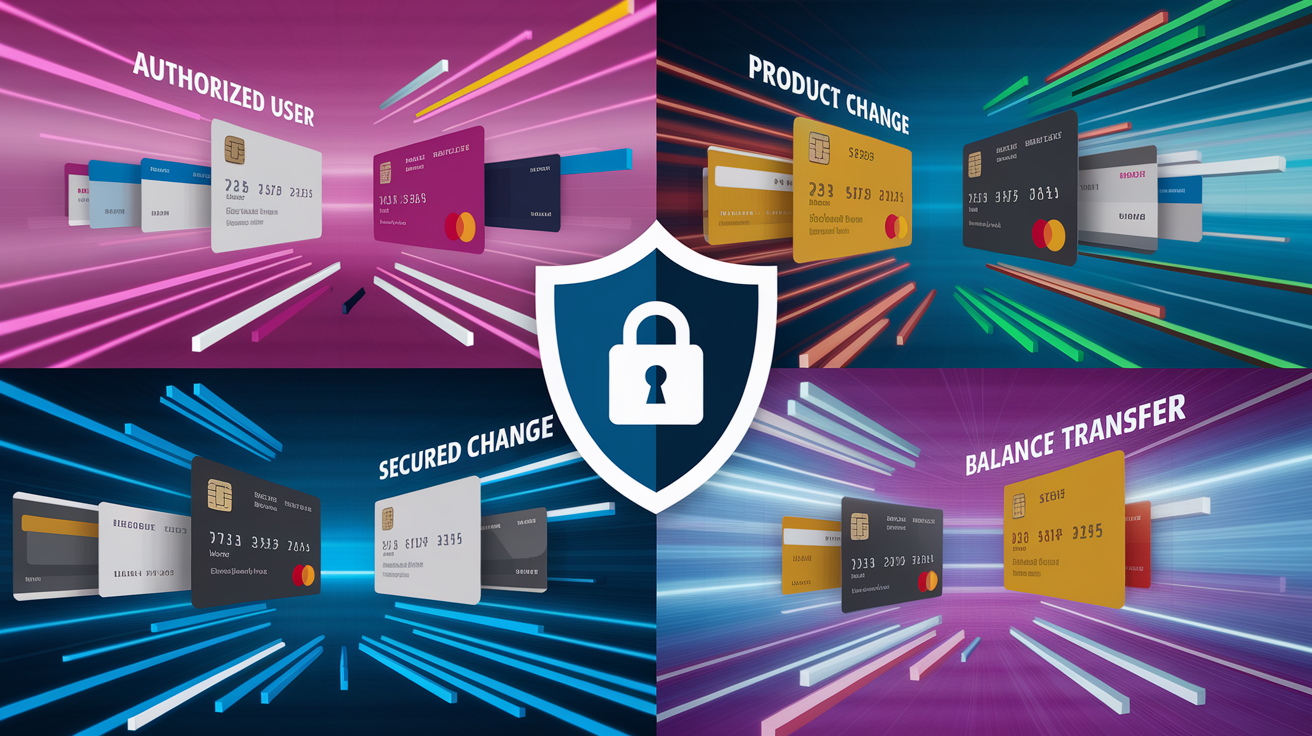
If your issuer will only approve a credit limit increase with a hard inquiry, or if your request gets denied, there are other ways to increase your total available credit without triggering a hard pull. These strategies either add credit indirectly or rely on issuer actions that don’t require a new credit check.
One option is to become an authorized user on another person’s credit card account. When you’re added as an authorized user, that account’s credit limit often gets reported to the credit bureaus under your name. That increases your total available credit without a hard inquiry. Verify with the primary cardholder’s issuer that they report authorized users to all three bureaus. Make sure the primary account has a high limit, low utilization, and a clean payment history.
Another alternative is to request small, incremental credit limit increases across multiple cards that are known to use soft pulls. Instead of asking for a single large increase on one card, request a 10 to 20 percent increase on two or three different accounts over several months. Spreading your requests reduces the risk of any single issuer doing a hard pull and gives you multiple chances to add available credit.
Six alternative methods to increase your available credit without a hard inquiry:
Become an authorized user on a family member’s or partner’s credit card account with a high limit and strong payment history.
Request a product change or upgrade to a card with a higher standard credit limit. Some issuers allow internal product switches without a hard pull.
Increase the deposit on a secured credit card to raise the credit limit on that secured product. Deposit-backed increases typically don’t require hard inquiries.
Let your issuers automatically increase your limits over time by maintaining perfect payments and utilization below 10 percent. Automatic reviews often occur after 6 to 12 months.
Use balance transfers to move debt from a high-utilization card to a card with a higher existing limit. That lowers your overall utilization without requesting new credit.
Spread small increase requests across multiple soft-pull-friendly issuers rather than asking for one large increase on a single account.
What to Do If Your Soft-Pull Limit Increase Request Is Denied

Issuers deny credit limit increase requests for specific, measurable reasons. Understanding the cause of your denial helps you adjust before you retry. Common denial triggers include utilization above 30 to 50 percent, one or more missed or late payments in the past 6 to 12 months, short account age (especially accounts less than six months old), too many recent hard inquiries on your credit report, or reported income that’s low relative to your current credit limits.
If your request gets denied, call the issuer’s reconsideration line and ask for the specific reason. Many issuers will tell you whether the denial was due to high balances, insufficient payment history, or low income. Some will let you provide updated documentation (recent pay stubs or proof of a raise) to appeal the decision. If the issuer won’t reconsider, focus on improving the factors that caused the denial and plan to retry after 90 days.
Quick fixes to improve your approval odds on your next request:
Pay down balances to get your utilization below 10 percent on all cards. Make at least three additional consecutive on-time payments.
Update your income in your account profile if you’ve gotten a raise, started a new job, or added a new income source since your last request.
Wait at least 90 days before submitting a new request. Use that time to build a longer history of low utilization and perfect payments.
Final Words
Request the increase online, confirm the issuer will use a soft pull, update your income, and lower your credit utilization. Aim for a modest 10–30% raise and expect an instant decision or one within 7–10 days.
If it’s denied, pay down balances, gather recent income docs, and try again after about 90 days. Use chat or secure messages to confirm inquiry type first.
These are the practical steps for how to increase credit limit without hard pull. Small, timed moves add up—keep at it.
FAQ
Q: Can you get a credit card limit increase without hard inquiry?
A: You can get a credit card limit increase without a hard inquiry by confirming the issuer will use a soft pull, updating income, keeping utilization low, and asking for a modest 10–30% raise after on-time payments.
Q: What is the credit limit for an $50,000 salary?
A: The credit limit for a $50,000 salary varies by lender, debts, and credit history; typical single-card limits often range roughly $5,000 to $20,000 depending on those factors.
Q: How to get a $30,000 credit card limit?
A: To get a $30,000 credit card limit, increase income or creditworthiness, lower utilization, maintain on-time payments, request staged increases (10–30%), and be ready to supply income documents or add accounts.
Q: What is the 2 3 4 rule for credit cards?
A: The 2 3 4 rule for credit cards isn’t a universal industry standard; people use it differently. Use clear guidelines instead: keep utilization under 30%, request 10–30% raises, and wait 6–12 months.