


Think bankruptcy ruined your credit for good?
It doesn’t have to.
You can start repairing your credit the day your bankruptcy is discharged.
This guide shows the exact steps to clean up your credit report, fix common errors, and build positive history quickly.
You’ll get a clear timeline, simple tools like secured cards and credit-builder loans, and a step-by-step plan you can start this week.
Follow these priorities and you’ll see steady improvement long before the public record falls off.
Immediate Steps to Start Recovering From Bankruptcy on Your Credit Report
Bankruptcy sticks around on your credit report for seven years after filing Chapter 13 or ten years after filing Chapter 7. But here’s the thing: you don’t have to wait that long to start rebuilding. The second the court issues your discharge, you can get to work.
The public record stays visible to lenders for the full stretch, but its actual impact drops over time when you show consistent, responsible behavior. Recovery starts now, not years from now.
Pull your reports from all three bureaus right away. Errors are common. Discharged debts should say “discharged in bankruptcy,” not that you still owe money. You might spot accounts with balances that should be zero, delinquencies reported after your discharge date, or the same account listed twice. Each bureau gets info separately, so an error on Experian won’t necessarily show up on Equifax or TransUnion.
Grab a current FICO score too. FICO Score 8 is what most lenders look at, and knowing your starting point helps you track whether what you’re doing is actually working. Most people see a big drop immediately after bankruptcy, but checking every few months shows real progress.
- Pull your credit report from Experian, Equifax, and TransUnion.
- Find any accounts incorrectly showing as open or still carrying a balance.
- Confirm discharged debts show the right status.
- Dispute wrong items directly with the bureau, and include copies of your discharge paperwork.
- Write down your starting score and set a reminder to check again in three to six months.
Understanding the Bankruptcy Timeline on a Credit Report
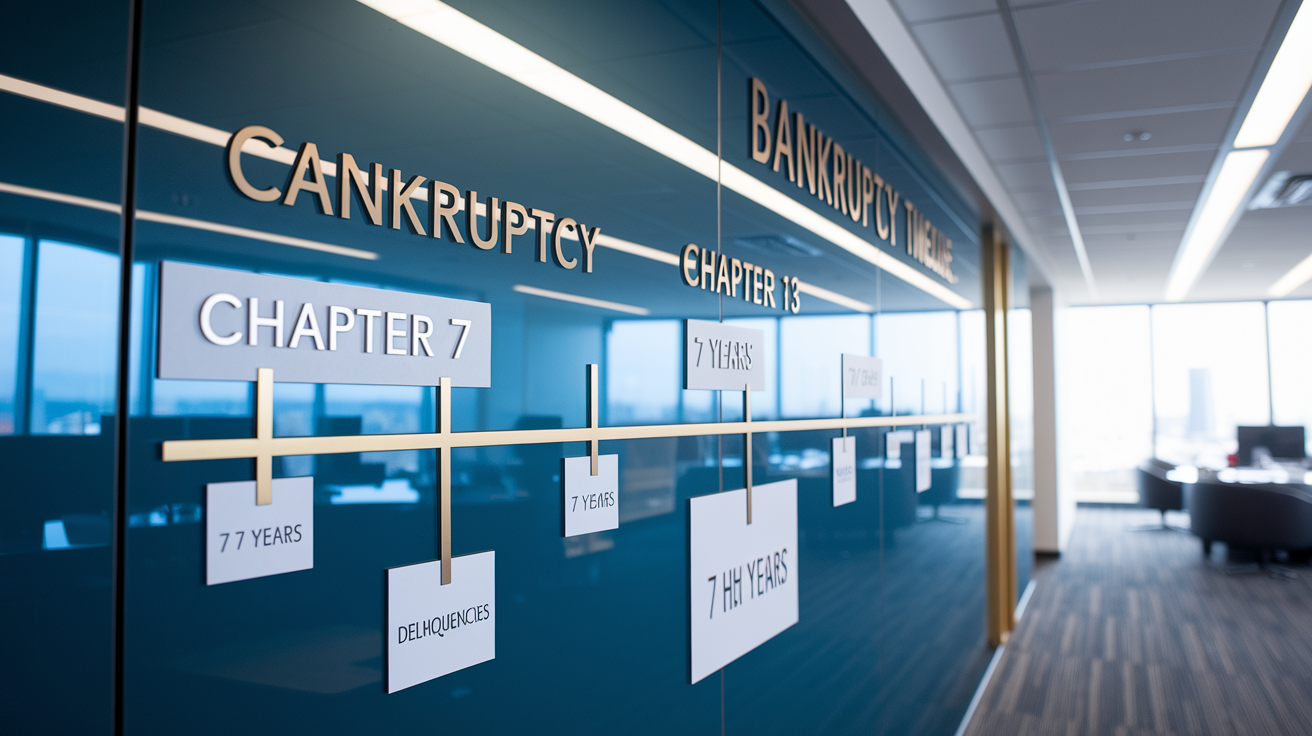
Chapter 7 stays on your report for 10 years from the filing date. Chapter 13 stays for 7. The difference comes down to structure: Chapter 7 wipes debts quickly through liquidation, while Chapter 13 involves a multi-year repayment plan before discharge. Individual late payments and collections that were part of the bankruptcy usually stick around for 7 years from the date each account first went delinquent, even if the bankruptcy itself hangs on longer.
Your score can start climbing within the first couple of years, even while the bankruptcy record is still there. With consistent on-time payments and smart use of new credit, a lot of people see real gains within 12 to 24 months. The bankruptcy entry disappears automatically once the clock runs out. You don’t need to file a dispute.
| Chapter Type | How Long It Stays | What to Expect |
|---|---|---|
| Chapter 7 | 10 years | Immediate discharge; longest reporting period; rebuilding can begin right away |
| Chapter 13 | 7 years | Repayment plan followed by discharge; shorter reporting period rewards completion |
| Delinquencies | 7 years | Individual late payments and collections age off independently of the bankruptcy record |
Credit Rebuilding Tools to Recover From Bankruptcy on Your Credit Report

Secured Credit Cards
You put down a cash deposit, usually between $200 and $300, and that becomes your credit limit. The card works like any other card: you buy stuff, get a statement, and pay at least the minimum by the due date. Keep your balance well below your limit and pay in full each month to dodge interest charges.
After six to twelve months of on-time payments, many issuers will review your account and might convert it to an unsecured card, giving you back your deposit. Before you apply, confirm the issuer reports to all three bureaus. If they don’t, you’re wasting time.
Credit-Builder Loans
These loans exist specifically for rebuilding. Amounts typically range from $300 to $1,000, with repayment terms between 6 and 24 months. The lender puts the loan amount into a locked savings account. You make monthly payments, and once you’ve paid it off, they release the funds to you, usually with a little interest.
Each monthly payment gets reported to the credit bureaus, so every on-time payment helps. Rates usually stay under 20 percent and can be in the single digits at credit unions. Always check that the lender reports to all three bureaus. A product that only reports to one limits your progress.
Authorized User Accounts
When you become an authorized user on someone else’s card, that account’s full payment history lands on your credit report. Often immediately. If the primary account holder has kept utilization low and made every payment on time, you can see a quick score boost.
But there’s risk. If the primary user messes up, late payments, high balances, or a closed account will also show up on your report and hurt your score. Pick someone you trust completely, someone with a long history of responsible use.
Loans With a Cosigner
A cosigner with good credit improves your approval odds and can help you get better terms, like a lower interest rate on an auto loan. The lender looks at the cosigner’s creditworthiness alongside yours, which lowers their risk. Every payment you make appears on both your report and the cosigner’s. Miss a payment and you damage both parties’ credit.
Cosigning makes sense for larger loans where approval would be impossible otherwise. It requires clear communication and a realistic plan before you sign anything.
Payment History, Utilization, and Core Habits That Boost Credit After Bankruptcy

Payment history is the biggest factor in your FICO score, usually around 35 percent of the calculation. Every on-time payment after bankruptcy rebuilds trust and gradually offsets the negative impact. One missed payment can undo months of progress. Reliability matters more than the size of the account. Even small recurring bills count when paid on time.
Credit utilization is the second biggest factor, typically around 30 percent of your score. If you have a secured card with a $500 limit and you carry a $100 balance, your utilization is 20 percent. Staying under 30 percent is baseline. Under 10 percent is better.
If your balance climbs near your limit, make multiple payments throughout the month to keep the reported balance low. Credit bureaus usually get balance updates once a month when your issuer reports your statement balance. Pay down the card before the statement closes and you reduce the utilization figure that appears on your report.
Set autopay for at least the minimum to avoid accidental late payments. Keep utilization under 30 percent of your total available credit, and aim for under 10 percent when you can. Make multiple payments per month if your balance approaches your limit, especially before the statement closing date. Avoid unnecessary new credit inquiries. Apply only when you meet the issuer’s requirements and you genuinely need the account.
Ongoing Credit Monitoring, Identity Protection, and Long-Term Dispute Management

Regular monitoring helps you catch identity theft, unknown accounts, and discharged debts that still incorrectly show a balance. Many free services send alerts when a new inquiry appears, when an account opens, or when your score changes significantly. Checking your reports every few months lets you verify that old delinquencies are aging off on schedule and that the bankruptcy record itself will be removed at the right time.
Disputes should include documentation. A copy of your bankruptcy discharge papers proves a debt was included and shouldn’t show as owed. File disputes directly with each bureau that shows the incorrect information, and keep records of your submissions and the bureau’s responses. Most disputes resolve within 30 days, but you might need to follow up if the bureau requests more documentation or doesn’t correct the account after the first dispute.
Bankruptcy can make you a target for identity theft because your personal information is part of a public court record. Monitoring all three bureau reports helps you spot fraudulent accounts early. If you see an account you don’t recognize, dispute it immediately and consider placing a fraud alert or credit freeze on your reports to stop further unauthorized activity.
Budgeting and Financial Stability to Support Credit Recovery After Bankruptcy

A clear budget keeps you from overspending and ensures you have enough cash each month to make all credit payments on time. Track your actual spending for one to two months before you finalize the budget. This gives you accurate numbers for rent, groceries, utilities, transportation, and discretionary expenses.
Once you know where your money goes, apply the 50/30/20 rule as a starting point: 50 percent of your income covers needs, 30 percent covers wants, and 20 percent goes to savings and debt repayment. Adjust based on your situation, but prioritize building an emergency fund and ensuring every bill gets paid on time.
Start an emergency fund using a savings account or high-yield savings account at an FDIC-insured bank or NCUSIF-insured credit union. Even a small fund, $500 to $1,000, can cover an unexpected car repair or medical bill without forcing you to miss a credit payment or take on new debt. Payroll deductions and automatic transfers make saving easier because the money moves before you can spend it.
- Track all spending for one to two months to get accurate baseline numbers.
- Separate expenses into needs, wants, and savings, then assign percentage targets that fit your income.
- Open a separate savings account and set up automatic transfers on payday to build your emergency fund.
- Review and adjust your budget monthly, especially if your income or major expenses change.
Applying for New Credit After Bankruptcy: Timing and Strategy
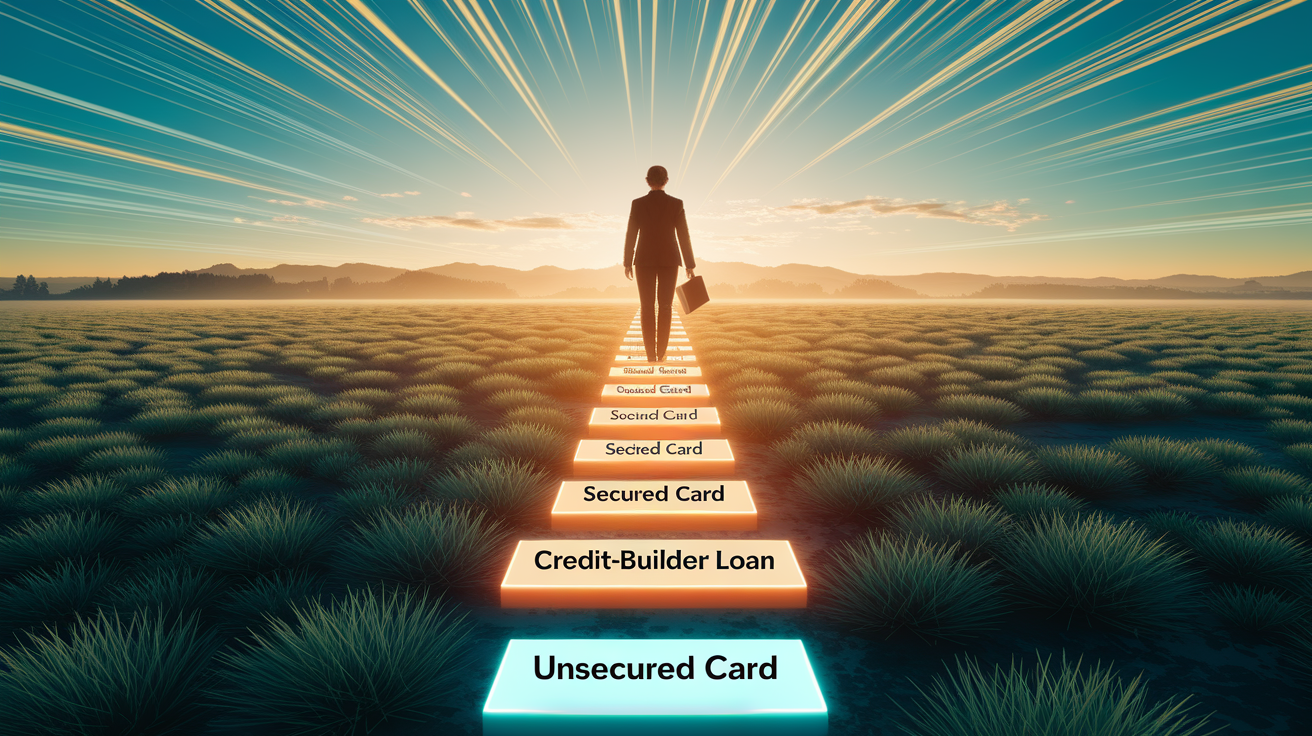
You don’t need to wait for the bankruptcy to disappear before applying for new credit. But start with low-risk products designed for rebuilding. Secured credit cards and credit-builder loans are typically available within a few months of discharge and carry lower approval risk than unsecured cards.
Each application generates a hard inquiry, which can temporarily lower your score by a few points. Apply only when you meet the issuer’s stated requirements and you genuinely need the account.
Moving from secured to unsecured credit usually becomes realistic after 12 to 24 months of consistent on-time payments and low utilization. Some secured card issuers will automatically review your account and offer to convert it to unsecured, returning your deposit and sometimes raising your limit. If your issuer doesn’t offer automatic conversion, you can apply for an unsecured card once your score improves. But compare your chances carefully. Multiple rejections create multiple hard inquiries that can stall your progress.
Auto loans and mortgages may become possible sooner than you think. Some auto lenders specialize in post-bankruptcy financing and may approve you within six months to a year, though interest rates will be higher than prime rates.
Mortgage approval timelines depend on the loan type and the lender’s policies. FHA loans may be available two years after a Chapter 7 discharge or one year after a Chapter 13 discharge if you’ve maintained strong payment history and rebuilt your credit. Conventional mortgages typically need a longer wait, often four years after Chapter 7 or two years after Chapter 13.
Each inquiry for a mortgage or auto loan within a short shopping period, usually 14 to 45 days, counts as a single inquiry for scoring purposes. You can compare offers without excessive score damage.
Long-Term Credit Recovery Timeline and Expectations After Bankruptcy

Meaningful score improvement often happens within one to three years if you maintain perfect payment history, keep utilization low, and add a mix of credit types. The bankruptcy record stays visible for the full seven or ten years, but lenders care more about recent behavior than old mistakes.
Someone who filed Chapter 7 three years ago and has made every payment on time since discharge will often qualify for better loan terms than someone with recent missed payments and high balances, even if the second person has no bankruptcy on record.
Full removal of the bankruptcy entry happens automatically when the reporting period expires. Chapter 13 at seven years, Chapter 7 at ten years. You don’t need to file a dispute or take any action. The credit bureaus remove the entry based on the filing date. Once the bankruptcy is gone, your score may see another modest bump, but the bulk of your recovery depends on the positive credit history you’ve built in the years leading up to removal.
Your rebuilding roadmap spans multiple phases. In the first six months after discharge, focus on admin tasks. Pull your credit reports, dispute errors, open a savings account, and create a working budget. Between six and twelve months, get a secured credit card or credit-builder loan, keep utilization under 30 percent, and make sure every payment posts on time.
From one to three years, expand your credit mix gradually by adding a second card or a small installment loan, maintain near-perfect payment history, and reduce utilization to under 10 percent. After three years, you become eligible for larger credit products like mortgages and unsecured personal loans, especially if your positive payment history is long and consistent.
Expect visible score gains within the first 12 to 24 months if you make all payments on time and keep balances low. Plan for mortgage or larger loan readiness around the two to four year mark, depending on the bankruptcy chapter and the lender’s requirements. The bankruptcy record’s removal at seven or ten years is automatic and may produce a final modest score increase, but your day-to-day credit behavior drives the majority of your recovery.
Final Words
Pull your three credit reports, check your FICO score, and dispute any errors right after discharge, because those are the immediate actions that start recovery.
The post maps the timeline (Chapter 7: 10 years, Chapter 13: 7), shows simple tools like secured cards and credit-builder loans, and stresses core habits: on-time payments, low utilization, and regular monitoring.
Stick with the budget and the step-by-step plan. This is how to recover from bankruptcy on credit report, and you can expect steady, real progress toward better credit.
FAQ
Q: Can you recover your credit score from bankruptcy and how do I get the bankruptcy off my credit report?
A: You can recover your credit score after bankruptcy, and getting the bankruptcy off your credit report usually means waiting (Chapter 7: 10 years; Chapter 13: 7 years) or disputing errors now with your discharge papers.
Q: What two debts cannot be erased?
A: Two debts that typically cannot be erased in bankruptcy are most student loans and domestic support obligations (child support or alimony); taxes and some debts from fraud are often nondischargeable too.
Q: What is the 3 year rule for bankruptcy?
A: The 3 year rule for bankruptcy means some lenders may consider you for certain loans, like a mortgage, about three years after discharge, but timing depends on the lender, loan type, and your credit rebuilding.