


Thinking of closing a credit card?
It can hurt your credit score, and often quickly.
That happens because you lower your total available credit and raise your credit utilization (how much of your credit limit you’re using).
It can also shrink your average account age.
Utilization alone counts for about 30% of your FICO score.
If you’re planning a big loan or already carry balances, closing a card right now can cost you real points.
Read on to learn what to do first.
Clear Answer on Whether Closing a Credit Card Hurts Your Score

Yes, closing a credit card can hurt your score, and it often happens fast. Two main culprits: you’re shrinking your total available credit and bumping up your credit utilization ratio. Both of these matter a lot to FICO and VantageScore. Utilization alone counts for about 30% of your FICO score. Length of credit history, which can take a hit when you close an older card, accounts for around 15%.
Here’s what closing a card actually does to your utilization. Say you’ve got three cards. Card A has a $10,000 limit with $6,000 balance. Card B has $3,000 limit with $1,000 balance. Card C has $12,000 limit with $0 balance. With all three open, you’re using $7,000 of $25,000 available credit. That’s 28% utilization. Close Card C and your available credit drops to $13,000. Now you’re using $7,000 of $13,000, which is 54% utilization. That jump from 28% to 54% will lower your score, sometimes by a lot, even though you didn’t add new debt.
Closed accounts in good standing stay on your credit reports for up to 10 years and can continue to help your credit history length during that time. But the reduction in available credit and the spike in utilization hit your score right away, typically within one reporting cycle after your issuer notifies the credit bureaus. Short term damage can be real. Long term impact depends on how you handle the remaining credit you’ve got.
Credit Utilization Ratio Impact When Closing a Credit Card
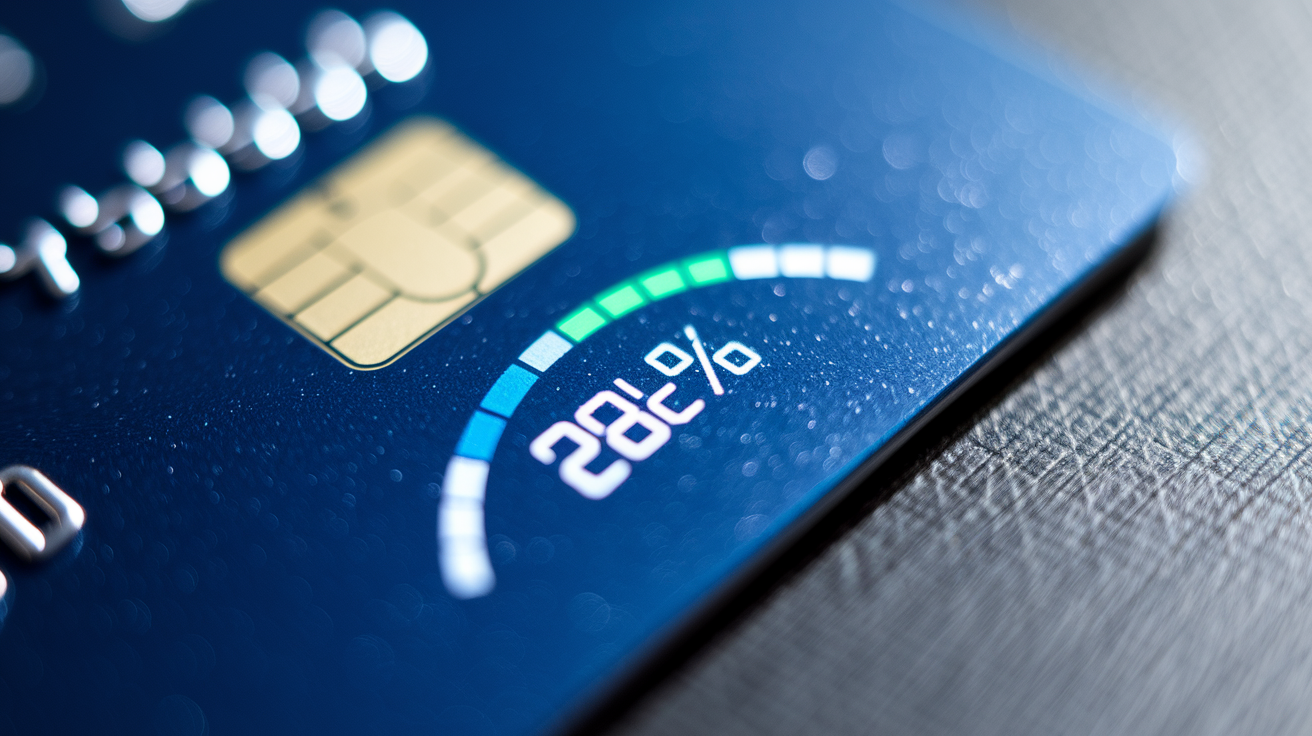
Credit utilization is your total balances across all revolving accounts divided by your total credit limits, then multiplied by 100 to get a percentage. Lenders and scoring models pay close attention to this ratio. Utilization above about 30% tends to hurt your score. The lower you keep it, the better. When you close a credit card, you’re removing that card’s credit limit from the denominator of that formula, which pushes your utilization percentage higher.
Take the earlier example: $7,000 used out of $25,000 available equals 28% utilization. Close the $12,000 limit card and available credit shrinks to $13,000, so $7,000 divided by $13,000 equals 54%. That single closure doubled your utilization ratio. Even if the closed card had a $0 balance, removing the limit still raises utilization because your balances on other cards stay the same while total available credit drops.
Common scenarios where closing a card spikes your utilization:
Closing your highest limit card. If one card holds most of your available credit, removing it leaves you with a much smaller total limit and a higher ratio.
Closing a card with a $0 balance. You might think closing an unused card has no effect, but the card’s available credit still helps keep your utilization low.
Closing cards before paying down balances. If you carry balances on other cards, closing any account raises the percentage you’re using.
Closing while carrying high balances. If you’re already near 30%, removing even a modest credit limit can push you well over that threshold.
Closing multiple cards at once. Removing several limits compounds the effect and can send utilization into a range that seriously lowers your score.
Length of Credit History and Account Age After Closing a Credit Card

Length of credit history makes up roughly 15% of your credit score. Scoring models calculate this in several ways, including average age of all your accounts and the age of your oldest account. Closing a card that’s been open for many years shortens your average account age. If the closed card is your oldest account, your score can take an immediate hit because your overall credit history looks younger.
Closed accounts don’t disappear from your credit report right away. Accounts in good standing remain on your report for up to 10 years after closure. Accounts closed with late payments or delinquencies remain for 7 years. While on your report, the closed account can still contribute to your average age, although scoring models treat closed accounts differently than open ones. The older the closed account, the more it helps until it eventually falls off your report entirely.
In the short term, closing an old card reduces the ongoing aging of your credit file. Open accounts continue to age every month. A closed account ages only to the closure date. If you close your oldest card and your next oldest is much newer, your average age drops. Over the next few years, as other accounts age, the gap narrows, but the initial score dip remains until your profile recovers naturally through time and responsible use.
Credit Mix, Number of Open Accounts, and Other Score Factors Affected by Closing a Card

Credit mix refers to the variety of account types on your credit report. Revolving accounts like credit cards and installment loans like mortgages, auto loans, or student loans. Credit mix accounts for about 10% of your FICO score. If you have only one credit card and you close it, you lose the revolving credit component entirely, which can reduce your score. If you have several cards or other revolving accounts, the impact of losing one card’s contribution to mix is smaller.
The total number of open accounts also matters. A thin credit file, one with few open accounts, makes each account closure more impactful. If you have only two or three cards, closing one reduces your overall account count meaningfully. If you have a dozen accounts, closing one card is less likely to shift your profile. Lenders and scoring models interpret more accounts as more experience managing credit.
| Factor | Potential Change When Closing a Card |
|---|---|
| Credit Mix | May lose a revolving account type if it’s your only credit card. Minimal impact if you have other cards. |
| Number of Open Accounts | Reduces total open accounts. Larger effect if you have few accounts to start with. |
| Payment History | No change. Payment history on closed accounts continues to count toward your score. |
When Closing a Credit Card Matters Most (Oldest Cards, High Limit Cards, and Timing)

The biggest score damage from closing a credit card happens when the card you’re closing is your oldest account or has a large credit limit that keeps your utilization low. Closing your oldest card reduces your credit history length immediately, which can lower your score by several points or more, depending on how much younger your other accounts are. Closing a high limit card removes a big chunk of your available credit and can spike utilization dramatically if you carry any balance on your remaining cards.
Timing also matters. If you’re planning to apply for a mortgage, auto loan, or any other significant credit product in the next six months, closing a card beforehand is risky. Lenders pull your credit report and see your current utilization, account age, and total number of accounts. A sudden drop in available credit or average age can push your score below a lender’s threshold or cost you a better interest rate. Even a small score decline can mean thousands of dollars more in interest over the life of a loan.
Four high risk closure scenarios:
Closing your oldest credit card when your next oldest account is several years newer.
Closing a card with a credit limit that’s a significant percentage of your total available credit.
Closing any card in the weeks or months before a major loan application.
Closing multiple cards in a short period, which compounds the effects on utilization, age, and account count.
Situations When Closing a Credit Card Can Make Sense

There are times when closing a credit card is reasonable, even with the score risk. Not every card is worth keeping open, especially if it costs you money or creates other problems. The decision comes down to whether the reasons to close outweigh the likely credit impact. If your credit profile is strong (low utilization, many accounts, long history), the damage from closing one card may be temporary and minor.
High annual fees, very high interest rates, and personal finance discipline are common reasons people close cards. If you can’t justify the annual fee and the issuer won’t waive it or switch you to a no fee version, paying that fee year after year is expensive. If you carry a balance and the APR is much higher than your other cards, consolidating to a lower rate card and closing the high rate account can save money. Some people overspend on certain cards and closing the account is a reset for their budget. Joint accounts with an ex partner often need to be closed to remove liability and prevent future charges you didn’t authorize.
Six situations where closing is often justified:
High annual fee with benefits you don’t use and the issuer won’t waive the fee or offer a product change.
Very high interest rate compared to your other cards and you regularly carry a balance.
Personal overspending risk. You know you can’t control spending on that card.
Joint account with a former partner. Closing is often the only way to cut financial ties cleanly.
Store or retail card you rarely use and the issuer may close it for inactivity anyway.
Lender requirement for a mortgage or other loan application. Some lenders ask you to close accounts to lower total available credit.
Alternatives to Closing a Credit Card While Protecting Your Score

Before you close a credit card, ask the issuer for alternatives that preserve your account age and available credit limit. Many issuers will waive or reduce an annual fee if you call and ask, especially if you’ve been a customer for years or you mention you’re considering closing the account. If the issuer offers multiple card products, request a product change to a no fee card in the same family. That keeps the account open, preserves your credit limit, and maintains the account’s age on your credit report.
Another option is to keep the card open but stop using it actively. Set up a small recurring charge, something like a streaming subscription or a monthly utility bill, and enable autopay so the card stays active without requiring your attention. Some issuers let you lock or pause a card, which prevents new purchases but keeps the account open. If you’re worried about fraud or losing the physical card, locking it gives you security without the credit score consequences of closing.
Five alternative strategies:
Ask for an annual fee waiver or reduction. Call the issuer’s retention department and explain you want to keep the account but the fee is a concern.
Request a product change to a no fee card with the same issuer. This preserves account age and credit limit.
Set up a small recurring charge and autopay to keep the card active without thinking about it.
Lock or pause the card if your issuer offers that feature, preventing purchases but keeping the account open.
Downgrade a premium card to a basic version instead of closing it entirely.
How to Close a Credit Card Safely With Minimal Score Impact
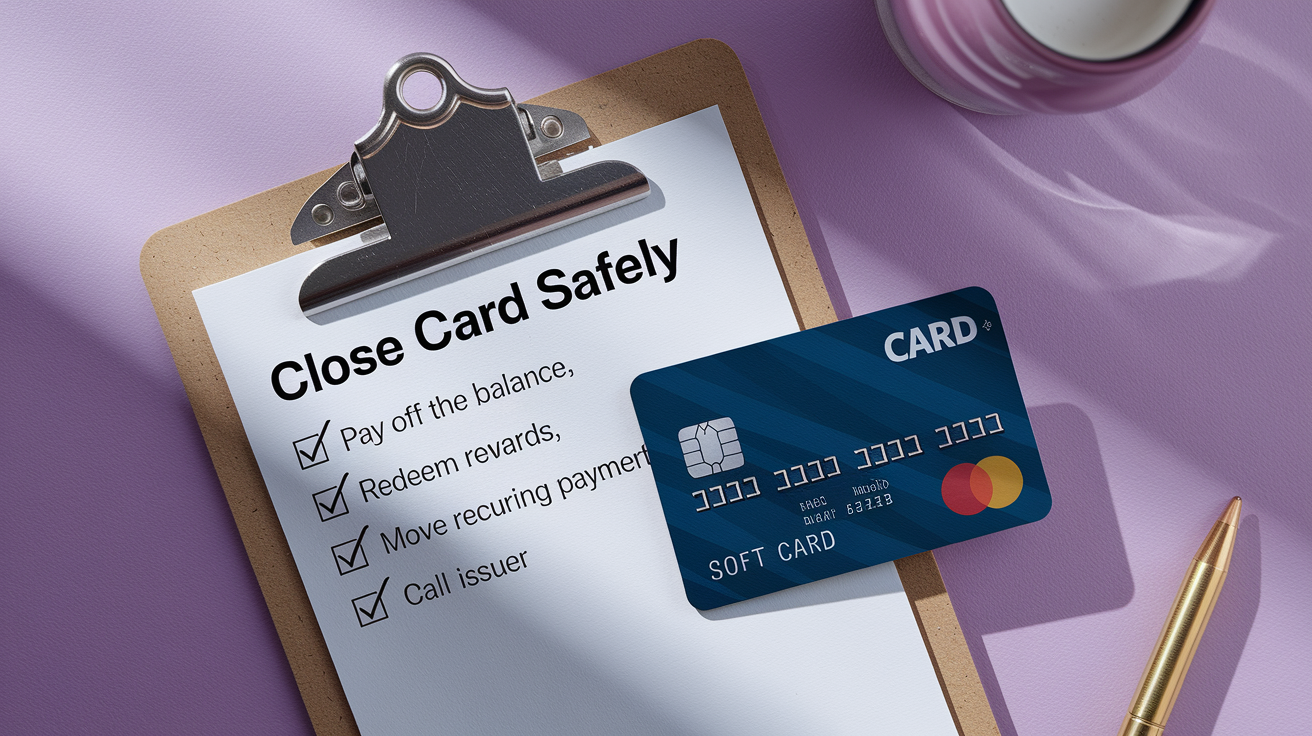
If you’ve decided that closing a credit card is the right move, follow these steps to minimize the damage to your credit score. Closing safely means paying off the balance, preserving rewards, updating recurring payments, and confirming the account status with the issuer and on your credit reports. You’re still responsible for any remaining balance even after the account is closed, so clearing that before closure simplifies everything.
Pay off the full balance before closing. If you can’t pay it all at once, understand that the balance remains after closure and you’ll still make payments, but the account is no longer open and available.
Redeem or transfer rewards. Check for unused points, miles, or cash back and claim them before the account closes. Many issuers forfeit rewards when you close.
Move recurring payments and autopay. Update subscriptions, utility bills, or any other charges linked to the card. Missing a payment because the card is closed can hurt your credit more than the closure itself.
Call the issuer to close the account. Don’t just stop using the card. Formally request closure and note the date and the representative’s name.
Request written confirmation that you closed the account. This protects you if the issuer reports the closure incorrectly or if disputes arise later.
Destroy the physical card. Cut it into pieces or shred it securely so no one can use the card number.
Check your credit reports from all three bureaus (Equifax, Experian, and TransUnion) within 30 to 45 days after closure. Confirm the account shows “closed by consumer” or “closed at consumer’s request.” Dispute any errors with the issuer and the bureaus if needed.
What Happens to Closed Accounts on Your Credit Report
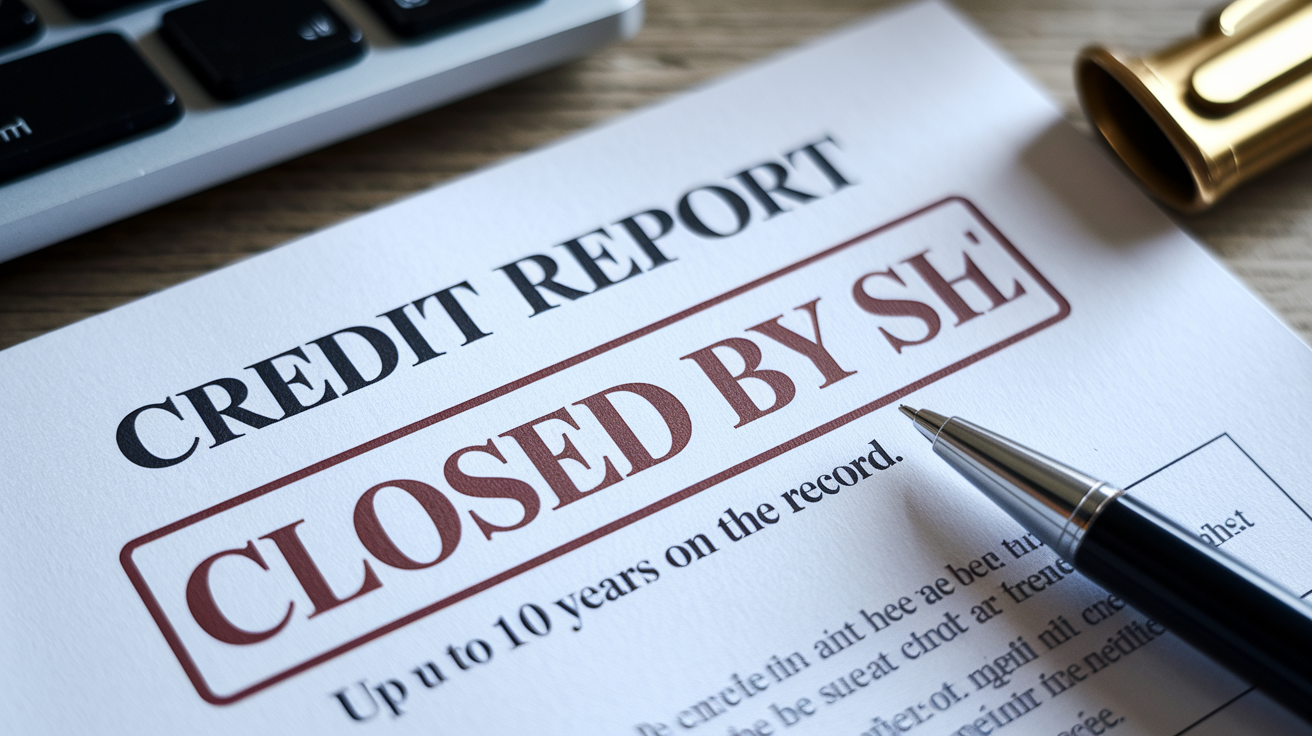
Closed accounts don’t vanish from your credit report immediately. Accounts closed in good standing remain on your report for up to 10 years from the closure date. Accounts that were delinquent or charged off remain for 7 years from the original delinquency date. During the time a closed account stays on your report, it can still contribute to your credit history length, though scoring models weight open accounts more heavily than closed ones.
Your score will update within roughly one billing cycle after the issuer reports the closure to the credit bureaus, typically 30 to 45 days. Payment history on the closed account continues to count toward your score. If you had a long record of on time payments on that card, that positive history remains and helps you. If you had late payments before closing, those negatives remain as well, for up to 7 years.
The status description matters. “Closed by consumer” or “account closed at consumer’s request” indicates you chose to close the account. “Closed by creditor” or “account closed by grantor” means the issuer closed it, often due to inactivity, missed payments, or other issuer policies. Lenders may view creditor initiated closures less favorably, so if you close an account yourself, confirm the report reflects that accurately.
Reopening Closed Credit Cards and Issuer Policies

Whether you can reopen a closed credit card depends entirely on the issuer’s policies and the circumstances of the closure. Some issuers allow you to request reinstatement of a recently closed account, especially if the closure was voluntary and the account was in good standing. Other issuers don’t permit reopening under any circumstances. If you closed the account due to fraud, dispute, or missed payments, reinstatement is unlikely.
Timing matters. If you contact the issuer within a few weeks or months of closure, you may have a better chance of reopening the account. After several months or a year, most issuers treat the closure as final and require you to apply for a new card if you want an account again. Applying for a new card means a hard inquiry on your credit report and a new account with a new open date, which won’t restore the closed account’s age or limit.
Strategies to Rebuild or Stabilize Your Credit After Closing a Card
If you’ve closed a credit card and your score dropped, focus on lowering your credit utilization and maintaining consistent on time payments. The fastest way to recover is to pay down balances on your remaining cards so your utilization falls below 30%, ideally under 10%. Lower utilization often raises your score within one or two billing cycles. If you can’t pay down balances immediately, avoid adding new charges and make more than the minimum payment each month.
Continue using your remaining credit cards responsibly. Make small purchases and pay them off in full each statement period. This builds positive payment history and keeps your accounts active. Check your credit reports from all three bureaus regularly. Look for errors, such as incorrect closure dates or balances, and dispute them with the credit bureau and the issuer. Monitoring your score monthly helps you see when it starts to recover and whether any additional problems appear.
Recovery timeline varies. If the closed card was your oldest account or had a high limit, your score may take six months to a year to fully stabilize. If the card was newer or you have many other accounts, recovery can happen faster. Focus on these practical steps:
Keep utilization below 30%, and aim for under 10% if possible.
Make every payment on time across all your accounts. Payment history is the largest scoring factor.
Check all three credit reports for accuracy and dispute errors promptly.
Avoid closing additional accounts while your score is recovering.
Use your remaining cards regularly with small purchases to maintain account activity and positive history.
Final Words
In the action: closing a credit card can hurt your score by cutting available credit, raising your credit utilization, and possibly lowering your average account age. Pay down balances or move recurring charges first to avoid a spike.
Closed accounts stay on reports for years, so most damage is short-term and fixable with steady on-time payments and lower utilization.
If you’re still wondering, does closing a credit card hurt your score? It can, but with a little planning you can protect your score and move forward confidently.
FAQ
Q: Is it better to cancel a credit card or keep it, and how much does your credit score lower if you close a credit card?
A: Whether it’s better to cancel or keep a credit card depends on your goals; keeping it usually protects your score. Closing can cut available credit, raise utilization, and often lowers score by several to dozens of points, especially before loan applications.
Q: How do I close my credit card without hurting my credit?
A: You can close a credit card with minimal harm by paying the full balance, moving recurring charges, redeeming rewards, requesting written confirmation, then checking your credit report after the issuer reports the closure.
Q: How do I raise my credit score 100 points in 30 days?
A: Raising your credit score 100 points in 30 days is unlikely; instead, quickly lower credit utilization (aim under 10–30%), fix reporting errors, and avoid new credit applications for the fastest, realistic boost.