


Want to simplify debt but don’t want another monthly loan payment?
You’re in luck: you can consolidate the way you pay without borrowing more.
This post walks through seven smart alternatives, like balance transfers, nonprofit debt management plans, negotiated settlements, using savings, and the snowball, avalanche, and blizzard do-it-yourself methods.
Each option explains who it’s best for, the trade-offs, and the first practical step to try.
If adding another bill worries you or your credit blocks good loan offers, start here.
Practical Ways to Simplify Debt Payments Without Taking Out a New Loan

Debt consolidation without a loan means you’re cutting costs or streamlining payments using methods that don’t pile on another monthly obligation. You’ve got five main options: debt settlement programs, nonprofit debt management plans (DMPs), balance transfer cards, and two DIY approaches called snowball and avalanche.
None of these methods require you to borrow. Instead, they reorganize how you pay:
Debt settlement programs talk creditors into reducing what you owe.
Debt management plans funnel your payments through a credit counseling agency that negotiates lower rates.
Balance transfer cards shift balances onto promotional 0% APR cards.
Debt snowball knocks out your smallest balances first for quick wins.
Debt avalanche goes after the highest interest rates to cut total cost.
These approaches keep things manageable by restructuring instead of refinancing. You’re dealing with debt you already have rather than layering on new credit, which matters most when your score blocks you from affordable loans or when adding another payment feels too risky.
How Balance Transfer Credit Cards Function as a Loan‑Free Debt Consolidation Tool

A balance transfer card lets you move existing credit card balances to a new card with a promotional 0% APR window, usually 6 to 21 months. During that stretch you pay zero interest, so every dollar hits principal. Transfer fees run 3% to 5% of what you move. If you transfer $8,000 with a 3% fee, you’re adding $240 for a total of $8,240.
The best offers typically want a FICO around 670 or higher, and most issuers give you 60 days from account opening to complete transfers. Miss a single payment during the promo and you can lose the 0% rate. Penalty APRs above 20% or even 30% turn what should save you money into an expensive mess.
What works:
Zero interest for months or over a year can save hundreds to thousands in finance charges.
Combining multiple card payments into one simplifies your monthly routine.
What doesn’t:
Transfer fees bump what you owe by 3% to 5% right away.
One late payment kills the promo and often slaps on a high penalty APR retroactively.
If you transfer $8,000 at 3%, you owe $8,240 total. Divide that by a 15 month promo and you need roughly $550 per month to clear it before interest hits. If your budget can handle that payment and you stay on schedule, the transfer fee beats paying 20% APR for another year.
Debt Management Plans (DMPs) for Simplifying Multiple Debts Without Borrowing

A debt management plan consolidates unsecured debts (credit cards, medical bills, personal loans, collection accounts) into one monthly payment you send to a nonprofit credit counseling agency. The agency distributes funds to your creditors under agreements that often include reduced interest rates, waived fees, and a fixed schedule spanning 36 to 60 months.
How a DMP Works Step‑by‑Step
You meet with an accredited counselor who reviews your income, expenses, and debts to see if a DMP fits.
The agency contacts each creditor to negotiate lower interest, waive late fees, and set a monthly payment you can afford.
Most creditors make you close enrolled credit card accounts to stop new charges during the plan.
You send one payment to the agency each month, typically $10 to $50 less than your combined minimums after negotiations.
The agency forwards payments to each creditor on schedule and sends you monthly progress reports.
DMPs show up on your credit report as accounts being paid through a credit counseling plan. Some lenders see it as neutral, others view it negatively. Your score may dip slightly at first because closed accounts raise utilization, but steady on-time payments over months usually improve scores as balances drop.
Typical setup fees range from $0 to $75, with monthly administration fees around $10 to $50 or roughly 1% to 5% of your payment. Not every creditor participates. The agency will list which accounts qualify during your intake session. Unsecured debts like credit cards and medical bills almost always fit. Secured loans like auto or home equity rarely do.
Negotiating Directly With Creditors to Achieve Debt Consolidation‑Like Results

Direct negotiation works best when you’re behind on payments or facing hardship that makes full repayment unlikely. Creditors prefer collecting something over writing off the entire balance, giving you leverage to propose reduced interest, waived fees, temporary payment plans, or lump sum settlements that discount the principal by 20% to 50%.
Hardship programs typically last 6 to 12 months and may freeze interest or lower your minimum while you stabilize income. Lump sum settlements require paying a negotiated percentage of the balance all at once. Offering $6,000 to settle a $10,000 debt is a 40% reduction and closes the account immediately.
Steps to Negotiate With Creditors
Gather recent statements showing balances and interest rates, proof of hardship (job loss letter, medical bills, pay stubs), and a realistic monthly budget.
Calculate what you can offer, either a lump sum you have now or a monthly payment you can sustain for 6 to 12 months.
Call the customer service number and ask for the hardship or settlement department. Explain your situation calmly and propose specific terms.
Propose clear numbers. Say “I can pay $300 per month for 12 months if you reduce my interest to 5%” or “I can settle this $10,000 balance for $6,000 paid in full within 30 days.”
Request written confirmation. Never agree without getting the terms in writing via email or mail before making a payment.
Make payments exactly as agreed. One missed payment can void the arrangement and restart collections.
Settled or negotiated accounts get reported to credit bureaus as “settled for less than full balance” or “paid as agreed under hardship plan.” Both hurt your credit score and can stay on your report for up to seven years. The damage is usually less severe than bankruptcy or continued delinquency, but it’s still a trade off between immediate debt relief and long term credit health.
DIY Debt Payoff Strategies That Consolidate Progress Without Combining Balances

DIY repayment strategies don’t physically combine balances into one account, but they organize your payments so you’re attacking debts in a logical sequence with any extra money you free up each month. This approach consolidates your effort and timeline without requiring new credit or third party involvement.
Debt Snowball
The snowball method pays off your smallest balance first regardless of interest rate, then rolls that payment into the next smallest debt. Each closed account feels like a win and builds momentum.
Best for people who need quick psychological victories to stay motivated.
Works well when you have several small balances under $1,000.
May cost slightly more in total interest than avalanche but keeps you engaged.
If you have three cards with balances of $800, $2,500, and $4,700, snowball attacks the $800 first. Once that’s gone, you add its minimum payment to the $2,500 card’s payment, creating a bigger monthly hit that clears the second card faster.
Debt Avalanche
The avalanche method targets the highest interest rate first, regardless of balance size. This minimizes total interest paid and often shortens your debt free date by weeks or months.
If Card A carries $4,200 at 19.9% and Card B holds $2,800 at 24.9%, avalanche says pay minimums on Card A and throw every extra dollar at Card B. Once Card B is gone, the entire payment shifts to Card A. On $12,000 split across high rate cards with $600 monthly payments, avalanche typically saves hundreds in interest and finishes about one month faster than snowball.
Debt Blizzard Method
Blizzard combines both. Start with the smallest balance for a fast win, then switch to highest interest rate for the remaining debts. This hybrid gives you an early confidence boost without sacrificing too much in interest savings over the full timeline.
| Method | Best For | Approx. Savings Potential |
|---|---|---|
| Snowball | Motivation and quick wins | Baseline (pays more interest) |
| Avalanche | Minimizing interest | Saves hundreds; ~1 month faster |
| Blizzard | Balanced approach | Moderate savings |
Using Savings Strategically to Reduce or Combine Debts Without Taking a Loan

Using savings to pay down high interest debt can save more in avoided interest charges than the savings account earns, but only if you keep enough cash on hand for true emergencies. A common rule of thumb is to retain one to three months of essential expenses (rent, utilities, minimum food, transportation) before tapping savings for debt payoff.
If your emergency fund holds $5,000 and your monthly essentials run $2,000, you could safely use $2,000 toward a 20% APR credit card balance. That $2,000 would otherwise cost you roughly $400 per year in interest, while sitting in a savings account it earns maybe $80 per year at 4% APY. The $320 net benefit makes the move financially sound as long as you don’t face an immediate risk of job loss or major repair bills.
Ideal times to use savings for debt reduction:
When interest on debt exceeds savings account yield by a wide margin (15%+ debt APR versus 4% savings APY).
After you’ve built a 1 to 3 month emergency buffer.
When a windfall like a tax refund or bonus arrives and isn’t needed for other obligations.
To eliminate a single high rate balance completely, freeing up that minimum payment for snowball or avalanche acceleration.
If you put $2,000 from savings toward a $10,000 balance at 20% APR, you drop the balance to $8,000 immediately. At $300 per month, you’ll clear that $8,000 in roughly 31 months instead of 47 months for the original $10,000, and you’ll save over $4,000 in interest. Just make sure you’re not leaving yourself one unexpected car repair away from new credit card debt.
Credit Score Effects and Timelines When Consolidating Debt Without a Loan

Short term credit impacts vary by method. Balance transfer cards and new accounts trigger a hard inquiry that typically costs 2 to 6 points, and opening a new card lowers your average account age. If you transfer a large balance and max out the new card’s limit, your utilization ratio spikes, which can drop your score 10 to 30 points temporarily. Debt management plans often require closing enrolled credit cards, which also raises utilization and may lower your score initially.
Long term recovery happens as you make consistent on time payments and reduce balances. Utilization improvements show up quickly, sometimes within one reporting cycle, and scores often climb 20 to 60 points over 6 to 12 months if you stay current. Accounts settled for less than the full amount remain on your credit report for up to seven years and are weighted negatively, though the impact fades as the entry ages and new positive payment history accumulates.
Realistic payoff timelines depend on debt size and monthly payment capacity. Balances under $5,000 with aggressive payments might clear in 6 to 24 months. Debts between $5,000 and $20,000 typically take 1 to 5 years using DMPs, balance transfers, or DIY methods. Balances over $20,000 can stretch 2 to 7 years without a consolidation loan, and settlement or negotiation may shorten the cash outlay period at the cost of credit damage.
What to track monthly:
Total balance remaining across all debts.
Number of accounts paid off (for motivation).
Credit report updates to confirm payments are reported correctly and watch utilization percentage.
When to Choose Each Non‑Loan Debt Consolidation Method

Balance transfer cards make sense when your credit score qualifies you for a 0% promotional period long enough to pay off the transferred balance before interest resumes, typically 12 to 18 months. If you owe $6,000 and can pay $500 per month, a 15 month promo with a 3% fee ($180) costs you $6,180 total versus paying thousands in interest at 20% APR over the same period.
Debt management plans work best for people who need structure, can’t qualify for balance transfers, and want creditor concessions like reduced interest. DMPs take 36 to 60 months and cost modest monthly fees, but they provide accountability and a clear finish line. Settlement through debt relief companies suits those so far behind that full repayment feels impossible. Settlements cut principal by 20% to 50% but damage credit significantly and usually take 2 to 4 years.
DIY snowball or avalanche strategies fit anyone with steady income, surplus cash after minimums, and the discipline to follow a plan without external help. These methods cost nothing except your time and work well when debt is under $20,000 and you can free up $200 to $600 extra per month.
| Method | Credit Score Needed | Cost | Timeframe | Credit Impact |
|---|---|---|---|---|
| Balance Transfer | ~670+ | 3%–5% fee | 6–21 months | Temporary dip from inquiry and utilization |
| DMP | Any (wide acceptance) | $10–$50/month | 36–60 months | Neutral to slight negative; improves over time |
| Settlement | Any (often already delinquent) | Reduced principal 20%–50% | 24–48 months | Significant negative; settled status for 7 years |
| DIY (Snowball/Avalanche) | N/A | $0 | 12–60+ months | Positive as balances drop |
Budgeting Adjustments That Support Non‑Loan Debt Consolidation
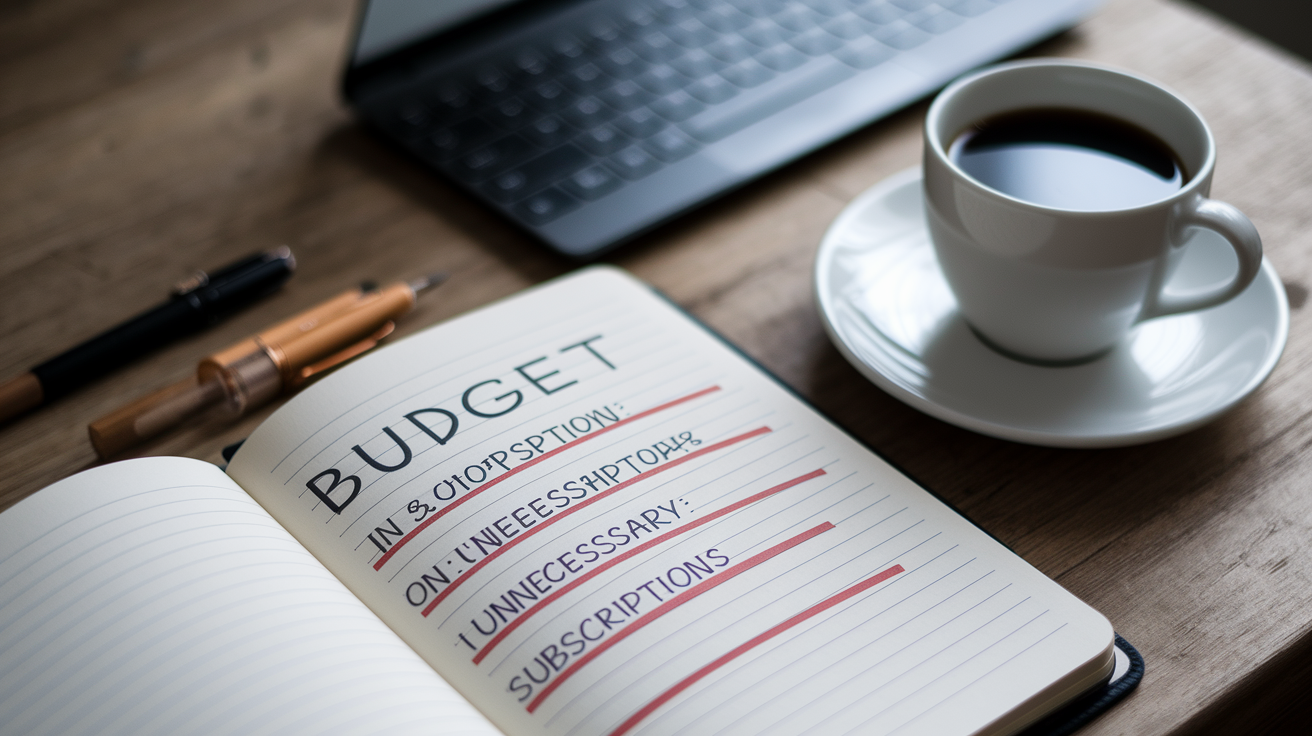
Freeing up extra monthly cash accelerates every consolidation method. A bare bones budget strips expenses to essentials (housing, utilities, minimum food, transportation, insurance, and debt minimums) then allocates every remaining dollar to debt payoff. The faster you clear balances, the sooner freed up minimums compound into bigger payments on remaining accounts.
Start by auditing recurring subscriptions and memberships. Streaming services, gym memberships, subscription boxes, and app fees often add $50 to $200 per month that you stopped noticing.
Six fast expense cuts:
Cancel or pause streaming services you use less than once a week.
Switch to a lower tier cell phone plan or prepaid carrier.
Cook meals at home and pack lunches instead of eating out.
Negotiate lower rates on car insurance by shopping competitors.
Cut subscription boxes and non essential memberships.
Postpone discretionary purchases like clothes, gadgets, and entertainment.
A bare bones budget doesn’t last forever, but committing to 12 to 24 months of minimal spending can turn a 5 year debt payoff into a 3 year finish. Every $100 you redirect monthly is $1,200 per year toward principal, which shortens timelines and reduces interest dramatically. Once you’ve cleared high rate debt, you can restore some discretionary spending without the weight of compound interest erasing your progress.
Income Boosting Options to Speed Up Debt Consolidation Without Borrowing

Increasing income, even temporarily, can shave months or years off your debt free date. Side income from gig work, freelancing, or part time shifts adds cash without touching savings or changing your core budget. Selling items you no longer use (furniture, electronics, tools, collectibles) generates lump sums that knock out smaller balances or fund settlement offers.
Windfalls like tax refunds, bonuses, or inheritances offer a one time chance to eliminate high interest debt or settle an account for less than the full balance. Applying a $3,000 refund to a $5,000 card at 22% APR drops your balance immediately and reduces the interest you’ll pay over the next year by hundreds of dollars.
Five income boosting ideas to support consolidation:
Drive for rideshare or delivery services evenings and weekends.
Freelance skills like writing, graphic design, tutoring, or bookkeeping on platforms like Upwork or Fiverr.
Sell unused items through Facebook Marketplace, eBay, or local consignment shops.
Pick up seasonal or part time retail work during high demand periods.
Rent out a spare room, parking space, or storage area if your living situation allows.
Community assistance programs can also reduce monthly expenses, freeing cash for debt. Local nonprofits, churches, and government programs sometimes offer utility assistance, food pantries, or subsidized childcare that lower your baseline costs by $100 to $300 per month, effectively the same as earning extra income.
Legal Protections and Consumer Rights When Consolidating Without a Loan
The Fair Debt Collection Practices Act (FDCPA) protects you from abusive, deceptive, or unfair collection practices by third party debt collectors. Collectors can’t call before 8 a.m. or after 9 p.m., contact you at work if you’ve asked them not to, or threaten actions they can’t legally take. Original creditors aren’t bound by the FDCPA, but many follow similar internal policies.
Every state sets a statute of limitations on debt, typically 3 to 6 years for credit card balances and other unsecured debts. Once the statute expires, collectors can’t sue you to force payment, though the debt still exists and can remain on your credit report for up to seven years from the date of first delinquency. Making a payment or acknowledging the debt in writing can restart the statute clock in some states, so verify your state’s rules before engaging with old debts.
Whenever you negotiate a settlement or payment plan, get the terms in writing before you send money. A written agreement should state the amount you’ll pay, the payment schedule, whether the creditor agrees to mark the account “paid in full” or “settled,” and the deadline for completing payments. Without documentation, a creditor can later claim you owe the remaining balance or report inaccurate information to credit bureaus.
Steps to dispute or validate debts:
Request debt validation. Within 30 days of a collector’s first contact, send a written request asking for proof you owe the debt, including the original creditor’s name and the amount.
Review the validation response. Collectors must provide documentation. If they can’t, they must stop collection efforts.
Dispute inaccurate information. If the debt isn’t yours or the amount is wrong, dispute it in writing with the collector and with the credit bureaus.
Keep copies of all correspondence. Save letters, emails, and notes from phone calls with dates, names, and what was discussed.
Real‑World Examples of Debt Consolidation Without Taking Out a Loan
A 34 year old teacher with $12,000 in credit card debt across three cards enrolled in a debt management plan after her credit score of 610 blocked access to balance transfer offers. The nonprofit credit counseling agency negotiated her average interest rate from 21% down to 9%, and she made a single $290 monthly payment for 48 months. Setup cost $50, and the monthly fee was $25. Total paid over four years: roughly $14,000 including fees, compared to $19,000+ if she’d stayed on minimum payments at original rates.
A freelance designer owed $8,500 across two cards and a medical bill in collections. She negotiated directly with each creditor, offering lump sum settlements funded by a tax refund and savings. The first card accepted $3,200 for a $5,000 balance (36% reduction), the second took $2,000 for a $2,800 balance (29% reduction), and the medical provider settled the $700 bill for $400 (43% reduction). Total paid: $5,600 to clear $8,500, saving $2,900. Her credit score dropped 40 points initially due to settled status but recovered 60 points over the next 18 months as she stayed current on all other accounts.
| Case | Starting Balance | Method Used | Months to Completion |
|---|---|---|---|
| Teacher (DMP) | $12,000 | Debt management plan | 48 |
| Freelancer (Settlement) | $8,500 | Direct negotiation + lump sum | 3 |
| Retail Worker (Avalanche) | $6,200 | DIY avalanche with extra $400/month | 18 |
A retail worker with $6,200 split across three cards used the avalanche method, paying minimums on two cards and an extra $400 per month on the 24% APR balance. She cleared that card in 8 months, then rolled the entire payment to the next highest rate. Total time to debt free: 18 months, saving roughly $1,100 in interest compared to paying minimums across all three simultaneously.
Final Words
You’ve seen five practical routes to simplify payments: balance transfers, debt management plans, negotiating with creditors, DIY payoff methods, and using savings.
We also covered credit effects and timelines, budgeting moves to free cash, income options to speed payoff, legal protections, and real examples that show likely outcomes and trade-offs.
Pick the path that fits your credit and cash flow, make a simple step-by-step plan, and repeat it. With consistent action, debt consolidation without taking out a loan is achievable and less stressful than it looks.
FAQ
Q: Can you consolidate debt without a loan?
A: You can consolidate debt without a loan by using debt management plans, balance‑transfer cards, creditor negotiation, savings, or DIY methods like snowball, avalanche, and blizzard to combine payments and simplify repayment.
Q: How to pay off $30,000 in debt in 1 year?
A: To pay off $30,000 in one year you need about $2,500 monthly plus interest; cut expenses, increase income, prioritize high‑interest accounts, and apply any windfalls or savings to principal.
Q: What two debts cannot be erased?
A: The two debts that typically cannot be erased are most federal student loans and recent or fraudulent tax debts; child support and court‑ordered fines are also usually nondischargeable.
Q: How much is the payment on a $50,000 consolidation loan?
A: The payment on a $50,000 consolidation loan depends on rate and term; for example, at 6% over 5 years it’s about $970/month, while 10% over 7 years is roughly $830/month.