


Think you need a perfect credit score to consolidate debt?
If your credit score is under 620, banks often say no or quote rates north of 25%, but you don’t have to give up.
These debt consolidation options for bad credit use income, collateral, or nonprofit help instead of your score.
This guide shows what each one costs, the main risks, and a simple rule so you can pick the best first move today.
Best Debt Consolidation Options for Bad Credit (Quick Overview)

If your credit score’s under 620, you already know how traditional consolidation loans go. Banks glance at the number and either say no or quote you something north of 25%. But you don’t need perfect credit to consolidate debt. There are options built specifically for borrowers with damaged scores, and they work by leaning on income, collateral, or nonprofit help instead of your credit file.
APRs for bad credit consolidation usually land between 18% and 36%. Secured loans can pull that lower if you’re willing to put up an asset. The trick is matching your situation to whatever gives you the best shot at approval and the lowest total cost. Some paths need steady income and you’ll close credit cards. Others want collateral like a car or home equity. A few skip the credit check completely and rely on negotiation.
Here are six consolidation routes that actually work when your credit’s taken a hit. Each one has different rules, timelines, and tradeoffs.
Debt management plans (DMPs) — A nonprofit counselor negotiates lower interest with your creditors. You make one payment to the agency each month. No minimum score needed.
Secured personal loans — You put up collateral like a vehicle, savings account, or home equity. That improves approval odds and drops your APR.
Unsecured personal loans — Some online lenders accept scores in the 500s, though rates are higher. Prequalification lets you compare without dinging your credit.
Debt settlement programs — Negotiate partial payoffs when accounts are already delinquent. Expect credit damage and possible tax bills.
Home equity loans or HELOCs — Borrow against your house to clear higher rate debt. Needs at least 20% equity and puts your home at risk.
Credit counseling and alternative strategies — Free sessions help you weigh DIY options, negotiate directly, or explore borrowing from family.
Understanding Debt Management Plans
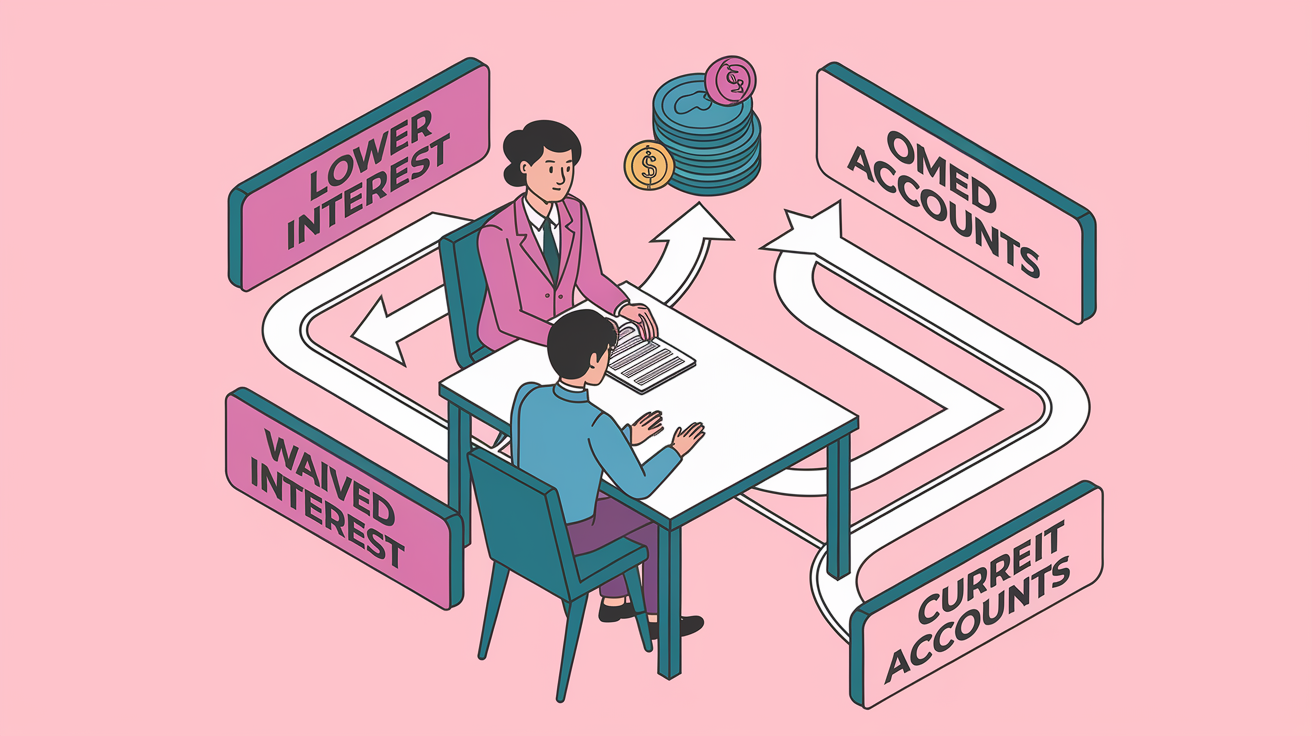
A debt management plan isn’t a loan. It’s a structured repayment setup run by a nonprofit credit counseling agency. You send one monthly payment to the agency, and they split it among your creditors based on a negotiated schedule. The agency also negotiates on your behalf to cut interest rates, waive late fees, and sometimes bring past due accounts current. Creditors go along because they’d rather get paid than write off the debt.
DMPs usually run 3 to 5 years. You don’t need a minimum credit score to enroll, but you do need steady income and enough cash flow to cover the agreed payment. Most agencies will also ask you to close the credit cards in the plan so you can’t rack up new balances while paying down the old ones. Setup fees are modest, around $30 to $50. Monthly admin fees sit between $20 and $75 depending on the agency and where you live.
Four biggest advantages:
No credit score requirement — Enrollment’s based on income and debt load, not your FICO.
Lower interest and waived fees — Creditors often drop APRs into single digits and stop penalty charges.
One predictable payment — You pay the agency once a month instead of juggling multiple due dates.
Credit improvement over time — Consistent on time payments through the DMP can rebuild your score, especially if you were missing deadlines before.
Secured Debt Consolidation Loans

A secured loan uses something you own as collateral. If you stop paying, the lender takes that asset to recover the money. That security makes lenders way more willing to approve borrowers with scores in the 500s or low 600s, and it usually cuts your APR compared to an unsecured loan. Common collateral includes your car, a savings account or CD, investment accounts, or home equity.
Auto secured loans are one of the easiest to get. You pledge your paid off vehicle’s title, and the lender puts a lien on it. If you still have an auto loan, some lenders will work with you if there’s enough equity in the car. Savings secured loans let you borrow against your own bank account or CD. The funds stay frozen until you repay the loan, and rates are often just a few points above what the account earns. Home equity loans and HELOCs let you borrow against your house’s value, but those need at least 15% to 20% equity and stable income. Bad credit borrowers can expect APRs on secured loans somewhere between 8% and 18%, well under the 25% to 36% range for unsecured.
The big risk is simple. If you miss payments, you lose the collateral. That means your car, your savings, or even your home. Only use a secured loan if you’re sure you can make every payment on time. Never pledge an asset you can’t afford to lose. If your income’s unstable or your budget’s already tight, a debt management plan or credit counseling might be safer.
Unsecured Personal Loans for Bad Credit
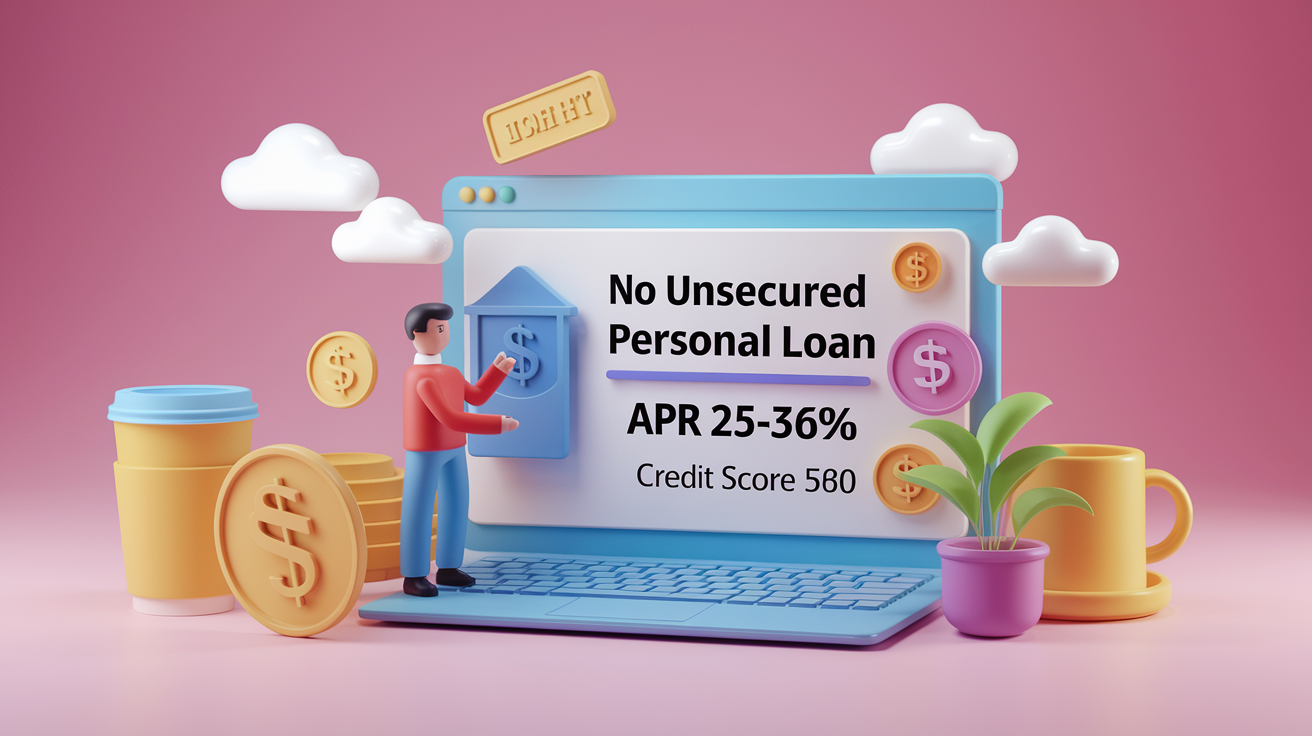
An unsecured personal loan doesn’t need collateral, so lenders look entirely at your credit history, income, and debt to income ratio when deciding whether to approve you. If your score’s below 600, most traditional banks and credit unions will say no. Online lenders and some fintech platforms take more risks, but they charge APRs between 25% and 36% to cover it. Origination fees of 1% to 8% are common. Loan terms tend to be shorter, often 24 to 60 months.
Even with the high cost, an unsecured loan can make sense if it replaces even higher rate debt. For example, if you’re paying 29% APR on multiple credit cards, consolidating at 28% with a fixed monthly payment at least stops the balance from growing and gives you a clear payoff date. The key is running the numbers. Calculate total interest paid now versus total interest paid under the consolidation loan. If the loan costs more or barely breaks even, skip it.
Three strategies to improve your approval odds:
Prequalify with multiple lenders — Prequalification uses a soft credit check that doesn’t hurt your score, so you can compare APRs, fees, and monthly payments before committing.
Add a cosigner — A cosigner with good credit can get you lower rates and better terms, but they’re legally responsible if you default.
Apply for a smaller loan amount — Lenders are more likely to approve a $5,000 request than a $20,000 one when your credit’s damaged. Consolidate your highest rate debts first and tackle the rest separately.
Debt Settlement and Negotiation Options

Debt settlement is a last resort for accounts that are already seriously delinquent or in collections. Instead of repaying the full balance, a settlement company or attorney negotiates with creditors to accept a lump sum that’s less than what you owe. Creditors agree because they’d rather get something than nothing, especially if the account’s already been charged off. You make monthly payments into a dedicated savings account the settlement company manages. Once enough money piles up, the company uses those funds to settle each debt one by one.
Settlement usually takes 24 to 48 months and comes with serious downsides. Your credit score will drop further because you’re told to stop making payments while the company negotiates. That means more late marks and possible lawsuits from creditors. Settled accounts get reported as “paid for less than the full balance,” which stays on your credit report for seven years. The IRS may also treat forgiven debt as taxable income, so you could owe taxes on the amount that got written off. Settlement companies charge fees, often 15% to 25% of the total enrolled debt, which eats into any savings you gain from reduced balances.
Four biggest risks:
Severe credit damage — Late payments, charge offs, and settled accounts all hurt your score and make future borrowing more expensive.
Creditor lawsuits — Stopping payments increases the chance creditors will sue to collect the debt before agreeing to settle.
Tax consequences — Forgiven debt over $600 is typically reported to the IRS on Form 1099 C, and you may owe income tax on that amount.
High fees and uneven results — Not all creditors settle. Some settlement firms charge fees even if negotiations fail or drag on for years.
Credit Counseling and Financial Guidance

Nonprofit credit counseling agencies offer free or low cost consultations to help you understand your options and build a realistic budget. A counselor will review your income, expenses, and debts, then recommend the best path forward based on your specific situation. That might be a debt management plan, direct creditor negotiation, a consolidation loan if your credit allows it, or even bankruptcy counseling if your debts are unmanageable. The goal is giving you a clear picture of what you can afford and which consolidation method will cost you the least over time.
Counseling sessions are confidential. Reputable agencies are accredited by organizations like the National Foundation for Credit Counseling or the Financial Counseling Association of America. There’s no obligation to enroll in a debt management plan after the consultation. If a counselor recommends a DMP, they’ll walk you through projected monthly payments, interest rate concessions from creditors, and the timeline to become debt free. If your income’s too low or too unstable for a DMP, they’ll suggest alternatives like negotiating payment plans directly with creditors, applying for hardship programs, or exploring government assistance for essentials so you can free up cash for debt payments.
Alternative Ways to Simplify Debt When Credit Is Low

If formal consolidation programs don’t fit your situation, several DIY and low barrier strategies can still reduce monthly payments or simplify your debt load. These alternatives need more work on your part, but they avoid new loans, credit checks, and third party fees.
Negotiate directly with creditors — Call each creditor and ask for a lower interest rate or a hardship payment plan. Many issuers will reduce your APR temporarily or waive fees if you explain your situation and show a history of trying to pay.
Balance transfer credit cards — If your score’s above 620, you may qualify for a card offering 0% APR for 12 to 21 months. Expect a 3% to 5% transfer fee. Make sure you can pay off the balance before the promo period ends.
Credit builder loans — These small installment loans, usually $300 to $1,000, are designed to help rebuild credit. The lender holds the loan funds in a savings account while you make payments, then releases the money to you at the end of the term.
Borrow from family or friends — If someone you trust is willing to lend you money at zero or low interest, draft a simple written agreement that includes the amount, repayment schedule, and any interest. Treat it as seriously as a bank loan to preserve the relationship.
Debt avalanche or snowball method — Avalanche focuses extra payments on the highest rate debt first, saving the most interest. Snowball targets the smallest balance first for quick wins and motivation. Both strategies keep you in control without needing a lender or agency.
Final Words
You saw quick overviews of the main paths, debt management plans, secured loans, unsecured loans, settlement, credit counseling, and DIY alternatives.
Simple rule. If you have collateral, check secured loans. If you have steady income but low credit, a debt management plan or nonprofit counseling is a safer next step.
Pick one small next move this week, call a counselor, check prequalification, or negotiate a lower rate. With the right step, these debt consolidation options for bad credit can shrink monthly payments and help you rebuild.
FAQ
Q: Can I get a debt consolidation loan with a 500 credit score or other poor credit? What is the lowest credit score lenders accept?
A: You can sometimes get a debt consolidation loan with a 500 or poor credit score, but approval and rates vary by lender. Secured loans, credit unions, co-signers, or debt management plans boost approval; expect APRs commonly 18%–36%.
Q: How to pay off $30,000 in debt in 1 year?
A: To pay off $30,000 in one year you need roughly $2,500 per month plus interest. Cut spending, boost income, consolidate to a lower rate, target highest-interest balances, and automate payments.