


What if consolidating your credit card debt could protect — not punish — your credit score?
It can, but only if you pick the right path: a balance transfer card, a fixed-rate consolidation loan, or a nonprofit debt management plan.
This post will show which choice helps your score, the trade-offs for each, and a simple rule to pick one: if you’ve got good credit and can finish a 0% promo, start with a balance transfer; otherwise consider a loan, and if your score is low, a nonprofit plan may be the safer route.
Best Ways to Consolidate Credit Card Debt Without Damaging Credit
The fastest and safest consolidation strategies? Balance transfer cards, debt consolidation loans, and nonprofit debt management plans. Each one replaces multiple monthly payments with a single payment, but they hit your credit score differently. Pick the method that lowers your interest rate and simplifies your life without closing old accounts or causing you to miss a due date.
Balance transfer credit card – You move all your card balances to one card offering 0% APR for 12 to 21 months. You’ll pay a 3 to 5% transfer fee, but you won’t owe interest during the promo period. That gives you a clean window to hammer down principal.
Debt consolidation loan – You borrow a fixed amount at a lower interest rate than your cards, use it to pay off every balance, then repay the loan over 24 to 60 months with predictable monthly payments.
Debt management plan – You work with a nonprofit credit counselor who negotiates lower interest rates with your creditors. You send one monthly payment to the agency, and they distribute it to each card over three to five years.
The most credit-friendly option is a balance transfer card if you’ve got good credit and can pay the balance within the 0% window. Paying off card debt while keeping those old accounts open preserves your available credit and average account age. Both help your score. A consolidation loan comes in second because it immediately lowers your credit utilization by replacing revolving debt with installment debt. The hard inquiry and new account will briefly lower your score by a few points, though.
Debt management plans protect your score over the long run but may require you to close cards as you enroll, which can raise your utilization ratio temporarily. Still, the consistent on-time payments and falling balances usually offset that dip within a few months. And there’s no hard inquiry since you’re not taking out new credit.
How Balance Transfer Credit Cards Work

A balance transfer card lets you move one or more credit card balances onto a new card that offers a promotional 0% APR period. These typically last 12 to 21 months. During that window you pay no interest, so every dollar you send goes straight to reducing principal. Most cards charge a balance transfer fee of 3 to 5% of the amount you move, which gets added to your new balance the day the transfer completes.
To qualify, you’ll generally need a credit score in the good to excellent range, around 670 or higher. Card issuers evaluate your income, existing debt, and payment history before approving the transfer. Once approved, you can request transfers online or by phone. Creditors usually receive payment within 7 to 14 days. Keep making minimum payments on your old cards until you confirm each transfer posted, then stop using those cards to avoid new balances.
Balance transfers lower your credit utilization immediately if the new card has a high limit and you’re not closing old accounts. For example, moving $8,000 in balances from cards with $10,000 combined limits to a card with a $15,000 limit drops your utilization from 80% to about 32% once the old cards show zero balances. That shift can raise your score within one billing cycle, as long as you keep the paid-off cards open and don’t run them back up.
Understanding Debt Consolidation Loans

A debt consolidation loan is a personal loan you use specifically to pay off credit card balances. You receive a lump sum, write checks or initiate transfers to each creditor, then repay the loan in fixed monthly installments over a term that usually runs 24 to 60 months. The loan’s annual percentage rate is typically lower than what you’re paying on cards, especially if your credit is fair or better.
Lenders approve consolidation loans based on your income, existing debt to income ratio, credit score, and employment stability. You’ll go through a hard credit inquiry when you apply, which can lower your score by a few points temporarily. Once approved and funded, the loan appears as a new installment account on your credit report, and your card balances drop to zero. If you keep those cards open, your total available revolving credit stays high. That lowers your utilization and can give your score a boost within a month or two.
Because the loan has a fixed interest rate and a set payoff date, you’ll know exactly how much you owe each month and when the debt will be gone. That predictability makes budgeting easier and removes the temptation to pay only minimums.
Key benefits of a debt consolidation loan:
- Fixed monthly payment that never changes
- Lower interest rate than most credit cards, reducing total interest paid
- Clear payoff timeline so you know when you’ll be debt free
- Potential credit score increase once utilization drops and you make on-time payments
Debt Management Plans Through Nonprofit Agencies

A debt management plan is a structured repayment program offered by nonprofit credit counseling agencies. When you enroll, a counselor contacts each of your credit card issuers to negotiate lower interest rates and sometimes waive late fees. You then make one monthly payment to the agency, and they distribute the funds to your creditors according to the agreed schedule. Plans typically run three to five years, depending on your total debt and monthly payment capacity.
You won’t take out a new loan, so there’s no hard credit inquiry. However, many agencies require you to close enrolled credit cards to prevent new charges while you’re paying down existing balances. Closing cards reduces your available credit, which can temporarily raise your utilization ratio and lower your score. Most people see their scores stabilize or improve within a few months, though, as balances fall and on-time payments accumulate.
Agencies usually charge a small setup fee, around $30 to $50, and a monthly maintenance fee, typically $20 to $75. Those costs are often lower than the interest you save through reduced rates. Because the plan doesn’t involve new borrowing and is managed by a nonprofit, it’s accessible to borrowers with fair or poor credit who might not qualify for balance transfer cards or low rate loans.
How Each Consolidation Method Affects Your Credit Score

Every consolidation method touches your credit score differently in the short term and long term. Balance transfer cards and consolidation loans both trigger a hard inquiry when you apply, which can shave a few points off your score for several months. Opening a new account also lowers your average account age, though that effect is smaller if you already have several older accounts. The upside is immediate, though. Moving card balances to a loan or new card drops your credit utilization, and lower utilization usually increases your score within one or two billing cycles.
Debt management plans skip the hard inquiry because you’re not opening new credit. Instead, the plan may require you to close cards, which shrinks your available credit and can push utilization higher if you still carry balances on non-enrolled cards. That can cause a temporary score dip. Over time, the plan’s mandatory on-time payments and falling balances repair your score, often bringing it higher than before you started.
All three methods depend on consistent, on-time payments to protect and improve your credit. One late payment reported to the bureaus can erase months of progress, so set up automatic payments the day you consolidate. If you keep old accounts open after paying them off and avoid running up new balances, your score will benefit from both lower utilization and preserved account history.
| Method | Short-Term Impact | Long-Term Impact |
|---|---|---|
| Balance Transfer Card | Hard inquiry and new account lower score slightly; utilization drops if old cards stay open, which can raise score quickly. | Score improves as you pay down balance during 0% period and maintain low utilization; keeping old cards open preserves account age. |
| Debt Consolidation Loan | Hard inquiry and new installment account cause small score dip; paying off cards lowers utilization and may boost score within weeks. | Fixed payments build positive payment history; closed cards hurt utilization unless you keep them open; loan eventually ages and supports score. |
| Debt Management Plan | No hard inquiry; closing cards raises utilization temporarily, which may lower score; first on-time payments begin to offset the dip. | Consistent payments and falling balances improve score over months; reduced interest accelerates payoff and strengthens credit profile. |
Eligibility Requirements and Timelines for Each Option
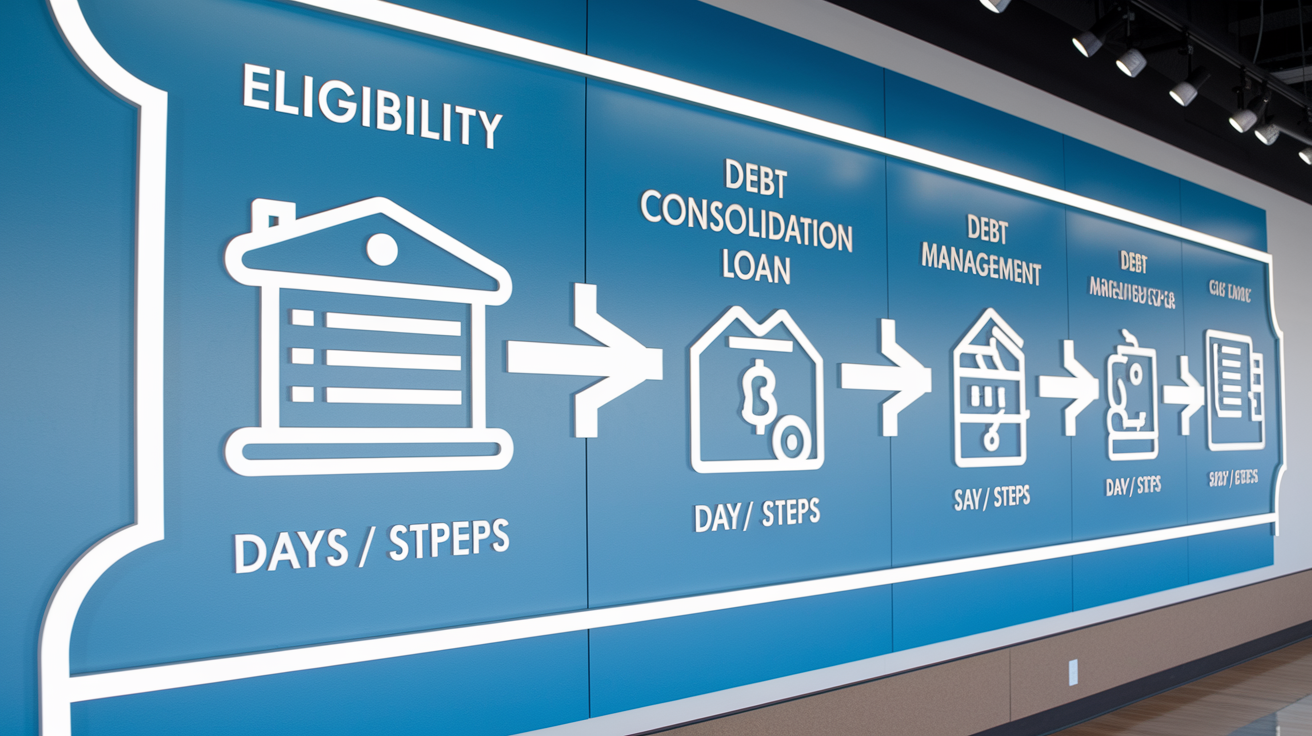
Balance transfer cards require a credit score typically in the good to excellent range, around 670 or higher. Card issuers also look for steady income and a manageable debt to income ratio. If approved, the card usually arrives within 7 to 10 business days, and balance transfers post within another 7 to 14 days. You’ll want to complete transfers and start payments immediately to maximize the 0% promotional window, which can last up to 21 months.
Debt consolidation loans accept applicants across a wider credit spectrum, but the lowest interest rates go to borrowers with scores above 680 and stable employment. Lenders verify income through pay stubs or tax returns and calculate your debt to income ratio to ensure you can handle the new monthly payment. Once approved, funds often arrive within one to three business days, and you’ll have a fixed repayment term ranging from two to seven years.
Debt management plans have the most flexible eligibility. Nonprofit counselors work with people at any credit level, including those with poor scores or recent late payments. You’ll need to show that you can afford a monthly payment large enough to retire your debt within three to five years. After an initial counseling session, the agency contacts your creditors to negotiate terms, a process that can take two to four weeks. Once agreements are in place, you begin monthly payments and the plan runs until every enrolled account is paid in full.
Balance transfer card: Good to excellent credit required. 7 to 10 days for card delivery plus 7 to 14 days for transfer posting. Promotional APR lasts 12 to 21 months.
Debt consolidation loan: Fair credit or better. Verification of income and employment. Funding within 1 to 3 days. Repayment terms of 24 to 84 months.
Debt management plan: Any credit level accepted. Initial counseling session. 2 to 4 weeks to finalize creditor agreements. Plan duration of 3 to 5 years.
Choosing the Right Method Based on Your Financial Situation

Your income stability, current credit score, total debt amount, and how quickly you can pay off the balance all influence which consolidation method will protect your credit and save you the most money. If you have good credit and enough monthly cash flow to eliminate your debt within 12 to 18 months, a balance transfer card offers the lowest cost because you’ll pay little or no interest. If your debt is larger or your income is steady but modest, a fixed rate consolidation loan gives you a predictable payment and a clear finish line without requiring excellent credit.
If your credit score is below 650 or you’ve missed payments recently, a debt management plan may be your best path. The plan doesn’t require new borrowing, so a low score won’t disqualify you. The negotiated interest rate reductions can cut your monthly payment enough to keep you on track. Just be prepared to close enrolled cards and commit to three to five years of disciplined payments.
Decision factors to consider:
Credit score. Good credit (670+) opens balance transfer cards and low rate loans. Fair or poor credit points toward debt management plans or higher rate loans.
Monthly cash flow. High cash flow lets you pay off a balance transfer quickly. Tighter budgets benefit from longer loan terms or structured DMP payments.
Total debt. Smaller balances under $5,000 fit well on a balance transfer card. Larger balances may require a loan with a multi-year term.
Payoff timeline. If you can finish within the 0% promo period, choose a balance transfer. If you need two to five years, pick a loan or DMP.
Account management preference. Balance transfers and loans let you keep cards open. Debt management plans usually require closing cards to prevent new charges.
Final Words
Pick the safest quick options: balance transfer cards, a fixed-rate consolidation loan, or a nonprofit debt management plan.
This post showed how each works, who usually qualifies, and how they can affect your credit score. You also saw the main trade-offs: promo periods and transfer fees, loan terms and approvals, or longer DMP timelines.
Next step: compare your rates, fees, and timeline, then pick the path that lowers cost while protecting credit. Use this guide to learn how to consolidate credit card debt without hurting credit, and you’ll be on a steadier path soon.
FAQ
Q: Can you consolidate credit card debt without hurting your credit score?
A: You can consolidate credit card debt without hurting your credit score by using methods that lower utilization and keep payments current—balance transfers, fixed-rate loans, or nonprofit debt management while avoiding missed payments and account closures.
Q: What is the 2 3 4 rule for credit cards?
A: The 2‑3‑4 rule for credit cards is an unofficial guideline: keep two cards for daily use, three to cover major spending categories, and no more than four total to keep utilization and tracking manageable.
Q: Is $20,000 in credit card debt a lot?
A: Whether $20,000 in credit card debt is a lot depends on your income, expenses, and rates; for many it’s a substantial burden—prioritize high-interest balances, make a plan, and consider consolidation.
Q: How much is the payment on a $50,000 consolidation loan?
A: The payment on a $50,000 consolidation loan depends on rate and term; for example, at 8% over 60 months the monthly payment is about $1,015.