


What if I told you most people build a budget on the wrong number?
That mistake turns a helpful plan into stress.
This post shows how to create a personal budget from scratch using a simple, five-step process.
You’ll learn to start with net (take-home) income, order expenses by priority, and assign every dollar.
If you follow the steps, you’ll end each month with a plan instead of guesswork.
Ready to stop guessing and start budgeting with confidence?
Step-by-Step Budget Setup to Start Your Personal Budget From Zero
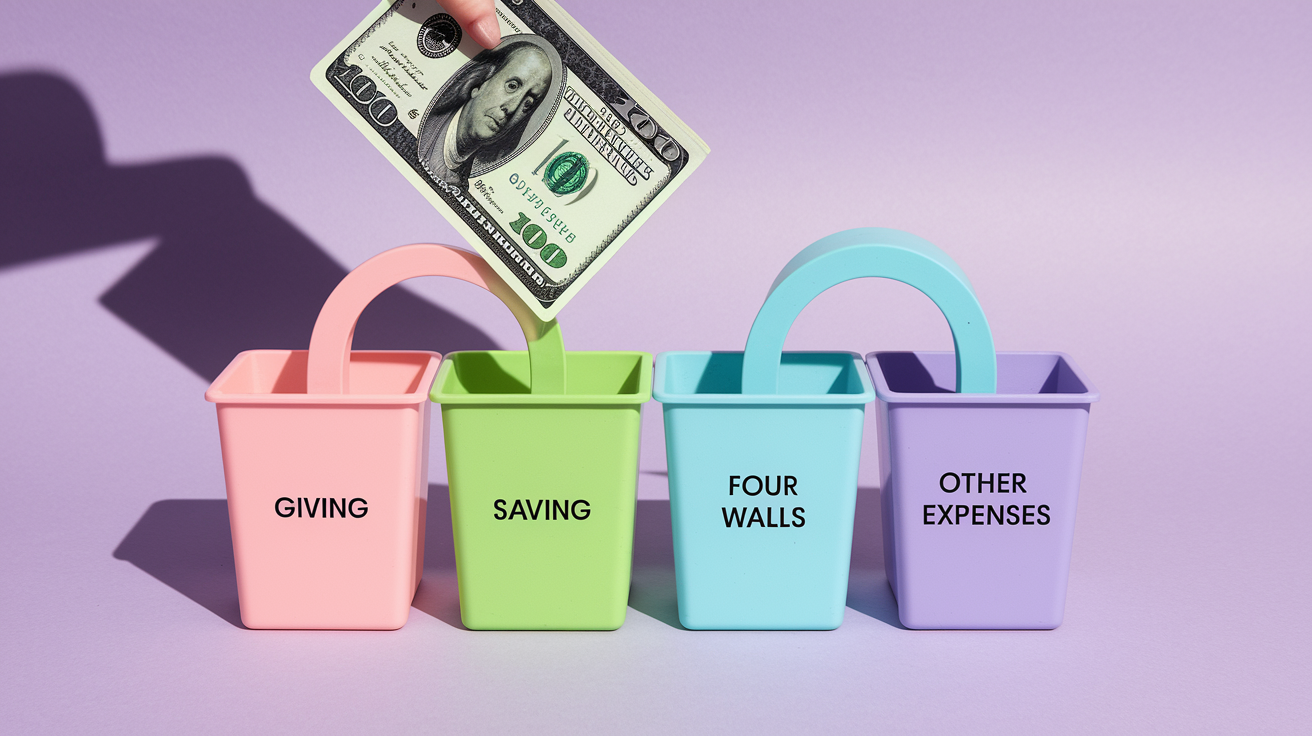
Creating a personal budget from scratch starts with knowing your actual take home income, then building a plan around it. Most budgeting for beginners kicks off by calculating net income. That’s what you actually receive in your bank account after taxes and deductions. Working from net income prevents overestimating what you can spend and keeps the budget realistic from day one.
Once you know your income, you’ll list expenses in a clear priority order. Start with giving if that’s part of your values, then saving, then the Four Walls (food, utilities, shelter, and transportation), and finally other monthly expenses like insurance, debt payments, and personal spending. This order protects your most essential needs first.
Here’s the complete 5 step quick start sequence:
- List your income using net (take home) pay. If your income varies, use the lowest recent month as your baseline.
- List your expenses in priority order: giving, saving, Four Walls, then other monthly bills.
- Subtract total expenses from total income. Aim for a balance near zero while keeping a $100–$300 buffer in your checking account.
- Track every expense daily or weekly so you know what’s left in each category and can stop before overspending.
- Create a new budget before each month starts by copying last month’s plan and adjusting for any seasonal, semiannual, or annual costs due that month.
After subtracting expenses from income, check whether your budget balances. If expenses are higher than income, you’ll need to cut costs or find extra income. If you have money left over, assign it to a goal like debt payoff or savings instead of leaving it unassigned. Keep a small buffer of $100–$300 in your checking account to avoid overdrafts, but don’t confuse the buffer with “leftover” money.
Budgets aren’t static. Each month brings different expenses. Back to school shopping in August, insurance premiums twice a year, birthday gifts scattered through the calendar. Before the month begins, review last month’s budget, copy the template, and add or remove line items that apply to the coming month. This monthly refresh keeps your budget accurate and prevents surprise shortfalls.
Calculating Net Income for a New Personal Budget
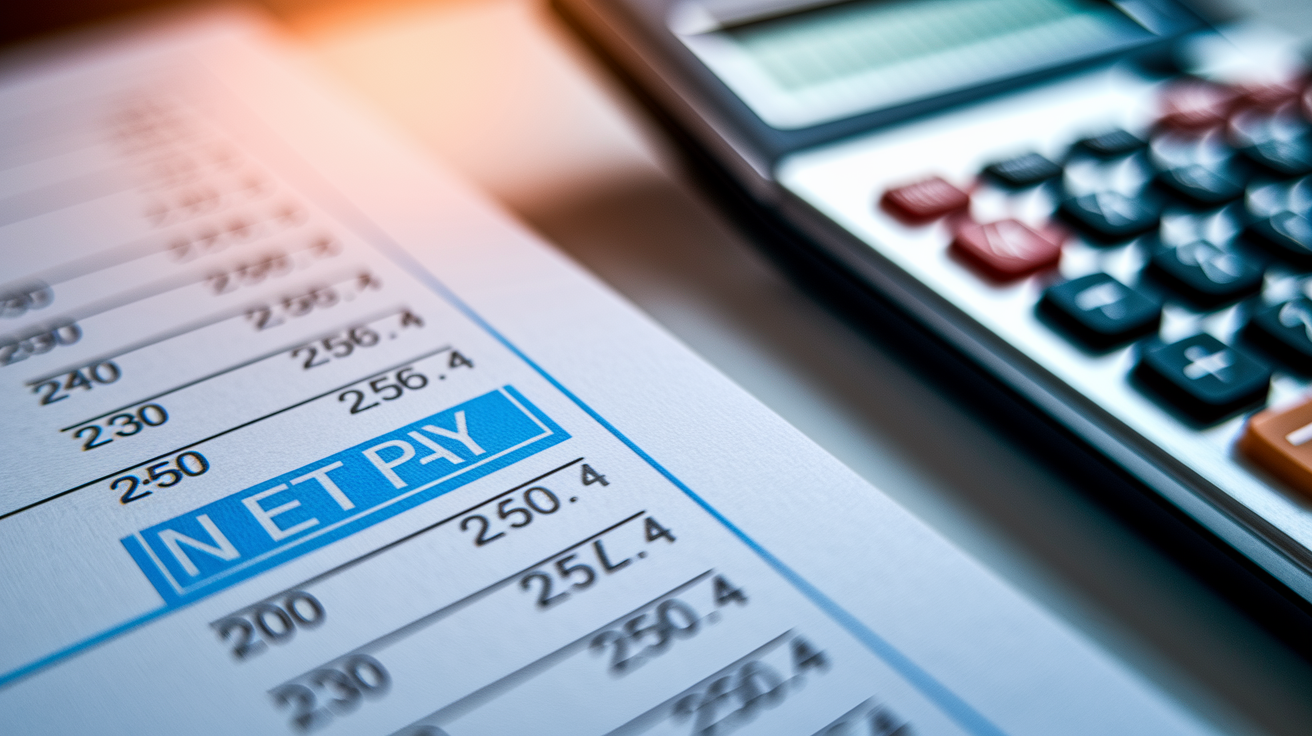
Accurate budgeting depends on knowing exactly how much money hits your account each month. Your gross salary sounds impressive on paper, but your budget must reflect net income. The amount you actually receive after federal and state taxes, Social Security, Medicare, and retirement contributions are deducted. Using gross income leads to overspending because that money never reaches your bank.
For salaried or hourly employees with regular paychecks, pull your most recent paystubs and look at the “net pay” line. If you’re paid biweekly, multiply one paycheck by 26 and divide by 12 to get your average monthly take home. If you’re paid twice a month, multiply by 24 and divide by 12. Include other regular income like interest, dividends, rental income, or side gig deposits. Add all sources together to find your total monthly net income. For example, if you and a partner each bring home two paychecks per month, plus side income, your total might look like this:
| Income Source | Amount |
|---|---|
| Your Paycheck 1 | $1,500 |
| Partner Paycheck 1 | $2,300 |
| Your Paycheck 2 | $1,500 |
| Partner Paycheck 2 | $2,300 |
| Side Hustle | $500 |
| Total Monthly Income | $8,100 |
Irregular income requires a different approach. If you work on commission, freelance, drive for rideshare, or receive tips, your monthly deposits vary. One safe method is to look back at the last three months of bank deposits, add them together, and divide by three for an average. A more conservative option is to use your lowest month from the past three as your baseline budget income. Budget conservatively with the lower number, then when a higher earning month arrives, assign the extra to savings or debt instead of increasing your standard spending. This keeps you covered during slower months and prevents the feast or famine cycle that derails many irregular income budgets.
Categorizing Personal Budget Expenses the Right Way
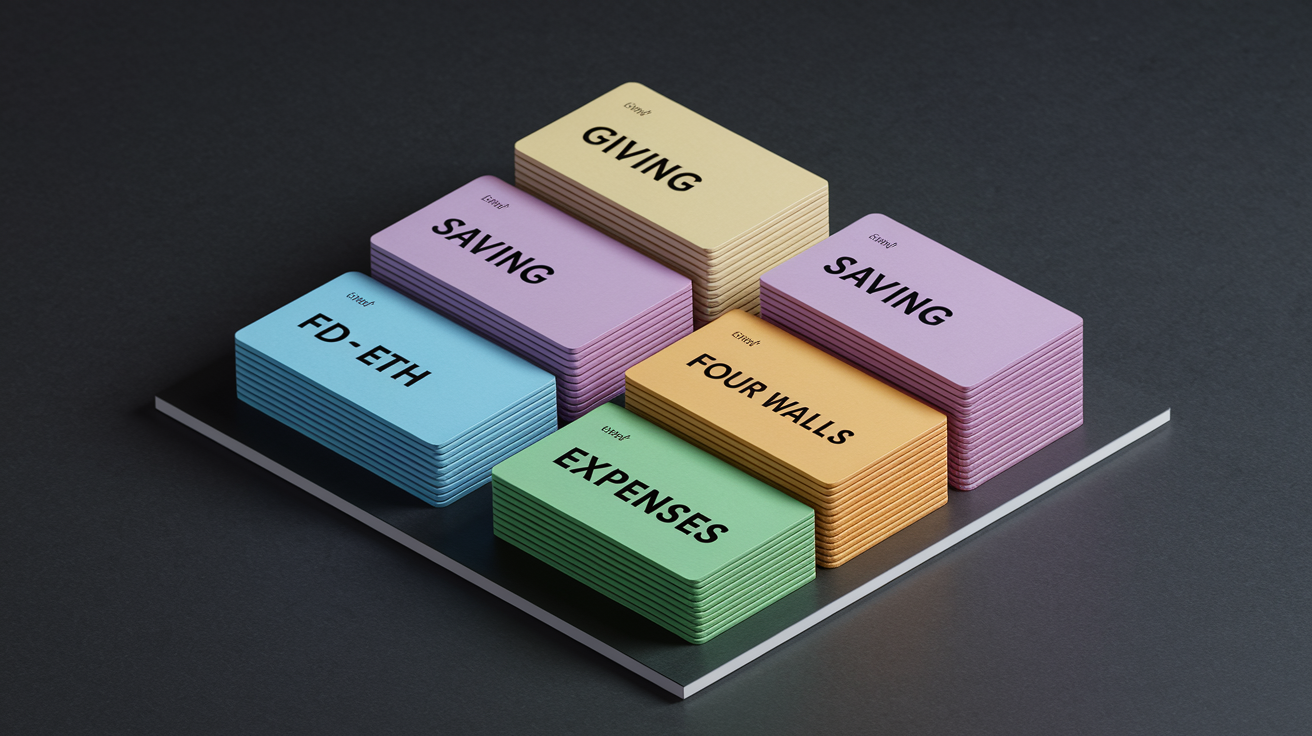
Listing expenses in the correct order protects your most critical needs and clarifies where cuts should happen if income falls short. The recommended priority sequence is giving (if that aligns with your values), saving, the Four Walls (food, utilities, shelter, and transportation), then everything else. Giving might mean charitable donations or tithing, typically around 10 percent of income. Saving includes emergency fund contributions and any debt payments beyond minimums. The Four Walls cover survival. If you lost your income tomorrow, you’d still need to eat, keep the lights on, stay housed, and get to work or the grocery store.
Fixed expenses stay the same each month and are easy to plan. Rent or mortgage payments, car loan payments, insurance premiums, and subscription services fall into this bucket. Write down the exact monthly amount for each fixed line. For example, your mortgage might be $1,450, HOA fees $50, and car insurance $120. These numbers don’t change month to month, so once you list them, they anchor your budget.
Variable expenses fluctuate based on usage and choices. Groceries, eating out, gasoline, electricity, water, and natural gas all vary depending on how much you use or spend. A realistic grocery budget might be $600 per month, eating out $150, electricity $130, water $60, natural gas $40, and transportation fuel $180. Track cash spending carefully in these categories. Grabbing lunch with cash or paying a friend back in bills still counts and can quietly drain variable categories if you don’t record the transactions.
Assign realistic amounts by reviewing the past two to three months of bank and credit card statements. Look for patterns. If you’ve spent an average of $140 on electricity over winter, budget $140 until you see a seasonal change. Use a simple monthly bill calendar, a list or spreadsheet noting which bills come due on which days, so you’re never surprised by a due date. Mark recurring dates like the 1st (rent), 15th (car payment), and 25th (credit card) to spread awareness of cash flow through the month. This prevents overdrafts and helps you see whether your paycheck timing lines up with your bill schedule.
Choosing a Budgeting Method to Build Your Personal Budget From Scratch
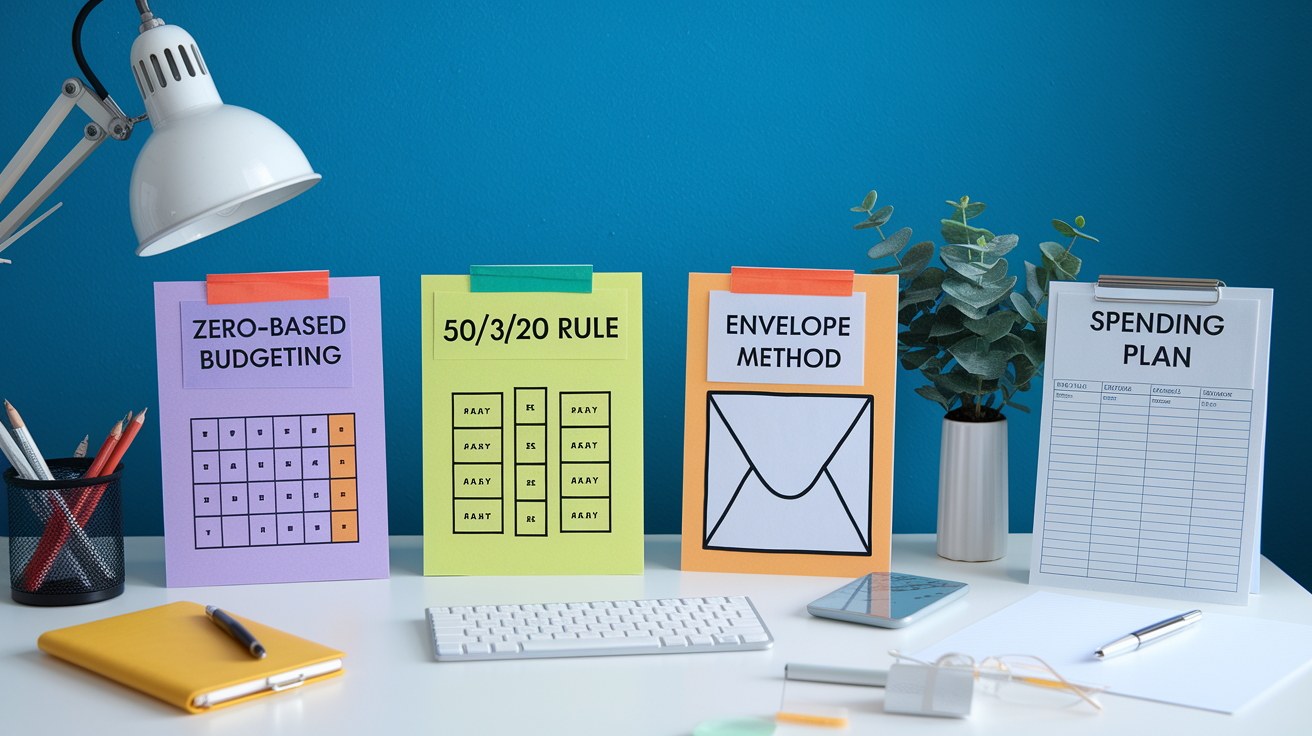
Selecting a budgeting framework gives your plan structure and helps you make faster decisions about where money should go. Without a method, budgeting feels overwhelming because every dollar requires a new judgment call. A framework simplifies the process by offering repeatable rules you can apply each month, which is especially helpful when you’re building a personal budget from scratch and don’t yet have spending habits to reference.
Different methods offer different trade offs between control and flexibility. Tight methods like zero based budgeting give you maximum control and visibility but require more tracking effort. Simpler frameworks like the 50/30/20 rule are easier to start but offer less detail when you need to troubleshoot overspending. The right method depends on your current financial situation. If you’re behind on bills or paying down debt, tighter control helps. If your finances are stable and you just want to formalize a plan, a flexible method works fine.
Consistency matters more than perfection. The best budgeting method is the one you’ll actually use next month and the month after. If a method feels too rigid or too loose after a few months, switch. Your budget serves you, not the other way around.
Zero Based Budgeting
Zero based budgeting assigns every single dollar a job before the month begins, so your income minus all assigned expenses equals zero. If you bring home $4,200, you assign all $4,200 to categories: $400 to groceries, $1,300 to rent, $200 to savings, $150 to debt, and so on until nothing is left unassigned. The goal isn’t to spend everything. It’s to decide what to do with everything, including money you’re saving.
Keep a $100–$300 buffer in your checking account to avoid overdrafts and bank fees. That buffer isn’t part of your budget categories. It’s a safety margin that sits below your zero line. Zero based budgeting works well if you’re paying off debt, building an emergency fund, or trying to break impulse spending habits because it removes “leftover” money that might otherwise disappear.
The 50/30/20 Rule
The 50/30/20 rule divides your net income into three buckets: 50 percent for fixed (non discretionary) expenses, 30 percent for discretionary spending, and 20 percent for savings and debt repayment. If your monthly take home is $4,000, you’d allocate $2,000 to fixed bills like rent, insurance, and loan minimums, $1,200 to discretionary items like dining out, hobbies, and entertainment, and $800 to goals like emergency fund contributions or extra debt payments.
This method is fast to set up and easy to remember. It works best when your current spending already falls close to these percentages. If your rent alone eats 60 percent of your income, the 50/30/20 split won’t fit without adjustments. Either increase income, cut costs, or modify the percentages to reflect reality while you work toward the target ratios.
Envelope & Spending Plan Methods
The envelope budgeting system uses physical cash divided into envelopes labeled by category: groceries, gas, entertainment. Once an envelope is empty, spending stops in that category until next month. Digital envelope apps replicate the concept by creating virtual “envelopes” you fund each month and spend down as transactions occur.
A spending plan hybrid combines broad category buckets with flexible tracking. Cover fixed bills in one bucket, set goal contributions in another, and group remaining spending into a few large categories like “Food & Home” or “Entertainment & Travel.” Track loosely within those buckets so you can adjust if one area runs over. This method offers more freedom than zero based budgeting but more structure than ignoring categories entirely, and it’s easier to maintain when retailers sell multiple product types in a single transaction.
Tracking Your Spending to Keep Your New Personal Budget Working

A budget on paper means nothing if you don’t track actual spending as the month unfolds. Recording every transaction, whether you use cash, debit, credit, or an app, gives you real time visibility into how much money remains in each category. Without tracking, it’s easy to overspend on groceries in week two, forget about those purchases by week three, and wonder why your account is empty by week four.
Tracking methods fall into two camps: manual spreadsheets and budgeting apps. A spreadsheet like Google Sheets is free and gives you full control over categories, but it requires you to manually enter every transaction. Set aside five minutes each evening to log purchases from receipts, bank notifications, or memory while the day is fresh. Apps cost a few dollars a month but save time by connecting to your bank and credit card accounts, automatically importing transactions, and sorting them into categories using rules and tags. Apps can also send alerts when a category is running low and provide dashboards that show spending trends over time.
Daily and weekly tracking habits that protect your budget:
Check your budget app or spreadsheet every morning to see yesterday’s spending and remaining balances. Save receipts in your wallet or phone photo roll and enter them within 24 hours. Reconcile credit card and bank transactions once a week to catch any missed entries or fraudulent charges. Review category totals at each paycheck and adjust upcoming spending if a category is running ahead of pace. Set a recurring phone reminder to log transactions if you tend to forget.
Tracking changes behavior in ways planning alone cannot. When you write down a $12 lunch, you feel the impact more than when you tap a card and move on. Over time, that awareness reduces impulse purchases, reveals spending leaks (like $8 coffees three times a week adding up to $96 a month), and builds the habit of asking “is this planned?” before swiping. The act of recording creates a pause that protects your budget from thoughtless overspending.
Planning for Irregular, Seasonal, and Annual Costs in Your Personal Budget

Irregular expenses are the silent budget killers. A beginner creates a careful monthly plan, tracks daily spending, and feels confident, until the car insurance bill arrives, or back to school shopping drains $300 in two weeks, or the annual subscription renews and wipes out grocery money. These costs aren’t surprises. They’re predictable events that many new budgets simply forget to include.
A sinking fund is a dedicated savings bucket you fill monthly so the money is waiting when the irregular bill comes due. If car insurance costs $600 every six months, divide $600 by 6 and set aside $100 each month in a sinking fund. When the bill arrives, you pay it from the fund instead of scrambling to cover it from regular cash flow. Sinking funds stabilize your budget because they turn unpredictable big hits into predictable small contributions.
Seasonal expenses include back to school supplies, sports league fees, lawn care in summer, and holiday gifts. Semiannual costs include insurance premiums, car maintenance and registration, and tuition payments. Annual expenses include subscription renewals (software, memberships), yearly medical exams, pet vaccinations, and birthdays or anniversaries. List every irregular expense you can remember from the past year, estimate the cost, and divide by 12 to find the monthly sinking fund amount. If you’re not sure, start with a guess and adjust after the expense actually occurs.
Create a budget line called “Month Specific Stuff” or “Alternating Expenses” and fund it with the total of your monthly sinking contributions. Each month, check which irregular bills are due and move money from the fund to cover them. This approach prevents the frustrating cycle of building momentum one month and falling behind the next when an irregular cost appears.
| Expense Type | Example | Monthly Sinking Fund Amount |
|---|---|---|
| Semiannual | Car insurance $600 every 6 months | $100 |
| Annual | Software subscription $180 per year | $15 |
| Seasonal | Back to school $240 in August | $20 |
| Occasional | Pet vet exam $120 once a year | $10 |
Setting Financial Goals That Direct Your Personal Budget

A budget without goals is just an accounting exercise. Goals give your budget purpose and make the hard trade offs easier to accept. When you know that skipping restaurant meals this month funds your emergency savings or pays down a credit card, the budget feels less like restriction and more like progress toward something that matters.
Short term goals address immediate needs and typically take less than a year. Examples include paying off a $2,000 credit card, replacing a broken appliance, saving $500 for car maintenance, or building a $1,000 starter emergency fund. Long term goals take multiple years and often require sustained contributions: buying a house, funding a child’s college account, or building a retirement nest egg. Both time horizons matter, and your budget needs to allocate money to each.
The recommended goal setting sequence protects you from the highest risks first. Pay off high interest debt like credit cards before tackling low interest student loans. If your employer offers a retirement match, contribute at least enough to capture the full match. It’s free money. Once high interest debt is cleared and the match is secured, focus on building an emergency fund large enough to cover three to six months of essential expenses. After that foundation is solid, direct extra money toward down payments, college savings, or additional retirement contributions.
SMART financial goal examples that fit into a monthly budget:
Pay an extra $150 toward the credit card each month to eliminate the $1,800 balance in 12 months. Save $200 per month to reach a $1,000 starter emergency fund in five months. Increase retirement contribution by 2 percent of salary starting next paycheck to capture the full employer match. Set aside $50 monthly in a “car repair” sinking fund to cover unexpected maintenance without using credit.
Link budget categories directly to your goals. Create a line called “Emergency Fund” and assign $200 to it each month. Create another line called “Credit Card Extra Payment” and assign $150. Treat these goal lines like bills. Non negotiable payments you make to yourself. Track progress visibly, whether on a spreadsheet chart, a printed thermometer on the fridge, or an app dashboard. Seeing the emergency fund grow from $200 to $600 to $1,000 reinforces the behaviors that built it and motivates you to keep going.
Adjusting and Updating Your Personal Budget Every Month

Budgets aren’t set it and forget it documents. Life changes, expenses shift, and what worked in January might not fit in July. The monthly update process keeps your budget relevant and accurate. Before each new month begins, open last month’s budget, copy the template, and adjust line by line. Did groceries run over by $40? Increase the grocery line. Did you cancel a subscription? Remove that line and reassign the freed up money to a goal. Add any irregular expenses that fall in the coming month. Car registration in March, vacation in June, holiday gifts in December.
Review your entire budget quarterly, even if monthly updates feel smooth. Every three months, check whether your income has changed, whether new expenses have appeared (a gym membership, a streaming service), or whether old goals are complete and new ones should take their place. Life events like a raise, a new baby, a job loss, or a move require immediate budget overhauls, but smaller drifts add up over time and quarterly reviews catch them before they derail progress.
Four common beginner budgeting mistakes that monthly updates help you catch and fix:
Underestimating groceries and household supplies. Most new budgets set grocery lines too low. Adjust upward after tracking actual spending for one or two months. Forgetting to include irregular bills like quarterly trash service, semiannual insurance, or annual subscriptions, which create surprise shortfalls when they hit. Not tracking small purchases under $10, which add up to $100+ per month in coffee, snacks, app purchases, and convenience store runs. Setting category amounts based on wishful thinking instead of past spending patterns. If you’ve spent $200 monthly on eating out for six months, a $50 budget won’t hold without a concrete behavior change plan.
Improvement happens through iteration, not perfection. Your first budget will have gaps and mistakes. Month two will be better. By month three or four, the budget will start feeling natural and the categories will reflect real life instead of guesses. Keep adjusting, keep tracking, and celebrate the small wins. Each month you finish in the black is progress, even if the budget wasn’t flawless.
Final Words
Start by getting your net income right, list expenses in priority order, pick a method, and track spending daily.
Quick five-step: list income; list expenses by priority; subtract and keep a $100-$300 buffer; track daily/weekly; build a fresh budget before each month.
If you want to know how to create a personal budget from scratch, pick one small goal this week, make one automatic transfer, and update the plan monthly. Small wins add up, and you’ll see steadier money habits before long.
FAQ
Q: How to create a simple personal budget?
A: A simple personal budget starts with your net income, lists expenses by priority (giving, saving, Four Walls, other), assigns amounts, keeps a $100–$300 buffer, tracks spending, and updates monthly.
Q: What is the 50 30 20 budget rule?
A: The 50 30 20 budget rule divides take-home pay into 50% needs, 30% wants, and 20% savings or debt repayment—for $4,000 that’s $2,000 needs, $1,200 wants, $800 savings.
Q: How to save $10,000 in 3 months?
A: To save $10,000 in 3 months you must save about $3,333 per month; cut nonessentials, increase income (side work, overtime, sell items), automate transfers, and track progress weekly.
Q: What is the 3 6 9 rule of money?
A: The 3 6 9 rule of money sets emergency fund targets: 3 months if your income is steady, 6 months if job risk is higher, and 9 months if self-employed or unstable income.