


You don’t need a credit card to build solid credit.
Some of the fastest options are becoming an authorized user, taking a credit builder loan, or using rent and utility reporting, and many people see results in 30 to 90 days.
This post shows how each method works, how quickly it can affect your score, and the trade-offs so you can pick the best path for your situation.
If you only do one thing today, confirm that whoever or whatever reports your payments sends data to at least one major credit bureau.
Fastest Ways to Build Credit Without Using a Credit Card
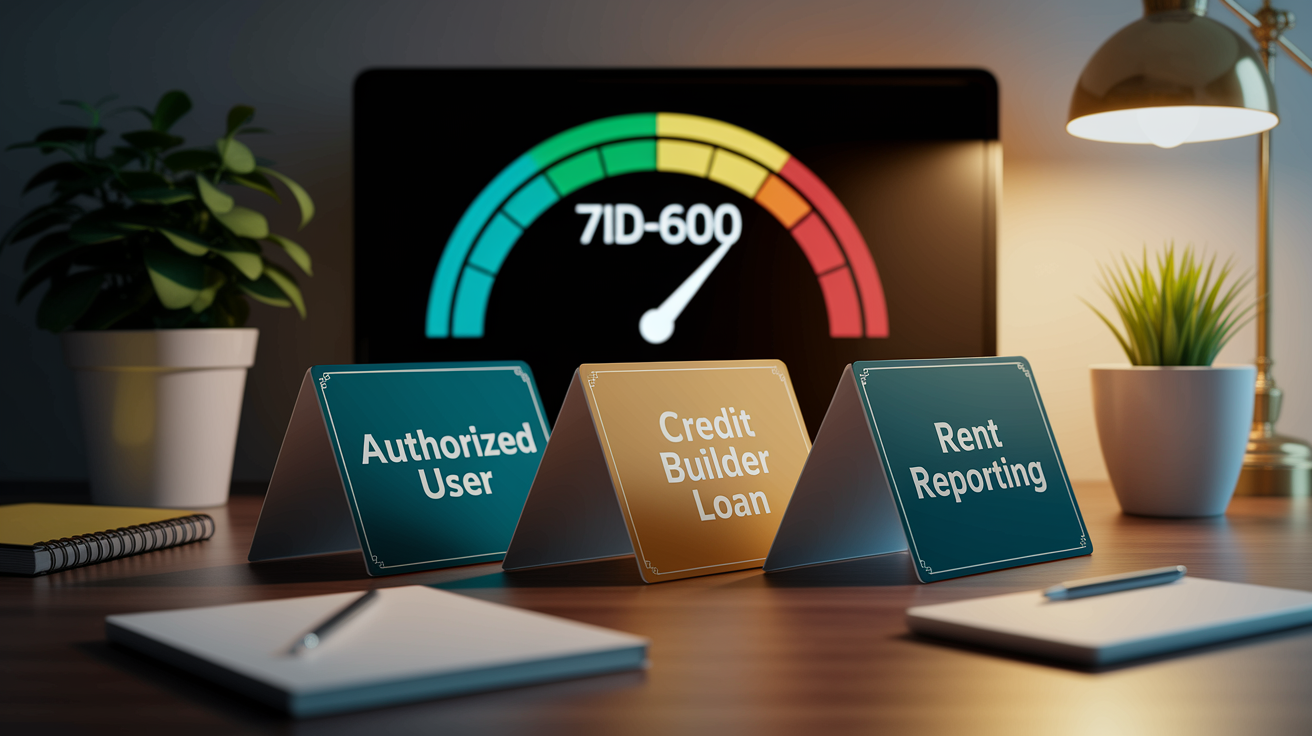
Authorized user status, credit builder loans, and rent reporting services are the three fastest ways to build credit when you don’t want a traditional credit card. Becoming an authorized user on someone else’s account can show up on your credit report in 30 to 45 days, making it the quickest method if you know someone with strong credit. Credit builder loans start reporting monthly payments immediately, so you’ll see positive activity within the first billing cycle. Rent reporting can be retroactive. Some services add up to 24 months of your past rental history all at once, which means you can instantly add two years of on time payment records to your credit file.
Experian Boost is another fast option because it links to your bank account and adds existing utility, phone, and streaming service payments to your Experian credit file right away. If you’ve been paying your phone bill on time for the past year, that history can appear in your credit profile within days. The impact varies, but many users see a modest score increase almost immediately.
All of these methods share one key rule. They only help if the payments are reported to at least one of the three major credit bureaus: Equifax, Experian, or TransUnion. Before you commit time or money, confirm that the lender, landlord, or service actually reports to the bureaus.
Quick start actions to build credit fast without a credit card:
- Ask a family member with good credit and low utilization to add you as an authorized user. Confirm the card issuer reports authorized users.
- Open a credit builder loan at a credit union or online lender. Verify the lender reports to all three bureaus.
- Sign up for a rent reporting service and ask if it can pull past rental payment history from your landlord.
- Link your bank account to Experian Boost and add your phone, utilities, and streaming services.
- Make every payment on time from day one. Payment history is about 35% of your credit score.
- Check your credit report 60 days after starting to confirm new accounts and payments are appearing.
- Keep track of which bureaus receive your data. Some services only report to one or two.
Using Credit Builder Loans Effectively
Credit builder loans flip the usual loan process upside down. Instead of receiving cash up front, the lender deposits the loan amount (typically between $300 and $1,000) into a locked savings account or certificate of deposit. You make fixed monthly payments for 6 to 24 months, and the lender reports those payments to all three credit bureaus every month. After you’ve paid off the loan, you receive the money minus any interest or fees. This structure forces you to save while building a solid payment history, which is the most important factor in your credit score.
These loans are designed for people with little credit or poor credit, so approval requirements are usually low. Many credit unions, community banks, and online lenders offer credit builder loans with APRs that range from about 6% to 16%. Because the loan is fully secured by the locked funds, lenders take almost no risk. That’s why they’re willing to work with borrowers who have zero credit history. The monthly payment is predictable and affordable. If you borrow $500 over 12 months at 10% APR, your payment will be around $44 per month.
Steps to open and use a credit builder loan:
- Find a lender that reports to all three bureaus. Credit unions, Self, and some online banks offer these loans. Call and confirm reporting practices before you apply.
- Choose a loan amount and term you can afford. Start with $300 to $500 over 12 months if your budget is tight. A smaller loan with on time payments is better than a larger loan you can’t finish.
- Set up automatic payments from your checking account. Missing even one payment will damage your credit and erase the benefit.
- Track your credit report after 60 to 90 days. Confirm the new installment account appears and that payments are being reported monthly.
Expect to see measurable credit score improvement after about three to six months of on time payments. If you’re starting with no credit file, many scoring models will generate your first score after six months of reported history. By the time you complete the loan, you’ll have 12 to 24 months of positive payment history and a lump sum of savings waiting for you.
Building Credit With Secured Personal Loans

Secured personal loans use your own savings or a certificate of deposit as collateral, so the lender holds almost no risk and approval is much easier than for an unsecured loan. The loan amount typically equals the value of your collateral. If you pledge a $1,000 savings account, you’ll receive a $1,000 loan. You make monthly payments over a fixed term, and those payments are reported to the credit bureaus just like any other installment loan. Because the loan is backed by your cash, interest rates are usually lower than unsecured personal loans, often between 5% and 12% APR.
The primary credit benefit is the same as a credit builder loan: regular, on time installment payments that prove you can manage debt responsibly. The difference is that you actually receive the loan funds up front, so you can use the money for an expense while simultaneously building credit. Just remember that your collateral stays locked until the loan is repaid in full. If you default, the lender will keep your savings.
Steps to use a secured personal loan strategically:
- Open a savings account or CD at a credit union or bank that offers secured loans. Deposit the amount you want to borrow. Start with $500 to $1,500 if possible.
- Apply for a secured loan equal to your deposit. Confirm the lender reports monthly payments to all three bureaus.
- Use the loan proceeds for a planned expense or keep them in a separate account. Do not spend the money on anything you can’t afford to repay.
- Make every payment on time and in full. Set up autopay to eliminate the risk of a missed payment. Even one late payment can erase months of progress.
After six months of consistent payments, you’ll have built a solid installment loan payment history and kept your savings intact. Once the loan is paid off, your collateral is released and the paid loan will remain on your credit report for up to 10 years, continuing to support your credit profile.
Becoming an Authorized User for Fast Credit Score Gains

Becoming an authorized user means someone else adds you to their credit card account, and the account’s full payment history and age can appear on your credit report even though you never applied for credit yourself. If the primary cardholder has been using the card responsibly for years, you inherit that positive history as soon as the card issuer reports the authorized user to the credit bureaus. Most major issuers report authorized user accounts within 30 to 45 days, making this one of the fastest ways to build credit without opening your own account.
The benefit is real, but it depends entirely on the primary cardholder’s habits. If they carry a low balance, make every payment on time, and have had the card for several years, your credit score can jump quickly. If they max out the card or miss a payment, that negative mark will appear on your report too. You also need to confirm that the card issuer reports authorized users to all three bureaus. Some issuers only report to one or two, and a few don’t report authorized users at all.
Five essential criteria for choosing the right authorized user account:
- The account is at least two years old. Older accounts contribute more to your length of credit history, which makes up about 15% of your score.
- The primary cardholder keeps utilization below 10%. For example, if the card has a $5,000 limit, the balance should stay under $500 at all times.
- The account has a perfect on time payment history. Even one 30 day late payment in the past two years can hurt your score.
- The card issuer reports authorized users to Equifax, Experian, and TransUnion. Call the issuer’s customer service line and ask directly.
- You trust the primary cardholder to maintain good habits. Your credit is tied to theirs as long as you remain an authorized user, so choose someone responsible and communicate clearly about expectations.
You don’t need to carry the physical card or make purchases to benefit. Simply being listed on the account is enough. If the primary cardholder’s behavior changes or you want to remove the account from your report, you can ask to be removed as an authorized user at any time.
Using Rent and Utility Reporting Services

Most landlords don’t report rent payments to credit bureaus, which means thousands of dollars in on time rent never help your credit score. Rent reporting services fix that gap by adding your rental payment history to one or more of your credit files. Some services can pull up to 24 months of past rent payments from your landlord or bank records and report them retroactively, giving you instant credit for two years of responsible payments. Monthly fees typically range from $5 to $25, or you may pay a one time setup fee between $10 and $100.
Experian Boost is a free tool that works differently. It links directly to your bank account and scans for recurring payments like utilities, phone bills, internet, and even some streaming services. You choose which payments to add, and Experian adds only the on time payments to your Experian credit file. The impact shows up quickly, often within a few days, though the score change is usually modest. The downside is that Boost only affects your Experian report, so lenders who pull from Equifax or TransUnion won’t see those payments.
| Service Name | Type of Reporting | Typical Credit Impact |
|---|---|---|
| Experian Boost | Utilities, phone, streaming (Experian only) | Small, immediate score increase for many users; varies widely |
| Rental Kharma | Rent payments (TransUnion, Equifax) | Adds up to 24 months of history; measurable improvement over 3–6 months |
| RentTrack | Rent payments (all three bureaus) | Consistent on time rent reporting; noticeable score growth after 6+ months |
| PayYourRent | Rent payments (Experian, TransUnion) | Retroactive history possible; steady positive impact with continued use |
Expect to see your first score changes within one to three billing cycles after your payments are reported, but meaningful improvement usually takes six to twelve months of consistent on time rent. If you’re just starting to build credit, adding 12 or 24 months of rent history all at once can help you generate your first credit score much faster than waiting for new accounts to age.
Additional Non Credit Card Methods to Build Credit

A growing number of tools and account types can help you build credit without opening a traditional credit card. Some banking apps now offer credit building features that report your everyday spending or savings behavior to the credit bureaus. Personal loans (even small ones between $1,000 and $5,000) add installment payment history to your credit file, and federal student loans do the same as long as you make on time monthly payments. Buy now pay later services are starting to report payment activity to credit bureaus, though reporting practices vary widely by provider and many still don’t report at all.
Six alternative credit building tools to consider:
- Federal student loans. If you’re repaying student debt, those monthly payments are reported to all three bureaus and can remain on your report for up to 10 years after payoff.
- Small personal loans from credit unions. Borrow $1,000 to $3,000 for a specific purpose (car repair, home improvement) and repay over 12 to 24 months. Confirm the lender reports to all three bureaus.
- Self or similar credit building apps. Self combines a credit builder loan with optional rent and bill reporting. Payments go into a CD and are reported monthly.
- Petal, Chime Credit Builder, or other fintech “credit cards” that don’t require credit checks. These products often work like secured cards or report debit card spending as credit activity.
- Buy now pay later accounts that report. Services like Affirm and Klarna have started reporting some accounts. Ask before you use them and only finance purchases you’ve already budgeted for.
- Passbook or savings secured loans at local credit unions. Deposit $500 or more, borrow against it, and make monthly payments. The loan is reported and your savings stay protected.
All of these methods share the same rule. Verify reporting before you commit, make every payment on time, and give the process at least six months to show results. Soft pull tools like Experian Boost won’t hurt your credit score, so there’s no downside to trying them while you wait for other accounts to build history.
Final Words
Start with the fastest moves: become an authorized user, sign up for a credit-builder loan, and add rent or utility reporting (or try Experian Boost). Those steps add payment history and age to your file quickly.
If you want a simple decision rule: ask to be an authorized user if you have a reliable friend or family member; if you can afford steady payments, pick a credit-builder loan; otherwise, start rent/utility reporting. All three report to bureaus.
For one clear next step on how to build credit without a credit card, choose one method, set automatic payments, and check your credit in 30–90 days. Small, steady steps add up.
FAQ
Q: What is the 2 2 2 credit rule?
A: The 2 2 2 credit rule isn’t an official credit bureau rule; it’s a nickname for different quick tips people use. Check the source—treat it as a rough guideline, not a guarantee.
Q: How to get a 700 credit score in 30 days?
A: Getting a 700 credit score in 30 days is rare; fastest moves are fix report errors, become an authorized user on a seasoned account, pay down card balances, and use Experian Boost where available.
Q: What is the fastest way to build credit if you have no credit?
A: The fastest way to build credit with no credit is to become an authorized user, use a credit‑builder loan, or enroll rent/utility reporting—start by asking a family member or joining a local credit‑builder program.
Q: What is the biggest killer of credit scores?
A: The biggest killer of credit scores is late or missed payments—payment history matters most. Set up autopay and catch up on past due accounts to stop further damage.