


Controversial take: a 0% balance transfer can save you the most, but only if you actually pay it off before the promo ends.
If you can’t finish within 12 to 21 months, that zero percent backfires and high post-promo APRs make a consolidation loan cheaper.
Here’s the simple rule: if your debt is under about $15,000, your credit score is roughly 680 or higher, and you can make aggressive monthly payments, choose a balance transfer.
If you need longer terms, larger loans, or your score is lower, pick a debt consolidation loan.
Determining Whether a Balance Transfer or Debt Consolidation Is Better
A balance transfer makes sense if you can pay off your debt within 12 to 21 months and you’ve got a credit score above 680. Debt consolidation loans work better when you need a longer repayment timeline, have balances above $15,000, or your credit score sits in the fair to good range (roughly 620 to 680). The deciding factor usually comes down to how fast you can eliminate the balance and what interest rate you qualify for.
Balance transfers shine when you’re dealing with smaller debt amounts, generally under $15,000, and you can afford aggressive monthly payments during the promotional window. Consolidation loans become the practical choice once debt crosses that threshold or when you need the predictability of a fixed payment spread over two to seven years. Your credit score gates both options, but consolidation lenders approve a wider range of applicants, even if they charge higher APRs to borrowers with lower scores. Timeline matters more than anything. If you can realistically pay off your balance in 18 months, the 0% promotional APR on a balance transfer (minus a 3% to 5% transfer fee) will almost always cost less than a consolidation loan charging 10% or more over three years.
Choosing the lower interest option depends entirely on repayment speed. A balance transfer lets you avoid interest completely if you finish before the promo expires, but any balance left after that window reverts to APRs often exceeding 20%. A consolidation loan locks in a fixed rate for the entire term, so even a 12% APR can save money compared to staying on high rate credit cards, provided you don’t stretch repayment so long that total interest eclipses what you’d pay with an aggressive balance transfer payoff.
| Option | Best For | Typical APR/Terms | Ideal Debt Range |
|---|---|---|---|
| Balance Transfer | Good to excellent credit, fast payoff (12–21 months) | 0% intro APR for 12–21 months; 18–29% after | Under $15,000 |
| Debt Consolidation Loan | Fair to good credit, longer payoff (2–7 years), larger or mixed debt | Fixed APR 6–36%; terms 24–84 months | $15,000 and above |
How Balance Transfers Work

When you open a balance transfer credit card, you move existing credit card balances onto the new card. The issuer typically offers a promotional 0% APR for a set period, commonly 12 to 21 months, so every payment goes directly toward principal instead of interest. That promotional window is the entire advantage. Finish the payoff before it ends and you avoid interest charges almost entirely, minus the upfront transfer fee.
Transfer fees run 3% to 5% of the amount you move, charged as soon as the transfer completes. Once the promotional period expires, any remaining balance starts accruing interest at the card’s standard APR, which often sits between 18% and 29%. Eligibility for the best offers usually requires a credit score of 680 or higher and a solid payment history.
The process follows these steps:
- Apply for a balance transfer card and get approved with a credit limit.
- Request a transfer by providing account details for the debts you want to move. Some issuers let you transfer at application; others require a separate request after approval.
- Wait for the transfer to complete, typically 5 to 14 days, and confirm the old balances are paid.
- Calculate the monthly payment needed to eliminate the transferred balance before the promo ends. Divide the new balance (including the transfer fee) by the number of promotional months.
- Make that payment every month without fail, and avoid new purchases on the card so every dollar reduces the balance.
How Debt Consolidation Loans Work

A debt consolidation loan is a personal loan you use to pay off multiple existing debts, leaving you with a single monthly payment at a fixed interest rate. Most consolidation loans are unsecured, meaning you don’t need collateral, and lenders approve loan amounts from a few thousand dollars up to $50,000 or more. Repayment terms typically range from two to seven years, and the APR stays locked for the life of the loan, so your monthly payment never changes.
Interest rates span a wide range, roughly 6% to 36%, depending on your credit score, income, debt to income ratio, and the lender. Many lenders charge an origination fee (usually 1% to 10% of the loan amount), which is either deducted from the proceeds or added to your balance. That fee is a real cost, so factor it into your total repayment calculation.
The application and funding process breaks down like this:
- Prequalify with one or more lenders using a soft credit check to see estimated rates and loan amounts without affecting your credit score.
- Submit a full application with income documentation, employment details, and existing debt information. The lender runs a hard credit inquiry at this stage.
- Review the loan offer (APR, term, monthly payment, origination fee) and accept if the terms work.
- Receive funds, typically within one to three business days, either as a direct deposit to your bank account or as payments sent directly to your creditors.
- Begin making fixed monthly payments to the lender while your old accounts are paid off and, ideally, closed or left unused.
Eligibility Requirements Compared
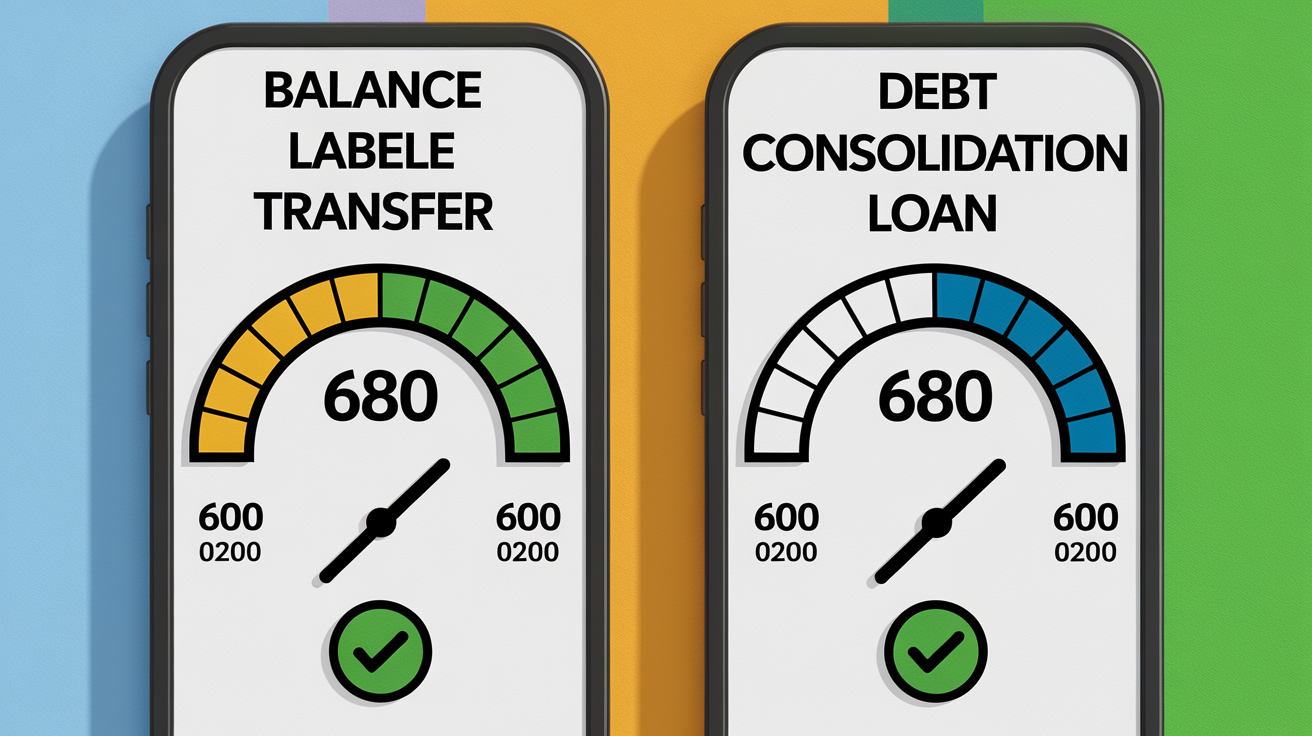
Balance transfer cards generally require a credit score of 680 or higher to qualify for promotional 0% APR offers and a meaningful credit limit. Issuers look for a clean payment history over the past 12 to 24 months and prefer applicants with existing credit card accounts in good standing. If your score sits below that threshold, you might still get approved for a balance transfer card, but the promotional period will be shorter, the transfer fee higher, or the intro APR above 0%.
Debt consolidation loans accept a broader range of credit profiles, often approving borrowers with scores as low as 600 to 620, though rates climb steeply as credit quality declines. Lenders also evaluate your debt to income ratio. Most want to see DTI below 40%, and some cap it at 35% or lower for their best rates. Income stability matters more for consolidation loans than for balance transfers because the lender is underwriting a multi year installment obligation rather than extending revolving credit.
The size and type of your existing debt influence approval differently for each product. Balance transfer issuers set credit limits based on your overall credit profile, and you can only transfer up to that limit minus any balance transfer fees. Consolidation lenders, on the other hand, focus on whether the monthly payment fits within your budget and whether paying off revolving debt will improve your financial position, so they may approve larger amounts if your income supports the payment.
Cost Comparison: Fees, APRs, and Total Interest
Balance transfers charge an upfront fee of 3% to 5% of the transferred amount, which gets added to your balance immediately. A $10,000 transfer at 3% costs $300, so you start with a $10,300 balance. Debt consolidation loans often include an origination fee ranging from 1% to 10%, either deducted from your proceeds or added to the principal. On a $10,000 loan with a 5% fee, you might receive $9,500 but owe $10,000, or you might receive the full $10,000 and owe $10,500.
Interest costs depend entirely on timing and rate. Balance transfers offer 0% APR during the promotional period, so if you pay the full balance before that window closes, your only cost is the transfer fee. If you carry any balance past the promo, the card’s standard APR (typically 18% to 29%) applies to what remains, and interest can accumulate quickly. Consolidation loans charge a fixed APR from day one, usually between 6% and 36%, and you’ll pay interest on the full term even if you pay ahead, unless the lender allows penalty free prepayment.
| Cost Type | Balance Transfer | Debt Consolidation Loan |
|---|---|---|
| Fees | 3–5% transfer fee (upfront) | 1–10% origination fee (deducted or added) |
| APR | 0% intro for 12–21 months; 18–29% after | Fixed 6–36% for entire term |
| Total Interest Potential | $0 if paid in promo; high if not | Predictable; accumulates over 2–7 years |
| Long-Term Cost Risk | High post-promo APR can double costs | Longer terms increase total interest paid |
Pros and Cons of Each Method
Balance transfers deliver the lowest possible interest cost if you can finish repayment within the promotional window. They consolidate multiple card payments into one, simplify tracking, and free up credit limits on your old cards (though that can be a risk if you’re tempted to use them again). The 0% APR window gives you breathing room to make real progress on principal without interest eating into every payment.
The downsides start with the transfer fee, which reduces your net savings, and the credit limit cap, which may not cover all your balances. You’ll face a hard credit inquiry when you apply, and your credit score may dip temporarily. If you miss a payment or don’t finish before the promo ends, the remaining balance gets hit with a high standard APR, often higher than what you were paying originally. Balance transfers also don’t address spending habits. If you keep using the old cards, you’ll end up with more debt than you started with.
Balance Transfer Pros:
- 0% interest for 12 to 21 months can eliminate interest costs entirely
- Simplifies multiple card payments into one
- Can cut total repayment amount if finished within promo period
- May improve credit utilization if old cards stay open with zero balances
- Fast approval and transfer process, often one to two weeks
Balance Transfer Cons:
- 3% to 5% transfer fee reduces net savings
- Requires good to excellent credit (680+) for best offers
- Post promo APR often exceeds original card rates (18–29%)
- Limited by credit limit, may not cover all balances
- Risk of re accumulating debt on old accounts if spending behavior doesn’t change
Debt consolidation loans provide predictability. You know your monthly payment, your payoff date, and your total cost from day one. The fixed rate protects you from rate increases, and paying off revolving debt with an installment loan can improve your credit mix and lower your utilization ratio. Longer repayment terms (two to seven years) make the monthly payment more affordable, and you can often get approved with fair credit.
The trade off is that longer terms mean more total interest, even at a lower APR than your cards carried. Origination fees can be steep, especially for borrowers with lower credit scores, and those fees are a sunk cost whether you pay off early or not. If your loan APR ends up above 15% and you stretch repayment over five years, you might pay more in total interest than you would have with an aggressive balance transfer payoff. Consolidation also doesn’t close your credit cards, so without discipline you can rack up new balances while still owing the loan.
Debt Consolidation Loan Pros:
- Fixed monthly payment and payoff date, easier budgeting
- Available to fair credit borrowers, scores as low as 600–620
- Converts revolving debt to installment debt, which can improve credit score
- Protects against rate increases over the loan term
- Can consolidate non card debts (medical bills, personal loans) in one loan
Debt Consolidation Loan Cons:
- Origination fees (1–10%) add to total cost and may be deducted from proceeds
- Longer terms increase total interest paid, even at lower APRs
- Requires hard credit inquiry and may temporarily lower credit score
- Monthly payment may be higher than minimum card payments, straining cash flow
- Risk of accumulating new credit card debt while still paying the loan
Impact on Credit Score

Both options start with a hard credit inquiry, which typically lowers your score by a few points for several months. That temporary dip is unavoidable when you’re opening any new credit account. Balance transfers add a new credit card to your report, which can help your credit mix if you previously had only cards, but opening the account also lowers the average age of your credit.
Balance transfers affect your utilization ratio in two ways. If you transfer balances off old cards and leave those accounts open with zero balances, your total available credit increases and your utilization drops, often a net positive for your score. But if your new card’s limit is low relative to the transferred balance, your utilization on that single card may spike above 30%, which can hurt your score until you pay it down. Closing old cards after a transfer reduces your available credit and raises overall utilization, so most experts recommend leaving them open and unused.
Debt consolidation loans improve your credit by replacing high utilization revolving debt with a fixed installment loan. Your credit card utilization falls to zero if you pay the cards in full, and adding an installment account diversifies your credit mix. As you make on time loan payments, your payment history strengthens, and your score typically rises over six to twelve months. The main risk is that paying off your cards frees up available credit, and if you start using those cards again, your utilization (and your total debt load) will climb, erasing any score gains and putting you in a worse financial position than before.
Ideal User Profiles for Each Strategy
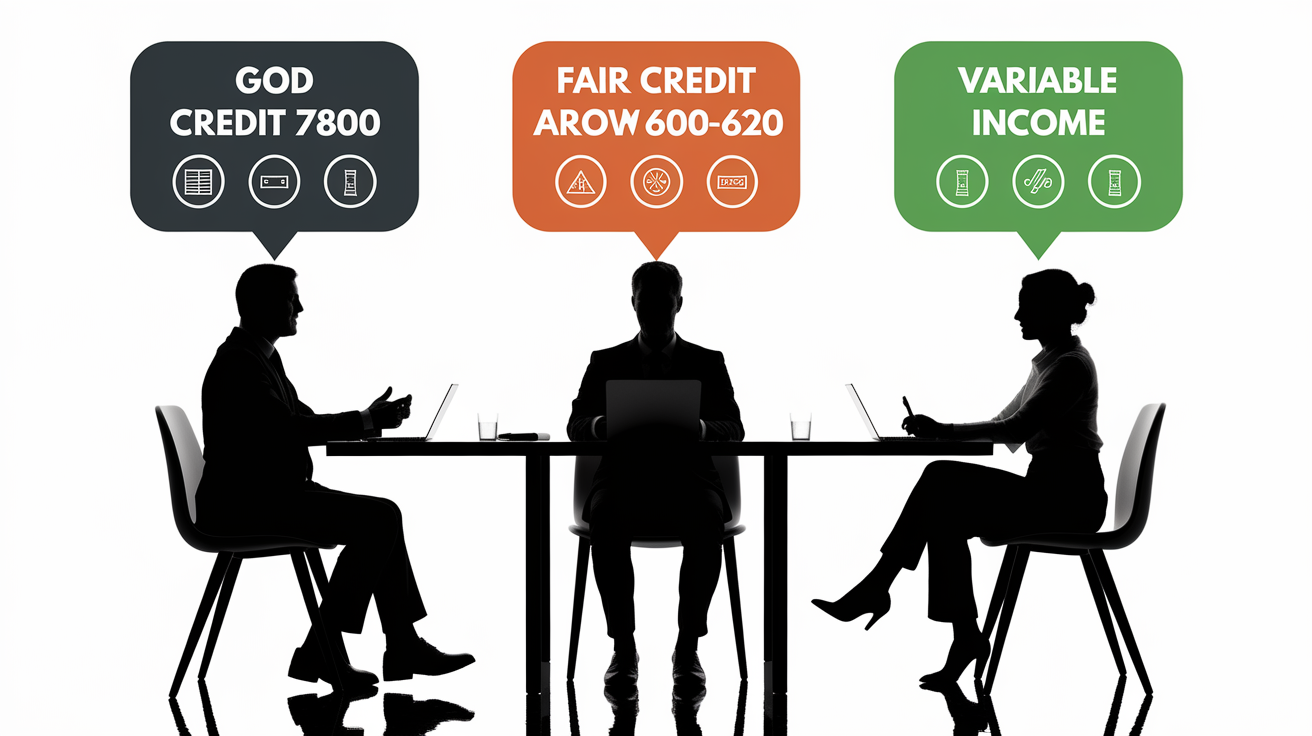
If you have a credit score above 700, owe less than $15,000 on credit cards, and can afford to pay $600 to $800 per month, a balance transfer card is likely your best path. You’ll qualify for a 0% promotional period long enough to finish the payoff, and the 3% to 5% transfer fee will cost far less than the interest you’d pay otherwise. This works when your budget can handle an aggressive payment schedule and you’re confident you won’t add new charges to your old cards.
Someone with a credit score in the mid 600s, balances above $15,000, or multiple types of debt (credit cards, medical bills, a personal loan) will find debt consolidation more accessible and workable. The fixed monthly payment is easier to budget, and stretching repayment over three to five years keeps the payment manageable even if your income is modest. If your current minimum payments are barely covering interest, consolidation can cut your APR enough to make real progress each month, and the predictable payoff date helps you plan.
A borrower who expects a financial windfall (tax refund, bonus, inheritance) within 12 to 18 months should consider a balance transfer even if current cash flow is tight. The 0% window buys time, and you can make smaller payments during lean months, then pay off the remaining balance in a lump sum before the promo expires. Just make sure the minimum payment is affordable, because missing even one can void the promotional rate.
If your income is variable (freelance, commission based, seasonal) or you’re rebuilding credit after missed payments, a debt consolidation loan with a longer term provides stability. Even if the APR isn’t ideal, knowing exactly what you owe each month reduces the risk of falling behind, and consistent on time payments will gradually lift your credit score. Balance transfers are riskier in this scenario because one missed payment during the promo can trigger penalty rates and undo all your progress.
Realistic Example Scenarios
Scenario A: You owe $8,000 on a credit card at 22% APR. You qualify for a balance transfer card with 0% APR for 18 months and a 3% transfer fee. The fee adds $240, so your starting balance is $8,240. To pay it off in 18 months, you need to pay about $458 per month. Total cost: $8,240. If you’d stayed on the original card paying $458 per month, you’d pay roughly $1,450 in interest over the same period, for a total of $9,450. The balance transfer saves you approximately $1,210.
Scenario B: You owe $25,000 spread across three credit cards with APRs between 18% and 24%. Your credit score is 660, so you don’t qualify for a good balance transfer offer, but a lender approves you for a five year debt consolidation loan at 14% APR with a 3% origination fee ($750). Your monthly payment is about $581, and over 60 months you’ll pay roughly $34,860 total (principal plus $9,860 in interest and fees). If you’d continued paying minimums on the cards, you’d likely pay over $15,000 in interest and take 8 to 10 years to finish, assuming no new charges. The loan saves you years and several thousand dollars, plus you get a fixed finish date.
Scenario C: You owe $12,000 at 20% APR and can pay $700 per month. You transfer the balance to a 0% card for 15 months with a 5% fee, so your new balance is $12,600. At $700 per month, you’ll pay it off in 18 months, three months past the promo. Those last three months accrue interest at the card’s 24% standard APR on the remaining balance of roughly $2,100, adding about $126 in interest. Total cost: $12,726. Alternatively, a three year consolidation loan at 11% APR with no origination fee gives you a $393 monthly payment and total cost of about $14,150. Even though you missed the promo deadline slightly, the balance transfer still costs less, but the loan would have been the safer pick if your budget was tight or unpredictable.
Decision Framework: Choosing the Right Option
Start by listing every debt you want to consolidate: the balance, APR, minimum payment, and the total interest you’ll pay if you keep the current terms. That baseline shows you what you’re trying to beat. Next, check your credit score and estimate which products you’re likely to qualify for. Use prequalification tools for consolidation loans (soft pull, no score impact) and research balance transfer card requirements to see if you meet the typical 680+ threshold.
Compare the total cost of each option over your realistic repayment timeline. For a balance transfer, add the transfer fee to your principal and divide by the number of promotional months to find the required monthly payment. If that’s affordable, calculate total cost as principal plus fee. For a consolidation loan, use an amortization calculator with the quoted APR, term, and origination fee to find the monthly payment and total interest. Choose the option with the lower total cost and a monthly payment you can comfortably sustain.
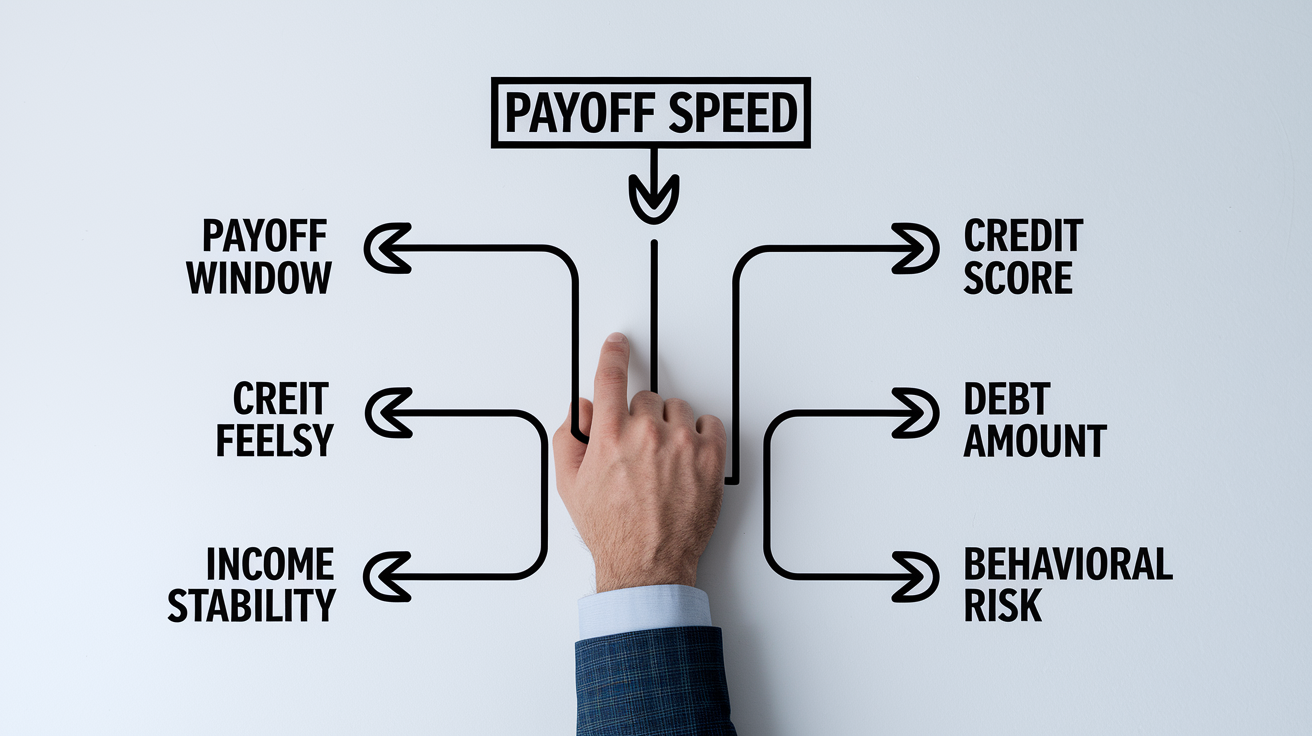
Key factors to weigh in your decision:
- Payoff speed: Can you realistically eliminate the balance within 12 to 21 months, or do you need two to seven years?
- Credit score: Do you qualify for a 0% balance transfer (680+), or will you get better loan terms than card terms?
- Debt amount: Is it under $15,000 (favoring balance transfer) or above (favoring consolidation loan)?
- Fee impact: Does a 3% to 5% transfer fee cost less than the origination fee plus interest on a loan?
- Income stability: Can you commit to aggressive payments during a short promo, or do you need a predictable long term payment?
- Credit limit risk: Will a balance transfer card give you enough limit to cover your balances, or will you be left with partial coverage?
- Behavioral risk: Are you confident you won’t re use old credit cards once they’re paid off?
- Credit mix and utilization goals: Do you want to improve your score by converting revolving debt to installment debt, or is lowering utilization via a transfer enough?
Final Words
If you can pay your cards during a 0% intro period, a balance transfer is the faster, lower-cost choice. This post compared who benefits, eligibility (credit scores), fees, APRs, credit impact, and showed example scenarios.
If you need more time, have larger balances, or a lower score, a consolidation loan gives fixed payments and predictability.
Decision rule: can you clear debt within the promo and have about a 680+ score? Pick a balance transfer. If not, choose consolidation, check your credit, and run a simple payoff calc to compare balance transfer vs debt consolidation — you’ve got this.
FAQ
Q: Is it better to consolidate debt or do a balance transfer?
A: Choosing between debt consolidation and a balance transfer depends on credit, debt size, and payoff speed. Use a balance transfer if you have good credit, under ~$15,000, and can pay within the 0% promo; otherwise use consolidation.
Q: Why does Dave Ramsey not recommend debt consolidation?
A: Dave Ramsey doesn’t recommend debt consolidation because it can extend repayment, mask spending habits, and cost more long term; he prefers the debt snowball (pay smallest balance first) to build momentum.
Q: How to pay off $30,000 in debt in 1 year?
A: Paying off $30,000 in one year requires roughly $2,500 monthly plus interest; cut expenses, add income, attack highest-rate debts first, use 0% balance transfers if eligible, and set automatic payments to stay on track.
Q: How much will it cost in fees to transfer a $1000 balance?
A: Transferring a $1,000 balance typically costs 3%–5% in fees, about $30–$50; you may still get a 0% promo APR, but factor the up-front fee into your payoff plan.