

What if your budget forced you to give every dollar a job before the month even starts?
Zero-based budgeting does exactly that: you assign each dollar to rent, groceries, savings, debt, or a sinking fund so your month balances to zero.
It takes more time than quick rules like 50/30/20, but the reward is clear control, faster debt payoff, and fewer surprise shortfalls.
This post walks you through step-by-step setup, simple templates, and practical rules so you can start allocating every dollar effectively—and stick with it.
Foundational Overview of Zero‑Based Budgeting for Beginners

Zero based budgeting is a planning method that assigns every single dollar of your income a specific purpose before the month begins. The central rule is simple: Income minus Expenditures equals 0. That doesn’t mean you spend everything. It means you decide where every dollar will go, whether that’s rent, groceries, savings, debt repayment, or a sinking fund for car repairs, so that nothing is left unassigned. When you finish building your budget, your remaining balance should be exactly zero.
This approach is sometimes called zero sum budgeting or blank slate budgeting because you start from scratch each month instead of copying last month’s numbers. Unlike traditional budgeting, where you base this month on what you did last month, zero based budgeting forces you to justify and plan every category fresh. Unlike percentage based rules like 50/30/20, where you split income into broad buckets, zero based budgeting demands line by line precision. You’re not guessing where the money went. You’re telling it where to go.
The method works best for people who want complete control over their cash flow, are rebuilding their finances, or have variable income that changes month to month. It takes more time than simpler methods, but the payoff is clarity. You know exactly what you’re spending, what you’re saving, and why. Here are the core rules:
- Track every income source for the month and calculate your total.
- List all fixed expenses, variable spending, savings goals, debt payments, and irregular costs.
- Assign a dollar amount to each category until your income minus all allocations equals zero.
- Include savings and debt as explicit line items, not leftovers.
- Review and adjust your budget every month based on what actually happened.
How Zero‑Based Budgeting Works Step‑by‑Step
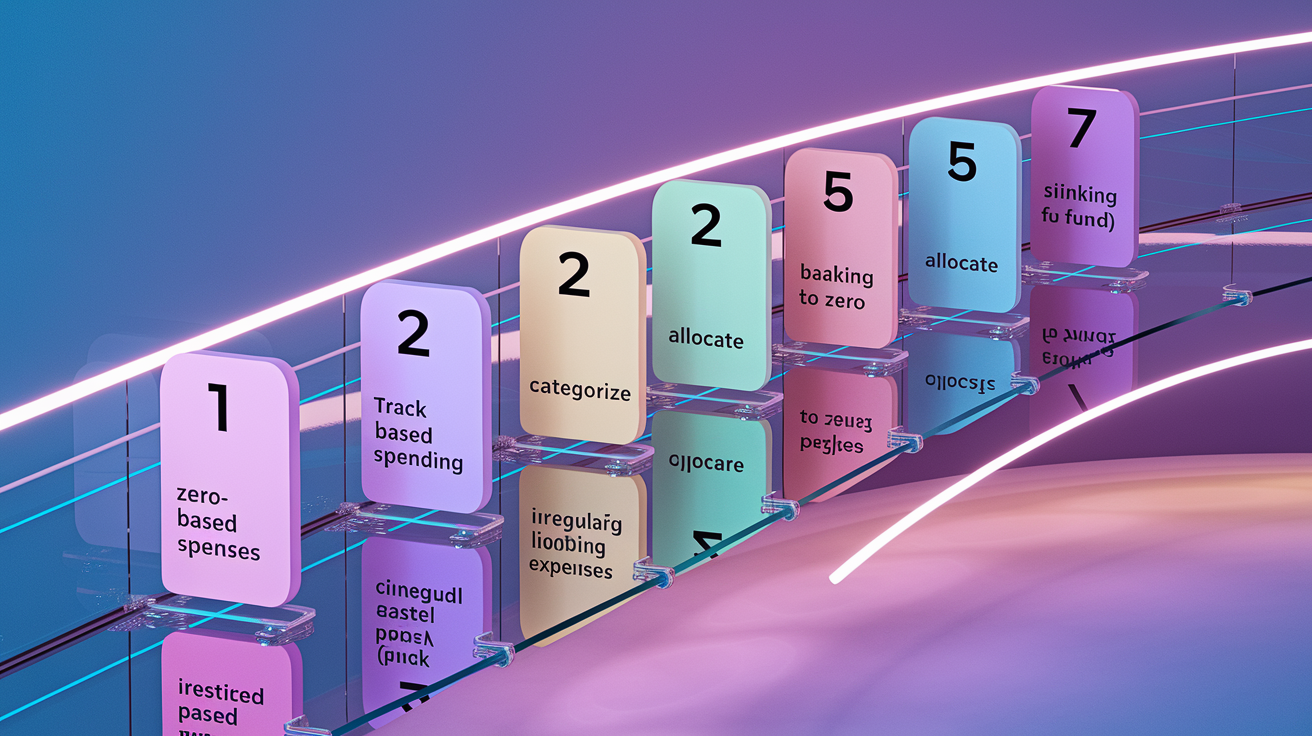
Setting up a zero based budget for the first time takes focus, but the process is straightforward once you break it into steps. Most people need a few months of real spending data before they can build a realistic plan, so if you’re brand new to budgeting, start by tracking what you actually spend for at least two or three months. Then use that information to create your first zero based budget.
Here’s the full workflow:
- Determine your total monthly income. Add up every paycheck, side gig payment, benefit, or other regular money coming in. Use after tax, take home amounts.
- Track your spending for a few months. Write down or categorize every expense so you understand your real patterns. This makes your budget realistic instead of aspirational.
- List all your expenses and break them into categories. Include needs like rent and utilities, wants like streaming services and dining out, savings goals, debt payments, and irregular costs like annual insurance premiums.
- Allocate a dollar amount to each category. Start with the essentials, then savings and debt, then discretionary spending. Adjust amounts until every dollar is assigned.
- Make sure your income minus all allocations equals zero. If you have money left over, assign it. If you’re short, cut or reallocate until the math works.
- Set aside money each month for irregular expenses. This is your sinking fund. Treat it like a bill.
- Review and adjust every month. Your budget isn’t static. If your income changes or a new expense appears, rebuild the plan so it still balances to zero.
A common starting framework is the 50/30/20 split. 50 percent of income goes to needs, 30 percent to wants, and 20 percent to savings and debt. You can use that as a baseline, then refine each bucket with specific line items until you’ve assigned every dollar.
Handling Irregular Expenses
Irregular expenses are the budget killers most people forget. Car insurance every six months, holiday gifts, annual software subscriptions, property taxes. A sinking fund solves this. Calculate the annual cost of each irregular expense, divide by 12, and set aside that amount every month in a dedicated savings category. For example, if you pay 600 dollars in car insurance twice a year, that’s 1,200 annually, or 100 per month into your sinking fund. When the bill arrives, the money is already there.
Zero‑Based Budgeting Example With Real Numbers

Let’s say your monthly take home income is 3,000 dollars. Using a 50/30/20 framework as a starting point, you’d allocate 1,500 to needs, 900 to wants, and 600 to savings and debt. But zero based budgeting doesn’t stop there. You break each bucket into specific line items and assign exact amounts until the full 3,000 is accounted for.
Here’s what that might look like:
| Category | Amount | Purpose |
|---|---|---|
| Rent | $900 | Housing (need) |
| Utilities & groceries | $400 | Essential spending (need) |
| Transportation & insurance | $200 | Commute and required coverage (need) |
| Dining out & subscriptions | $600 | Discretionary spending (want) |
| Entertainment & hobbies | $300 | Lifestyle spending (want) |
| Emergency fund | $300 | Short-term savings buffer |
| Debt payment | $200 | Credit card or student loan |
| Sinking fund | $100 | Irregular expenses (car maintenance, annual fees) |
Total assigned: 900 + 400 + 200 + 600 + 300 + 300 + 200 + 100 = 3,000. Income minus allocations equals zero.
If your income drops to 2,700 next month, you rebuild the budget. Maybe you cut dining out to 400, reduce entertainment to 200, and lower the sinking fund to 50. The goal isn’t to keep the same plan forever. It’s to intentionally decide where every dollar goes based on what’s real right now.
Comparing Zero‑Based Budgeting to Traditional and Percentage‑Based Methods
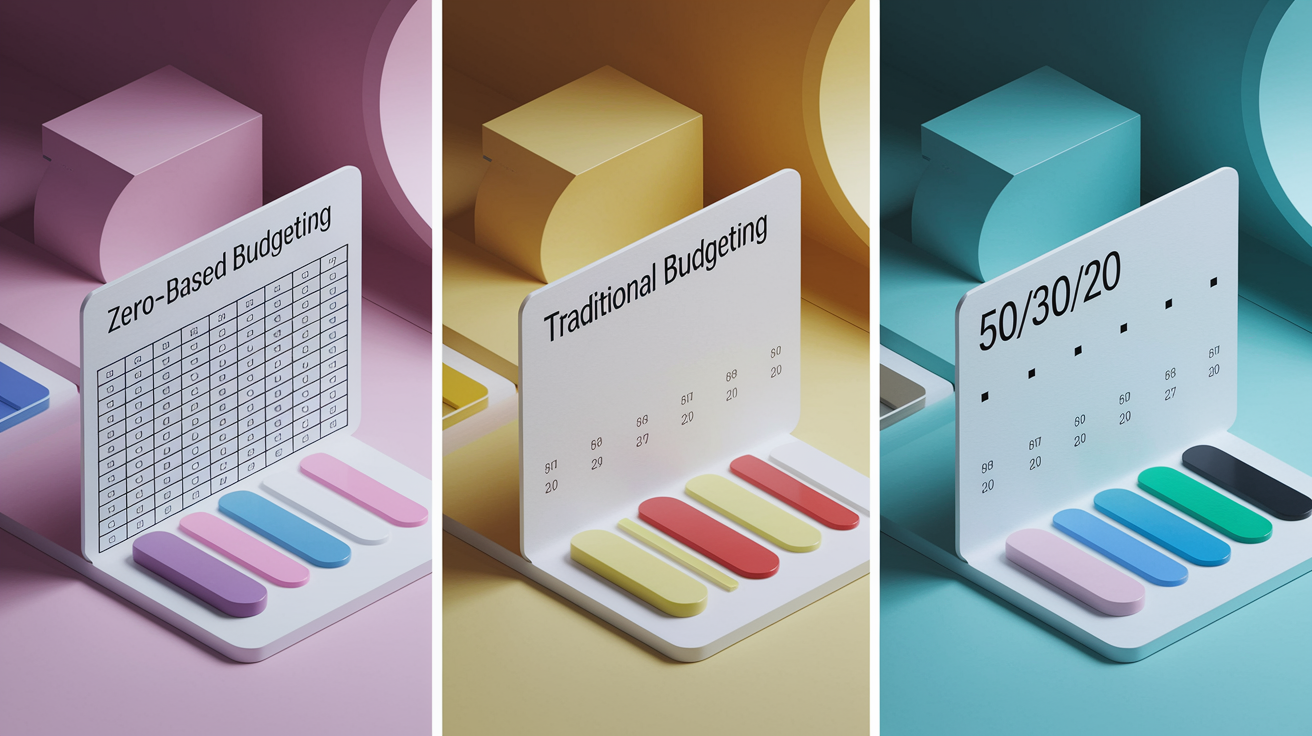
Traditional budgeting starts with last year’s spending, or last month’s, and tweaks it. You look at what you spent on groceries in March and assume April will be similar, maybe adding a little if prices went up. Zero based budgeting throws that baseline out. Every month you start with a blank slate and justify every line item. That gives you more control, but it also takes more time. Traditional budgeting might take an hour. Zero based budgeting can take several hours in the first few cycles.
Percentage based methods like 50/30/20 offer simplicity. You don’t need to track every coffee. You just aim to keep needs under half your income, wants under a third, and savings above 20 percent. Zero based budgeting is the opposite. It’s precise, category by category. If you want to know exactly where your money is going and catch small leaks, zero based wins. If you want a fast, low maintenance system and don’t mind less detail, percentage rules are easier.
Here’s a quick side by side:
Zero based budgeting: High control, high time commitment, very detailed, best for variable income or intentional savers.
Traditional budgeting: Low control, fast setup, relies on history, good for stable expenses and people who hate spreadsheets.
50/30/20 percentage method: Moderate control, simple to follow, broad categories, works well for consistent income and beginners.
All methods require tracking. The difference is how much precision you need and how much time you’re willing to spend.
Benefits and Drawbacks of Zero‑Based Budgeting

Key Advantages
You know where every dollar goes. There’s no mystery spending. You assigned it, so you can track it.
Savings and debt payoff become non negotiable. They’re line items in the budget, not whatever is left over at the end of the month.
You catch spending leaks fast. Subscriptions you forgot about, irregular charges, or categories that quietly grew all show up when you assign every dollar.
It adapts to your real life. If your income drops or a big expense hits, you rebuild the budget so it still works instead of hoping things balance out.
It forces intentional decisions. You can’t passively overspend when you’ve already decided what each dollar is for.
Common Challenges
It takes time, especially at first. Expect to spend a few hours building your first zero based budget and at least an hour each month after that.
Variable income makes it harder. If your paycheck changes every month, you’ll need a one month buffer. Money saved in advance so you can budget this month using last month’s income.
Rigid categories can backfire. If you create 30 micro categories and obsess over every line, the system becomes exhausting. Keep it simple enough to maintain.
It doesn’t fix behavior on its own. A perfect budget means nothing if you don’t follow it. The plan only works if you check in and adjust when reality shifts.
Tools, Templates, and Software for Zero‑Based Budgeting

You don’t need expensive software to run a zero based budget. A simple spreadsheet works fine. Most people start with a monthly template that includes a few core fields and evolve it as they go. Here’s what a basic zero based budget worksheet should include:
Total monthly income row at the top, showing every source.
Fixed expenses section with line items for rent, utilities, insurance, and other recurring bills.
Variable expenses section for groceries, gas, dining out, and anything that changes month to month.
Savings and debt section with specific targets for emergency fund contributions, retirement, and debt payments.
Sinking fund rows for irregular annual or quarterly expenses, with monthly contribution amounts.
Remaining balance row at the bottom that should always equal zero after all allocations.
A spreadsheet gives you full control and costs nothing. Software like budgeting apps or expense trackers can automate some of the work. Linking bank accounts, categorizing transactions, and alerting you when you’re close to a limit. The trade off is you give up some flexibility and sometimes pay a monthly fee. If you’re comfortable with Excel or Google Sheets, start there. If you want real time syncing and less manual entry, try software. The method works either way.
Who Zero‑Based Budgeting Works Best For (Households, Businesses, Nonprofits)

For households, zero based budgeting is a strong fit if you’re rebuilding finances after a setback, managing debt, or trying to stop money from disappearing into untracked spending. It’s especially useful if your income varies. Freelancers, commission earners, or anyone with side gigs, because it forces you to plan with what you actually have instead of assuming consistency. Families juggling multiple goals, emergency fund, college savings, vacation fund, debt payoff, benefit from the clarity of assigning every dollar a job.
Small businesses use zero based budgeting to control costs and align spending with current priorities instead of just repeating last quarter’s budget. If you’re launching a new product line, cutting overhead, or managing cash flow through a slow season, starting from zero lets you reallocate resources intentionally. Instead of assuming the marketing budget stays the same, you justify it based on this quarter’s strategy. That level of scrutiny can surface waste. Unused software subscriptions, vendor contracts that no longer deliver value, or departments sized for yesterday’s workload.
Nonprofits often operate on tight, mission driven budgets where every dollar counts. Zero based budgeting helps leadership ensure spending aligns with program impact rather than institutional inertia. When funding changes or a new initiative launches, the method makes it easier to shift resources without assuming that last year’s allocations are untouchable. Departments justify their budgets based on outcomes and current goals, which can improve accountability and focus.
Long‑Term Sustainability, Review Cadence, and Ongoing Improvements in Zero‑Based Budgeting
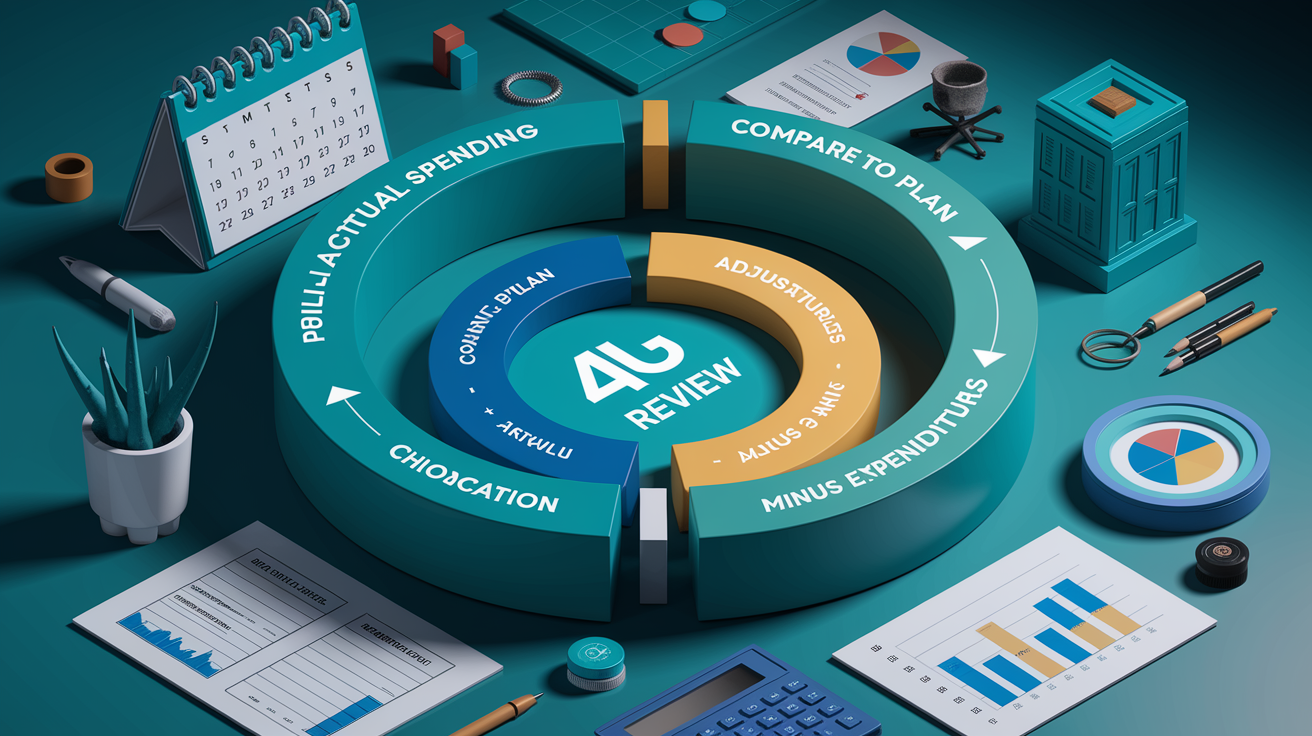
Zero based budgeting is designed to be reviewed and adjusted monthly. That’s the standard cadence. Every time you get paid or a new month begins, you rebuild or refine your allocations. The first few cycles take longer because you’re learning what’s realistic, but once you have a template and understand your spending patterns, monthly reviews get faster. Some people check in weekly to track progress and catch problems early.
The method works long term because it’s flexible. If your income increases, you reallocate. If a new expense shows up, you adjust other categories to make room. If a goal is met, say, you finish paying off a credit card, you reassign that money to the next priority. Zero based budgeting doesn’t assume your life stays the same, which is why it stays useful even as circumstances change.
Here’s how to run a simple monthly zero based budget check in:
Pull your actual spending from the previous month. Compare it to what you planned. Note any categories where you went over or under.
Identify what changed. Did an irregular expense hit? Did income drop? Did you underestimate a category?
Adjust your allocations for the new month. Use what you learned to make the next budget more realistic.
Confirm your income minus expenditures still equals zero. Every dollar should have a purpose before the month starts.
The goal is continuous improvement. Each cycle teaches you something about your real spending, your priorities, and where the plan needs to flex. That’s what makes zero based budgeting sustainable. It’s not a rigid system you abandon when life changes. It’s a decision making tool you refine as you go.
Final Words
Get started: list your income, give every dollar a job, add sinking funds for irregular bills, and review monthly. You’ve seen step-by-step setup, a numeric example, and how ZBB compares to other methods.
It’s clearer and gives real control, though it needs time and habit. Use a simple template or app to make it stick.
If you want one take-away, remember this: zero-based budgeting explained means income minus allocations equals zero, so start small, iterate, and you’ll gain confidence.
FAQ
Q: What is zero-based budgeting in simple words?
A: Zero-based budgeting is assigning every dollar a job so your income minus allocations equals zero, which gives clear control over spending, savings, and debt each month.
Q: What are the four basic components of a zero-based budget?
A: The four basic components are total monthly income, categorized expenses (fixed and variable), savings and debt payments as explicit line items, and an end-of-month balance set to zero.
Q: What is a real life example of zero-based budgeting?
A: A real life example of zero-based budgeting is using a $3,000 paycheck: $1,500 needs, $900 wants, $600 savings/debt, plus sinking funds for irregular bills so all dollars are assigned.
Q: What are some ZBB best practices?
A: ZBB best practices include tracking real spending, creating sinking funds for irregular costs, reviewing and adjusting monthly, prioritizing high-interest debt, and keeping category amounts realistic and flexible.