


Think you have to pay that medical bill as is? You don’t.
Nearly 41% of Americans carried medical debt in 2023, and up to 80% of bills contain errors, so there’s often room to push back.
This post gives a short, step-by-step plan to audit charges, ask for discounts or payment plans, and start negotiating before your account goes to collections.
If you can only do one thing today, call billing and request an itemized bill.
Immediate Steps to Start Lowering Your Medical Bill

You’ll usually see medical bills and Explanation of Benefits forms show up about 2 to 4 weeks after your appointment or procedure. The second that paperwork hits your mailbox, the negotiation window opens. Wait too long and you’re limiting your options. Here’s something most people don’t know: nearly 41% of Americans were carrying medical debt in 2023, and a huge chunk of them never realized they could actually push back on those numbers. Getting started early gives you real leverage. Providers are way more willing to work with you before your account gets old or ends up in collections.
Your first move? It’s simpler than you think. Call the billing department (the number’s right there on the statement) and confirm the balance, the date of service, and whether your insurance has processed everything. Then ask directly if they offer prompt payment discounts, financial assistance programs, or payment plans. Keep it polite and stick to the facts. “I got a bill for $3,200 dated March 15th. Can you confirm this is what I owe after insurance, and are there discounts if I pay within 30 days?” That one question can uncover reductions you didn’t even know were on the table.
Give yourself a timeline. Gather basic information in the first week, request any missing documents by week two, and start actual negotiation talks by week three. Moving fast prevents late fees, keeps your account in good standing, and shows the provider you’re serious about handling this responsibly.
7 immediate steps to take today:
- Call the billing department and confirm the total balance, service date, and insurance status.
- Ask whether they offer a prompt pay discount for payment within 30 days.
- Request an itemized bill showing every charge, procedure code, and line item cost.
- Verify that your insurance claim has been fully processed and posted to your account.
- Ask about financial assistance applications or charity care programs at the facility.
- Write down the name, title, and direct phone number of every person you talk to.
- Schedule a follow up call or callback date before you hang up so nothing gets stuck.
Preparing Documentation Needed for Successful Medical Bill Negotiation
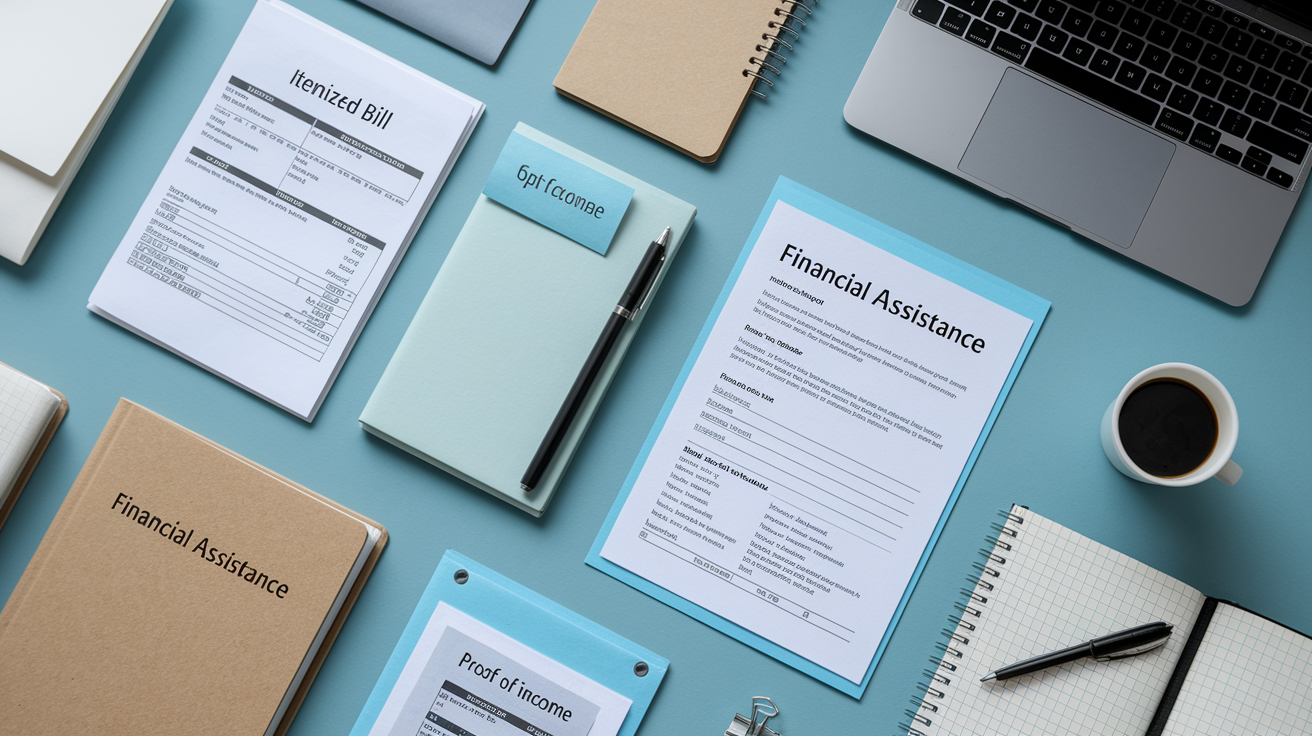
Providers and billing departments need specific paperwork before they can approve discounts, payment plans, or charity care. Without the right documents, your request just sits there, even if you qualify for serious reductions. Proof of income, recent tax returns, bank statements, and a completed financial assistance application are what most hardship reviews require. Nonprofit hospitals are legally required under ACA rules to publish written financial assistance policies and make applications available, but you still have to supply the supporting evidence that shows your need.
How organized you are determines whether your negotiation moves forward or disappears into administrative limbo. Keep a dedicated folder (physical or digital) with copies of every bill, Explanation of Benefits, prior authorization letter, denial notice, and communication log. When you call back or escalate to a supervisor, being able to reference exact dates, names, and what you discussed before builds credibility and speeds things up.
5 essential documents to gather before you negotiate:
- Itemized bill showing CPT procedure codes, dates of service, and individual line item charges
- Explanation of Benefits (EOB) from your health insurer detailing what was billed, allowed, and paid
- Proof of income: recent pay stubs, unemployment letter, Social Security statement, or tax return
- Written notes of all prior phone calls: dates, staff names, reference numbers, and summaries of what was discussed
- Copies of your insurance policy summary, including deductible, out of pocket maximum, and coverage exclusions
Auditing Medical Bills for Errors Before Negotiation
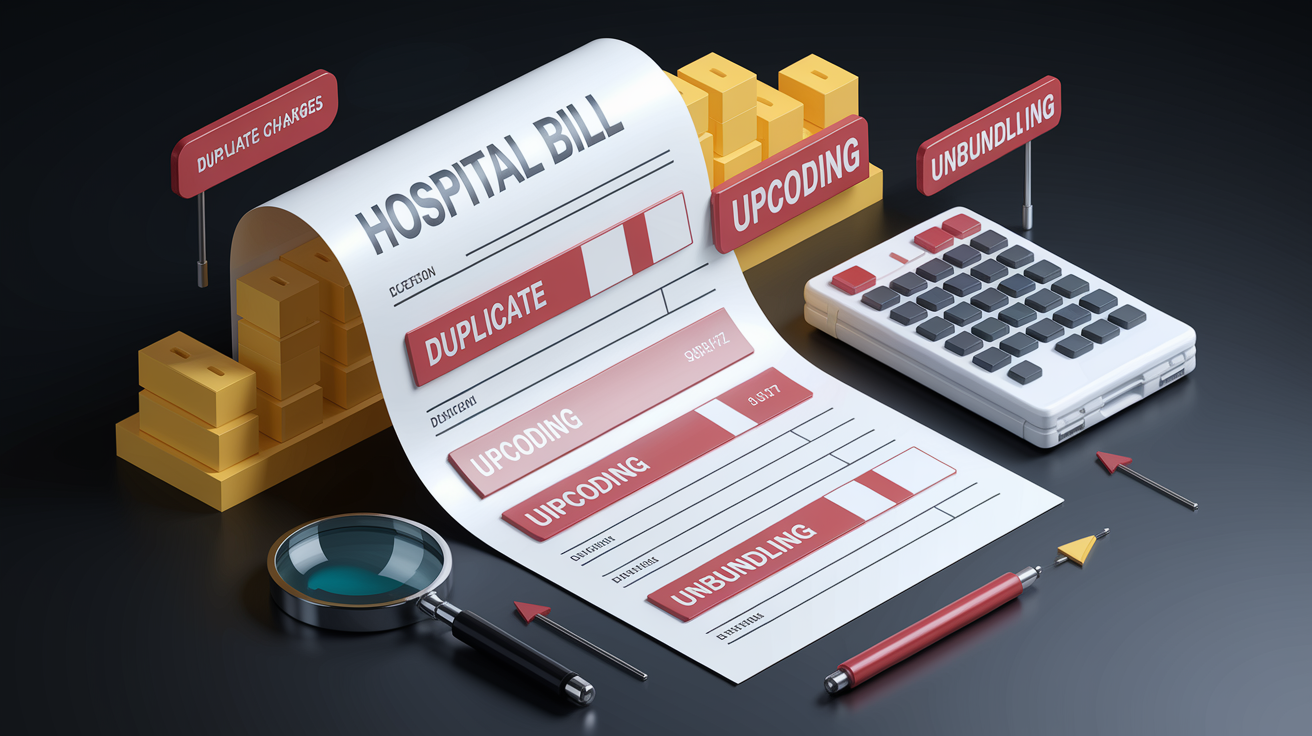
Industry estimates suggest up to 80% of medical bills contain at least one error. Billing mistakes for skilled nursing claims alone can result in overpayments approaching 25%. Auditing your bill before you negotiate isn’t optional. It’s the fastest way to cut what you owe without asking for charity or discounts. Errors range from simple duplicates to deliberate upcoding, where a provider assigns a more expensive diagnosis or procedure code than what actually happened. Billing systems are complex, and mistakes happen at every stage: data entry, coding, claims submission, and insurance adjudication.
Start by comparing your itemized bill to your Explanation of Benefits line by line. Look for charges that appear twice, services you never received, or procedures billed separately that should’ve been bundled under a single code (that’s called unbundling). CPT codes describe what was done. ICD codes describe why it was done. If the CPT code listed doesn’t match the service you remember, or if the ICD diagnosis code seems inflated to justify a higher charge, flag it. Use FAIR Health Consumer to look up the average cost for a specific CPT code in your ZIP code. Check Healthcare Bluebook to compare your provider’s price to local benchmarks. When you find a discrepancy, script your dispute clearly: “I reviewed the itemized bill and saw that I was charged for procedure code 99215, but my visit was routine and should be coded as 99213. The difference is about $120. Can you please review and adjust?”
Auditing saves money before you ever discuss hardship or payment plans. If your bill shows $4,800 and you identify $1,200 in errors, you’ve just reduced your negotiation target by 25% with documentation the provider can’t dispute.
| Error Type | Description | Impact on Bill |
|---|---|---|
| Duplicate charges | Same procedure or supply billed twice on different line items | Can double the cost of that service; common in multi-day hospital stays |
| Services not received | Charges for tests, procedures, or consultations that never happened | Adds hundreds to thousands depending on the phantom service |
| Upcoding | Using a higher level diagnosis or procedure code than warranted to increase reimbursement | Can inflate a single visit by $50 to $300 or more |
| Unbundling | Billing multiple codes for steps that should be grouped under one comprehensive code | Increases total by billing each component separately at full price |
| Incorrect procedure code | Wrong CPT code applied, often due to clerical error or miscommunication | May result in charges for a more expensive or unrelated procedure |
Final Words
Start now: call the provider, confirm the balance, and ask for an itemized bill.
Gather essentials: EOB, CPT/ICD codes, proof of income, and keep a communication log for every call.
If you only do one thing this week, request the itemized bill and set a payment timeline. That creates room to negotiate. Combine quick contact, organized documents, and a focused audit. Learning how to negotiate medical bills takes patience, but each small step lowers stress and cost.
FAQ
Q: How much can you negotiate off medical bills?
A: How much you can negotiate off medical bills varies: many people secure 20–50% discounts, uninsured or hardship cases may get larger cuts, and some bills can be reduced or forgone under charity care—ask early.
Q: What do I say to lower my medical bill?
A: To lower your medical bill, say you want to confirm the balance, ask about cash-pay or prompt-pay discounts, request available financial assistance, and propose a reasonable payment plan if needed.
Q: What is the golden rule in medical billing?
A: The golden rule in medical billing is start negotiating as soon as the bill or EOB arrives and keep careful records: confirm charges, verify insurance posting, and politely ask for discounts or hardship help.
Q: What is the secret to avoiding huge medical bills?
A: The secret to avoiding huge medical bills is to check coverage and network status beforehand, ask for price estimates, use in-network providers, and request discounts, payment plans, or charity care early.