


Controversial: some collectors will delete a collection from your credit report if you pay, but only under certain conditions.
That sounds great, but trusting verbal promises can cost you money.
This post shows you how to negotiate pay-for-delete the smart way: validate the debt first, insist on a signed deletion agreement that names Equifax, Experian, and TransUnion, and only pay by a traceable method after you have that paper.
You’ll get exact scripts, letter templates, and a short checklist so you can try this without losing money or waking up to the tradeline back on your report.
Immediate Steps to Start a Pay-for-Delete Negotiation

Pay-for-delete is an arrangement where you offer a collector payment (sometimes the full balance, sometimes a settlement amount) in exchange for removing the collection account from your credit reports entirely. The core challenge: verbal agreements fall apart fast. You might pay in full, only to watch the tradeline reappear 60 days later with no way to recover your money. That’s why every single step in a pay-for-delete negotiation must be documented in writing before you send a dime. “I’ll send a confirmation letter after you pay” is not confirmation.
Creditors and collection agencies hesitate to put deletion in writing because the Fair Credit Reporting Act requires accurate reporting. If an account is legitimate and verifiable, removing it to secure payment sits in a legal gray area. Collectors who report to the credit bureaus worry about losing access if they’re caught systematically deleting truthful items. That risk means many will refuse outright, some will stall, and a small handful will quietly agree if the economics line up in their favor.
Before you propose anything, validate the debt. Collectors buy portfolios for pennies on the dollar, accounts get resold multiple times, and paperwork gets lost or fabricated. If you skip validation and start negotiating, you might pay the wrong entity, pay twice, or pay for a debt that’s not yours. Start by confirming ownership, balance, and the date the account first became delinquent.
Immediate action checklist:
-
Pull credit reports to verify the delinquency date. Log into AnnualCreditReport.com and download all three reports. Look for the “Date of First Delinquency” field on the collection tradeline. That date determines when the seven-year reporting window ends.
-
Send a debt validation letter by certified mail. Within 30 days of the collector’s first contact, you have the right to request validation. After 30 days you can still request it, the collector just isn’t required to pause collection activity. Ask for the original creditor’s name, the account number, the full balance with itemization of fees, and proof that this collector owns or is authorized to collect the debt.
-
Confirm the collector’s legal right to collect. Check the validation response for an assignment agreement, a bill of sale, or an affidavit of debt ownership. If the response is vague, you may be dealing with a third party that can’t enforce the debt.
-
Prepare your maximum offer. Decide whether you’ll pay in full or propose a lump-sum settlement. Debt buyers often purchase accounts for 5 to 20 cents on the dollar, so an offer of 30 to 50 percent of the balance can still deliver them a profit.
-
Draft a written pay-for-delete proposal. Your letter should state, “I will pay [amount] to fully resolve account [number], on the condition that you provide written agreement to remove all references to this account from my credit reports at Equifax, Experian, and TransUnion, and cease all future reporting.”
-
Request written confirmation before payment. Don’t pay until you hold a signed agreement that includes the account number, the exact payment amount, explicit deletion language, and the names of all three bureaus. Once that agreement arrives, send payment by a traceable method (check, money order, or ACH) and keep receipts, bank statements, and copies of the signed agreement.
Understanding Pay-for-Delete Agreements and Credit Reporting Rules

Collection accounts stay on your credit reports for seven years from the date the original account first became delinquent. Not the date the collector bought the debt, not the date you settled, and not the date you paid in full. Paying a collection will typically update the balance to $0 and change the status to “paid” or “settled,” but the tradeline itself remains until the seven-year mark. The Fair Credit Reporting Act requires accurate reporting, so a collector that removes a legitimate collection risks violating federal law unless the item cannot be verified.
There are a few narrow exceptions and recent rule changes. The Consumer Financial Protection Bureau finalized a rule on January 7, 2025, removing medical bills from credit reports entirely. That rule took effect March 8, 2025, and impacts roughly 15 million consumers and $49 billion in medical debt. If your collection is medical, you shouldn’t need to negotiate pay-for-delete at all. The account should drop automatically under the new rule. Meanwhile, newer credit scoring models like FICO 9 ignore paid collections altogether, which means paying without deletion can still improve your score if the lender uses that version. FICO 8, however, still counts paid collections, and FICO 8 remains the most widely used model for mortgage and auto lending as of 2026.
Key reporting and scoring facts:
The seven-year reporting rule: the clock starts the month and year your account first went delinquent with the original creditor, typically 30 or 60 days before the charge-off.
Medical debt removal rule (effective March 8, 2025): medical collections should no longer appear on consumer credit reports. If yours still shows, dispute it with the bureau and reference the CFPB rule.
Charge-off timing (usually 180 days): credit card issuers generally wait six months of non-payment before charging off the account and selling or transferring it to a collector. That six-month period is included in the seven-year window.
Paid vs settled reporting labels: paying in full will show “paid” or “paid in full,” settling for less will show “settled” or “settled for less than full balance.” Both labels leave the tradeline visible for seven years unless the collector agrees to delete.
Why deletion may not improve credit if scoring model already ignores paid collections: if a lender uses FICO 9 or VantageScore 4.0, paying the collection brings your score up even without deletion. Negotiating a higher settlement to secure deletion may cost you extra money for no additional benefit.
How to Structure a Pay-for-Delete Offer to Creditors or Collectors

Start by identifying whether you’re dealing with the original creditor or a debt buyer. If the collector purchased your account outright, they have the authority to report or delete as they choose (within FCRA boundaries). If the collector is working on commission for the original creditor, they may lack authority to remove the tradeline without the creditor’s approval. Check your debt validation response for language like “account purchased” or “acting as agent for.” When in doubt, contact the original creditor directly and ask if they still own the debt or if it was sold.
Debt buyers purchase portfolios in bulk for a small fraction of face value, often 5 to 20 cents per dollar of charged-off debt. That economic reality gives you leverage. If you offer 30 to 50 percent of the balance as a lump sum, the buyer still earns a multiple of their purchase price and closes the file. Some buyers will accept even less if the account is old or the statute of limitations is near. The trade-off: collectors know that agreeing to delete in writing exposes them to FCRA risk, so they may counter with a higher percentage or refuse deletion entirely and offer only a “paid” status update. Weigh the extra cost of securing deletion against the possibility that deletion might not stick or that your target lender’s scoring model already ignores paid collections.
Your written offer should be crystal clear on what you will pay and what the collector must do in return. Vague language like “we’ll update your account” or “we’ll review removal” is worthless. The agreement must explicitly state deletion, name all three credit bureaus, and commit to a timeline (for example, “within 30 days of payment receipt”). Many collectors will verbally hint at deletion but refuse to sign anything. If they won’t put it in writing, assume deletion will not happen.
Essential Elements of a Deletion Agreement
A binding pay-for-delete agreement must include:
Account number. The full original creditor account number or the collector’s internal reference number, so there’s no confusion about which debt you’re settling.
Settlement amount. The exact dollar figure you will pay, stated as “payment in full” or “settlement in full satisfaction of account.”
Payment deadline. A date by which you will remit funds, typically 10 to 30 days after both parties sign the agreement.
Deletion wording. Clear language such as “Collector agrees to request deletion of all references to account [number] from the credit files maintained by Equifax, Experian, and TransUnion, and to cease all future reporting of this account.”
Bureaus included. Explicit mention of Equifax, Experian, and TransUnion by name, so the collector cannot claim “we only report to two bureaus.”
Timeline for removal. A commitment that deletion requests will be submitted within 30 days of payment, or within the next reporting cycle, whichever is sooner.
Phone Scripts and Written Templates for Pay-for-Delete Requests
When you call, your goal is to get the collector to commit in writing before you discuss payment details. Don’t negotiate amounts or agree to anything until you hold a signed agreement. Keep the conversation short, factual, and documented. If the representative refuses to provide written terms, ask for a supervisor or end the call and send your proposal by certified mail instead.
Use a calm, professional tone. Collectors are trained to pressure you into immediate payment. If you sound desperate or confused, they’ll steer you toward a settlement without deletion. If they make verbal promises, respond with, “That sounds reasonable, so please email or mail me a written agreement that includes those exact terms, and I’ll send payment the same day I receive it.”
Sample Phone Script
Opening: “Hi, I’m calling about account number [account number]. I want to resolve this, and I’m prepared to pay [offer amount] to close the file. Before we go further, will your company agree in writing to delete this account from all three credit bureaus once payment is received?”
Offer: “I can pay [offer amount] as a lump sum if you’ll provide a written agreement that includes deletion from Equifax, Experian, and TransUnion. Can you send that agreement to me by email or mail today?”
Request for written confirmation: “I understand you’re saying you’ll handle it, but I need the deletion terms in writing before I send any funds. Can you transfer me to someone who can issue a signed settlement letter?”
Objection response: “If company policy prevents written deletion agreements, I’m happy to settle for [slightly lower amount] without deletion and get that in writing instead. Which option works for your company?”
Escalation request: “I’d like to speak with a supervisor or the decision-maker who has authority to approve written deletion terms. Can you transfer me now?”
Closing: “Thanks for your time. I’ll wait for the written agreement. Once I have it in hand, I’ll send payment immediately. My mailing address is [your address], and my email is [your email].”
Sample Written Letter
[Your Name]
[Your Address]
[City, State ZIP]
[Date]
[Collector Name]
[Collector Address]
[City, State ZIP]
Re: Account [Account Number] – Settlement Offer Conditioned on Deletion
I’m writing to propose a settlement of the above-referenced account. I’m willing to pay [settlement amount] to fully resolve this debt, provided you agree in writing to the following terms:
-
Upon receipt of payment, you will request deletion of all references to account [account number] from my credit files at Equifax, Experian, and TransUnion, and you will cease all future reporting of this account to consumer reporting agencies.
-
You will submit deletion requests within 30 days of receiving my payment.
If you accept these conditions, please send a signed written agreement on company letterhead that includes the account number, the settlement amount, and the deletion language described above. I will send payment by [check/money order] within 10 days of receiving your signed agreement.
This letter is being sent via certified mail, tracking number [tracking number], to ensure delivery. If I don’t receive a written response within 15 days, I will assume you have declined this offer.
Sincerely,
[Your Signature]
[Your Printed Name]
Timing Strategies, Statute-of-Limitations Rules, and When to Wait
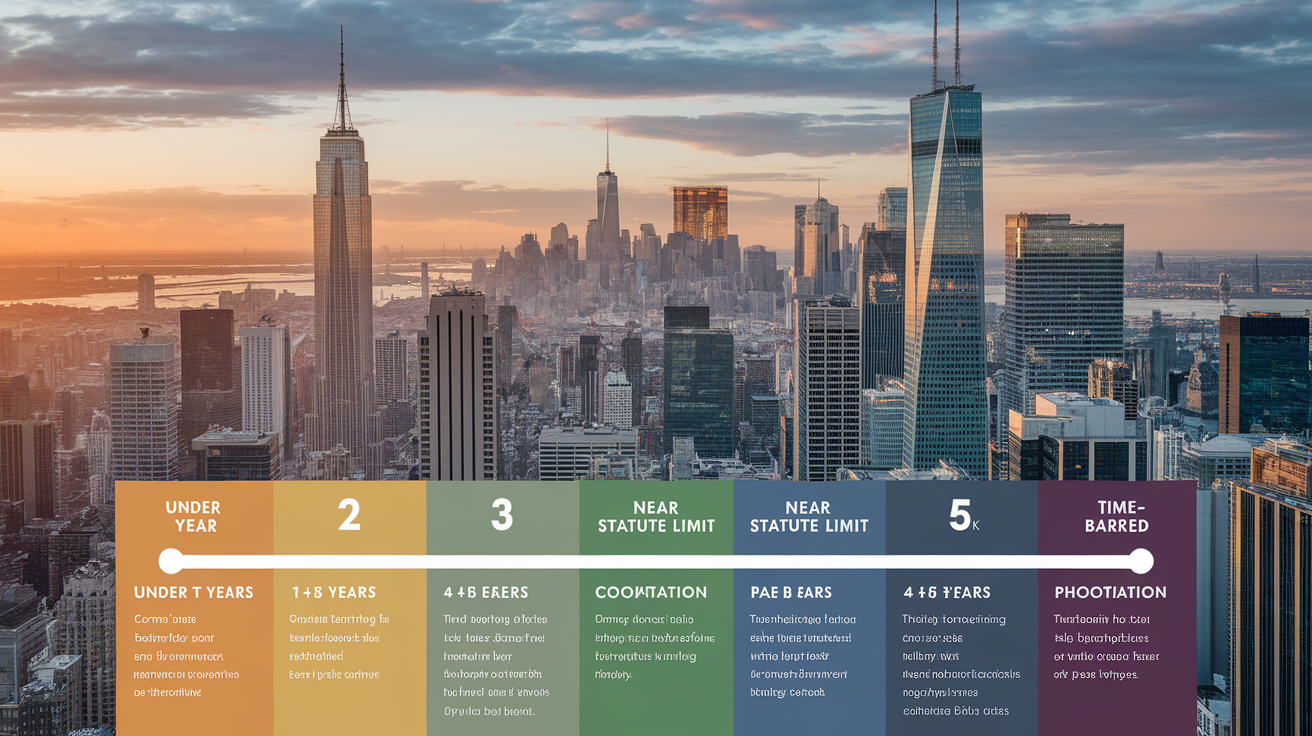
The age of the debt changes your leverage and your risks. A fresh collection (under a year old) sits squarely within the statute of limitations in every state, which means the collector can sue if you don’t pay. That legal threat gives them less reason to negotiate aggressively or agree to deletion. An older account, especially one approaching the statute deadline, loses enforcement power. Once a debt is time-barred, the collector can still contact you and still report the account for the full seven years, but they generally cannot sue. In some states, making any payment (even a small partial payment) can restart the statute clock and revive the collector’s right to sue, so tread carefully.
If the account is within a year or two of the seven-year reporting drop-off, consider whether paying for deletion makes financial sense. Deletion might improve your score temporarily, but if the tradeline will fall off naturally in 18 months, you might be better off saving your money or negotiating a lower settlement without deletion. On the other hand, if you’re applying for a mortgage or auto loan in the next six months, even a temporary score boost from deletion can lower your interest rate enough to justify the cost.
Track your negotiation timeline and the account’s age using the date of first delinquency you found on your credit report. If the collector drags out the negotiation for months, the account ages closer to automatic removal, which reduces their urgency to settle and increases your leverage to demand better terms.
| Debt Age Category | Negotiation Benefit | Risk Level | Recommended Action |
|---|---|---|---|
| Under 1 year old | Low. Collector has lawsuit leverage and less urgency to settle | High. Statute of limitations active, payment restarts clock in some states | Validate debt, confirm statute deadline, negotiate only if deletion is in writing |
| 1–3 years old | Moderate. Collector may accept lower settlement, deletion still rare | Moderate. Statute still active, partial payment can restart in some states | Offer lump-sum settlement at 30–50% of balance, request deletion in writing |
| Near statute limit | High. Collector loses lawsuit power soon, higher chance of accepting deletion | Low if you avoid payment acknowledgment, moderate if you pay and restart statute | Wait until statute expires, then negotiate deletion or low settlement without fear of lawsuit |
| Time-barred | Very high. No lawsuit risk, collector may delete to close file | Very low. Paying does not typically restart statute if debt is already time-barred | Offer minimal settlement in exchange for written deletion, dispute if collector refuses |
Risks, Red Flags, and Documentation Requirements in Pay-for-Delete Deals

Oral promises from collectors are worth exactly nothing. You might hear “Sure, we’ll take care of that once you pay,” only to discover three months later that the tradeline is still there, or was temporarily removed and then re-reported when the account was re-verified during a routine credit bureau audit. Once you’ve paid, you have no leverage left. The collector has your money, and the FCRA’s accuracy requirement may override any private agreement you thought you had. Courts have consistently held that furnishers cannot be forced to report inaccurately, even if they signed a contract saying they would delete.
Some collectors will send a vague letter that acknowledges settlement but never mentions deletion. Others will verbally agree, then send a form letter confirming only that the balance is now $0. If the agreement doesn’t explicitly say “delete,” “remove,” or “cease reporting,” assume the tradeline will remain. Keep every piece of correspondence: the original debt validation response, your written offer, their signed acceptance, proof of payment, and certified mail receipts. If the collector fails to delete, you’ll need that paper trail to file a complaint with the Consumer Financial Protection Bureau or your state attorney general.
Even with perfect documentation, pay-for-delete is never guaranteed. The collector might honor the agreement, delete the account, and the bureaus update within 30 days. That’s the best case. Or the collector might delete temporarily, then a portfolio resale or system migration triggers re-reporting six months later. Or the collector might refuse to delete at all, leaving you with a “paid” status and no recourse except a CFPB complaint that may take months to resolve.
Red flags that signal a risky or fraudulent deletion offer:
Verbal-only promises. Any collector who says “just pay and we’ll handle it” without providing written terms is either inexperienced or deliberately vague.
No account number included. Legitimate settlement letters always reference the specific account number, original creditor, and current balance.
Refusal to send written terms. If a representative insists “our system doesn’t generate those letters,” ask for a supervisor or walk away.
Pressure to pay immediately. Threats like “this offer expires today” or “pay now or we sue tomorrow” are high-pressure tactics designed to bypass your request for documentation.
Demand for unusual payment methods. Requests for wire transfer, prepaid debit cards, gift cards, or cash by mail are major fraud red flags. Use checks, money orders, or bank ACH only.
Promises of “instant” deletion. Credit bureaus update on 30- to 45-day cycles. No collector can delete an account from your report overnight.
Conflicting statements by different reps. If you call back and a second representative contradicts the first, the company likely has no internal agreement on deletion policy. Avoid them.
Alternatives When Creditors Refuse Pay-for-Delete

When a collector won’t agree to deletion, you still have options that can improve your credit and close the account. The most straightforward alternative is negotiating a standard settlement where you pay a lump sum (often 30 to 60 percent of the balance) in exchange for a written agreement that the account will be marked “settled in full” and the balance updated to $0. Newer scoring models like FICO 9 and VantageScore 4.0 ignore paid and settled collections entirely, so even without deletion you may see a score increase if your lender uses those versions. Always get the settlement terms in writing before you pay.
If the collection account contains any inaccuracies (wrong balance, wrong date, wrong creditor name) you can dispute those errors with the credit bureaus under the FCRA. The bureau must investigate within 30 days, and if the collector cannot verify the disputed information, the bureau will remove or correct the tradeline. Disputing doesn’t erase legitimate debt, but it can clean up reporting mistakes that hurt your score. For federal student loans in default, there’s a formal rehabilitation program: make nine consecutive, on-time, full monthly payments within a 10-month window, and the default status is removed from your credit report. Medical collections became even simpler on March 8, 2025, when the CFPB rule removed them from credit reports entirely. If yours still appears, dispute it and cite the rule.
Five practical alternatives to pay-for-delete:
Negotiate a lump-sum settlement without deletion. Offer 30 to 50 percent of the balance in exchange for a “settled in full” status and $0 balance, documented in writing. If your lender uses FICO 9, your score improves even without deletion.
Dispute inaccuracies with the credit bureaus. File a dispute online or by mail for any incorrect dates, balances, or creditor names. Include copies of your validation response and any proof that contradicts the bureau’s records.
Rehabilitate federal student loan defaults. Contact your loan servicer to enroll in rehabilitation. After nine on-time payments in 10 months, the default notation is removed and only the original late payments remain.
Request goodwill deletion from the original creditor. If you had a strong payment history before the delinquency, write a goodwill letter to the original creditor explaining the hardship and asking them to remove the late payments or charge-off as a courtesy.
Wait for automatic removal at the seven-year mark. If the account is within 18 months of the drop-off date and you don’t need credit immediately, let time handle it. Set a calendar reminder to check your reports the month after the seven-year anniversary and dispute if the tradeline doesn’t fall off automatically.
Final Words
Start by pulling your credit reports and sending a debt validation letter. Then prepare a written pay‑for‑delete offer, get everything in writing, and don’t pay until you have confirmation.
We covered how reporting works, what to include in an agreement, scripts and templates, timing rules, common risks, and realistic fallbacks.
If you only do one thing this week, follow the debt validation and written‑offer steps in this guide to practice how to negotiate pay for delete with creditors — it’s small work with real upside.
FAQ
Q: Can I negotiate a pay to delete collections?
A: You can negotiate a pay‑for‑delete on a collection account, but it’s not guaranteed; always validate the debt first, make a reasonable lump‑sum offer, and require a written deletion agreement before paying.
Q: How to negotiate a payoff with creditors?
A: To negotiate a payoff with creditors, pull your credit reports, send a debt validation letter, set your maximum offer, propose a lump‑sum or payment plan in writing, and get written confirmation before you pay.
Q: Will creditors settle for 30%?
A: Creditors sometimes accept about 30% for older debts, especially debt buyers, but acceptance depends on account age, balance, and collector economics; use 30% as a starting offer and expect counteroffers.
Q: What is the 777 rule with debt collectors?
A: The 777 rule with debt collectors is not a formal legal standard; it’s an informal term some mention — focus on statute of limitations, reporting dates, and always get written agreements before paying.